Cell Phone Family Plans Comparison
Before the age of unlimited everything, before the smartphone became an extension of our very hands, there was a sacred document that bound families together in a covenant of shared minutes. It was the family cell phone plan, a laminated chart of anxieties and thrift, passed around the dinner table like a decree. I can still recall the tactile feel of the Nokia 5160 in my palm, its weight promising durability, and the whispered negotiations with my parents every time the bill arrived. The plan wasn’t just a utility; it was a household governance system, a ledger of trust where every text message cost a dime and every call over the 7:00 PM “night minute” threshold was a fiscal sin. The initial human necessity was simple, almost primal: to keep the tribe connected while keeping the household solvent. Before that, a family had one landline in the kitchen, a physical anchor for all communication. The mobile phone promised liberation, but the cost of that freedom was a new kind of family bureaucracy—one built on buckets of minutes, the terror of roaming, and the sacred act of “calling before 9 PM.”
In those early days, the carriers weren’t selling connectivity; they were selling control. The first family plans, introduced in the mid-1990s by the likes of AT&T and Verizon, were clunky, brutalist contracts. They were designed not for convenience, but to prevent the catastrophic bill shock that came from a teenager discovering the internet on a 2G WAP browser. You had a “primary line” (often the parent) and “additional lines” (the children), each tacked on for an outrageous fee of $9.99, but crucially, sharing a single pool of 500 minutes. The logic was antiquated, almost agrarian—a shared silo of grain that had to be rationed. If you exceeded the pool, you were charged per-minute overage rates that read like a horror story: 45 cents per minute in-network, 65 cents off-network. The cultural landscape was riddled with bizarre workarounds. Families would use “missed call” codes—letting it ring once and hanging up—to signal “I’m home” without burning a minute. Others developed the “10-second rule,” calling, saying “Call me back,” and hanging up to trigger a free incoming-call window on their specific carrier (a loophole that Sprint famously closed with a swift, merciless hammer).
There was a strange, almost perverse pride in managing these plans. Fathers would pore over the itemized bill—a 30-page document of call logs—with the forensic intensity of an accountant auditing a crime scene. They would circle suspicious numbers, cross-examine their teenage daughters about a 15-minute call to a boyfriend, and deliver lectures on the economic folly of “thinking before your texts.” The plan was a social contract, but also a surveillance tool. You knew exactly where your children were, not because of GPS, but because of the tower pings invisible in the bill’s fine print. It was a simpler time, but also a more anxious one. The family plan was a shared burden, and the burden was always measured in seconds and cents. The nostalgia isn't for the cost, but for the tangible, visceral nature of it all—the way a bill could spark a family argument, or the relief in a mother’s voice when she saw you had only used 400 of the 500 minutes, granting you a reprieve from the silent treatment.
Must Read
The Great Unbundling and the Rise of the Data Dynasty
The turn of the millennium brought a seismic shift, one that would dismantle the old autocratic rule of the minute. The introduction of the unlimited night and weekend calling, pioneered by AT&T in 2001, was the first crack in the dam. But the true revolution came with the iPhone in 2007 and the subsequent explosion of 3G and 4G data. Suddenly, the family plan wasn’t about minutes; it was about megabytes. This was a bizarre, forgotten pivot. Carriers, trying to cling to the old model, initially offered “data blocks” as an add-on to the shared minute bucket. I remember the horror of 2009, when a family of four would have a single 5GB data bucket, and watching a single YouTube video was considered an act of reckless familial consumption. The term “Wi-Fi hog” entered the lexicon, describing the child who would sit by the router, refusing to move, because the cellular data had run out on the 15th of the month.
This era birthed the “throttling” nightmare, a punishment worse than any overage fee. The pain of watching a video buffer at 64kbps while you’re paying for a premium plan was a uniquely modern psychological torture. The family meeting evolved from discussing minute usage to discussing the “data triangle” at the top of the phone screen—the colors (green, yellow, red) becoming a traffic light for family harmony. Vintage facts forgotten today include the “unlimited data” plans that were secretly capped at 2GB before being throttled, a loophole that led to class-action lawsuits and a profound distrust of the word “unlimited.” Then there was the bizarre workaround of tethering—using your phone as a Wi-Fi hotspot for the family laptop, a practice that carriers explicitly prohibited, leading to a cat-and-mouse game of users downloading “tethering apps” that hid the usage, blurring the line between rebellion and necessity.

But the most dramatic transformation was the “unbundling” of the family itself. The old model assumed that a family shared everything. The new model, driven by T-Mobile’s “Un-carrier” revolution in 2013, introduced the idea of individual data allocations within a shared plan. This was the death of the collective. Each line got its own separate data bucket, and the bill became a grotesque spread of inequity. Poor little Timmy, who only streamed audiobooks, would have 5GB leftover, while his older sister, a budding TikTok influencer, would be throttled to oblivion by day three. This led to a new form of sibling negotiation, far more sophisticated than shared minute rationing: the “data donation.” T-Mobile allowed you to “kick in” data to another line, a feature that turned the family plan into a micro-economy of digital charity and guilt. The family unit was no longer a commune of shared resources, but a decentralized network of individual consumers bound together by a single billing statement—an ironic metaphor for the broader cultural shift toward hyper-individualism.
As we moved deeper into the 2010s, the family plan also began to absorb the internet of things. We started adding tablets, smartwatches, and eventually, LTE-enabled car systems. The old family plan, once a sacred bundle of two or three lines, became a sprawling, monstrous entity hosting seven or eight connected devices. The bill became a dense, arcane document, filled with acronyms like “SGD” (Smartphone Global Device) and “TAB.” The nostalgia for the simple minute bucket of the 90s began to bloom, not because we wanted to go back, but because the complexity had become overwhelming. Yet, the core principle remained: a family plan was still the cheapest way to get everyone connected, a bulk discount on the illusion of independence.

Modern Hacks: The Algorithmic Family and the Rise of “A La Carte” Connectivity
Today, the classic principles of the shared family plan are being hacked not by rebellious teenagers, but by the carriers themselves, using AI and predictive analytics. The modern “hack” is the automatic data top-up. Instead of a desperate call to mom to add a gig, the system now quietly charges your credit card an additional $10 for 2GB, without a single family meeting. It’s efficient, frictionless, and utterly soulless. Another modern hack is the “plan mixer,” where a single account can hold a limited-data plan for the grandparents, a heavy-data plan for the teenager, and a “smartwatch-only” line for the toddler, all under one roof. This is a radical departure from the one-size-fits-all bucket. The algorithm now watches your usage patterns and suggests adjustments—offering you a discount if you agree to slower speeds during peak hours, or a bonus if you let the carrier use your phone as a “pseudo-5G” hotspot for others in a crowded stadium. It’s a personalized, dynamic family plan that morphs monthly, reacting to the ebb and flow of human behavior.
Furthermore, the modern family is no longer geographically bound. The “family” plan now spans across state lines and even countries with plans that include Canada and Mexico roaming. The old fear of roaming—the dreaded $1.99 per minute charge when crossing a state border (yes, that was a real thing called “border roaming”)—is virtually extinct. But the most profound hack is the advent of eSIMs and multi-network profiles. One physical SIM can now host a carrier profile for work, one for family, one for a local travel network. This is the ultimate unbundling, where the concept of a single “family plan” becomes a layer of profiles on a single handset. The modern parent isn’t buying a bucket of minutes; they’re subscribing to a flexible connectivity ecosystem, managed through a slick app with charts and graphs. It’s less oppressive, but it lacks the tactile ritual of the past. There’s no bill to hold, no itemized list to argue over—just silent, automatic charges that barely register as a line item in a monthly budget.
Frequently Asked Questions: Bridging the Analog and Digital
1. “Will I be burned by overage charges if I go back to a shared data pool like the old days?”
The short answer is: it depends on the 2024-2025 carrier’s specific policy, but the brutal overage charges of the 1998-2007 era are virtually extinct. Back in the day, the “overage” was a deliberate profit center, often accounting for up to 30% of a carrier’s revenue in some quarters. Today, the regulatory pressure and competitive landscape have forced carriers to adopt “hard caps” or “smart throttling” instead. If you hit your data limit on a shared pool today, you are not hit with a $45 charge; instead, your speed is reduced to 128kbps, which is just enough for iMessage and email, but not for video. This is a kinder, gentler punishment. However, the hidden myth is that “unlimited” plans are truly unlimited. Most “unlimited” family plans have a premium data threshold (around 50GB or 60GB) after which you are deprioritized—meaning your data speeds drop during network congestion. So, you can’t be charged overage fees anymore, but you can be invisible in the digital slow lane. The historical fear of the bill shock has been replaced by the quiet, confusing reality of “deprioritization,” which is far less dramatic but still requires a careful reading of the fine print.
2. “Is it still cheaper to keep the whole family on one plan, or are individual plans better now?”
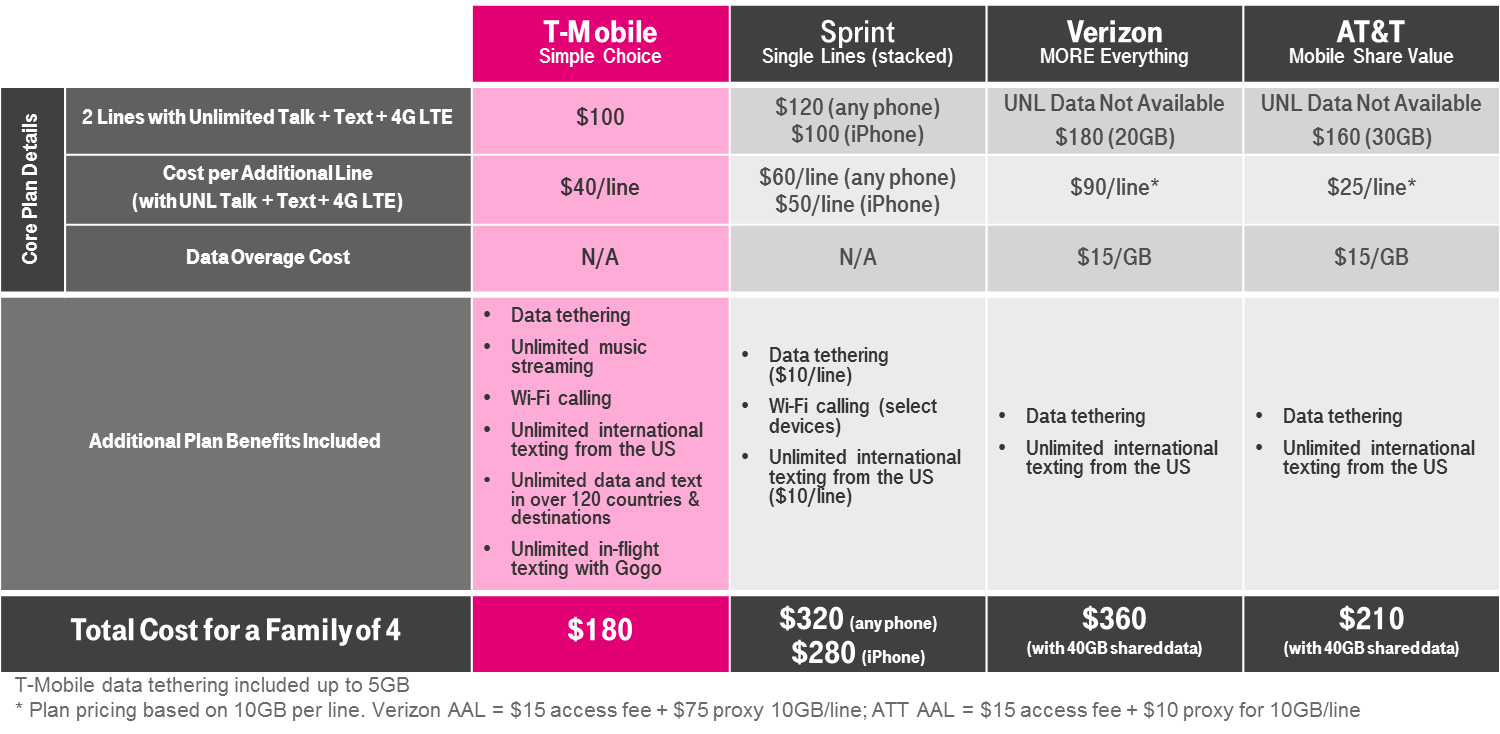
This is the great mythological debate of the 2010s. In the old world, adding a line was expensive, but the shared minute pool was so large that it made sense for a family of five to pool resources. That logic was shattered when prepaid carriers like Cricket and MetroPCS began offering individual lines with 5GB of data for $25 a month, with no shared overhead. However, in 2024, the postpaid trench warfare has flipped the script. The major carriers now employ a “buy more, save more” strategy. For example, Verizon’s current “myPlan” structure offers a discount per line when you have 4 or 5 lines, making the per-line cost drop from $70 to $45 for the same unlimited features. In raw arithmetic, a family of four on one shared plan will almost always be $30 to $60 cheaper per month than four individual plans. But the modern caveat is the “perk” system. Carriers now bundle streaming services (Netflix, Max, Disney+) into the family plan. If you don’t use those perks, the plan is wasteful. The wisdom here is not about the raw cost but the utilization. A modern family plan is a discount coupon book; you only save if you use the coupons. The old plan was a silo of unavoidable costs; the new plan is a menu of optional privileges that tempt you into paying more than you should.

3. “My kids are driving me crazy with data usage. Should I do what my parents did and just cut them off?”
Ah, the eternal cycle of parental punishment. In 1996, cutting off a teenager’s cell phone meant they couldn’t call their friends from the mall. It was a meaningful, albeit temporary, social exile. In 2025, cutting off a teenager’s cellular data is a futile gesture, because they will simply connect to the local Starbucks Wi-Fi or use the school’s network. The old punitive logic is a relic because the internet is now the primary infrastructure of social life, homework, and even dating. However, modern carriers have given parents a far more sophisticated “spanking” tool: the parental control app. You don’t have to cut off the line; you can instantly throttle the data to zero, but still allow calls and texts to emergency numbers and family members. You can schedule "bedtime" blocks where the phone only connects to home Wi-Fi, or block specific apps like TikTok or Instagram during school hours. The modern version of the old school “you’re grounded from your phone” is actually “you’re grounded from the internet, but I can still reach you.” The principle remains—removing the luxury to teach responsibility—but the implementation has evolved from a blunt sledgehammer of disconnect to a surgical scalpel of digital boundary-setting. The nostalgia for the old ultimatum is strong, but the modern parent has more power, not less, to shape their child’s digital nutrition.
Looking ahead twenty years, the concept of a family plan might dissolve entirely into the fabric of ubiquitous, ambient connectivity. The idea of a “plan” that you pay for, with monthly limits and buckets, will seem as archaic as a telegraph. Futurists predict a shift to “connectivity as a utility,” where the family simply has a home network that extends seamlessly to the car, the office, and the sidewalk. Your phone will not be a singular device but a pair of glasses, a neural wristband, or even an embedded earpiece. The family plan will be a single neural subscription that permits a certain amount of cognitive bandwidth—how much data your brain can absorb without excessive ad injection. The negotiation between parents and children won’t be about gigabytes but about digital serenity—how much silence and offline time is guaranteed in the plan. We might see “family sleep modes” where the entire network degrades to voice-only after 10 PM, a high-tech return to the old night-minute rituals.
In twenty years, the bill will be a one-line item: “Family Connectivity Bundle, Level 5,” and the arguments will shift to who gets the premium “thought-to-text” translation speeds. The nostalgia we feel today for the minute-bucket will be replaced by a longing for the days when we could physically hold a phone, when a call was a deliberate act, and when the data was a gift we rationed, not a torrent we took for granted. The human necessity behind the family plan has never been about the tech; it’s about the negotiation, the sharing, and the irritation that comes from loving people who use more than their fair share. As long as families exist, the plan will be a metaphor for our need to balance independence with collective security—a dance between the one and the many, played out on a glowing screen in our pockets.