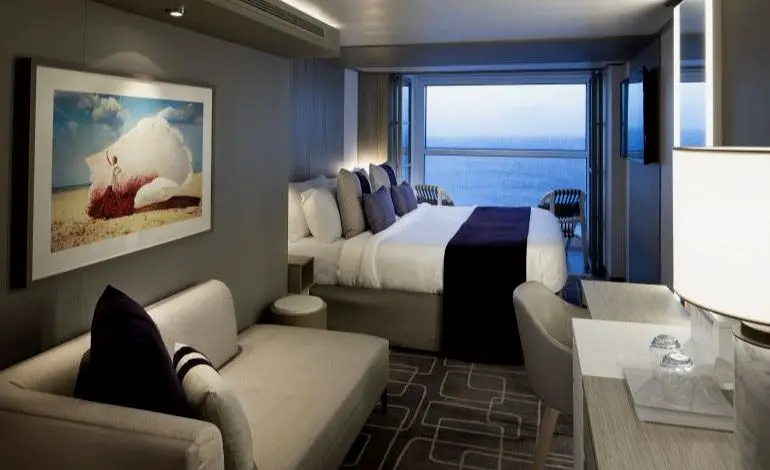
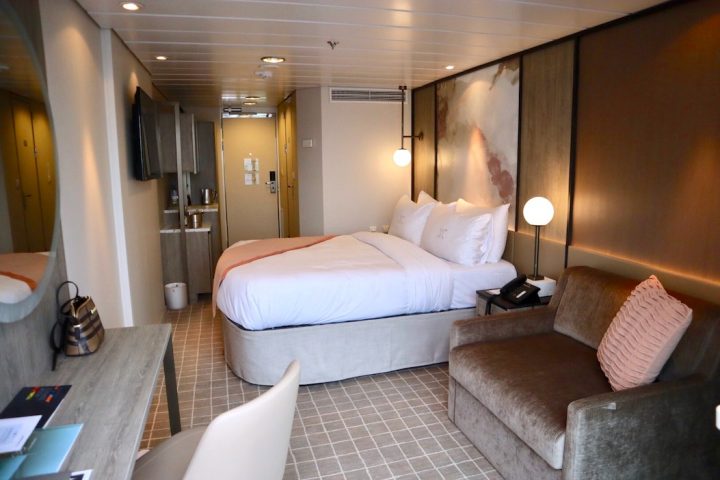
Celebrity Aqua Class Vs Concierge

There is a quiet, unspoken hierarchy that exists the moment you step onto a Celebrity Cruises vessel. It’s not written in the glossy brochure, nor is it announced over the ship’s PA system, but you feel it in the weight of the keycard in your pocket. For the uninitiated, the choice between AquaClass and Concierge seems like a mere footnote in the booking process—a choice between a slightly better cabin and a bottle of cheap sparkling wine. But for the seasoned traveler, this decision is a psychological Rorschach test, revealing whether you prioritize sensory deprivation or social validation. This is the great modern maritime dilemma: do you want a cabin that cleanses your soul, or one that massages your ego?
Born from the cruise industry’s relentless need to segment the ocean into increasingly niche experiences, Celebrity’s tiered stateroom system evolved from the simple inside/outside dichotomy of the 90s. Concierge Class was introduced in the early 2000s as the "smart" upgrade—a stepping stone to suites, offering priority embarkation and canapés. AquaClass, however, emerged later, riding the wave of the global wellness boom, specifically integrating with the ship's opulent spa, Canyon Ranch. Today, these two categories represent a fundamental fork in the road for luxury travelers: one path leads to the serenity of a private thermal suite, the other to the flattering hum of a dedicated butler and a dedicated dinner seating. Understanding which path is yours is less about budget and more about your personal philosophy on what a vacation is actually for.
The Hidden Psychology of the Deck Plan
Let’s talk about the elephant in the stateroom—or rather, the lack of one. Concierge Class staterooms are often positioned on higher decks, strategically placed near the ship’s bustling hubs. This is not an accident. The proximity to the main dining room and the pool deck is a subconscious nudge toward sociability. You are paying for convenience, for the ability to slip into a party dress and be at the Martini Bar in ninety seconds. The psychological payoff here is control over your social environment. You aren't isolated; you are the connective tissue of the ship's social organism. Contrast this with AquaClass, which is almost universally located in a quiet, forward-facing pocket of the ship, often directly adjacent to the spa. This strategic isolation is designed to lower your heart rate. You are not meant to be in the fray; you are meant to observe it from a distance, wrapped in a plush robe. The cabin placement is a silent promise: here, you are allowed to ignore everyone else.
Must Read
The infamous Blu restaurant is where the psychological divergence becomes visceral. Concierge guests dine in the main cosmopolitan dining room—a cavernous, glittering space of perpetual motion. It’s a stage. You are a minor actor in a grand spectacle of clinking glasses and hovering service. In Blu, the AquaClass exclusive dining venue, the lighting is dimmer, the tables are closer to the windows, and the menu is a love letter to anti-inflammatory ingredients. The difference is not just caloric; it is theological. Concierge dining is a celebration of abundance and choice. AquaClass dining is a ritual of restraint. Eating at Blu feels like confessing to a priest who happens to be a nutritionist—a performance of virtue rather than indulgence. Psychologically, Concierge guests get energy from the crowd; AquaClass guests get energy from the absence of it.
There is also a dark, petty side to this comparison that any honest travel writer must acknowledge. The "priority" benefits of Concierge Class—the priority tendering, the priority embarkation—are often shared with AquaClass guests, yet the Concierge passenger pays a premium for the label. The canapés delivered to Concierge rooms are, historically, a sad parade of wilted celery and overly processed cheese spreads. Meanwhile, AquaClass guests receive a daily infusion of fresh fruit and bottled water, which feels less like a perk and more like a medical necessity. The dirty secret of the cruise industry is that the "class" system is often a game of smoke and mirrors. You are paying for a feeling of exclusivity. Concierge offers the feeling of being a VIP; AquaClass offers the feeling of being a patient at a very expensive, floating wellness clinic. One feeds the ego; the other feeds the nervous system.
Strategic Scenarios: Which Passport to Your Peace?
Let’s inject some brutal practicality into this philosophical debate. Imagine you are a high-performing executive, exhausted from a year of Zoom calls and airport lounges. Your nervous system is frayed, your sleep architecture is shattered. Choosing AquaClass is non-negotiable. The Persian Garden—the thermal suite with its heated ceramic loungers and aromatherapy steam rooms—is not a luxury; it is a medical device. The unlimited access (which Concierge guests must pay extra for, to the tune of hundreds of dollars) becomes your daily sanctuary. The shower in your cabin, equipped with multi-jet rain fixtures and mood lighting, is designed to mimic a hydrotherapy session. For this demographic, the lack of a butler is a feature, not a bug. The last thing a burnt-out executive wants is a stranger asking if they need a shrimp cocktail. They want silence, and AquaClass delivers it with the precision of a scalpel.

Conversely, consider the social butterfly—the retired couple, or the group of friends celebrating a milestone. For you, the cruise is a movable feast of conversation and recognition. The Concierge Class benefits become your secret weapons. The dedicated check-in line on embarkation day saves you 45 minutes of standing among the masses, which is 45 minutes you can spend getting a cocktail at the Sunset Bar. The expanded breakfast menu in the main dining room, served in a calm, dedicated section, allows you to plan your day’s gossip. The binoculus—sorry, the binoculars—and the umbrella in your room don't seem like gimmicks; they are tools for interaction. The daily canapés, while mediocre, provide a conversational icebreaker for your cabin steward. Concierge is about grease for the social wheels. It’s about feeling like you matter to the ship’s hierarchy, and for many, that feeling is the vacation.
But here is the actionable pivot: do not be seduced by the word "Suite" hidden within the Concierge description. It is a standard stateroom with a label. If you are comparing apples to apples, the physical square footage of an AquaClass and a Concierge cabin is nearly identical. Therefore, the decision comes down to where you spend your waking moments. If you are an excursion enthusiast who leaves the ship at dawn and returns at sunset, exhausted and happy, the spa benefits of AquaClass will go to waste. You will just be paying for a shower head. Conversely, if you are a ship-day devotee who relishes sea days, then the thermal suite is worth its weight in gold. My advice? Check the itinerary. A port-heavy Mediterranean cruise screams Concierge (you won't have time for the spa). A transatlantic crossing or an Alaskan scenic cruising itinerary screams AquaClass (you have days of open water to heal).
Finally, understand the stealth game of the upgrade. The difference in price between AquaClass and Concierge is often shockingly slim—sometimes a matter of $20 to $50 per person, per day. If that is the case, the choice becomes idiotic to ignore. Even if you don't use the spa daily, the private restaurant Blu is superior in almost every metric to the main dining room. The service is more attentive, the portions are reasonable, and the food is fresher. You are paying a marginal premium for a significantly better dining experience and a quieter location. Unless you specifically crave the hustle of the main dining room or need the extra "perks" to validate your booking, AquaClass is the objectively superior value proposition. Concierge is for those who want to be seen; AquaClass is for those who want to feel. On a ship of 2,000 souls, choose to feel.
The F.A.Q. of the Deep Blue
Can Concierge guests use the Spa's Persian Garden?
Technically, yes, but prepare your wallet. The Persian Garden is an exclusive amenity reserved for AquaClass guests and suite guests as part of their fare. For Concierge Class passengers, access is offered only through the purchase of a day pass or a week-long spa pass, which can range from $100 to $250 per person depending on the sailing length. This is a significant cost consideration. When you total up the cost of the daily spa pass for two people on a 7-night cruise, it often exceeds the price difference you paid for AquaClass in the first place. It is the cruise industry’s sneaky way of extracting maximum value from the "upsell" after you’ve already booked.
The psychological irritation of this is intense. You are already paying a premium for "concierge" service, yet you are treated as a second-class citizen regarding the thermal suites. The workaround is to gamble: sometimes, Celebrity offers spa passes at a discount on embarkation day or during port days when foot traffic is low. However, you can't rely on that. If the heated tile loungers are on your "must-have" list, then booking AquaClass outright eliminates the guesswork, the wristband fees, and the shame of having to ask the spa staff if you can "borrow" the space for an hour. The thermal suite is the soul of the AquaClass experience, and trying to access it as a Concierge guest is like ordering a steak at a sushi bar—you can do it, but you’re missing the point.
Is the food in Blu significantly better than the main dining room?
As someone who has eaten at both venues on consecutive nights, I can confirm: yes, by a significant margin. The main dining room on Celebrity ships (Cosmopolitan) is good, but it suffers from the constraints of mass catering. The menu is vast, the kitchen is overwhelmed, and dishes often arrive lukewarm or underseasoned to appeal to a median palate. Blu, however, operates on a smaller scale, serving only AquaClass guests. This allows the chefs to focus on technique and plating. The Chilean Sea Bass in Blu is flaky perfection, while the Lobster Bisque is rich without being heavy. The menu is heavily inspired by the Canyon Ranch wellness philosophy, meaning you see more quinoa, more sustainable fish, and fewer heavy cream reductions.
But the deeper benefit is the ritual. Blu does not take reservations for breakfast; it operates on a "come when you want" basis, which means you are never rushed. The waitstaff remember your name and your coffee order by day two. This is hospitality with a memory. In the main dining room, you are a table number. In Blu, you are a returning guest. The reduction in ambient noise is also a factor—the room is smaller, so the clatter of trolleys is minimized. The food is not just "better"; the experience makes the food taste better. The psychological boost of knowing you have a dedicated, intimate venue waiting for you, away from the 1,000-person dining rush, transforms the dinner hour from a logistical hurdle into a nightly retreat.
Do AquaClass cabins have butlers?
This is the most common misconception. Neither AquaClass nor Concierge Class includes a dedicated butler. That privilege is reserved for guests in the "Retreat" (Celebrity Suites, Royal Suites, and above). What AquaClass and Concierge offer is a cabin attendant who is trained to a slightly higher standard. In Concierge, they might offer to unpack your luggage or bring extra hangers. In AquaClass, they manage your in-room dining menu and ensure your mini-fridge is stocked with Vitamin Water. However, this is a glorified stewarding role, not a butler role. You cannot request a butler to draw a bath or press your formal wear; those tasks would be directed to the room service team or laundry staff.
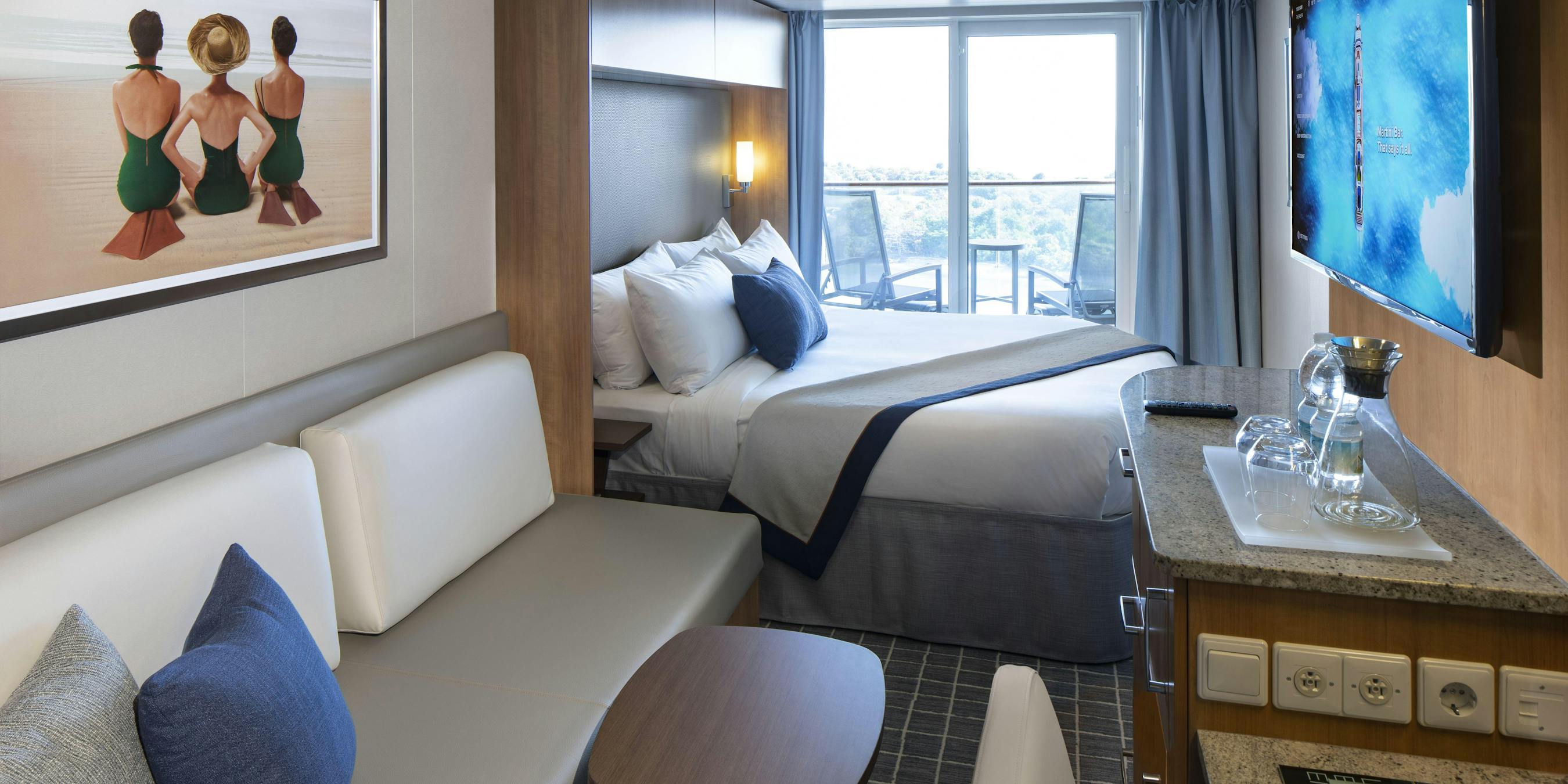
Understanding this distinction is crucial for managing expectations. The lack of a butler is often the reason why suite loyalists look down upon AquaClass and Concierge. If you are used to a butler who anticipates your thoughts, neither of these classes will satisfy you. However, the modern traveler often mistakes a butler for "interference." A butler knocks; a steward hovers. For many, the absence of a butler is liberating—it means less small talk, fewer tips, and more autonomy. If you want to leave your "Do Not Disturb" light on for 20 hours, nobody will judge you. The takeaway: don't buy these classes expecting a Jeeves. Buy them for the physical amenities, not the servile theatrics.
Which class offers better embarkation and tendering?
Here is where the waters muddy. Both AquaClass and Concierge guests receive "Priority" embarkation, which means you bypass the main security queue and board the ship in the first wave of passengers. This is a high-value perk on a sunny day in Miami, where the queue can snake for hours. For tendering (when the ship anchors and you take a small boat to shore), both classes also receive priority group numbers. However, suite guests always trump both. The dirty secret is that AquaClass and Concierge are often lumped into the same "VIP" boarding group. So, in practice, the embarkation experience is identical.
So why does Concierge market it so heavily? Because their marketing team knows that the feeling of priority is as valuable as the speed. Concierge guests get a slightly more formal handoff—a dedicated check-in desk with a staff member who says "Welcome, Mr. Smith" rather than a generic scanning kiosk. AquaClass guests just get waved through with a spa-themed tote bag. If you are a pragmatist, you will realize you saved the same 20 minutes. If you are a status-seeker, the Concierge lounge (a dedicated seating area pre-cruise) feels more exclusive. My practical insight? On port days, ignore the tender tickets and take the ship's shore excursion. Excurision groups get first dibs on tenders, rendering both class perks moot. Angling for priority tendering is only useful if you're doing independent exploration, and even then, the time saved is often 10–15 minutes.
Is the premium price worth it for a 7-night cruise?
Mathematically, the answer is a resounding "it depends on your vices." If you are a drinker, an AquaClass premium pays for itself if you utilize the Persian Garden daily. The daily cost of a spa pass is roughly $30; over seven days, that’s $210. If the price difference between the two categories is less than $210, you are literally profiting by choosing AquaClass. The same logic applies to dining. A specialty dining package for one night at a premium venue costs around $50; if Blu saves you from paying that even two nights, you’ve broken even. Concierge Class, however, offers no comparable financial math. The canapés, the binoculars, and the welcome sparkling wine are worth maybe $40 total. You are paying for intangibles—the prestige of the "Concierge" label on your boarding pass.
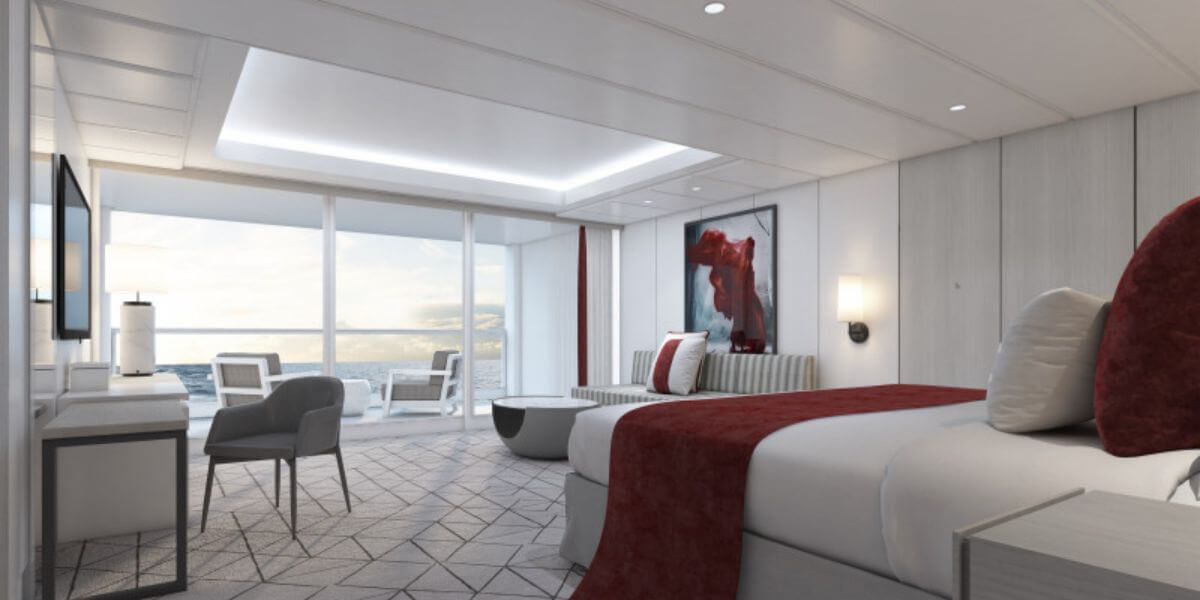
The emotional ROI is different. Staring out at the sea from a heated ceramic lounger at 6 AM during a rough crossing is a moment of sublime solitude. That moment cannot be quantified. Conversely, walking into the main dining room on "Evening Chic" night and being seated promptly because you are Concierge is a small lord-of-the-manor thrill. For a milestone anniversary or a honeymoon, splurging on AquaClass provides a daily rhythm of wellness that enhances the romance of the journey. For a multigenerational family trip, Concierge’s proximity to the main thoroughfares is more functional. Ultimately, the price is worth it if you can articulate why you are paying it. If the answer is "I just want the better room," stick with a standard veranda and spend the savings on shore excursions. If the answer is "I want a deconstructed relationship with my body and time," AquaClass wins. If the answer is "I want to feel like a cruise director's favorite," Concierge will give you that fleeting high.
The choice between AquaClass and Concierge is ultimately a mirror held up to your own energy. In a digital world where we are constantly overstimulated, the AquaClass pursuit of sensory deprivation feels radical, almost rebellious. It whispers that true luxury is the ability to switch off the noise entirely. Yet, there is a deep, tribal human need in the Concierge philosophy: the need for recognition, for the comfort of being sorted into the "right" line. We are social animals who crave hierarchy, even on vacation. Choosing Concierge is an admission that you aren't fully ready to abandon the thrill of social belonging, even when there is no one to impress.
On our off days, we all want to be the person who wakes up in AquaClass, wrapping themselves in a robe, shuffling barefoot to the Persian Garden. That version of us is calm, healthy, and annoyingly content. But the other version, the one who lingers over martinis in the Sky Lounge, who grins when the Concierge hostess remembers their name, is equally human. Neither is superior; they are just different seasons of the soul. The best vacation is not about picking the "best" class, but about being honest about where your mental state is at the moment of booking. Are you running on empty? Choose Aqua. Are you running on ego? Choose Concierge.
And here’s the final, liberating insight: the ocean doesn't care. The waves crash the same against the hull whether you are eating sea bass in Blu or filet mignon in Cosmopolitan. The sunsets are witnessed equally from any public deck. The cabin categories are merely scaffolding for the experience, not the experience itself. So, make your choice, hold your keycard tight, and then let the sea do its ancient, leveling work. Because whether your stateroom is number 1118 (Aqua) or 9132 (Concierge), the profound, humbling magic of the open water—the great equalizer—remains accessible to all who step onto the balcony.