Can I Buy A Car With 520 Credit Score

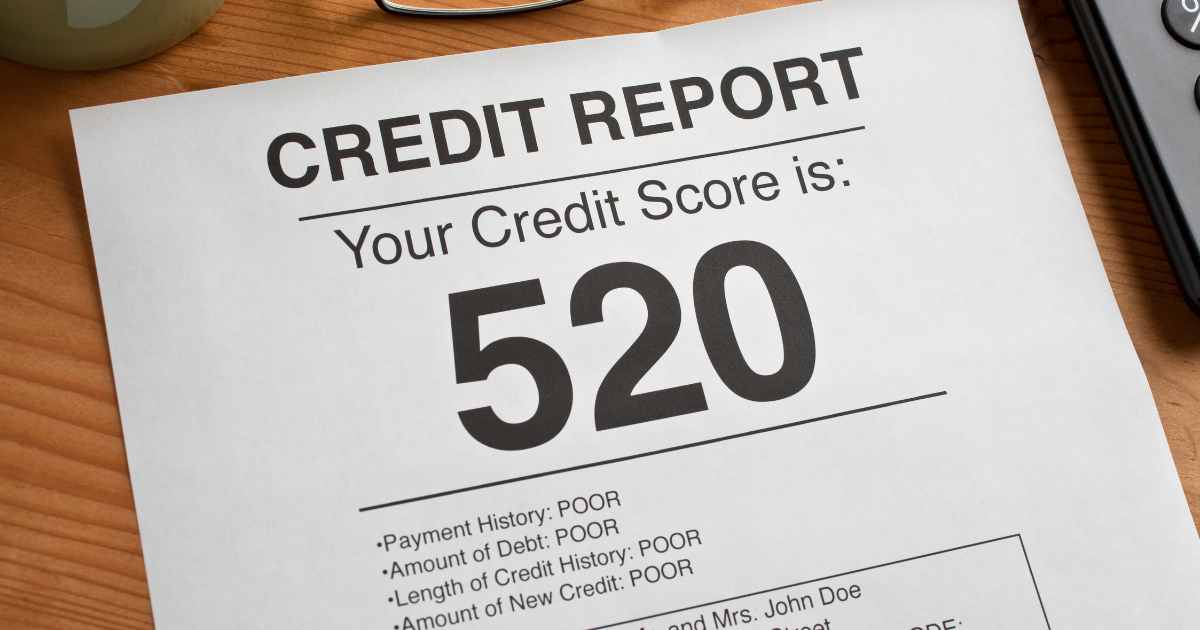
The check-engine light blinks like a judgmental eye as you sit in the dealership’s finance office, the smell of synthetic leather and desperation hanging in the air. You’ve seen the number—520—staring back at you from a free credit monitoring app. It feels like a scarlet letter, a modern-day mark of Cain that brands you as financially unworthy. But here’s the plot twist: in the world of auto lending, a 520 credit score isn’t a death sentence; it’s merely a negotiation starting point. The history of subprime lending is as American as apple pie and predatory interest rates. Since the 1990s, when securitization allowed lenders to bundle risky loans into bonds, the industry discovered a golden rule: desperation is a highly liquidity-friendly emotion. The real question isn’t if you can buy a car, but how much of your future paycheck you’re willing to mortgage for the privilege of turning a key in an ignition.
Today, the landscape is a paradox. On one hand, you have Buy Here-Pay Here lots with neon signs that promise "No Credit, No Problem!"—a phrase that whispers but you’ll pay us in blood. On the other, you have a digital ecosystem of fintech lenders who use AI to underwrite based on your Venmo history and whether you’ve paid your Netflix bill on time. This bifurcation means that a 520 score today isn't the universal barrier it was in 2008. It’s a spectrum of opportunity, albeit one that leans heavily toward the predatory end. Understanding this nuance is crucial because your credit score is not a reflection of your character; it’s a reflection of your documented history with debt. And history, as they say, is written by the creditors.
The Subprime Psychology: Why You're the Mouse in the Maze
Let’s get dark for a second. Lenders aren’t in the business of selling cars; they’re in the business of selling access to mobility, and they know that mobility is non-negotiable for most Americans. In cities with crumbling public transit, a car isn't a luxury—it's a prosthetic limb for survival. This dependence creates a beautiful (for them) captive market. When you walk onto the lot with a 520 score, the finance manager doesn't see a person; they see a risk-adjusted profit margin. The psychological trick is called "anchoring"—they quote you a monthly payment that makes you gasp, say, $650, and then "work their magic" to get it down to $499. You feel relieved, even grateful, though you’ve just agreed to pay a 21% APR on a four-year-old Nissan Versa with a dented bumper.
Culturally, we’ve fetishized the prime borrower. Think of the financial guru influencers—they talk about 800 scores like they’re Olympic medals. This creates a toxic shame spiral for those below 600. But here’s a fun fact: some of the wealthiest people in history have had terrible credit. Abraham Lincoln was famously broke and debt-ridden for decades. Mark Twain declared bankruptcy twice. The difference? They didn’t care about a FICO score. They cared about assets. The modern consumer, however, is trapped by the algorithmic gatekeepers, forced to prove their trustworthiness through a three-digit number generated by a secretive formula that even the creators claim to only partially understand. It’s a clerical absurdity dressed up as meritocracy.
Furthermore, there’s a phenomenon called "credit invisibility," but a 520 is the opposite—you're hyper-visible to the wrong lenders. You attract sharks, not fish. These lenders use "risk-based pricing," a euphemism for charging you more because they perceive you as likely to default. Ironically, the higher the interest rate they charge you, the more likely you are to default, creating a self-fulfilling prophecy. It’s a vicious cycle wrapped in a predatory loan, tied with a bow of late fees. You aren't buying a car; you’re buying a lesson in behavioral economics that you’ll pay for over the next 72 months.
Navigating the Minotaur’s Maze: Your Actionable Path to Four Wheels
Let’s assume you’re reading this with a 520 score and a burning desire to escape the bus stop. Your strategy must be surgical. First, you need to stop thinking like a consumer and start thinking like a hedge fund manager. You are not looking for a "good deal"; you are looking for the least catastrophic loss of capital. Begin by looking at the total cost of ownership, not the monthly payment. The worst mistake is falling in love with a $35,000 truck when your score dictates you’ll be paying $1,000/month for 84 months. Instead, target a used car in the $8,000–$12,000 range. A reliable Honda Civic or Toyota Corolla with 100,000 miles is a far better asset than a flashy Charger with 60,000 miles, because the latter will be repossessed when the engine blows.

Here’s the case study: Meet "Sarah," a social worker with a 520 score and a $45,000 salary. She walked into a national franchise dealership and was quoted a 24% APR on a used Mazda. Instead of crying, she pivoted. She went to her local credit union—a step most people ignore. Even with a 520, credit unions are more lenient because they look at your savings history, not just your score. She opened a secured credit card with $500, deposited $1,000 into a share account, and asked for a loan against her own savings. She got a 9% APR and walked out with the same Mazda for $300 less per month. The key is relationship banking; you are not a number to them, but a member.
Another scenario: "Marcus," a gig-economy driver, used the "narrative letter" method. He wrote a two-page explanation of his credit history—a healthcare bankruptcy, unexpected unemployment, and his subsequent recovery. Under the Equal Credit Opportunity Act, creditors are required to consider your explanation of extenuating circumstances. It’s not a loophole; it’s a lifeline. He submitted this letter with his application to a subprime lender, along with 6 months of pay stubs and a large down payment (30%). The lender reduced his APR from 23% to 18% because he demonstrated "will to pay." The takeaway? Data is cold, but narratives can warm the engine of underwriting.
Finally, consider the "buy-sell-hold" strategy. Don't buy the car your ego wants; buy the car your credit score demands. Then, set a goal: refinance in 12 months. Aggressively make double payments on the principal for a year. This boosts your score by reducing your debt-to-income ratio and building payment history. After 12 months, your score may jump to 620. Then, refinance that same car at a local bank. You’ll lower the APR, save thousands, and feel like a financial ninja. The goal isn’t to keep the car; the goal is to usurp the lender’s power over you.
The Vault of Knowledge: Five Burnin Questions, Answered
1. Will a 520 credit score guarantee my auto loan application gets denied?
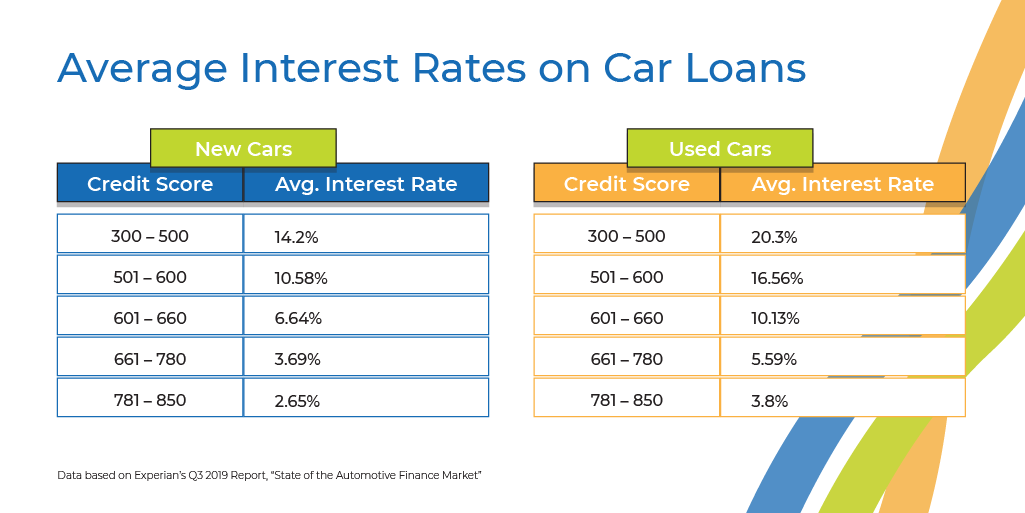
Absolutely not. While 520 is firmly in the "subprime" category (ranging from 300-580), it’s precisely in the sweet spot for lenders who specialize in "deep subprime" lending. These institutions, often called "buy here, pay here" (BHPH) dealerships, rely on volume and repossession rates to profit. They will approve you, but the terms will be brutal. Think of it this way: you’ll walk in with a 520, and they’ll approve you for a car with 0% down, but you’ll pay an APR that would make a loan shark blush—typically between 18% and 29%. The denial only comes from prime lenders like Chase or Bank of America. For every denial, there are two specialty lenders eager to say "yes" because they see your score as a guaranteed 40% profit margin over the loan’s life.
However, the approval often comes with strings attached: mandatory GPS tracking installed in the car (which allows them to remotely disable the vehicle if you're late), a starter-interrupt device, or a requirement that you buy gap insurance and extended warranties—all padded with hefty fees. Your best bet is to avoid getting pre-approved by these sharks and instead focus on financing through a credit union if possible. But if you have to go subprime, know that approval is the norm, not the exception. The trick is to haggle on the price of the car, not just the APR, to minimize the damage.
2. What is a realistic interest rate I can expect with a 520 score?
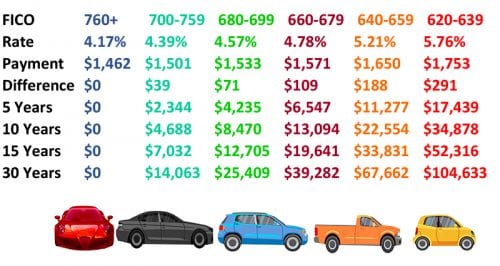
Brace yourself, but you’re looking at a range typically between 15% and 29% APR. The exact number depends on your income, down payment, and the age of the car. If you’re financing a new car, expect the higher end because new cars depreciate rapidly, making them riskier collateral. For a used car, the rate might be slightly lower, but lenders often compensate by adding "dealer documentation fees" of $900 or more. Let’s paint a picture: on a $15,000 loan at 24% APR for 60 months, you’ll pay back a total of approximately $26,000. That’s $11,000 in pure interest. That’s not a car payment; that’s a second mortgage on a shack.
To combat this, consider the "equity injection" method. Put down a massive down payment—$5,000 or 30% of the car’s price. This lowers the loan amount to $10,000. At 18% APR for 48 months, your payment drops to roughly $290 monthly. The lender sees your cash down as a commitment, reducing their risk. Your goal is to avoid being the "underwater" borrower from day one. If you can't afford a significant down payment to bring the APR down, you cannot afford the car. It’s better to save for six months than to sign a contract that makes you a debt slave for five years.
3. Is it better to buy a cheap car with cash than to finance one with bad credit?
From a purely financial standpoint, a $3,000 beater bought in cash is always superior to a $15,000 financed car at 22% APR. The math is undeniable. However, this ignores the reliability factor. A $3,000 car often comes with hidden repairs—a new transmission ($2,500), a broken AC ($1,200), a new set of tires ($500). If you don't have a spare $5,000 for repairs, a cheap car can bankrupt you faster than a high APR. There's a concept called "Maintenance Inversion" where the poorer you are, the more you pay per mile driven. Data from the Bureau of Labor Statistics shows that households earning under $30,000 spend a significantly higher percentage of their income on vehicle maintenance.

So, the answer is nuanced. If you have the mechanical skills or a trustworthy relative to inspect a used car, cash is king. If not, financing a $10,000 car with a 50% down payment, even at a high APR, might be more pragmatic because you get a warranty and predictable payments. The classic "clunker" strategy works only if you have a cash buffer of $2,000 for immediate repairs. The goal is to buy time to repair your credit while maintaining reliable transportation, not to win a prize for the cheapest purchase. A broken-down car on the side of the highway costs you lost wages, which is the most expensive fee of all.
4. Can I put money down to lower the risk for the lender and get a better rate?
Yes, and you should. In the subprime world, the down payment is the single most powerful tool you have. It acts as a form of "first-loss protection" for the lender. If you default, they can repossess the car and sell it at auction. If you put down $1,000, they are already ahead because the loan amount is reduced, and their loss exposure shrinks. Lenders typically like to see at least 15-20% down, but with a 520, you should aim for 30% or more to unlock a slightly lower APR. The difference between 10% down and 30% down can be the difference between a 24% APR and a 16% APR.
Additionally, a large down payment creates immediate equity. Let's say you buy a car for $10,000 and put down $4,000. Your loan is $6,000. Two years later, the car is worth $7,000. You have $1,000 in positive equity. This equity becomes your safety net; you can sell the car if you lose your job and not owe the bank. Without that down payment, you'd be $2,000 underwater, making it impossible to escape the loan without a huge cash crunch. Treat the down payment as your ransom payment to the creditor—it buys you freedom and leverage. Always negotiate the down payment as a percentage of the negotiated price, not the sticker price.
5. How quickly can I improve my 520 score to get a standard loan?
With aggressive strategy, you can see a significant jump in 6 to 12 months. The fastest way to improve a 520 is to focus on payment history (35% of your score) and credit utilization (30%). Paying down existing credit card balances below 30% of their limits will cause a rapid increase, often within a few billing cycles. Also, dispute any errors on your credit report; a single incorrect late payment can drag you down. However, buying a car on a subprime loan and making on-time payments is the best "credit builder" loan you can get. After 9 months of perfect payments, your score can leap to 600-620, which is prime for many standard banks.

But here’s the irony: the subprime loan itself carries the highest fees, so while you’re building credit, you’re paying heavily for the privilege. To mitigate this, set up autopay from a bank account to never miss a payment. Consider using a service like Credit Karma to monitor changes monthly. Negotiate with a local credit union before you need the car—ask if they offer a "credit builder" loan that you can take out for $500 and pay off in a year. The key is consistency. Don't close old accounts; length of history matters. In 14 months, you can be looking at a 640 score and refinancing that same car at 8% APR, saving yourself $200 a month. The climb is steep, but the reward is financial mobility, not just vehicular.
In the end, we are all just trying to get to work, to the grocery store, to our aging parents' houses. The car is a vessel for life’s obligations, and the credit score is just the toll booth operator. There’s something deeply human about this struggle—the desire to move forward, literally and metaphorically, is hardwired into our DNA. We’ve turned credit into a moral judgment, but the truth is, a 520 score often reflects a life interrupted, not a life wasted. Building yourself back up after financial trauma requires the same grit as rebuilding a decrepit engine: you fix the spark plugs, replace the timing belt, and eventually, you turn the key and it roars to life.
The 520 score is not an identity; it’s a snapshot of a former self. The loneliness of a bad credit score can feel isolating, as if you’re the only one not in the fast lane. But statistics show that over 60 million Americans have a credit score under 600. That’s a massive, silent tribe of people being told "no" by automated systems, yet still finding alternative routes. Buying a car with bad credit is an act of defiance—a refusal to surrender your mobility to an algorithmic formula. It’s messy, expensive, and often unfair, but it’s also your story.
And that’s the secret to surviving it. You must wade into the swamp of subprime lending with your eyes wide open, treating every dollar of interest as tuition for financial literacy. The pain of a 24% APR will teach you more about compound interest than any personal finance podcast. So, buy the car. Drive it off the lot. Then, spend the next year working obsessively on your credit, knowing that this car is not your destination—it’s just the vehicle that will carry you toward the moment when a lender finally looks at your score and says, "Welcome back."