Best Time To Aerate Lawn In Chicago
There’s a particular brand of quiet desperation that settles over a Chicago lawn by late August. It’s not the dramatic, cinematic decay of autumn; it’s the slow, suffocating compaction of a summer that was too hot, too humid, and far too full of backyard barbecues. The grass looks less like a living carpet and more like a tired, threadbare rug, beaten flat by the relentless foot traffic of kids, dogs, and the ambitious corn-hole league you started during the pandemic. This is the moment before the decision, the existential question that every Windy City homeowner must face: when exactly do I aerate this stubborn patch of earth? The answer, as with most things in Chicago, is a delicate dance between the calendar, the weather gods, and a grudging respect for the soil that sits atop what was once a swampy, portage-laden outpost of the fur trade.
Aeration, the process of pulling literal plugs of soil from your lawn to let air, water, and nutrients reach the roots, isn't just a chore; it’s a primal act of liberation. Your lawn, historically, has been a victim of its own geography. Chicago sits on a bed of dense, glacially deposited clay that, when dried, has the consistency of ancient brick. When wet, it's a sticky mire that clings to your boots like a guilty conscience. For the best aeration, you need the soil to be in a Goldilocks state—slightly moist, yielding, but not mud. This narrow window typically falls in the early fall, specifically from late September to mid-October. This is the "Chicago Sweet Spot," a time when the intense summer heat has broken, the overnight lows reach the crisp 50s, and the grass is entering its second growth spurt of the year, preparing for winter dormancy. It’s a race against the first hard frost, but it’s a race you can win.
The Science of the Plugs: Why Timing Feels Like Alchemy
To understand why the fall is non-negotiable, you must first understand the psychology of a grass plant. Unlike humans, who regenerate best during sleep, cool-season grasses (the dominant species in Chicago, like Kentucky Bluegrass and Fescue) are driven by temperature. They have two major growth surges: one in the spring (April-May) and one in the fall (September-October). Aerating in the spring seems logical, but it's a rookie mistake. The spring flush comes with a tidal wave of weed seeds (crabgrass, dandelions) that are just waking up. When you pull plugs in April, you are effectively opening up a hundred little apartment units for weeds to move into rent-free. The fall, however, is a war of attrition against the weeds. The soil temperature is cooling, the weed seeds are less viable, and the grass is throwing its last burst of energy into root development. Aeration in the fall gives the roots time to fill those holes before the ground freezes, creating a denser, healthier turf that chokes out invaders next spring.
Must Read
There’s also a deeply psychological component to this timing that mirrors the city’s own rhythm. Chicagoans are experts at enduring. We survive the polar vortexes, the biblical snowfalls, and the grueling humidity. Aerating in the fall is an act of extreme optimism—a belief that next summer will be better. The holes you pull are essentially a promise to the future. The darker fun fact here is that if you aerate too early, say in late August, you run the risk of desiccating the roots. The soil is still hot, and those exposed cores will dry out like ancient pottery shards in the Sahara wind coming off the lake. The plug you pull must have a chance to decompose back into the soil. A mid-September plug will break down while the microbes are still active. An early September plug will sit there like a petrified turd, mocking your ambition until next May.
Furthermore, the cultural impact of aeration in Chicago is tied to the "Great Lawn Divide." There are those who swear by the services of a big-box lawn care company, which often aerate too early to maximize their route efficiency, typically starting right after Labor Day. This is a tragedy of the commons. They are operating on corporate logistics, not biology. But the true Chicago lawn obsessive—the one who wakes up at dawn to check the soil moisture in the 19th Ward—knows that the best time is dictated by the soil thermometer, not the football calendar. It’s a silent rebellion against the industrialized approach to nature, a reclamation of the small, specific, intimate knowledge of your own turf. It’s the difference between listening to a lecture and listening to the ground.
The Strategic Playbook: Fall vs. Spring (And the "Deep Dish" Method)
Let’s get down to the brass tacks. For the average Chicagoan, the aeration window is October. But you need to be flexible. If we have an unseasonably warm September, you can push it to mid-October. If an early cold snap hits, you need to move it up. The rule of thumb is to aerate at least four weeks before the ground freezes solid. The soil temperature needs to be at least 55°F to wake up the roots, but the air temperature can be anywhere between 45°F and 70°F. In essence, you are looking for a week where the forecast shows a string of sunny, dry days (for the plugs to air out) but with crisp nights.
Case Study: The Rogers Park Rye. Imagine a lawn in Rogers Park, notorious for its high water table and clay soil. The owner aerates religiously in the spring. He gets a beautiful, lush carpet in June. But by August, it’s dust. Why? Because spring aeration doesn't solve the compaction problem; it just patches it. The roots don't go deep because they are too busy growing lateral shoots. In the fall, however, if this same owner aerates and immediately overseeds, the grass seeds fall into the holes, protected from birds and desiccation. The moisture from the early October rains seeps into the holes, encouraging the roots to plunge down 6, 8, even 10 inches. This deep root system then acts as a reservoir, sustaining the grass through the dry, stressful heat of the next July.
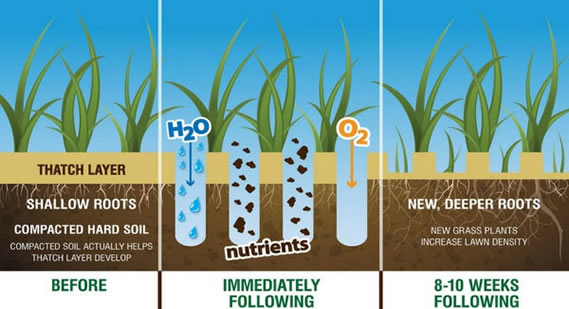
Here is the actionable takeaway: Don't just aerate. You must execute the "Deep Dish" method. That means you are going to core aerate (using a machine that pulls plugs 2-3 inches long), and you are going to immediately overseed (spread high-quality grass seed) and top-dress (spread a thin layer of compost). The compost fills the holes with rich, organic food, creating a perfect seedbed. This is a three-step ritual that takes 90 minutes in October and saves you six months of therapy in April. If you do this, your lawn will be the envy of Wicker Park and the talk of Lincoln Square. It’s the difference between a quick fix and a structural overhaul.
But what if you missed the fall window? Don't panic, but do feel a twinge of regret. Aerating in the late spring (late April) is a salvage operation. You can do it, but you must be prepared to battle the crabgrass that will sprout in those holes. You will need to use a pre-emergent herbicide with aeration, which is counterintuitive because that herbicide also prevents the grass seed from germinating. So, if you aerate in the spring, you are essentially doing it for the soil structure alone, not for the seeding. That is why the fall is the circus of the lawn calendar; it’re the only season where the magic actually happens.
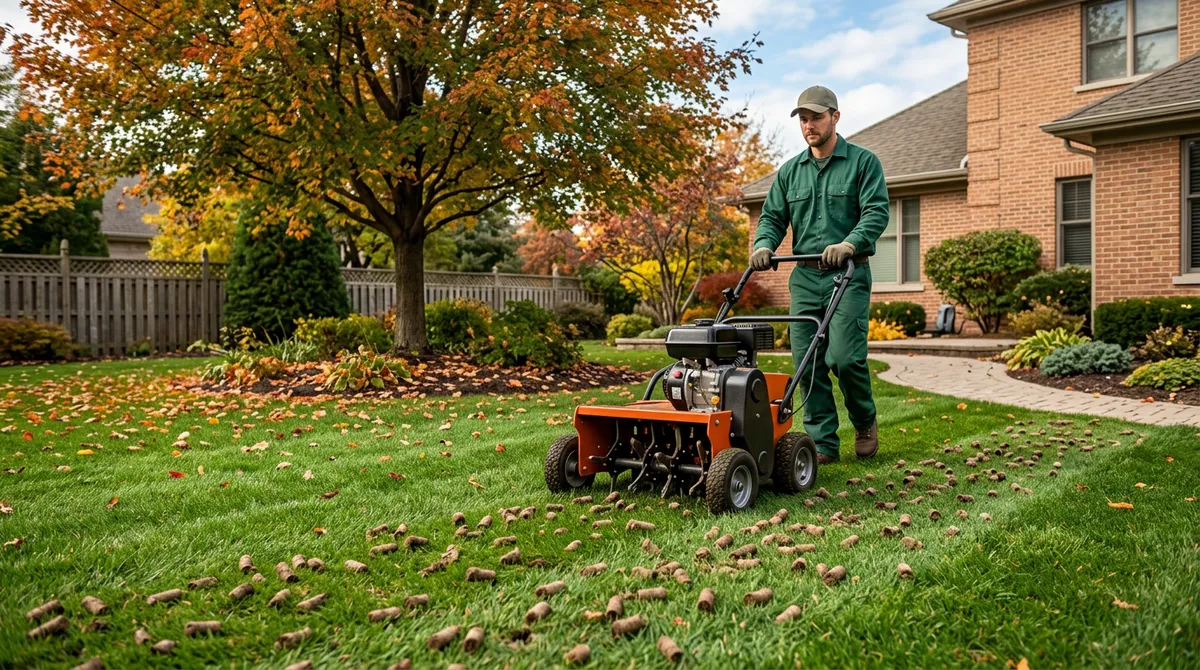
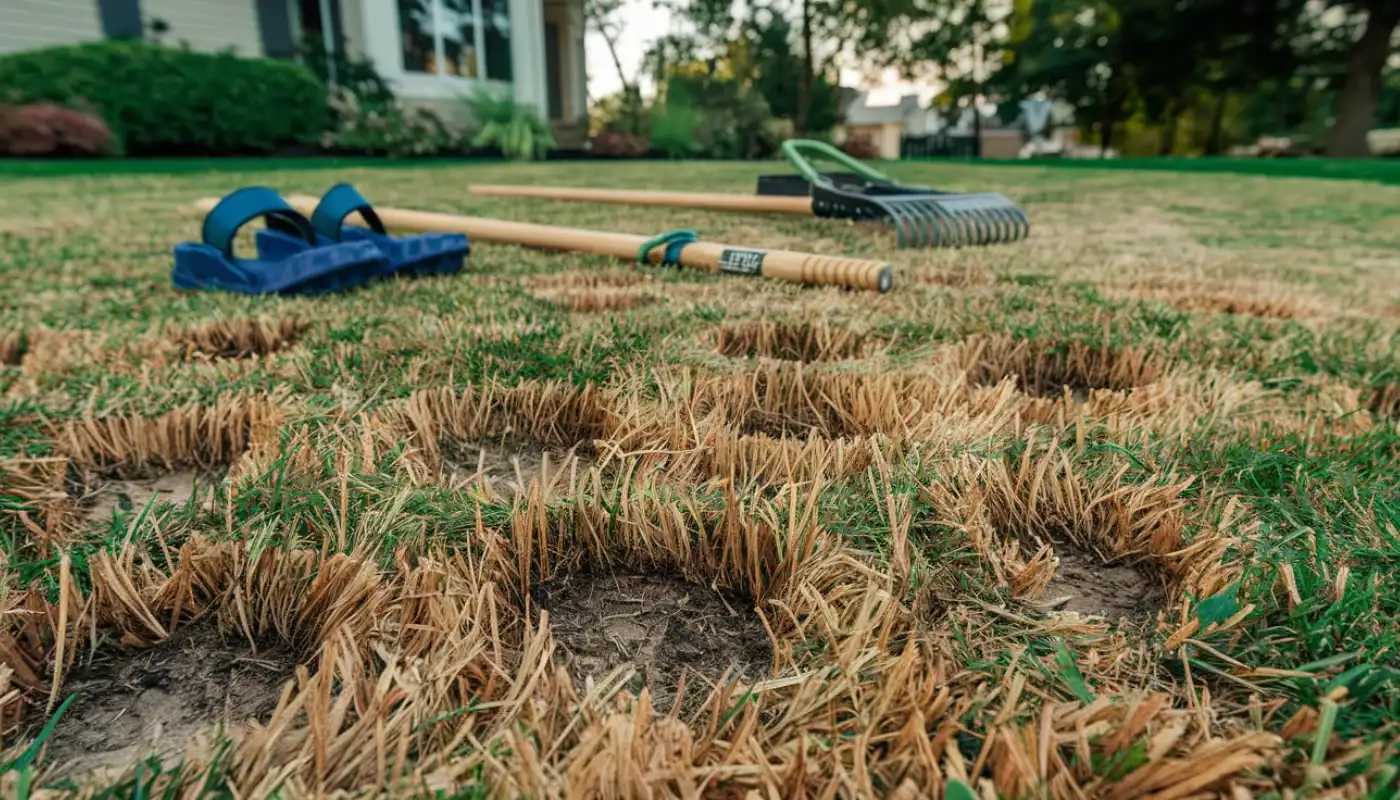
Finally, consider the condition of the core itself. If your soil is so compacted that you need a jackhammer to break it up, you should consider a liquid aeration treatment as a primer a week before you go mechanical. But for 99% of Chicago, a rented walk-behind aerator from your local hardware store is the workhorse. Do not use the spiked "aerator" shoes. Those are a myth; they just compact the soil further by pushing it down. You want the plug, the little cigar of soil. You want to see those "Martin Fools" lying on your turf—little brown deposits that look like goose droppings but are actually the sacrificial pieces of your yard, giving their lives so that the rest may breathe.
Chicago Aerating Decoder: The Five Questions Everyone Asks
FAQs: When exactly is the "too late" zone?
If you’re reading this while standing over a patch of frost-covered lawn in November, it’s too late to aerate. The machine won't penetrate the frozen top layer, and even if you manage to break through, the roots are dormant. They cannot absorb the air or recover from the shock. Aerating too late in the fall is akin to performing surgery on a patient in a coma; it does more damage than good. It leaves the soil exposed and vulnerable to heaving during the freeze-thaw cycles of January.

However, if you miss the October window, your smartest move is to pivot to a "Winterizer" fertilizer application in late November, just before the ground freezes. This fertilizer sits in the soil, ready to fuel the roots in early spring. Then, you need to wait for the third week of April, when the soil thaws completely, and the threat of a deep freeze is behind you. You can aerate then, but remember the weed caveat: You are doing it for the compaction relief, not for seeding. Mark your calendar for October 5th next year. It’s the most romantic day of the year for a Chicago lawn.
FAQs: Does the size of my yard change the timing?
Absolutely, but not in the way you think. The timing remains the same—the biology of the grass doesn't care about property lines. However, the logistics change. If you have a postage-stamp yard in the city, you can wait a little longer into October because you can do the aeration by hand with a manual core aerator in about thirty minutes. You can also be more precise about soil moisture. If you have a massive suburban lot in Naperville or Barrington, you need to be more strategic. You’ll need to rent a powered machine, which can take a full afternoon.
For larger yards, you must factor in the rental schedule. The week of Columbus Day is the peak rental time in the Chicago suburbs. If you wait until the 20th of October, you might find the hardware store is out of stock because they’ve already moved on to leaf blowers. My advice is to book your rental equipment a week in advance. Watch the long-term forecast: if you see rain predicted, wait for it to soak in, then let it dry for a day, and then hit the lawn. The perfect window for a big lawn is the first clear, dry weekend after a mild rainy spell. This ensures the soil is moist at the surface but not muddy at the core.
FAQs: Is aeration really necessary if I fertilize religiously?
Think of fertilization as the meal and aeration as the air you breathe while eating. You need both. Fertilizing a compacted lawn is like pouring a gourmet smoothie into a sealed bottle; the roots can't access it. The nitrogen, phosphorus, and potassium in your fertilizer cannot penetrate the thatch layer and the dense clay. They either run off into the sewers (which the Chicago River doesn't appreciate) or sit on the surface, burning the grass in the summer heat.

Furthermore, aeration breaks up the thatch—that layer of dead roots and stems that builds up between the soil and the grass blades. If that thatch becomes too thick (over half an inch), it acts as a roof, preventing water from reaching the roots and harboring pests and fungal diseases. Aeration physically fractures that roof, allowing your fertilizer to actually reach the soil where it can do its job. The synergy between the two is the secret to a lush, dark green lawn that makes your neighbors from Evanston jealous.
FAQs: How long before I see the benefits of the holes?
This is where patience is tested. Immediately after aeration, your lawn will look like a warzone. It will be covered in hundreds of small soil plugs. Do not rake them up! This is the "funky fun fact" of the process. Leave them. Most homeowners panic and clean them, but the plugs are like tiny time-release capsules. Over the next two weeks, the rain and your irrigation system will break them down, washing the soil back into the holes and spreading the thatch-degrading microbes. It’s nature’s self-cleaning oven.
Visually, you won't see the "wow" effect until the following spring. In late November, the lawn will look slightly scruffy, but that's okay. The magic happens in April when you notice that the grass is greening up faster than usual, filling in the bare patches you aerated over. The true test comes in July. While your neighbor's lawn is frying in the heat, yours will stay supple and green because the roots are drinking from a deep, oxygenated aquifer you created months ago. It’s the gift that keeps giving, silently working beneath the surface.
FAQs: Do I need a professional, or can I handle the rental?
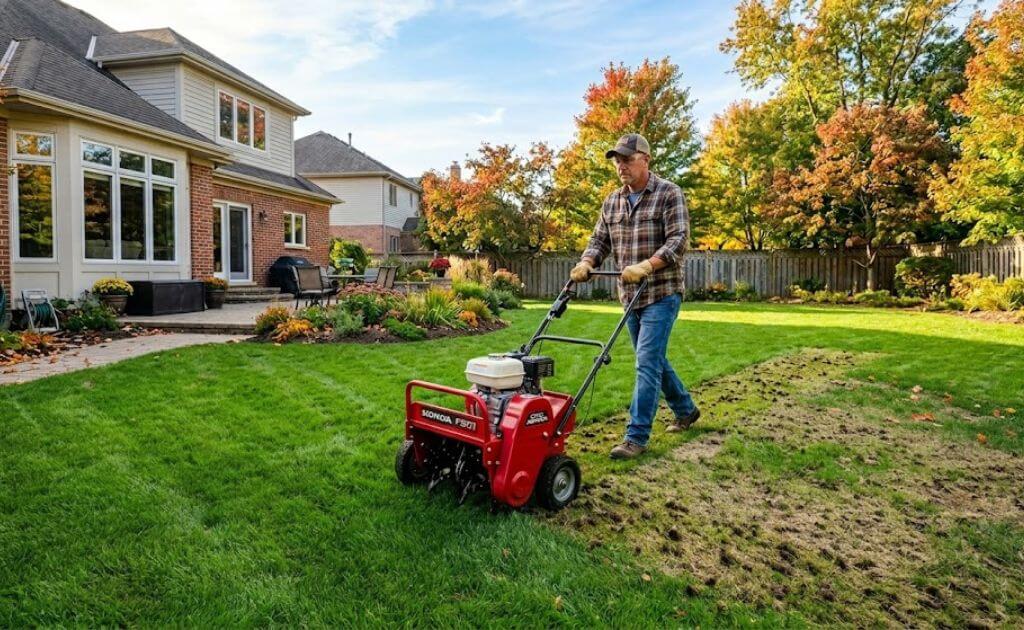
If you are physically fit and don't mind a machine that vibrates like a massage chair from hell, you can absolutely rent a core aerator. The learning curve is minimal; you just go back and forth in straight lines, overlapping slightly. The biggest mistake DIYers make is going too slow, which rips the turf, or too fast, which skips holes. You want a steady, consistent walking pace. Rent from a place that has the newer "plugger" machines with sharp, hollow tines—dull tines will just stamp holes, not pull cores.
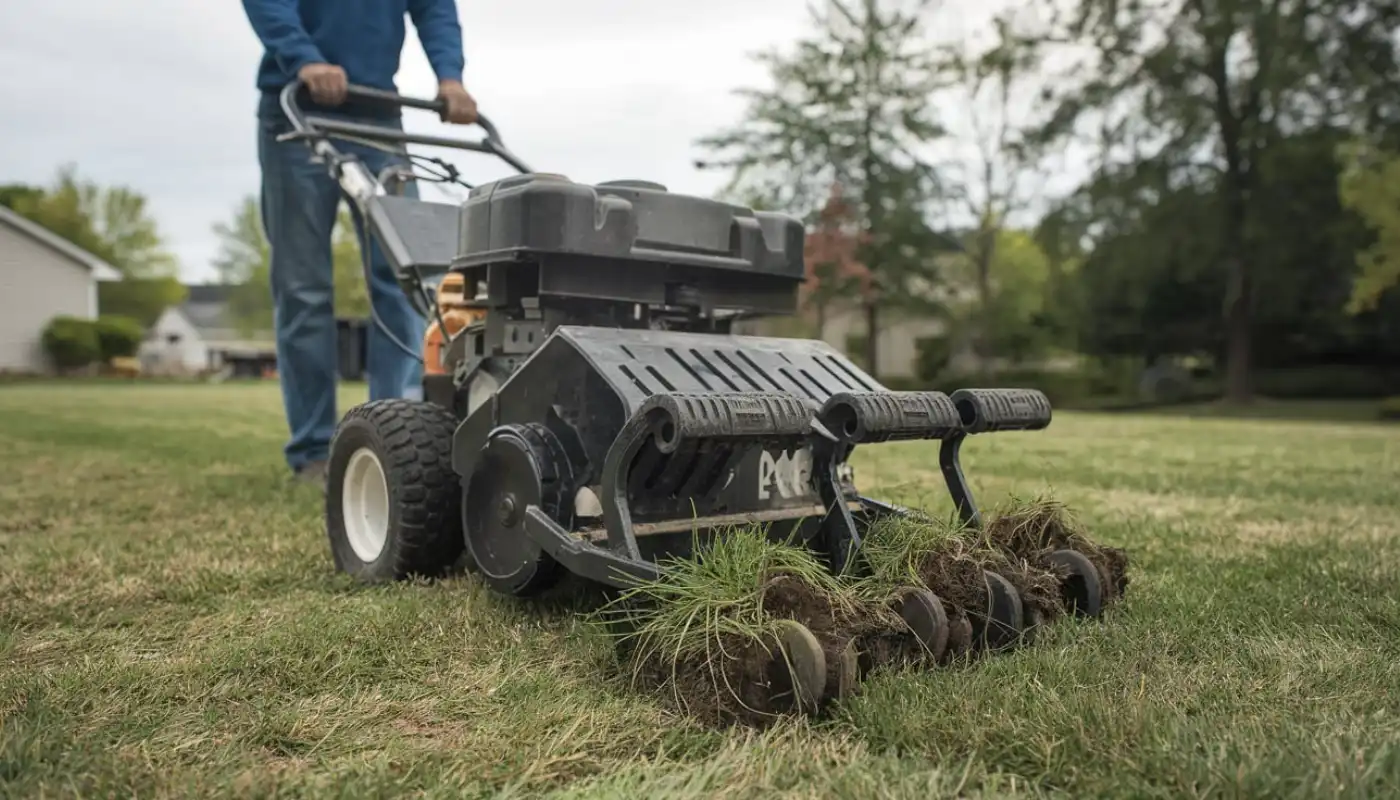
However, if your lawn is on a slope (think of the hills near Humboldt Park) or if it’s interspersed with thick tree roots, a professional is worth the money. They have the heavy-duty "ProCore" machines that can handle tricky terrain. They also know the city's microclimates. A pro will charge between $150 and $300 for a typical Chicago lot. Is it worth it? If it saves you a herniated disc and ensures the job is done in the narrow biological window, it's a bargain. Just make sure you verify they are pulling cores, not just spiking.
There is a raw, unglamorous beauty to the ritual of aeration. It is the antithesis of the manicured, perfect lawn pictured in glossy magazines. It is a mess. It is dirty. It is work. But it is also the most hopeful act a homeowner can perform. In a city that worships the lake, the skyline, and the "Chicago-strong" ethos, aeration is a quiet admission that even the toughest things need to breathe. We spend our summers running over our lawns, walking our dogs across the same dirt paths, and parking our cars on the same green verge. These are acts of love and daily life, but they are also acts of trauma.
When you aerate, you are acknowledging that trauma. You are acknowledging that the ground under your feet is a living organism, one that gets tired and compacted by the sheer weight of existence. The dark, heavy clay of Chicago is a metaphor for the stubborn, resilient nature of its people. We get compressed by the pressures of city life, but we need those breaks, those holes of fresh air and opportunity, to grow deeper. The fall aeration is our seasonal reset button.
So, as the Cubs fade from contention and the air smells of burning leaves and roasted malts, look at your lawn. See it not as a patch of grass, but as a covenant. Show it some respect in October. Pull out the plugs, let the air rush in, and scatter the seed. Do this, and you will be rewarded with a spring so vibrant that it will make the cold, dark winter a distant, smudged memory. It’s not just landscaping; it’s the maintenance of hope.