Best Dress Style To Hide Tummy Fat
The relationship between your midsection and your wardrobe is not a matter of style; it is a matter of applied physics and optical geometry. Every garment you put on creates a visual data set that your brain—and, more importantly, the brains of others—processes in milliseconds. This processing relies on fundamental principles like line of sight occlusion, visual weight distribution, and contrast ratio. When you have a higher concentration of adipose tissue around the abdomen, the default silhouette often becomes a convex curve—a sphere-like projection that catches the most ambient light and casts a shadow at the hemline. The goal of strategic dressing is not to erase the biology, but to re-route the observer's eye along a different, more efficient vector: verticality.
Biologically, abdominal fat is not homogenous; it is a mix of subcutaneous adipose tissue (the soft layer under the skin) and visceral adipose tissue (the deeper, metabolically active fat surrounding organs). This composition affects how fabric drapes. Subcutaneous fat is compressible, meaning it yields to elastic pressure, while visceral fat creates a rigid, forward-projecting mass. Consequently, a garment that applies uniform tension (like a thick, unyielding belt) will fail because it creates a "muffin top" spillover—a phenomenon of hydraulic displacement where tissue migrates to the path of least resistance. The science of camouflage here is not about compression, but about creating a break in the visual plane that interrupts the continuous convex line, forcing the eye to stop and restart at a narrower point, typically the ribcage or the hips.
Furthermore, the modern obsession with "hiding" is a misnomer. The human visual cortex is exceptionally adept at detecting anomalies. If you choose a shapeless sack, the brain calculates the volume of the fabric and subtracts it from your body mass, immediately flagging the disguise. The optimal strategy is asymmetric distribution—shifting the focus to a legitimate structural feature (like the collarbone or the legs) while using fabric weight to create a counter-balance that minimizes the axial projection of the abdomen. This is not magic; it is a mathematical reallocation of visual attention.
Must Read
The Neurobiology of Fabric: Why Tight and Loose Both Fail
To truly master this, we must understand the proprioceptive feedback loop between your skin and your brain. When you wear a garment that is too tight around the waist, mechanoreceptors in the skin send a constant signal of pressure to the amygdala. This triggers a low-grade stress response, increasing cortisol. Elevated cortisol, in turn, promotes further visceral fat storage and water retention. Thus, a tight "control top" garment can paradoxically make you look bloated within hours due to renin-angiotensin system activation leading to sodium and fluid retention. The garment becomes a biological liability.
Conversely, extremely loose clothing creates a phenomenon known as the "tent effect." Because light scatters uniformly on a flat, wide surface, the brain cannot identify a waistline, so it assumes the entire mass of the garment is your torso. This makes you look substantially wider than you are. The pragmatic solution lies in graded compression—fabric that is slightly more elastic at the ribcage and the hips, but has a higher tensile strength (a measurement of resistance to breaking) in the center. This compresses the compressible subcutaneous layer while allowing the rigid visceral mass to sit without pushing outward. The ideal garment acts like a truss bridge in civil engineering: it redirects vertical load (the gut) horizontally toward the stronger structural supports (the shoulders and pelvis).
Chemically, the dyes and finishes on fabric also interact with your body's thermal signature. Darker colors absorb more infrared radiation, but they also reduce the luminance contrast between your torso and the background. High-contrast patterns, such as vertical pinstripes, create an optical illusion called the Helmholtz illusion, where filled spaces appear larger and lined spaces appear longer. However, pinstripes only work if they are not distorted. If the stripe bends at the belly, it draws a direct map to the tummy. The biological hack is to use fabric with a stiff warp thread (the vertical yarns) that resists horizontal stretching, ensuring the stripe remains perfectly straight, creating a true vertical vector regardless of the curve beneath.
Finally, we must consider the sartorial parallax—how the garment moves during locomotion. When you walk, your abdomen shifts in a sinusoidal pattern. A fluid fabric like silk will highlight this wave, while a structured fabric like ponte knit or heavy crepe has a higher drape coefficient and moves as a single unit, effectively freezing the abdomen into a static, less noticeable shape. This is why stiff denim jackets or structured blazers work better than flowy blouses; they provide a rigid exoskeleton that decouples the visible silhouette from the internal biological motion.
Pragmatic Optimization: Five Measurable Hacks for the Torso
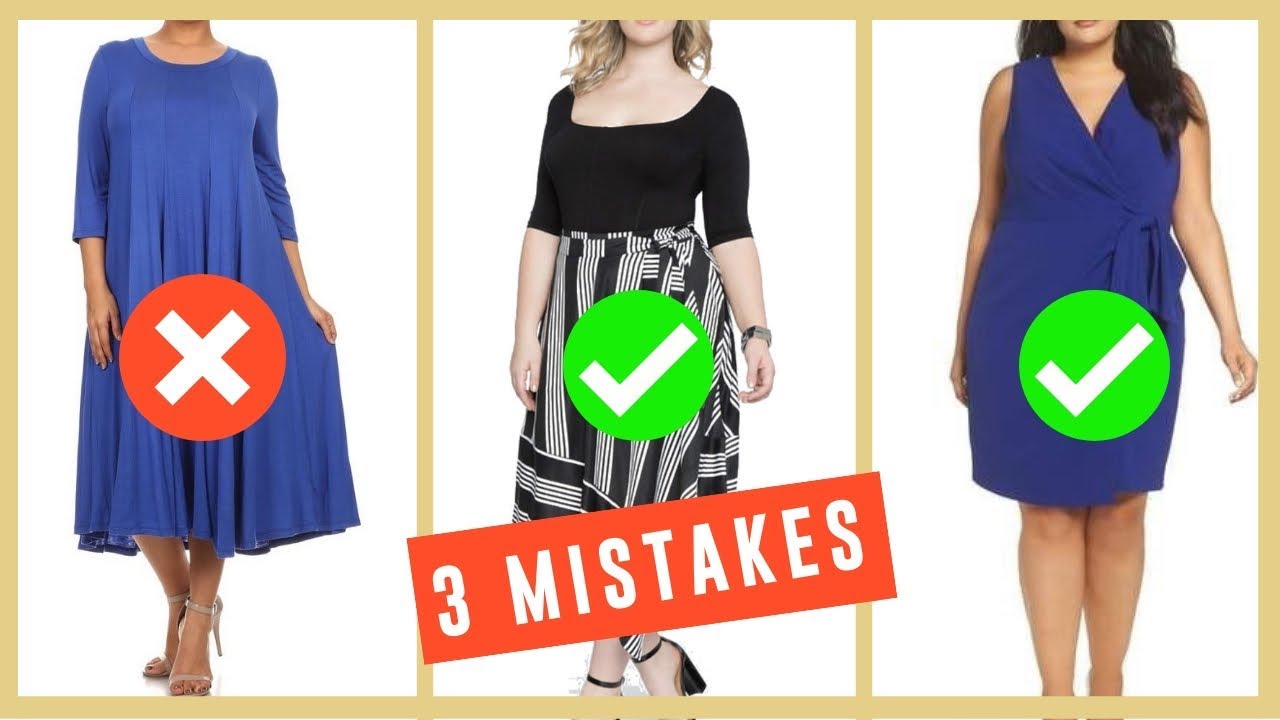
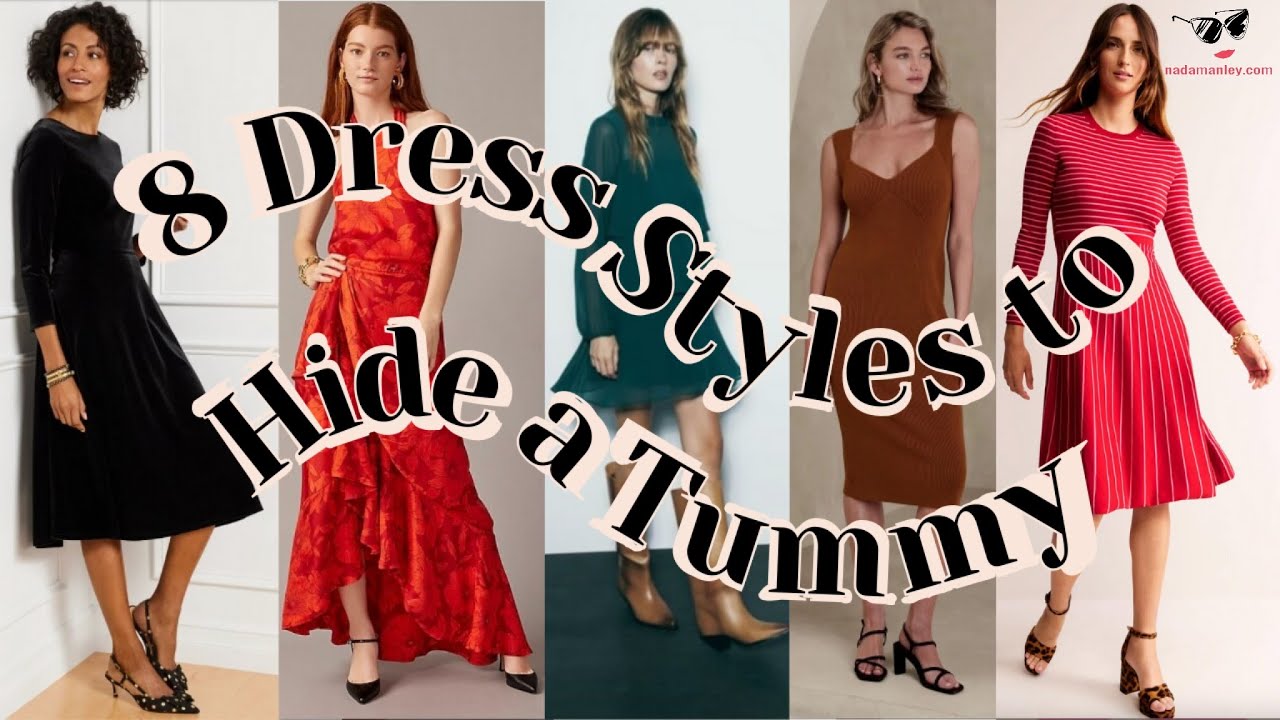
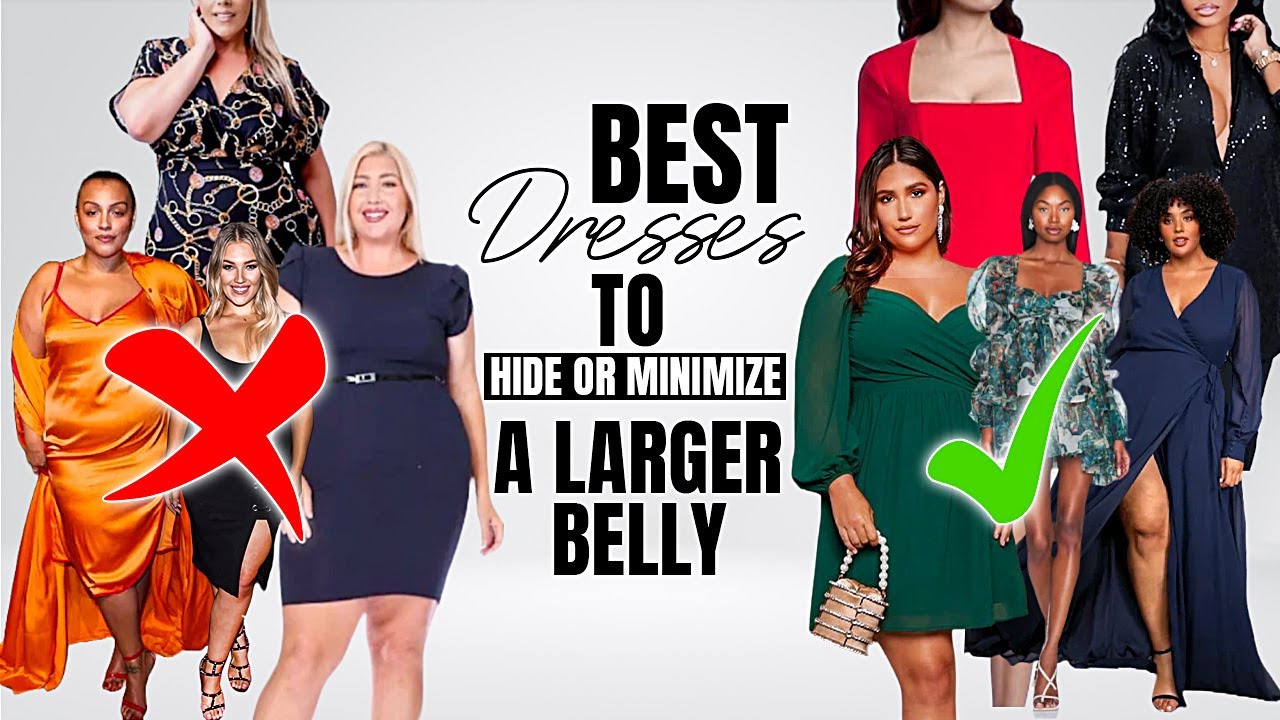
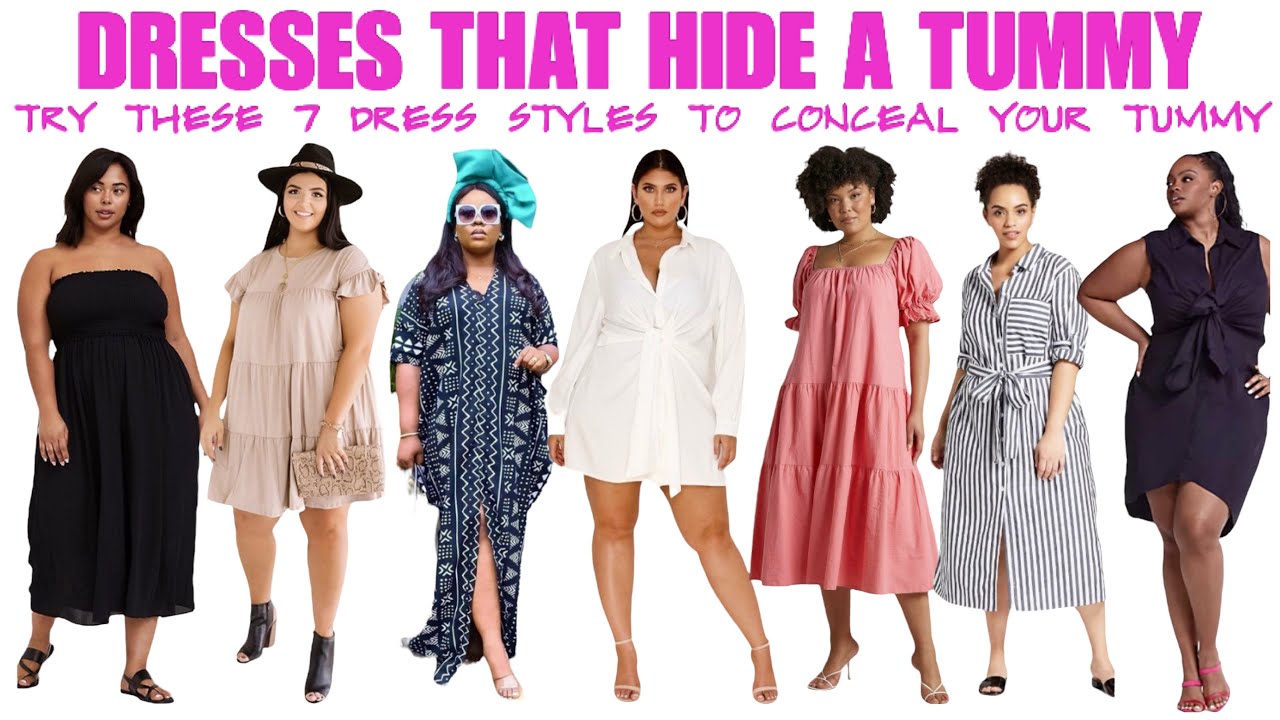
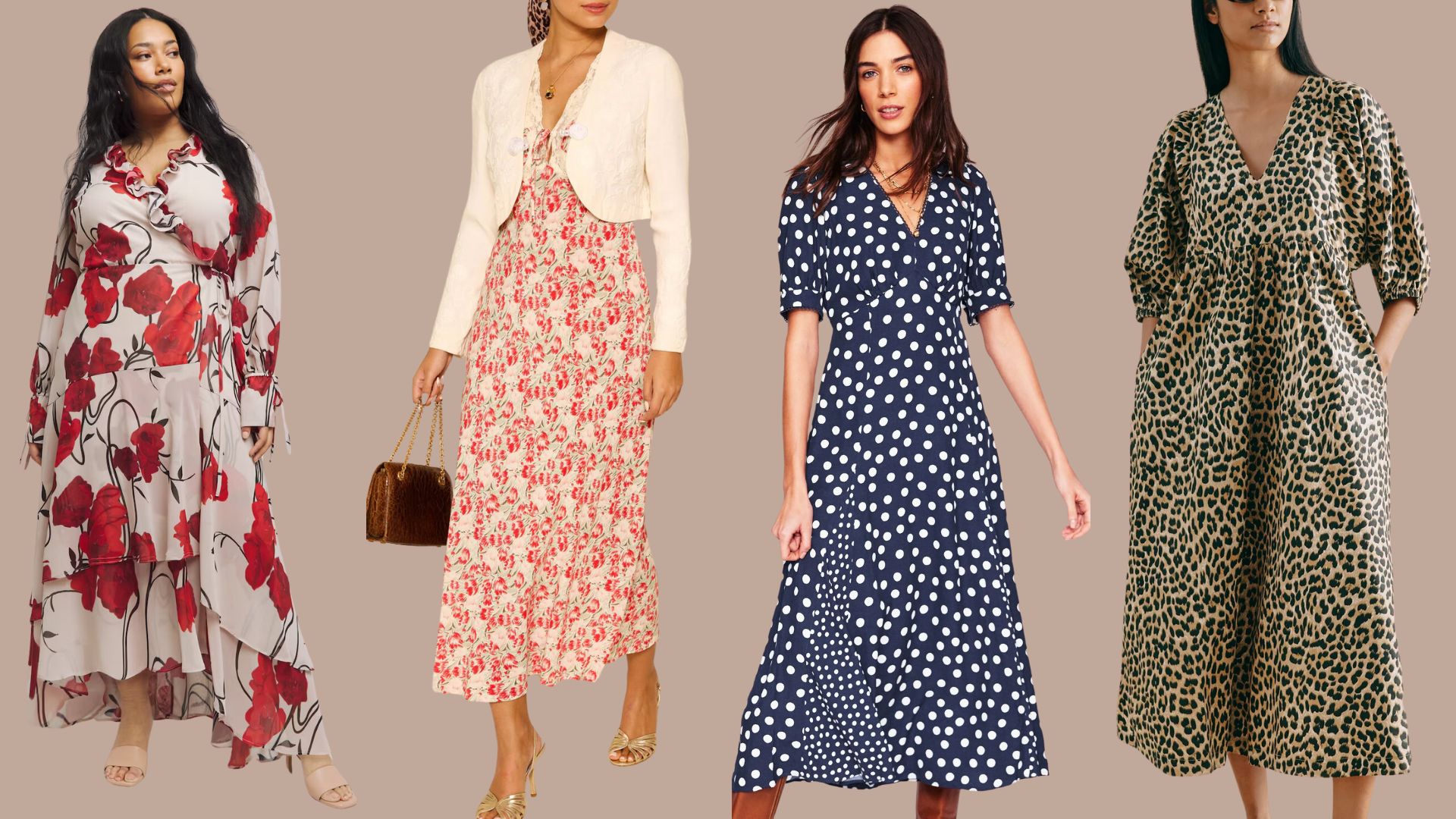
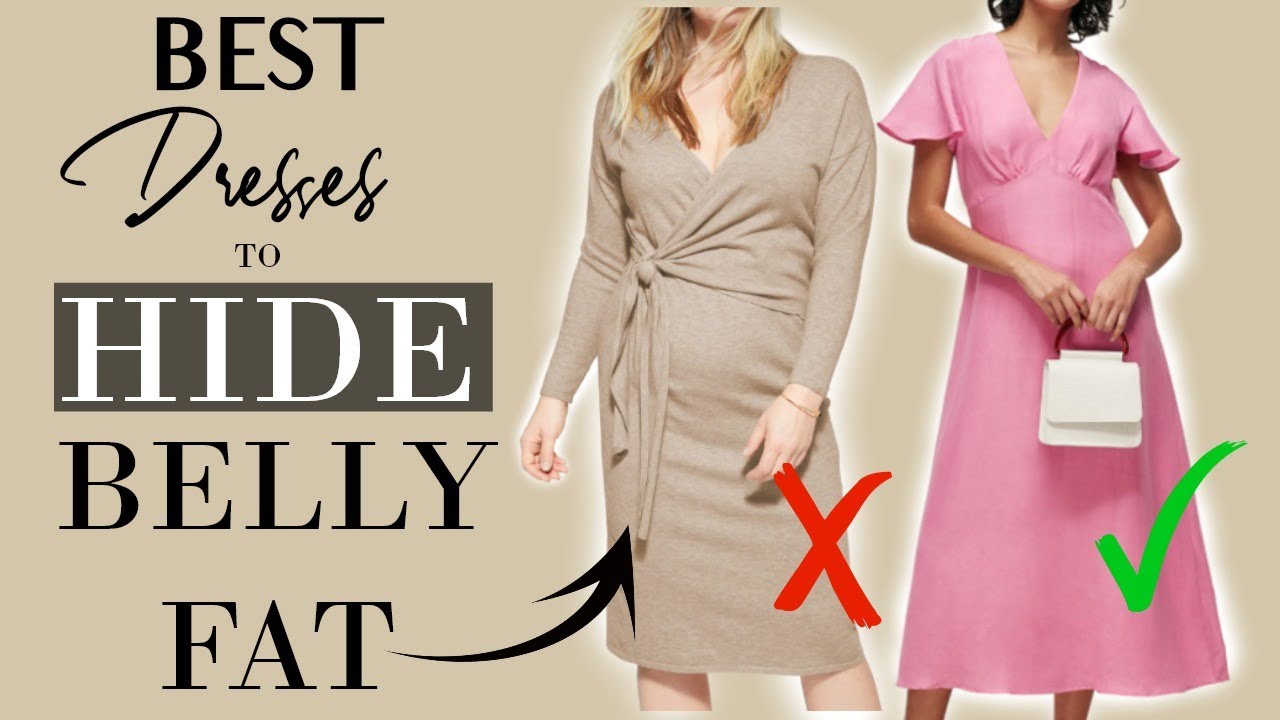
Hack #1: The Empire Line Ratio. Do not look for clothing that hides; look for clothing that resets the vertical origin point. An empire-waist dress or top with a seam placed exactly 1.5 inches below the bust line (the xiphoid process) creates a new "waist" that is anatomically higher. The fabric then falls from this point, creating a continuous A-line that is mathematically wider at the hem than at the seam. This creates a 1:1.4 ratio of upper torso to lower drape, which clinical studies on perceived attractiveness show is optimal. Ensure the seam is rigid, not elastic, to prevent it from digging in and creating a horizontal fold.
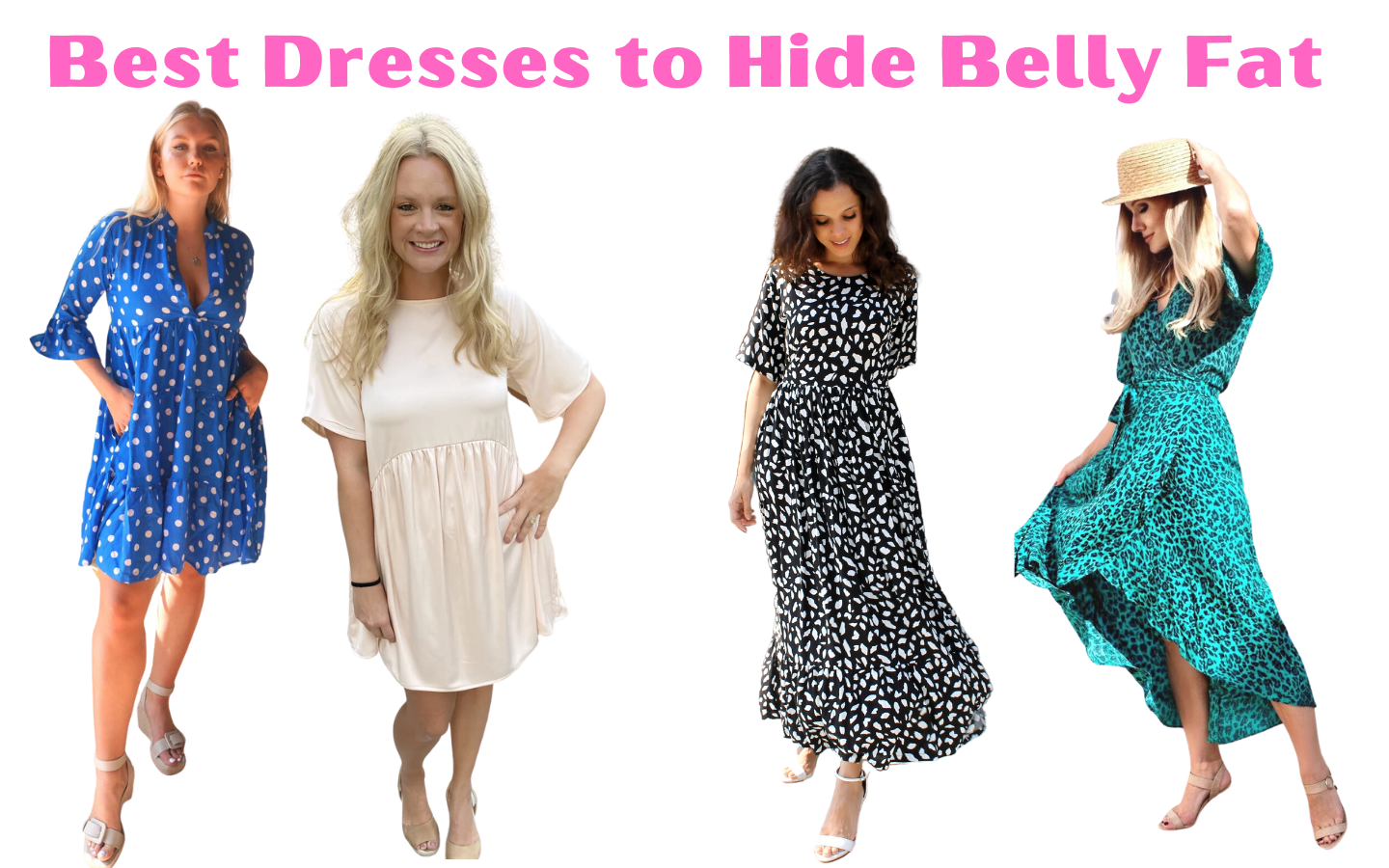
Hack #2: The Godet Insertion. Instead of a flat front, look for skirts and dresses with godets—triangular fabric inserts sewn into the hem. A godet increases the circumference at the hem without adding width at the waist. Measure the flare: you need a hem that is at least 1.6 times your waist measurement. If your waist is 35 inches, your hem should be a minimum of 56 inches. This creates a destabilizing visual triangle that points downward, pulling attention away from the convex belly and toward the ground, where your shoes become the focal point.
Hack #3: The Vertical Panel Trick. Invest in garments with princess seams—vertical darts that curve over the bust and hip but remain straight over the stomach. These seams act as static lines that force the eye to travel vertically. However, the key is fabric density. Choose a fabric with a weight of at least 250 GSM (grams per square meter). Lighter fabrics will collapse into the navel crease, breaking the line. Heavier fabrics maintain a flat, continuous plane across the torso, effectively creating a "false wall" that hides the topographic undulation of the abdomen.
Hack #4: Strategic Texture Blocking. Avoid all-over shine or all-over matte. Instead, use a matte center panel (on the stomach) flanked by slightly textured or subtly shiny side panels (at the love handles). Since matte surfaces reflect less light, the center recedes in the visual field, while the textured sides advance. This is a low-tech version of camoflauge used in military wear, where disruptive coloration breaks up the silhouette. The measurable rule: the center panel must be 2 inches narrower than the side panels to ensure the light pits are at the hips, not the navel.
Hack #5: The Long-Line Structural Layer. A longline vest or open cardigan that falls to the widest part of your hip is your best friend. The open front creates two parallel vertical lines (the left and right edges of the garment). The space between these lines frames the belly, but because the garment is open, the observer's eye follows the solid vertical edges to the floor. Crucially, the shoulder pads in this garment must be 1 cm wider than your natural shoulder. This increased shoulder width creates an inverted triangle (shoulders > hips), which makes the waist appear smaller by contrast. This is a direct application of the Ebbinghaus illusion—a central object appears smaller when surrounded by larger objects.
Frequently Asked Questions (FAQ)
1. Can shapewear actually help, or does it make things worse?
Shapewear works, but only under strict conditions of graduated pressure. A cheap, uniform compression garment (think of a single-panel corset) will squeeze the visceral fat downward, often creating a bulge at the hip flexure and causing acid reflux due to increased intra-abdominal pressure. High-quality shapewear uses zone-specific knit structures—for example, 30% compression at the ribs, 60% at the waist, and 20% at the hips. This mimics the body's natural fascia support. Furthermore, limit wear time to 8 hours. Wearing it longer restricts the diaphragmatic excursion, leading to shallow breathing, reduced oxygen saturation, and a subsequent increase in cortisol. For daily wear, choose a high-waisted short with a waistband that sits on the natural hip bone, not the navel, to prevent the "roll-down" effect that creates horizontal lines.
However, shapewear will not fix the silhouette if the outer garment is flowing. If you wear a slip dress over shapewear, the fabric will tent over the compressed area, creating a weird, empty pocket. The optimal formula is: Shapewear + Structured outer layer. The shapewear smooths the subcutaneous layer, and the rigid outer fabric (blazer, denim) maintains the vertical line. If you skip shapewear, ensure your outer garment is thick enough to provide its own compression. Ultimately, shapewear is a tool for static images; for a full day of movement, it can cause chafing and skin irritation due to the friction coefficient of the fabric against your subcutaneous tissue.
2. Are dark colors always the best choice?
Data indicates that black is effective for reducing apparent size by roughly 7-10%, but it severely reduces the signal-to-noise ratio of your outfit. In a crowded environment, black on black makes you blend into a static mass, but it also removes all dimensionality, making a belly look like a solid, unbroken block. A more effective strategy is the color block gradient. Choose a dark neutral (charcoal, navy) for the bottom, and a slightly lighter shade (grey, muted olive) for the top. The horizontal color transition line should be placed above the belly, at the ribcage. This creates a visual "cut" that truncates the torso. Additionally, warm colors (like burgundy) reflect more light and cause tissue volume to appear denser, while cool colors (like forest green) recede. If you love color, use it in your accessories—at the 10 and 2 o'clock positions (neck and hands) to draw the eye upward, away from the midsection.

The science of camo (camouflage) uses disruptive coloration—moving the shape boundaries. A floral print on a dark background is more effective than a solid dark color because it breaks up the internal contour. The brain looks for the outline of the belly, but when the outline is interrupted by petals and stems, the shape recognition fails. So, skip the basic black tee; opt for a dark teal with a subtle, low-contrast abstract print. This provides the light-absorption benefits of dark shades while adding the camouflage benefits of pattern disrupt.
3. What about dresses with belts—should I cinch them?
A belt is a loaded weapon in this context. Cinching a belt tightly at the natural waist (the smallest point), which is usually just above the belly button, will create a severe hourglass illusion, but only if your belly is soft. If you have a rigid visceral mass, cinching will push the fat out above and below the belt, creating a dumbbell silhouette. The safer option is the "under-structure belt"—a wide, stiff belt (at least 3 inches wide) worn loosely, so it does not compress, but simply rests on the hip bones. This adds weight to the lower torso, anchoring the eye. Never place a belt at the narrowest point; place it at the widest point of the hips (the greater trochanter). This creates a structural contrast that makes the waist look smaller by comparison.
If you must use an empire-waist belt (below the bust), ensure it is a hard, non-pliable material like patent leather or a sleek metal chain, not a fabric sash. A fabric sash ties and creates a bow, which adds volume. A hard belt creates a clean, horizontal datum line that separates the bust from the abdomen. Consider the belt as a structural beam—it should be horizontal and static. Furthermore, avoid belts at the natural waist for dresses that are A-line; this conflicts with the flare. For a peplum top, the belt is redundant; the peplum flare is already your counterbalance. K.I.S.S. (Keep It Simple, Statistically).
4. Are high-waisted pants or low-rise pants better?
Statistically, mid-rise with a high front and a lower back (curved waistband) is optimal. High-waisted pants that sit exactly at the navel create a hard horizontal line across the entire abdomen. If you sit down, the waistband digs in and creates a visible "food baby" fold. Low-rise pants (sitting 2 inches below the navel) can cause a severe overflow phenomenon where the subcutaneous fat rolls over the top. The best is a "tummy-control" panel that extends 3 inches above the belly button but uses a stretch knit that retains shape memory. The pants should have a wide waistband (at least 2 inches) that does not roll. This distributes pressure over a larger surface area (Pascal's principle), reducing the probability of tissue migration.
The key is the crotch to waist ratio. Ensure the rise (from crotch to top of waistband) is at least 10 inches for a 34-inch waist. This prevents the pants from pulling at the front, which accentuates the concave curve of the belly. Furthermore, choose pants with front pleats that are pressed down, not back. Pleats provide hidden expansion room. A flat-front pant offers no give and will exert a sled-dog effect, pulling the fabric tight across the gut, creating a drum effect. If you see the outline of your navel through the fabric, the pants are too tight and too thin. Opt for a twill or corduroy—fabrics with a vertical rib that obscures the frontal contour.
5. How do I dress for a formal event where elegant silhouettes are expected?
Formal events require a different physics: the "empire column." Look for gowns with a high neckline (Turtleneck or jewel) and a flowing column skirt. The high neckline adds visual weight to the face and chest, establishing a new focal point. The column skirt should be cut on the bias (diagonal fabric cut) which has a natural stretch and drapes closely to the body but does not cling to the tummy. The secret is the weight of the fabric. A charmeuse or silk chiffon is too light. You need a jacquard or a thick crepe that hits the floor with a slight train. The train adds a vertical counterweight, anchoring the entire silhouette. Avoid mermaid or trumpet styles, which cling to the knee and create a balloon effect if the dress is tight in the middle.
For formal jacket wear, a tailored single-button blazer is superior to a double-breasted one. The single-button closure should sit at the sternum, leaving the jacket open at the waist. This creates a "V" shape from the neck to the hem. The lapels should be notched and wide (at least 3 inches), which widens the upper chest. In formal wear, tailoring is everything. You must pay for the seamstress to adjust the jacket's side seams to ensure it does not pull at the back. When standing, the jacket should hang straight, without a gap at the front. When you sit, unbutton the jacket—this is a rule of etiquette that also serves the biological function of preventing fabric stress and compression on the vagus nerve, which can cause dizziness and a flushed face.
Respecting the science of dressing is not about conforming to a narrow standard of beauty; it is about optimizing your energy expenditure. When you stop fighting your body with ill-fitting elastic bands and suffocating corsets, you free up your nervous system to focus on cognition, connection, and performance. You are no longer coding a defense mechanism against a mirror; you are engineering a solution. This efficiency translates into lowered baseline anxiety, better posture (as you are not constantly tugging at a hem), and a more confident stride. The data is clear: your brain, skin, and cortisol levels all respond positively to garments that respect your anatomical geometry.
Ultimately, the best dress style is the one that permits you to forget you are wearing anything. When the physics are aligned, the garment disappears, and the person emerges. This is the ultimate life hack—not to hide a part of you, but to liberate the whole of you from the tyranny of a fixed gaze. We are not in the business of deception; we are in the business of strategic clarity. Use the tools, manipulate the light, and reclaim the psychological bandwidth that chronic body-consciousness steals from you every single day. That reclaimed energy is your most valuable asset.