
Best Automatic Bathroom Air Freshener
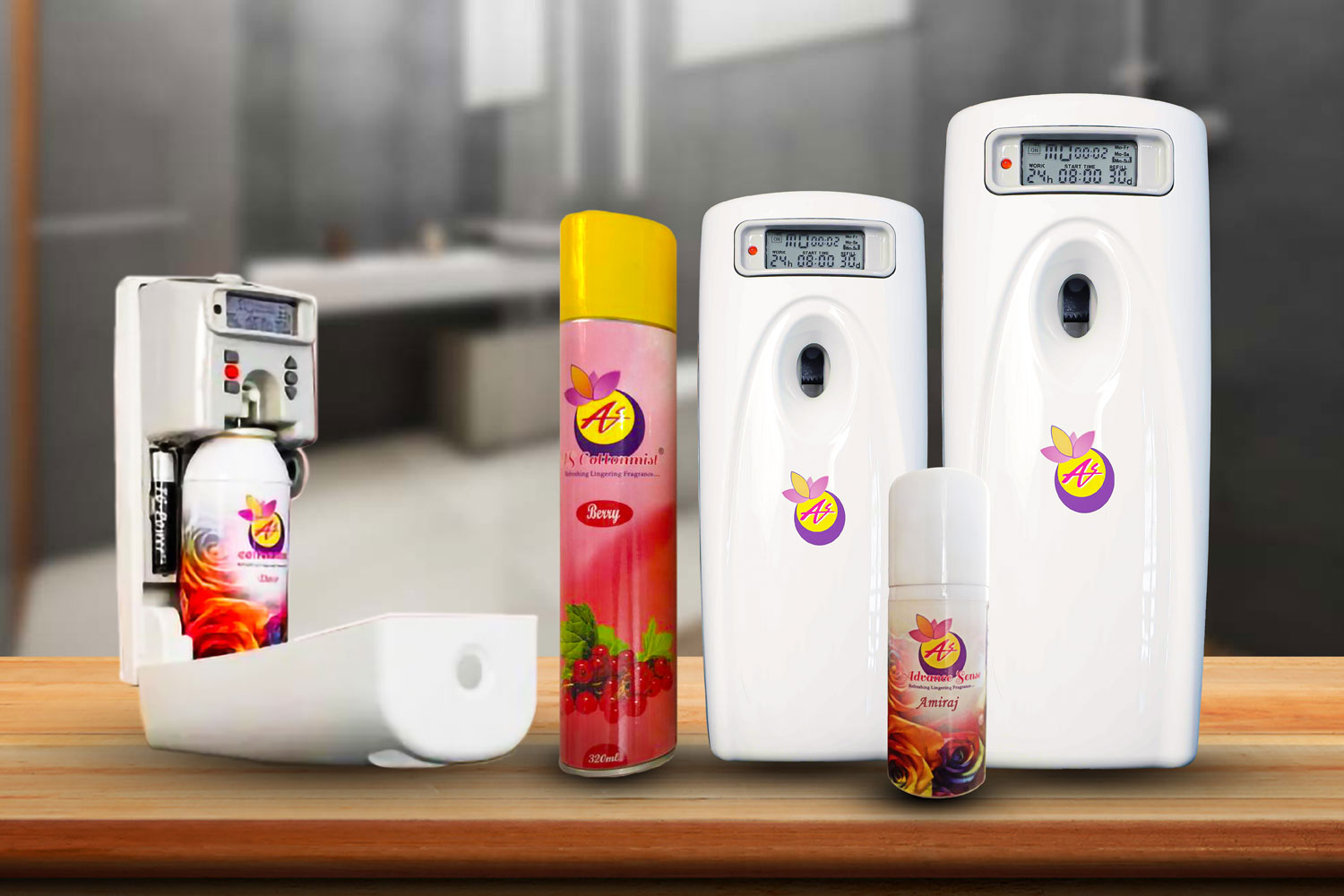
Cast your mind back, if you will, to a time before the gentle hiss of a motion-triggered mist, before the silent, battery-powered sentinel that guards the porcelain throne. It was an era of aerosol cans with their piercing synthetic citrus, and before that, of ceramic pineapples holding a solid block of perfume that grew dustier and less potent with each passing week. The humble bathroom air freshener began not as a convenience, but as a quiet act of domestic defiance against the unmentionable. In the mid-20th century, the bathroom was a purely functional space—clinical, tiled, and notoriously unforgiving in its acoustics. The necessity was primal: to mask, to cloak, to restore a veneer of Victorian propriety to a room that was, by its very nature, devoid of it. The initial solution was the “toilet bowl” deodorant, which worked on the water’s surface, but the air itself remained a stubborn, lingering testament to human biology.
These early efforts were profoundly analog, relying on a user’s manual intervention. You had to remember to spray, to wave the canister with a practiced flick of the wrist, or to twist a dial that dispensed a thick, oily liquid into a reservoir that often clogged. It was a ritual fraught with human error and social anxiety. The first “automatic” attempts were clunky mechanical timers, often resembling small, beige alarm clocks, that would periodically click and release a puff of fragrance—regardless of whether anyone was present. They were voracious consumers of batteries and even more voracious consumers of patience, with their hissing unpredictability often startling guests more than any natural odor could. This was the awkward adolescence of home fragrance: a solution that was simultaneously over-engineered and woefully under-effective, a far cry from the sleek, adaptive devices we now take for granted.
Yet, there was a certain charming earnestness to those early machines. They represented a belief that even the most mundane aspects of life could be automated and improved upon—a post-war optimism filtered through a jet of liquefied floral perfume. The human necessity wasn’t just for a pleasant smell; it was for control. Control over one’s environment, control over the perception of one’s home, and the elimination of that uniquely primal embarrassment that comes from a poorly timed bathroom visit. We didn't just want to cover the odor; we wanted to conquer the moment. This longing for pre-emptive hygiene is the deep-rooted seed from which the entire modern industry has grown, and it explains why we are willing to pay a premium for a device that essentially does nothing more than a $2 aerosol can—it just does it without us asking.
Must Read
The Fragrant Arms Race: From Glade to the Gadget Era
The major transformation began in the 1980s, when the automatic air freshener moved from the utilitarian car commercial to the domestic sphere with aggressive marketing. Brands like Glade and Air Wick realized that the key wasn't just cleaning the air, but creating an "ambiance." This decade introduced the aerosol canister that could be placed in a wall-mounted dispenser, a plastic contraption that looked suspiciously like a small, futuristic toaster. These devices used a mechanical cam that pressed the nozzle at intervals, controlled by a simple dial that offered vague settings like "Low," "Med," and "High." However, the weakness was glaring: they still used the same propellant-heavy aerosols, which left a damp, chemical residue on bathroom surfaces and often masked odors with an even more offensive floral bouquet that clung to the back of your throat.
A forgotten vintage fact that captivates me is the rise of the "solid electric" deodorizer in the 1970s, which was a ceramic plug-in that melted a solid puck of perfume. They were notorious fire hazards if left on too long, and a forgotten puck would leave a strange, sticky lacquer on the heating element. The 1970s also gave birth to the infamous "urinal cake," which, while not automatic in the home sense, established the psychological link between the color of a fragrance block and the location’s hygiene status. The turn of the millennium brought the first whispers of "sensor" technology, but these early sonar-based devices were wildly erratic. A cat walking past the bathroom door could trigger a full canister discharge, soaking the room in a tsunami of "Ocean Breeze" and leading to a profound distrust of the machine’s intelligence.

The bizarre ways we treated this topic in previous decades are a treasure trove of social history. There was the "potpourri crock" in the 1990s, where a powder was heated into a cinnamon-scented fog—a scent that was a staple of the holiday season and the restroom alike. We also saw the advent of the "enzyme" sprays in the early 2000s, which claimed to break down the odor at a molecular level rather than merely masking it. This was a revolutionary concept: the idea of elimination rather than camouflage. Yet, the marketing often presented these as a "pre-treat" spray, meaning you had to aim and fire before the event, which felt oddly aggressive and prescriptive, as if the bathroom itself required a pre-game pep talk.
The undeniable turning point—the 2010s—saw the injection of digital logic. Devices like the Air Wick Wicks and the Clorox Automatic began to use proprietary, high-concentration refills that lasted for weeks, not days. These were the first to truly perfect the "micro-dose," where a nearly invisible mist ensures the room smells of expensive sandalwood rather than a disappointing dollop of baby powder. However, the true horror story of this era was the rise of the propellant-free mechanical pump. Early iterations of these pumps required a Herculean effort to press, often jamming or dying halfway through a canister, leading to a graveyard of half-full refills in utility closets across the country.
The Hacking of the Scented Machine
Today, the classic principles of the automatic air freshener are being ruthlessly hacked by a new generation of "smart" home enthusiasts. The old paradigm was "intervals"—fixed, dumb, and repetitive. The modern paradigm is proximity and volume. We are seeing devices like the Pura and the ScentAir Home employ artificial intelligence to learn the time of day you usually shower, the frequency of guest visits, and even the humidity level of the room. The innovation isn't the smell; it’s the decision-making. These devices sync with your smartphone, allowing you to schedule a "spritz" from bed, and they monitor the depletion of the oil cartridge, automatically reordering a refill from Amazon without you ever lifting a finger.
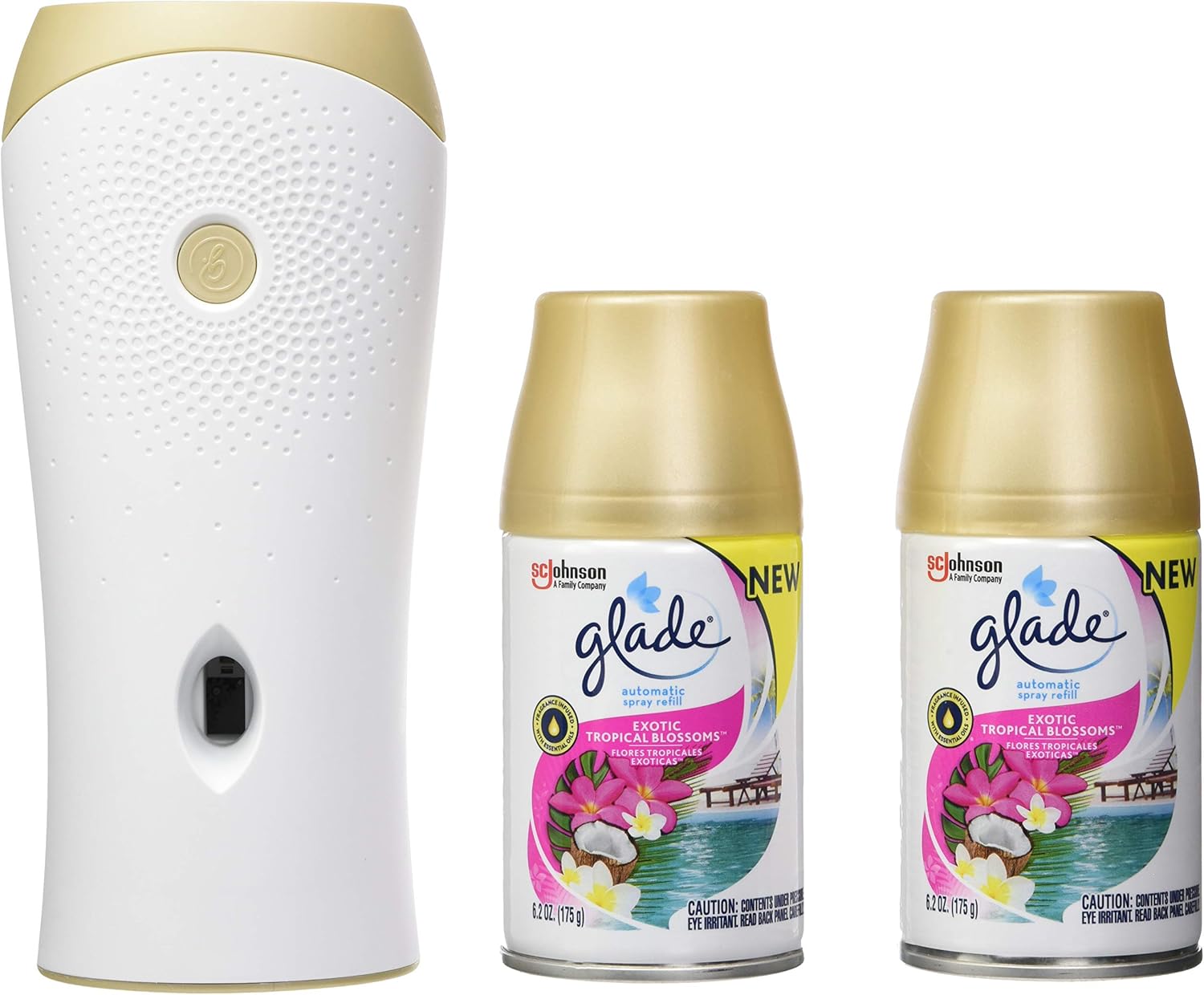
This current generation is also shifting the chemical base from the harsh, alcohol-heavy aerosols of the past to water-based, ultra-fine fragrance mists. This aligns perfectly with a fast-paced world that is increasingly sensitive to phthalates and VOCs (Volatile Organic Compounds). The smart devices are also becoming multi-functional; some now include subtle white-noise generators and built-in nightlights, morphing the air freshener from a purely olfactory device into a full-spectrum bathroom ambiance unit. They are quiet, discreet, and often mistaken for a minimalist Wi-Fi router, which is ironic, as they are communicating far more than we realize—they are interpreting our private routines and turning them into a symphony of scent.
Frequently Asked Questions from the Lavatory Lounge
Are automatic air fresheners truly more effective than the manual sprays of the 1960s?
It’s a fair question, and one that requires a look back at the chemistry. In the 1960s, aerosols were buoyed by big, aggressive molecules of synthetic musk and aldehyde, which were designed to sit on top of the air particles and "cancel" them out—which often meant you were simply swapping one smell for a heavier, more oppressive one. The manual spray was effective only if you caught the odor quickly and completely doused the area, creating a temporary haze of dampness. Modern automatic devices use a starkly different physics. They rely on rapid diffusion and smaller droplet sizes, which gives a larger surface area for odor-binding molecules to interact with the airborne bacteria that cause the smells.
Furthermore, the modern sensors are more effective at the principles of timing. A human manual spray is reactionary; the odor has already radiated to the perimeter of the room. An automatic device with a motion sensor detects your approach to the toilet and dispenses a dry vapor before the event, creating a micro-climate of fragrance ready to neutralize the incident. The old spray was a bandage; the new device is a shield. So, yes, while the active ingredients are often similar, the delivery system and the timing make it vastly more effective, removing the human error of "too late" that plagued every manual user in the past.

Will smart fresheners replace the need for basic cleaning, like the mop and bleach we used in the 1990s?
This is a dangerous myth that needs debunking with a heavy dose of reality. The toilet bowl cleaner and the scrub brush are not obsolete. In the 1990s, the cleaning industry tried to persuade us that a "continuous cleaning" tablet in the tank would eliminate the need for scrubbing, and we all saw how that turned out—blue stained porcelain and a lingering chlorine smell that eventually corroded the rubber flapper. Similarly, an automatic air freshener is the last step in the process, not the first. It is a cosmetic layer, a dermatological treatment for the air, but it does not address the bio-film on the tiles or the mineral scale in the bowl.
Modern smart devices often include "odor detection" sensors that claim to boost fragrance output when they detect a spike in VOCs. This is a clever hack, but it’s masking the issue. If you skip your weekly deep clean, no amount of scent will fix the musty, mildewy-base notes that will inevitably seep through the fabric of the room. The future of hygiene is actually a hybrid approach: using a smart device to keep the air pleasant continuously, but coupling it with a scheduled, app-reminded cleaning routine that addresses the physical surfaces. The scent is the memory of the clean, not the cleaning itself.
Why are refills for modern models so much more expensive than the old aerosol cans?
The economics here are a lesson in modern manufacturing and consumer psychology. The old 1980s aerosol cans were cheap because the contents were 90% propellant (and often, cheap perfume oils), with only a fraction of actual fragrance concentrate. The cost was in the metal and the pressurized gas. In contrast, the premium refills for modern smart devices contain a highly concentrated, propellant-free oil that is often diluted with water. The real cost driver is the proprietary engineering of the cartridge itself. These cartridges are computer-chipped, containing an RFID tag that tracks usage and prevents counterfeit refills, adding a significant layer of cost to the hardware you are throwing away.

We are effectively paying for the guarantee of performance. The chip in the refill communicates with the base unit to adjust the pressure and droplet size, ensuring every last drop is atomized perfectly. In the 1990s, you was buying a mixture of chemicals in a pressurized can; today, you are buying a high-tech dosing system that happens to be housed in plastic. Brands know that once you own the expensive base unit, you are locked into their refill ecosystem, allowing them to price the consumables at a premium—a business model that would have baffled the simple canister manufacturers of yesteryear, but one that addicts us to the clean, consistent scent that feels like a luxury every single time we enter the room.
Looking to the next two decades, the horizon is dazzling. We are moving away from the concept of "dispensing" fragrance to the concept of "engineering" it on-demand. The future holds molecular printers—small devices that use a neutral water base to synthesize specific aroma molecules as needed, eliminating the plastic refill cartridge entirely and allowing for infinite scent customization via a smartphone app. Imagine telling your bathroom, "No citrus today, I want the smell of rain on hot pavement," and the machine, not just mixing oils but generating the chemical compounds, complying within seconds. This will be paired with advanced biometric sensing—the freshener will read your heart rate and cortisol levels, and infer stress, then emitting a calming lavender and chamomile mix to lower your blood pressure before you even sit down.
Furthermore, we will see the integration of the freshener into the Internet of Things (IoT) grid of the home, collaborating with the HVAC system to ensure that fragrance is ported through the entire house, not just the bathroom, managing indoor air quality with a precision we can’t imagine. The nostalgia for the old hiss of a controlled canister will fade, replaced by a silent, invisible, adaptive atmosphere that feels less like a chemical cover-up and more like a personal genie. The bathroom, once the final frontier of domestic neglect, will become the most intelligent, responsive, and personalized room in the house—a quiet, scented sanctuary that knows you better than you know yourself, all because we had the audacity to want to hide a little odor.


