Average Pontoon Boat Rental Price
There is a particular breed of summer daydream that involves lukewarm sunscreen, a cooler clinking with ice, and the low, reassuring thrum of a motor pushing you across glassy water. That daydream almost always features a pontoon boat. Once considered the floating equivalent of a suburban station wagon, the pontoon has undergone a radical rebranding. It is no longer just a retirement community accessory; it is the undisputed king of the modern lake day, a floating living room that has conquered the jet-ski generation. But before you can claim your slice of aquatic serenity, you have to confront the transactional reality: the rental price. It’s the fine print on the fun, the toll booth on the road to relaxation, and understanding it requires more navigation skill than steering the boat itself.
The irony is thick enough to cut with a paddle: we live in an era of $40 million superyachts and NFT-backed marina memberships, yet the most democratic vessel on the water is a glorified aluminum raft with couches bolted on. The pontoon’s cultural rise is a story of humble practicality triumphing over glamour. Originally designed in the 1950s as a way to extend a lakeside cottage’s lawn onto the water, it was derided as slow and ugly. Fast forward to today, and the boat has become a status symbol of leisure in reverse—a statement that you are so relaxed, you don't need to go fast. This psychological shift has driven up demand, and consequently, the price you’ll pay to park your backside on that vinyl upholstery for a few hours.
The Invisible Mathematics of the Floating Rental Market
Let’s strip the romance away for a moment and talk about the beast of burden that is the average price point. Across the United States, the average rental price for a standard pontoon boat (typically 20 to 24 feet, seating 10 to 12 people) hovers awkwardly between $200 and $350 for a half-day (4 hours) and $350 to $550 for a full 8-hour day. However, this single, deceptively simple number is a lie of averages. It doesn't account for the brutal seasonal surge that occurs between Memorial Day and Labor Day, when prices on Lake Tahoe or Lake of the Ozarks can spike by 40%—making a weekday rate of $300 balloon to a weekend rate of $420. The "average" is a myth; the reality is a dynamic pricing algorithm that changes based on the weather forecast for that specific Saturday.
Must Read
There is a dark, almost heretical secret lurking beneath these numbers: the rental price is rarely about the boat itself. When you pay $450 for a day on a tritoon, you are not paying for the depreciating asset. You are paying for liability insurance, storage fees in a marina that costs more per square foot than a Manhattan studio, and the labor of the teenager who had to clean up the previous renter’s sunflower seed husks. The boat is just the vehicle for the transaction; you are actually paying for the absence of ownership. It’s a financial exorcism—paying a premium to avoid the $800 annual winterization fee, the $1,200 storage bill, and the ulcer-inducing anxiety of seeing a rock chip on your gel coat.
Culturally, we have developed a Stockholm Syndrome with the rental process. The psychology of the "Hourly Rate" is a masterclass in consumer manipulation. We see $75 an hour and think it’s a bargain, completely ignoring the fact that your first hour is spent steering out of the no-wake zone and your last hour is spent panicking to return the vessel before the late fee kicks in (which is usually a brutal, flat $100 penalty). The rental industry understands that time perception expands and contracts. On a boat, time moves differently; the first two hours feel eternal, but the last hour evaporates. This temporal distortion is why half-day rentals are the true cash cow—they’re long enough to get you out to the sandbar, but short enough to ensure you don't have time to get bored and demand a discount.
Strategies, Scenarios, and the Art of the Waterborne Bargain
To navigate these murky waters, you need a tactical playbook. Let’s consider the scenario of the "Weekend Warrior" versus the "Midweek Renegade." The Weekend Warrior books on a Friday afternoon from a big franchise like Fun Rental or a local marina, paying the premium $480 full-day rate. They fight the traffic, they battle the wake from other boats, and they return exhausted, having spent more time navigating the harbor than actually lounging. The Midweek Renegade, however, knows that Tuesday morning is the golden hour. Marinas are terrified of idle inventory. If a pontoon isn’t rented on a Tuesday, it generates zero revenue. Therefore, many small operators will negotiate a "Ghost Rate" of 30-40% off for a Tuesday booking, payable in cash. You get the same boat, the same lake, but you get it with 80% less traffic and a price tag closer to $280.

Here’s another case study: The Luxury Trap. You might be tempted by the pictures of the trifoon with a 250HP engine and a waterslide. Resist it. The rental price for these beasts often exceeds $700 a day. But unless you are waterskiing (which you aren't on a pontoon), that horsepower is useless. You are paying for the potential of speed, not the reality of leisure. The smart move is to rent the slightly older, slightly less shiny 20-foot model. It has a slower top speed, but it still floats, it still has a Bimini top, and it still has a cooler spot. The aesthetic difference is negligible once you are anchored in a cove; the $200 difference in your wallet is not.
Actionable insight #1: Always ask about the "Damage Waiver" fee before they show you the price. This is often a non-negotiable $50-$80 fee added on top of the quote. It is not insurance; it is a "don't yell at me if the prop hits a log" fee. Factor this into your budget, or ask them to include it in the base price. Actionable insight #2: Check the "Cut-off Time." Most marinas require the boat back by 6 PM, regardless of when you start. If you book a 4-hour rental starting at 1 PM, you are done by 5 PM. But if you book a 4-hour rental starting at 9 AM, you are done at 1 PM. The afternoon slot is the most desirable (for the sunset), so it costs more. To save money, book the morning slot. Yes, the water is colder, but the fishing is better, and the price is considerably lower.
Finally, consider the "Anchor Out" strategy to beat the clock. Renters often panic about the fuel gauge. Most rentals are "full to full" or have a prepay option. The dark fun fact here is that the fuel gauge on a rental pontoon is notoriously inaccurate, often showing empty when you have half a tank left, causing renters to burn unnecessary time heading back early. Ignore the gauge; learn the cruising speed (approximately 10-15 mph) and calculate your distance. A pontoon burns surprisingly little gas at idle. The real cost is time. Use your time on the water to anchor early, and stretch your perceived time by not rushing to the far end of the lake. The sandbar 10 minutes away is free; the one 40 minutes away costs you an hour of rental time you can't get back.
Navigating the Current: Five Essential FAQs
1. Is the rental price cheaper if I rent for multiple days?
Interestingly, yes, but the discount structure is wildly inconsistent. Unlike car rentals, where the weekly rate is often 5x the daily rate (a discount), pontoon rentals usually offer a "Multi-Day Concession." For a 2-day rental, you might see a discount of only 10-15%. This is because the marina loses the ability to re-rent the boat to the Saturday rush. However, if you rent for 3+ days during the week, many smaller operators will offer you the 3rd day at 50% off just to secure the guaranteed revenue. This is the "Bulk Purchase" psychology. The caveat is that you are responsible for overnight parking at the dock, and you must ensure the boat is secured properly. It’s a better deal for your wallet but adds a layer of responsibility that a casual day-tripper might not want. The math works best if you treat the boat as a floating basecamp for a lake cabin trip, rather than just a day excursion.
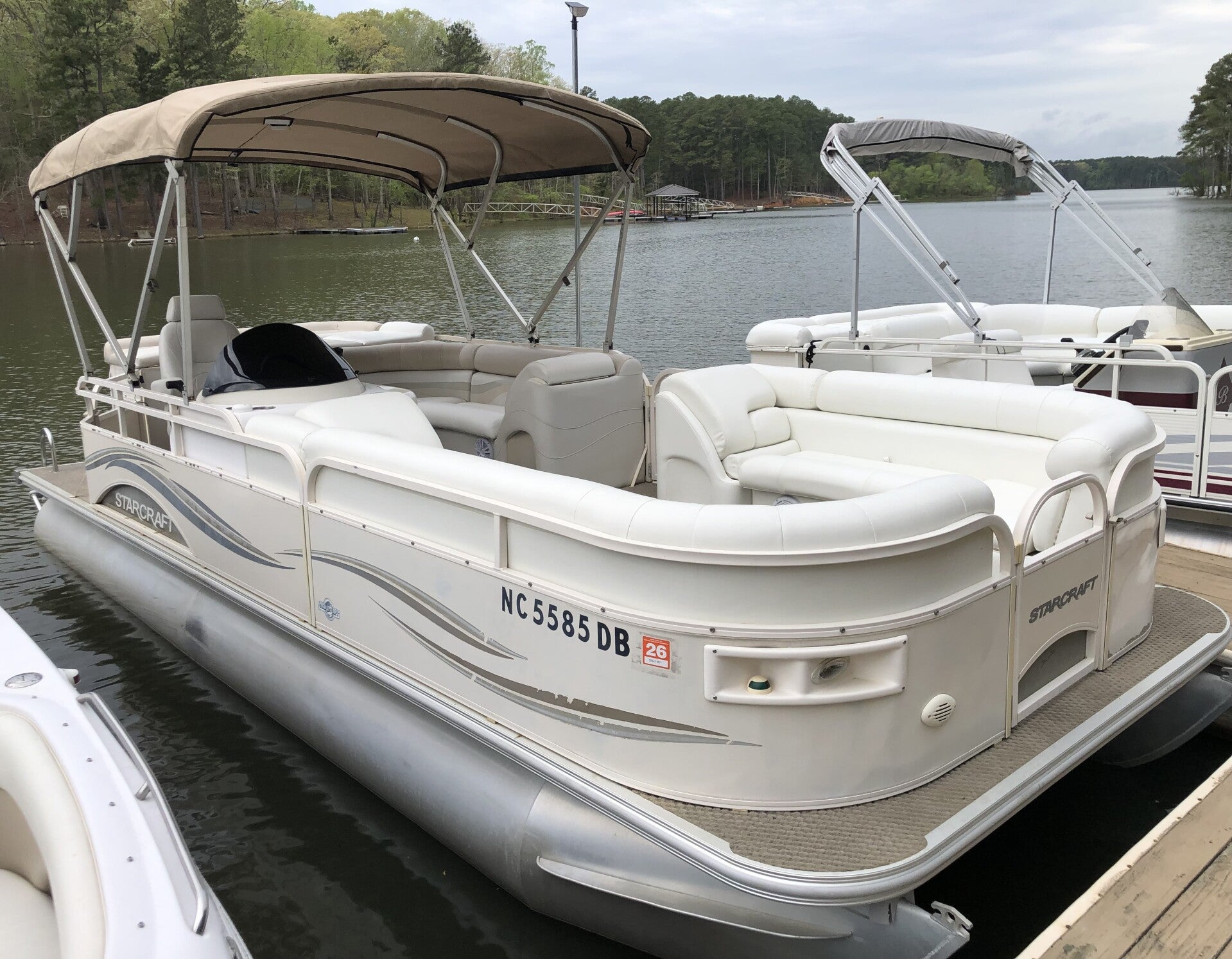
From a financial standpoint, the multi-day rental also shifts the cost-per-hour ratio in your favor. A single 8-hour day at $450 works out to $56.25 per hour. A 3-day rental at $1,100 (with the 50% third day) works out to about $45.80 per hour, and you get the luxury of not rushing. However, be wary of the "Sea-Doo" clause—some marinas charge a mandatory daily cleaning fee for multi-day rentals because they assume you will party harder and leave debris. Always read the contract for the "Daily Turnaround" fee, which is often hidden in the fine print and can negate your multi-day savings.
2. What exactly is the average cost difference between a pontoon and a deck boat?
The average rental price for a standard pontoon is typically 20-30% more expensive than a comparable deck boat. This seems counterintuitive, as deck boats are often faster and have a sportier profile. The reasoning is purely utilitarian. A pontoon has a flat, stable deck that makes entering and exiting the water significantly easier for children and elderly passengers. The liability insurance for a pontoon is actually lower for the marina because of this stability, but they don't pass those savings on to you. Instead, the price reflects the amenity of space. A 24-foot pontoon offers roughly twice the square footage of a 24-foot deck boat because the hull is a straight rectangle. That space is the luxury, and luxury costs money.
Furthermore, the "toon" is the default choice for group rentals. Marinas know that if you are renting a pontoon, you likely have a group of 8-10 people. They price accordingly, knowing that the cost per person is still lower than a dinner out. Deck boats, conversely, are usually rented by smaller groups (4-5 people), so the marina must keep the absolute dollar amount lower to attract that demographic. It’s a classic supply and demand curve where the larger, slower boat commands a premium because of its social utility, not its performance. If you are a couple without kids, you can save $100 by opting for the deck boat, but you will sacrifice the ability to play cornhole on the bow.
3. Do rental prices include fuel, or is that extra?
This is the single most common point of confusion, and it is the source of the infamous "Post-Rental Sticker Shock." Roughly 60% of rental agencies now offer a "Full Tank" prepay option, while the other 40% still operate on a "Full-to-Full" policy. The Full Tank prepay usually costs a flat fee of $50 to $80, regardless of how much gas you actually burn. This is a profit center for the marina; they buy fuel wholesale and sell it to you at retail. For the renter, it is a psychological safety net that eliminates the "fuel anxiety" during the trip. However, the dark trick is that most renters don't burn $80 worth of gas in a 4-hour rental unless they are doing high-speed runs. You are often paying a premium for the convenience of ignoring the gauge.
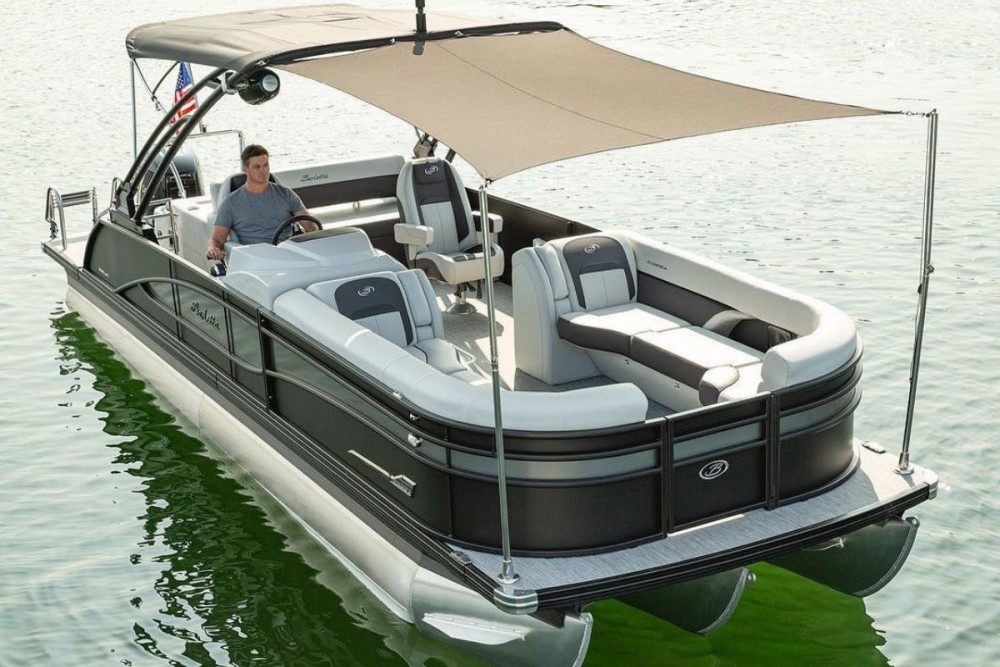
On the flip side, the "Full-to-Full" policy requires you to return the boat with the exact amount of fuel it had when you left. You must find a gas station on the water (which is notoriously expensive, often $2+/gallon more than the station on land) and hold a jerry can while your boat bobs in the swell. This is a logistical nightmare. My advice? Always take the prepay option if it is within $30 of the estimated fuel cost. The $20 you lose is the price of peace of mind. If they don't offer prepay, ask them to estimate the fuel cost for your trip, and factor that estimate into the rental quote so you aren't blindsided when you get back to the dock.
4. Why do prices drop so drastically in September?
The seasonal cliff is a beautiful thing. The average price for a pontoon rental in August can be $500. The exact same boat on a Tuesday in mid-September can be found for $250. This is not altruism; it is the brutal math of the "Use-It-Or-Lose-It" depreciation. The marina knows that the boat will sit in storage, unproductive, for the next 7 months. They need to generate some revenue to offset the interest on their loan for that boat, and they will take any amount of money over zero. The psychology of the fall rental is that the demand curve falls off a cliff after Labor Day, but the supply (the boats) remains constant. This creates a buyer's paradise.
But there is a catch: the "Fall Fee" isn't reflected in the hourly rate alone. Marinas often shorten their operating hours, meaning you might only be allowed a 6-hour rental, not the full 8 hours. They also tend to skimp on the “included” amenities, such as free life jackets or the courtesy trailer, to save on maintenance costs. However, if you look past the shortened hours, the fall is the superior season for boating. The water is still warm (especially in Southern states), the weather is less oppressively hot, and the lake is finally empty of the summer crowd. The $250 you spend in September buys you a better experience than the $500 you would spend in July, purely because the quality of the time on the water is exponentially higher.
5. What is the “Hidden” fee for docking or anchoring at a sandbar?
You are paying for the rental of the boat, not the water. However, the access to certain sandbars or coves is often monetized. Many popular lake destinations (like Lake Havasu or Norris Lake) have privatized the sandbar areas with beach clubs that charge a "Mooring Fee" for non-members. Typically, this is a cash-only charge of $10 to $20 per boat, collected by a guy in a jet ski who threatens to tow you if you don't pay. This is not a scam; it is a jurisdictional gray area where the shoreline rights end and the lakebed rights begin. This fee is never mentioned in your rental contract, because the marina doesn't want to be responsible for it.
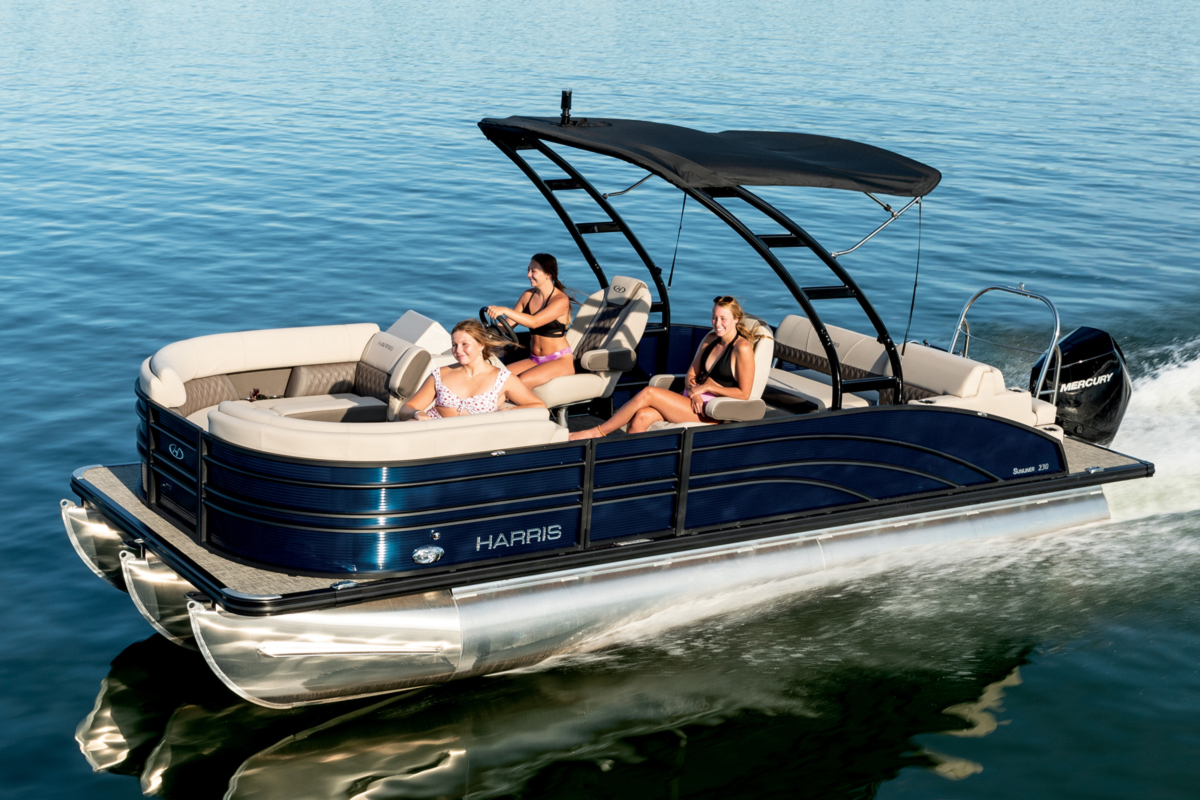
The dark truth here is that the "free" sandbar is a myth. You will either pay the mooring fee, or you will anchor in a spot that is too shallow, getting you stuck on a sandbar (which is a different kind of fee—a tow fee of $200+). The workaround is to anchor in the middle of a cove, away from the sandbar itself. It’s deeper, the water is colder, but you are legally in public waters and cannot be charged. Alternatively, ask the rental operator where their "gratis" anchor spots are. They usually know a secret spot that is just as good as the popular one, but requires a 5-minute longer boat ride. Those 5 minutes are cheaper than the $20 extortion at the dock.
We obsess over the numbers—the hourly rate, the deposit, the gas bill—but we do so because we are trying to buy a feeling. The pontoon rental price is not a transaction for aluminum and upholstery; it is a tariff on the desire to disconnect. We are willing to pay a premium for the certainty that we can float, just for a few hours, untethered from the grid that keeps us chained to our desks. The financial pain of the rental is the toll we pay to escape the gravity of our daily lives, and for a moment, the weightlessness is worth every penny.
There is a profound human connection in this exchange. We are the only species that pays to stand still. A dog doesn't rent a boat to sit on a lake; it just swims. But we, with our complex social structures and burnout, require a sanctioned space to do nothing. The rental price is the ritual sacrifice we make to the gods of relaxation. It legitimizes our laziness. If we simply sat on the shore for free, we would feel guilty; but because we have paid $350, we can justify the act of staring at the horizon for four hours as a scheduled activity. We are paying to feel productive in our unproductivity.
Ultimately, the average price is just a number, but the value is intrinsic. We remember the sun warming our faces, the laughter of a friend as we jump off the top deck, and the smell of sunscreen mixed with lake water. We do not remember the credit card receipt. So, when you are handed that quote for the pontoon, remember that you aren't just buying a boat ride; you are buying a memory that will outlast the bank statement. It is, perhaps, the most expensive rental you’ll happily never get your money back from—and yet, you’ll never regret it.