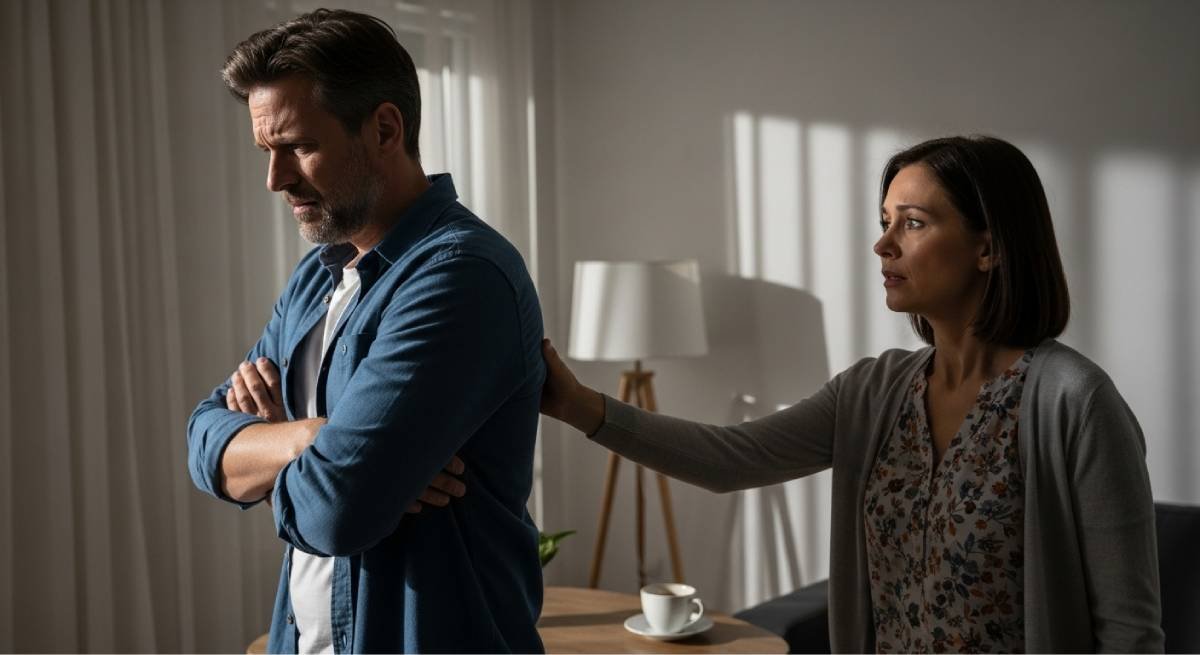
Why Is My Husband Not Interested In Me Sexually

It's a feeling that can be difficult to put into words - the sense of disconnection, of being unwanted, of being invisible to the person who is supposed to be closest to us. When our partner shows a lack of interest in us sexually, it can be a devastating blow to our self-esteem, our sense of worthiness, and our overall well-being. But why does this happen? What are the psychological roots of this phenomenon, and how can we begin to understand and address them?
Our brains are wired to respond to threats to our relationships, and a lack of sexual interest from our partner can trigger a deep-seated fear of abandonment and rejection. This fear can be so overwhelming that it can lead to a range of negative emotions, from anxiety and depression to anger and resentment. But it's not just about the emotional response - it's also about the cognitive biases and mental hurdles that can get in the way of our ability to communicate effectively and work through these issues with our partner. In today's fast-paced, technology-driven world, it's easier than ever to get distracted, to lose touch with our own desires and needs, and to neglect the emotional intimacy that is so essential to a healthy and fulfilling relationship.
Uncovering the Emotional Triggers
So, what are the hidden emotional triggers that can contribute to a lack of sexual interest in our partner? One major factor is the presence of unresolved conflicts and unexpressed emotions. When we don't feel heard, seen, or validated by our partner, it can create a sense of emotional distance and disconnection that can be difficult to overcome. Another factor is the pressure to perform, the feeling that we need to be perfect, to meet our partner's expectations, and to avoid disappointing them. This pressure can be overwhelming, leading to anxiety and self-doubt that can make it difficult to relax and be present in the moment.
Must Read
Additionally, our past experiences and trauma can also play a role in shaping our attitudes towards sex and intimacy. If we have experienced abuse, neglect, or betrayal in the past, it can create a sense of vulnerability and fear that can make it difficult to open up and be receptive to our partner's advances. Furthermore, our cultural and societal norms can also influence our expectations and attitudes towards sex, leading to feelings of guilt, shame, and inadequacy.
It's also important to recognize that our partner's lack of interest may not be about us at all - it may be about their own stress, anxiety, or depression. It may be about their own unresolved issues and unmet needs. By acknowledging and accepting this possibility, we can begin to shift our focus away from self-blame and towards a more compassionate and empathetic understanding of our partner's experience.
Breaking Down the Barriers
So, how can we begin to break down the barriers that are preventing us from connecting with our partner on a deeper, more intimate level? One key step is to communicate openly and honestly with our partner, to express our needs and desires, and to listen to theirs. This means creating a safe space for vulnerable and authentic communication, free from judgment and criticism. It means being willing to listen actively and to validate each other's emotions and experiences.

Another important step is to prioritize emotional intimacy, to make time for regular date nights, romantic getaways, and quality time together. This means putting away our phones and other distractions, and focusing on each other's eyes, voices, and bodies. It means being present in the moment, and allowing ourselves to be vulnerable and open with each other.
In addition to communication and emotional intimacy, it's also essential to focus on our own personal growth and self-care. This means taking care of our physical, emotional, and mental health, and engaging in activities that bring us joy, relaxation, and fulfillment. It means being kind and compassionate towards ourselves, and recognizing that we are worthy of love, care, and attention - regardless of our partner's level of interest.
Finally, it's crucial to seek outside help when needed, whether that means couples therapy, individual counseling, or support groups. This means being willing to confront our fears and insecurities, and to work through the underlying issues that may be contributing to our partner's lack of interest. It means being open to new perspectives and strategies, and being willing to learn and grow together as a couple.
Frequently Asked Questions
What if my partner is not interested in sex at all - is it worth staying in the relationship?
This is a difficult and complex question, and the answer will depend on a variety of factors, including the overall quality of the relationship, the level of emotional intimacy and connection, and the individual needs and desires of each partner. While a lack of sexual interest can be a significant challenge, it's not necessarily a deal-breaker - especially if the relationship is strong in other areas. However, it's essential to communicate openly and honestly with our partner, and to consider seeking outside help if the issue persists.

Ultimately, the decision to stay in a relationship or not is a deeply personal one, and will depend on our own unique values, priorities, and circumstances. What's most important is that we take the time to reflect on our own needs and desires, and to consider what is truly best for us. This may involve weighing the pros and cons of the relationship, and considering whether the benefits outweigh the challenges. It may also involve exploring our own feelings and emotions, and seeking support from friends, family, or a therapist.
How can I increase my partner's interest in sex - are there any guaranteed tips or tricks?
While there are no guaranteed tips or tricks for increasing our partner's interest in sex, there are certainly some strategies that may be helpful. One key approach is to focus on emotional intimacy, and to prioritize quality time and connection with our partner. This means being present in the moment, and allowing ourselves to be vulnerable and open with each other. It means being willing to listen actively and to validate each other's emotions and experiences.
Another important approach is to communicate openly and honestly with our partner, and to express our needs and desires in a clear and respectful way. This means being willing to take risks and to be vulnerable, and to trust that our partner will receive our message with an open and receptive heart. It means being patient, understanding, and empathetic, and recognizing that our partner's lack of interest may not be about us at all - but about their own stress, anxiety, or depression.

What if I'm not sure if my partner's lack of interest is due to a medical issue or not - how can I approach the conversation?
Approaching the conversation about our partner's lack of interest can be a challenging and delicate matter, especially if we're not sure whether it's due to a medical issue or not. One key approach is to start with empathy and understanding, and to express our concerns in a non-judgmental and supportive way. This means being willing to listen actively and to validate our partner's emotions and experiences, and to avoid making assumptions or jumping to conclusions.
It's also essential to focus on the emotional and relational aspects of the issue, rather than just the physical or medical aspects. This means exploring how our partner's lack of interest is affecting our relationship, and how we can work together to address any underlying issues or concerns. It means being willing to seek outside help if needed, whether that means couples therapy, individual counseling, or support groups.
Can a lack of sexual interest be a sign of a deeper issue in the relationship - and if so, how can I address it?
A lack of sexual interest can indeed be a sign of a deeper issue in the relationship, and it's essential to explore the underlying causes rather than just the symptoms. This means being willing to communicate openly and honestly with our partner, and to express our needs and desires in a clear and respectful way. It means being willing to listen actively and to validate each other's emotions and experiences, and to work together to address any underlying issues or concerns.
One key approach is to focus on building emotional intimacy, and to prioritize quality time and connection with our partner. This means being present in the moment, and allowing ourselves to be vulnerable and open with each other. It means being willing to take risks and to be vulnerable, and to trust that our partner will receive our message with an open and receptive heart.

How can I maintain my own sense of self-worth and confidence when my partner is not interested in sex?
Maintaining our own sense of self-worth and confidence can be a significant challenge when our partner is not interested in sex, but it's essential to remember that our worth and value come from within. One key approach is to focus on our own personal growth and self-care, and to engage in activities that bring us joy, relaxation, and fulfillment. This means being kind and compassionate towards ourselves, and recognizing that we are worthy of love, care, and attention - regardless of our partner's level of interest.
Another important approach is to seek outside support and connection, whether that means talking to friends or family, joining a support group, or seeking individual counseling. This means being willing to reach out and to ask for help when we need it, and to trust that we are not alone in our struggles. It means being willing to learn and grow, and to explore new ways of nurturing our own sense of self-worth and confidence.
As we reflect on the complex and multifaceted issue of our partner's lack of interest in sex, it's essential to remember that we are not alone in our struggles. By being willing to communicate openly and honestly, to listen actively and to validate each other's emotions and experiences, we can begin to build a stronger, more resilient relationship that is based on mutual respect, trust, and understanding. We can learn to navigate the challenges of a lack of sexual interest, and to find new ways of connecting and intimate with our partner.
Ultimately, mastering this topic leads to a better, more balanced human experience - one that is characterized by emotional intimacy, mutual respect, and a deep and abiding connection with our partner. By being willing to confront our fears and insecurities, and to work through the underlying issues that may be contributing to our partner's lack of interest, we can create a more fulfilling and meaningful relationship - one that is based on a deep and lasting connection with our partner, and a profound and abiding sense of self-worth and confidence.