Genetic Sexual Attraction Syndrome
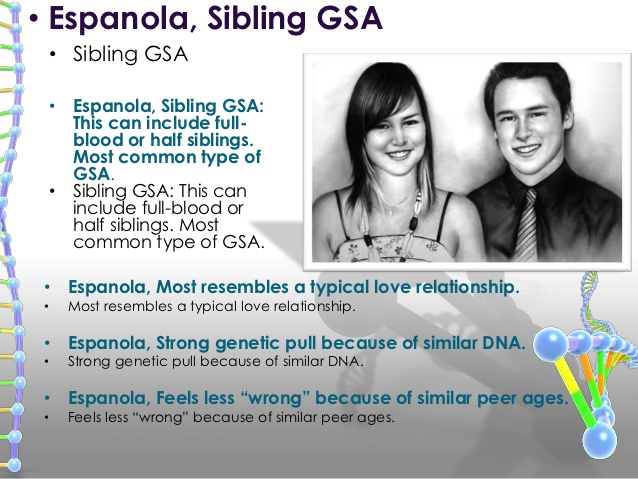
So, have you ever heard of Genetic Sexual Attraction Syndrome, or GSA for short? It's a pretty fascinating topic that has been gaining attention in recent years, and for good reason. It's a complex and intriguing phenomenon that can be really hard to wrap your head around, but stick with me, and I'll try to break it down in a way that's easy to understand.
But first, let's start with the basics: what is GSA, exactly? In simple terms, it's a strong emotional and physical attraction that can occur between two people who are closely related, like siblings or parents and children, but who have been separated at birth or haven't grown up together. It's not something that happens to everyone, but for those who experience it, it can be a really intense and confusing feeling.
A Little Background
So, how does this happen? Well, research suggests that GSA is often triggered by a combination of genetic and environmental factors. For example, when two people who are closely related meet for the first time as adults, they may experience a strong sense of familiarity or connection that can be misinterpreted as romantic or sexual attraction. It's kind of like meeting a long-lost friend, but instead of a friendship, you feel a strong physical attraction.
Must Read
Why It's Interesting
One of the coolest things about GSA is that it challenges our traditional notions of love and attraction. We often think of love as something that happens between two people who are not related, but GSA shows us that this isn't always the case. It's like our brains are wired to respond to certain people in a certain way, regardless of whether they're related to us or not. And that's a pretty mind-blowing concept to think about.
Another interesting aspect of GSA is the way it highlights the complexity of human emotions. We often try to simplify our feelings into neat little categories, but GSA shows us that emotions can be really messy and complicated. It's like trying to untangle a big ball of yarn - you're not always sure where one thread ends and another begins. And that's what makes GSA so fascinating to learn about.
The Science Behind It
So, what does the science say about GSA? Well, researchers have identified a few key factors that contribute to the development of GSA, including genetic similarity and environmental influences. It's kind of like baking a cake - you need the right combination of ingredients (in this case, genetic and environmental factors) to produce the desired result (GSA). And just like a cake, the ingredients can vary from person to person, which is why GSA can manifest differently in different people.
Despite the complexity of GSA, researchers are making progress in understanding it. For example, studies have shown that people who experience GSA often have higher levels of emotional intimacy with their relatives, which can contribute to the development of romantic or sexual feelings. It's like having a strong foundation of trust and connection that can sometimes be misinterpreted as something more.

Conclusion
So, there you have it - a brief introduction to the fascinating world of Genetic Sexual Attraction Syndrome. It's a complex and multifaceted topic that challenges our assumptions about love, attraction, and relationships. And while it may be uncomfortable to think about at times, it's also really interesting and thought-provoking. So, next time you hear someone mention GSA, you'll be in the know - and who knows, you might even find yourself intrigued by the complexity of human emotions.
And that's a pretty cool place to be - curious, open-minded, and eager to learn more about the human experience. So, keep exploring, keep learning, and always remember that there's more to the story than what meets the eye. Especially when it comes to something as complex and fascinating as GSA.