Fairchild V Glenhaven Funeral Services [2003] 1 Ac 32
![Fairchild V Glenhaven Funeral Services [2003] 1 Ac 32](https://thecasesummary.com/wp-content/uploads/2024/10/Fairchild-v-Glenhaven-FP-EN-1536x864.png)
The world of law can be fascinating, especially when it comes to cases that have a significant impact on our lives. One such case is Fairchild v Glenhaven Funeral Services [2003] 1 AC 32, which has far-reaching implications for employment law and personal injury claims. This landmark case has been widely discussed and studied, making it a popular topic among law enthusiasts and professionals alike.
The purpose of this case was to establish a new approach to causation in personal injury claims, particularly in cases where the claimant has been exposed to asbestos by multiple employers. The House of Lords had to consider whether the claimant could establish causation against one or more of the employers, even if it was impossible to determine which specific exposure had caused the injury. This was a complex issue that required careful consideration of the legal principles involved.
Background and Facts
The case involved three claimants who had all been exposed to asbestos during their employment with different companies. Each claimant had developed mesothelioma, a type of cancer caused by asbestos exposure. The claimants brought personal injury claims against their former employers, but the employers argued that they could not be held liable because it was impossible to determine which specific exposure had caused the injury. The claimants argued that the employers had breached their duty of care by failing to provide adequate protection against asbestos exposure.
Must Read
- Heart Of Mexico City Football: Pinpointing The Azteca Stadium Location
- Guadalajara Stadium Parking Guide: Avoid The Matchday Traffic
- Houston Stadium Bag Policy: Clear Bag Rules For Visitors
- Sofi Stadium Capacity: How Many Fans It Can Hold
- Reliant Stadium Parking: A Guide To The Old Name And Current Venue
The House of Lords had to consider the causation issue in detail, and their decision has had a lasting impact on employment law and personal injury claims. The court held that the claimants could establish causation against one or more of the employers, even if it was impossible to determine which specific exposure had caused the injury. This was a significant departure from the traditional approach to causation, which required the claimant to prove that the defendant's breach of duty had caused the injury on the balance of probabilities.
The decision in Fairchild v Glenhaven Funeral Services [2003] 1 AC 32 has been widely praised for providing a more just and equitable approach to personal injury claims, particularly in cases involving asbestos exposure.
The benefits of this decision are clear: it provides a more claimant-friendly approach to causation, which can help to ensure that individuals who have been injured by asbestos exposure receive the compensation they deserve. The decision also highlights the importance of employer liability in cases where employees have been exposed to asbestos or other hazardous substances. By holding employers liable for breaches of duty, the decision helps to promote health and safety in the workplace and prevent future injuries.
![Fairchild v Glenhaven Funeral Services [2003] 1 AC 32](https://lawprof.co/wp-content/uploads/2025/09/lawprof-site-image.jpg)
Impact and Legacy
The impact of Fairchild v Glenhaven Funeral Services [2003] 1 AC 32 has been significant, with the decision being cited in numerous subsequent cases involving personal injury claims and employer liability. The case has also been the subject of extensive academic commentary, with many scholars praising the House of Lords for their innovative approach to causation. As a result, the decision has become a landmark case in the field of employment law and personal injury claims, and its influence can still be felt today.
In conclusion, Fairchild v Glenhaven Funeral Services [2003] 1 AC 32 is a fascinating case that has had a lasting impact on employment law and personal injury claims. The decision has provided a more claimant-friendly approach to causation, and has helped to promote health and safety in the workplace. As such, it is an important case that continues to be widely studied and discussed by law enthusiasts and professionals alike.
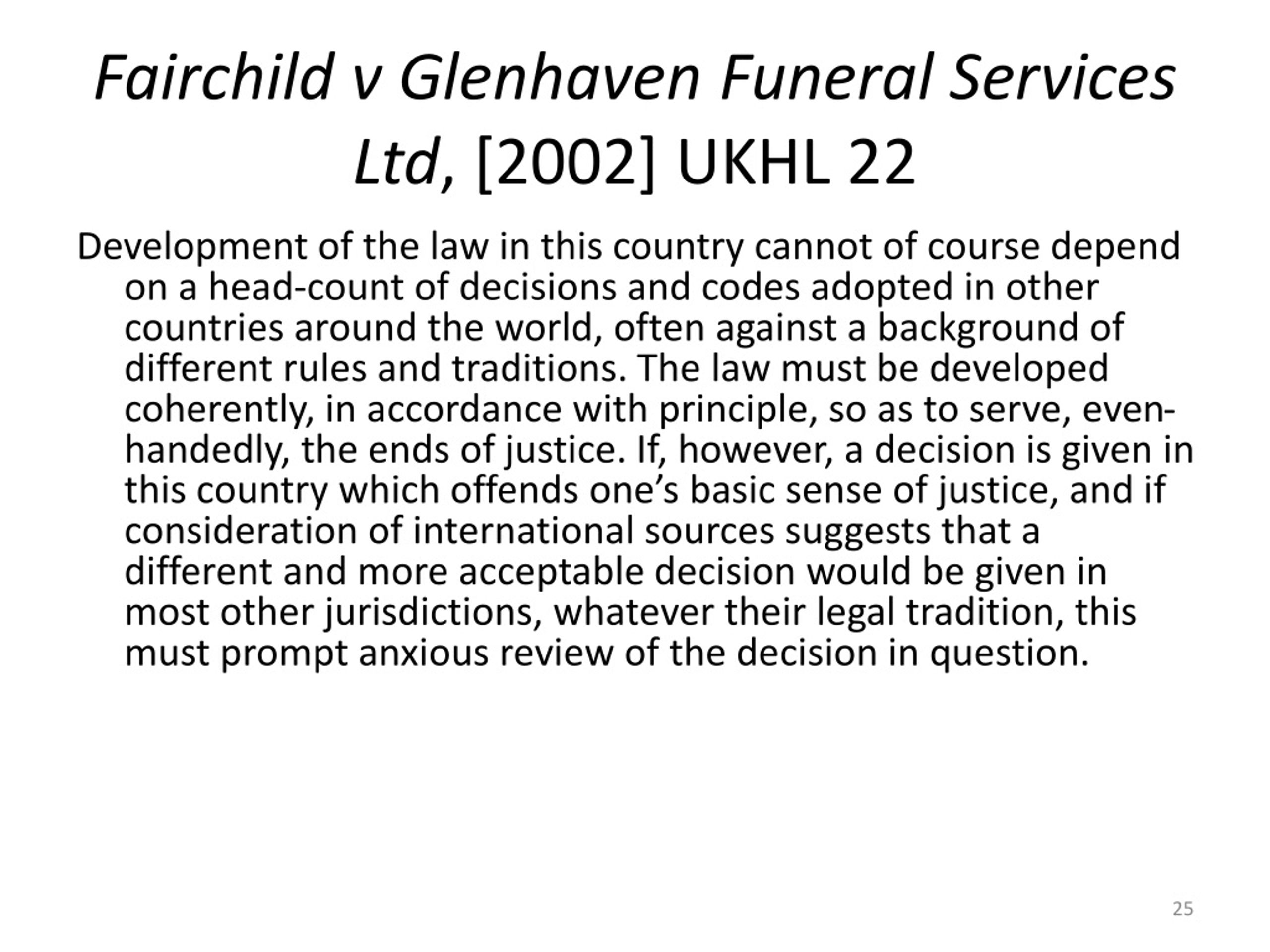
The case also highlights the importance of asbestos awareness and the need for employers to take steps to prevent asbestos exposure in the workplace. By understanding the risks associated with asbestos and taking steps to mitigate them, employers can help to prevent future injuries and ensure a safer working environment for their employees. This is a critical issue that affects many people, and the decision in Fairchild v Glenhaven Funeral Services [2003] 1 AC 32 has helped to raise awareness of the importance of asbestos safety.
Furthermore, the case has also been influential in shaping the development of employment law and personal injury claims in other jurisdictions. The decision has been cited in cases from around the world, and has helped to inform the development of laws and regulations related to asbestos exposure and employer liability. This is a testament to the enduring legacy of Fairchild v Glenhaven Funeral Services [2003] 1 AC 32, and highlights the importance of this case in the broader context of employment law and personal injury claims.
Overall, Fairchild v Glenhaven Funeral Services [2003] 1 AC 32 is a significant case that has had a lasting impact on employment law and personal injury claims. The decision has provided a more claimant-friendly approach to causation, and has helped to promote health and safety in the workplace. As such, it is an important case that continues to be widely studied and discussed by law enthusiasts and professionals alike, and its influence can still be felt today.
![Fairchild v Glenhaven Funeral Services Ltd (2003) [Case Summary]](https://thecasesummary.com/wp-content/uploads/2024/09/Barnett-v-Chelsea-FP-BN-1-2048x1151.jpg)
![Case Summary: Fairchild v Glenhaven Funeral Services [2003] 1 AC 32](https://careerinlaw.net/uk/wp-content/uploads/sites/3/2023/06/Case-Summary-Careerinlaw-Cover-Photo.jpg)