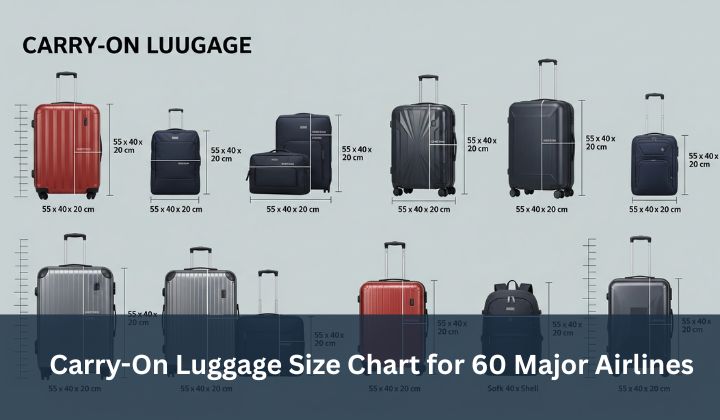
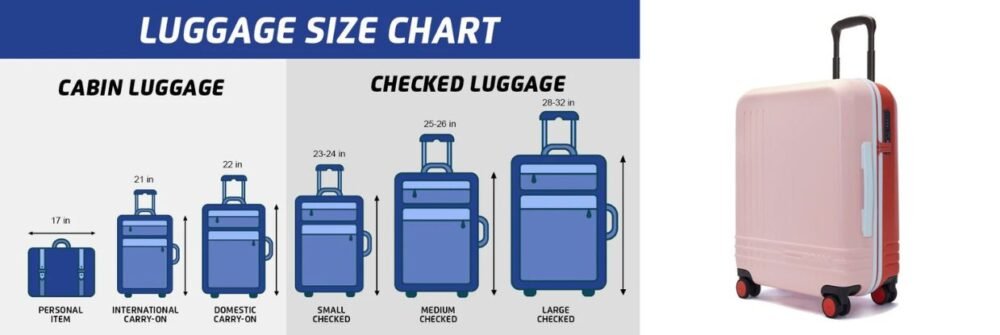
Airline Carry On Luggage Size Chart

I still remember my first flight, I was so excited to explore a new city, but little did I know that my carry-on luggage would become the center of attention. As I was about to board the plane, the flight attendant politely asked me to check my bag's size, and I was like, "Uh, is it too big?" Luckily, it fit, but I learned a valuable lesson that day: knowing the airline's carry-on luggage size restrictions is crucial to avoiding any hassle at the airport.
So, you're probably wondering, what are these size restrictions all about? Well, my friend, each airline has its own set of rules when it comes to the maximum size of a carry-on bag. It's not like they're trying to be difficult, but rather, they want to ensure that everyone's bag fits comfortably in the overhead bin or under the seat in front of you.
Why is it important to know the carry-on luggage size?
Let's face it, we've all been there - waiting in line to board the plane, only to be told that our carry-on bag is too big. It's frustrating, to say the least. By knowing the size restrictions beforehand, you can avoid the stress of having to check your bag at the last minute or, even worse, having to pay extra fees for a bag that's too large.
Must Read
- Heart Of Mexico City Football: Pinpointing The Azteca Stadium Location
- Guadalajara Stadium Parking Guide: Avoid The Matchday Traffic
- Houston Stadium Bag Policy: Clear Bag Rules For Visitors
- Sofi Stadium Capacity: How Many Fans It Can Hold
- Reliant Stadium Parking: A Guide To The Old Name And Current Venue
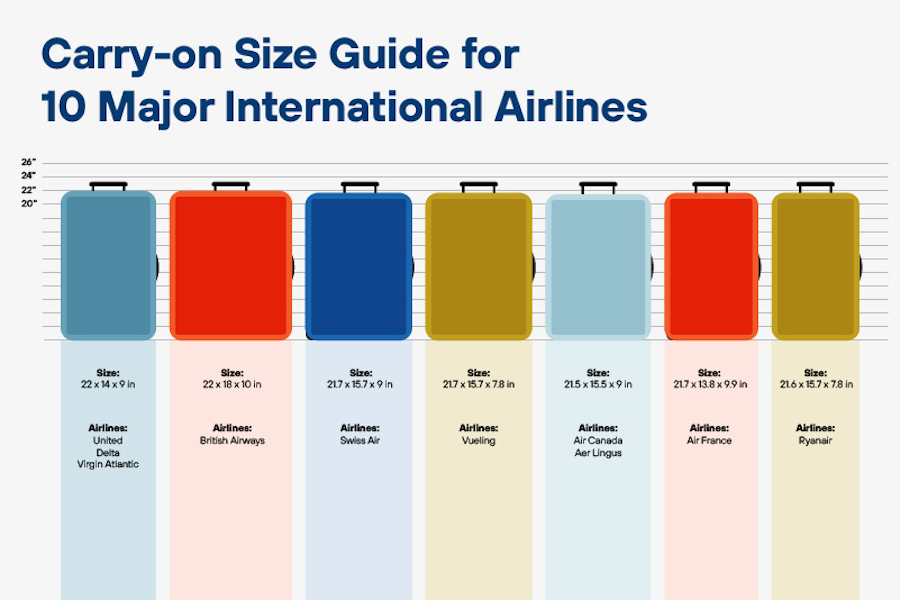
But here's the thing: airline carry-on luggage size charts can vary greatly from one airline to another. For example, American Airlines allows a maximum size of 22 x 14 x 9 inches, while Delta Air Lines allows a slightly larger size of 22 x 14 x 10 inches. So, it's essential to check with your airline before your flight to ensure that your carry-on bag meets their requirements.
What are the standard carry-on luggage sizes?
While there's no one-size-fits-all answer, most airlines follow the International Air Transport Association (IATA) guidelines, which recommend a maximum size of 21.7 x 15.7 x 9 inches. However, it's always best to check with your airline, as some may have more restrictive policies. And, let's be real, who doesn't love a good packing challenge?
Now, I know what you're thinking: "What about personal items like purses, laptops, or backpacks?" Well, most airlines allow these items to be carried on in addition to your main carry-on bag, but be sure to check their policies first. You don't want to be that person who has to gate-check their favorite handbag!
How to measure your carry-on luggage
Measuring your carry-on luggage is relatively simple. Just use a flexible measuring tape or a ruler to measure the length, width, and height of your bag. Don't forget to include any handles or wheels in your measurements, as these can add to the overall size of your bag. And, if you're still unsure, you can always check your airline's website for more information.
:max_bytes(150000):strip_icc()/TAL-illustrated-chart-CARRYSIZE0325-35ad53e34fe94833b370f432af602978.jpg)
So, there you have it - a brief guide to airline carry-on luggage size charts. By knowing the size restrictions and measuring your bag beforehand, you can avoid any headaches at the airport and ensure a smooth, stress-free flight. Happy travels, and don't forget to pack wisely!
One last thing: if you're planning to travel with a unique or oversized item, such as a musical instrument or sports equipment, be sure to check with your airline well in advance. They may have special procedures or requirements for these types of items, and you don't want to be caught off guard at the airport.
In conclusion, airline carry-on luggage size charts may seem like a hassle, but they're in place to ensure that everyone has a comfortable and safe flight. By being prepared and knowledgeable about the size restrictions, you can avoid any issues and enjoy your travels. So, go ahead, pack that sense of adventure, and don't worry about your carry-on bag - as long as it fits, you're good to go!