Yahoo Fantasy Baseball Pro Leagues

In the vast, chaotic bazaar of the modern internet, where dopamine is currency and doomscrolling is a cardio workout, one unlikely gladiator has clawed its way back into the spotlight: Yahoo Fantasy Baseball. Yes, that Yahoo—the digital attic of the early 2000s, the place where your uncle still checks his email. But hold your skepticism. We are not talking about a nostalgic reverie for smoother DSL connections. We are talking about the Pro Leagues, where the stakes are as real as your rent, and the vibes are as toxic as a Twitter main-character meltdown. It’s the unlikely intersection of Moneyball analytics, high-stakes poker, and a group chat that has silently agreed to hate each other for six months.
The cultural zeitgeist has shifted. Fantasy sports have shed their nerdy, basement-dweller reputation for a slick, algorithmic sheen, thanks to a generation raised on spreadsheets and TikTok financial bros. But the Yahoo Pro Leagues specifically have emerged as the Wild West of hustle culture. While ESPN and Sleeper chase casuals with shiny UI, Yahoo’s Pro Leagues are where the semi-serious degenerate goes to prove that they understand sabermetrics better than the front office of the Mets. It’s not just a game; it’s a flex. It’s the “quiet luxury” of the sports nerd world—no obnoxious trophy, just cold, hard cash deposited into your account and a screenshot sent to your rival with zero context.
Why is everyone suddenly talking about it? Blame the creator economy. Every micro-influencer with a tripod and a burning desire for relevance is now selling “expert” draft strategies. They’ve discovered that Yahoo Pro League content generates insane engagement because it taps into two primal human desires: gambling and knowing you’re better than your friends. The game has become a proxy for intelligence in a world that feels increasingly irrational. When the stock market is a casino and politics is a reality show, meticulously constructing a fantasy baseball roster feels like the only arena where logic and statistical probability still apply. And the fact that it happens on a platform that feels like a digital relic? That’s the ironic patina Gen Z and elder Millennials crave.
Must Read
The Piranha Tank: Navigating the Subcultures of the Pro League
Entering a Yahoo Pro League is not like joining a local rec league. It is like diving into a piranha tank wearing a steak suit. The subcultures within are diverse, terrifying, and endlessly fascinating. First, you have the Quant Jockeys. These are the people who treat the player pool like a machine learning dataset. They don’t watch games; they watch Statcast overlays. They will trade away a proven closer because his expected FIP (Fielding Independent Pitching) suggests he’s due for a regression, even if he has 20 saves and hasn’t allowed a run in a month. They dominate the chat with acronyms like wOBA and SIERA, speaking a language designed to intimidate. Their social media presence is a smoldering dumpster fire of smug cherry-picked stats, shared to X (formerly Twitter) to dunk on a player who went 0-for-4.
Then there’s the Chaos Agent. This person is the wildcard, the agent of disorder. They draft aggressively, make irrational waiver claims at 3 AM, and engage in psychological warfare via the league chat. They are the direct descendants of the 2016 political troll—they’re not trying to win; they’re trying to break you. They will offer a trade of their mediocre player for your superstar, just to see if you’ll panic-click. They are fluent in the language of viral trends, using gifs from The Bear to mock your losing streak. These leagues are not just about baseball; they are about status anxiety performed in real-time. The chat logs read like a cross between a Wall Street trading floor and a Reddit AITA thread. The social dynamic is brutal: winning is the only armor. Being a nice guy in a Pro League is like bringing a butter knife to a drone strike.
There is also the Silent Assassin—the avatar of pure internet introversion. They never post in the chat. They have no bio, no profile picture update since 2009. Yet, every week, they quietly maximize acquisitions, stream two-start pitchers, and sit at the top of the standings. They are the boogeyman of the league, the unbothered king who treats the entire exercise with the seriousness of a PhD dissertation. This creates a cultural divide: the performative loudness of the social media bros versus the cold, stoic efficiency of the silent grinders. It mirrors our current digital landscape where engagement bait is prioritized over substance, but the silent ones are quietly racking up the W’s. This friction is the engine of Pro League culture—it’s a microcosm of the attention economy itself, where the loudest voices are rarely the most successful ones.

How to Survive the Yahoo Pro League Grind Without Losing Your Rent Money
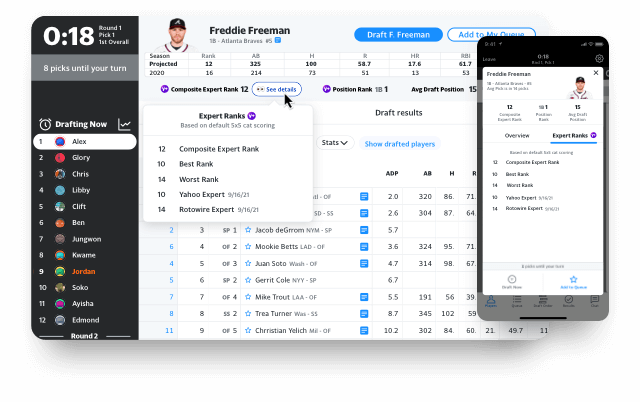
Let’s be clear: the barrier to entry is a price tag, but the barrier to sanity is a steep cliff. You cannot just walk in blind. Step one is extensive pre-draft autopilot management. Do not, under any circumstances, rely on Yahoo’s default rankings. They are designed for casuals. If you show up to your live draft without a custom queue, you are the lamb. Use the week leading up to the draft to mock draft against bots that are set to mimic Matt’s aggressive style from the Discord server. Treat the draft like a financial portfolio: you need a crippling anchor in elite hitting, a risky pivot in pitching, and a few value picks in the later rounds that the Quant Jockeys will undervalue because they’re too busy looking at spin rates for a guy who throws a heater 30% of the time.
Step two is to manage your mental health via mute buttons. The chat feature in Yahoo is a time-suck that produces zero statistical benefit. Do not get dragged into a 45-minute debate about whether Joey Gallo is back. The toxic energy is real, and it will cloud your judgment. Archive the chat, engage only via the trade interface, and let your roster do the talking. The moment your opponent starts spamming laughing emojis because your starter got shelled in the first inning, remember: they are trying to trigger a reactionary trade or a waiver-wire panic. Your serenity is your weapon. Disconnect from the social aspect, and reconnect with the data. This is the “Ghosting” strategy—it’s viral for a reason. It works in dating, and it works in fantasy.
Third, master the waiver wire velocity. In Pro Leagues, the wire is a feeding frenzy. You cannot wait until 11 AM to check for injuries. You need to set alarms. Follow team beat writers on Twitter (X) for the most obscure updates. If a middle reliever suddenly becomes the setup man due to a blown save, you have a 30-second window to grab him before the Chaotic Agent does. This is where the lifestyle aspect comes in—commit to being that guy who checks the news while brushing his teeth. It’s a horrifying admission of our connected reality, but the clutch waiver claim is the modern equivalent of a walk-off home run. You don’t need to watch the game; you just need to know when the closer implodes and who’s next in the bullpen hierarchy.
Finally, protect your bankroll. Yahoo Pro Leagues have varying entry fees, and it’s tempting to jump into the $100 leagues to “feel something.” Don’t. Start at the $10–$25 level. The payout isn’t life-changing, but the intensity is the exact same. The predators are just as hungry for a $20 payout because they need to validate their existence. The secret to long-term success is capital preservation. Think of it like a bankroll management plan for poker. You are not a baller; you are a grindr. Unless you have the analytical IQ of a data scientist, avoid the high-stakes tables. The juice isn’t worth the squeeze, especially when your league mates are operating on a level of psycho-obsession that would make a Silicon Valley founder blush. You are paying for the competition, not the potential payout. Pay for the thrill of beating the Quant Jockey’s algorithm with your gut, and cash out quickly when you win. Do not let the winnings burn a hole in your digital pocket.
FAQ: The Burning Questions on the Internet's Tongue
Are Yahoo Pro Leagues Rigged or Just Unfairly Difficult?
The internet loves a conspiracy theory. But no, they are not rigged. However, the unfairness is by design. Yahoo uses a system that prioritizes active managers. The scoring algorithm is standard, but the competition is not. What feels like rigging is actually the brutal mathematical reality of variance. In a Pro League, you are dealing with a small sample size—a 22-week season. A player performing at 10% above their career average can swing an entire matchup. This leads to the infamous “Luck vs. Skill” debate ravaging Reddit threads. The true answer is that Fantasy Baseball is 70% luck, 25% prep, and 5% not having your star player get injured while tripping over a bat bag. The “rigged” feeling comes from playing against opponents who have algorithmic edge—they are running simulations that you aren’t. It’s not rigged; it’s just that your A-Game is their C-Game. You are playing chess while they are playing 4D chess.
Furthermore, the pricing structure of Pro Leagues means Yahoo takes a cut. This complicates the psychological aspect. You are not just playing for the pot; you are playing against a silent third party—the casino. This doesn't mean the outcome is fixed, but it means the house always has an edge. This realization is where the despair for casuals sinks in. You need to win consistently to maintain profitability. This is why the ecosystem feels so toxic—the players are not just fans; they are arbitrageurs looking to exploit statistical inefficiencies. So when you lose by 3 points because a relief pitcher blew a save on Sunday night, it feels rigged. It’s not. It’s just the cruel, cold calculus of baseball and the emotional trauma of being a sports fan in the digital age.
Is Yahoo Fantasy Baseball Better Than ESPN or Sleeper in 2025?
This is the holy war of the fantasy community. The “ESPN is the app for normies” crowd is loud. Sleeper has the sleek UI and the “social feed,” but it lacks the legacy stat depth. Yahoo’s Pro Leagues offer the best combination of transaction speed and analytical depth for a grind-heavy player. The mobile app is a bit clunky, which ironically acts as a filter. If you can’t navigate the archaic interface, you probably aren’t a serious contender. It’s the Meth of fantasy apps—it’s not pretty, but it’s effective. ESPN is the Starbucks—ubiquitous, easy, but diluted. Sleeper is the TikTok—great for engagement, but ultimately shallow when you need raw data at 1 AM.
Yahoo wins on the livability of the commissioner tools. You have insane customization. You can set weekly or daily lineups, adjust scoring categories with granularity, and process trades without needing a PhD. But the real edge is the Pro League environment itself. It creates a self-selecting pool of sharks. On ESPN, you can join a public league and play against a dad who auto-drafts Tom Brady in the first round. In Yahoo Pro, you are paying to play against the dad who has a spreadsheet on Brady’s throwing velocity decline. The pay-to-play model inherently curates a higher skill floor. So yes, for the degenerate accuracy and the competitive purity, Yahoo Pro is superior. It respects your intelligence by assuming you are dumb enough to pay for the torture, but smart enough to handle the data.
Can You Make a Living Playing Yahoo Fantasy Baseball Pro Leagues?
The short answer is no, unless you are a robot. The internet is rife with stories of people quit their jobs to “grind fantasy sports.” These are the same people who use “financial influencer” in their bio un-ironically. The reality is that the entry fees in Pro Leagues are capped. The biggest sharks in the Yahoo pool are often playing daily fantasy on Underdog or DraftKings for the real money. The Pro Leagues are a side hustle at best, a passion project with a modest return. The time commitment, however, is a full-time job. Between writing scouting reports, monitoring injuries, and analyzing park factors, you could easily put in 30 hours a week. If you divide your winnings by those hours, you’re making less than minimum wage.

That said, the ancillary value is immense. The skills you sharpen—data analysis, risk assessment, emotional regulation under pressure—are transferable to real-world finance and trading. Many users report that their fantasy discipline helped them manage crypto portfolios better (or at least lose less money). Also, the social capital is high. Winning a Pro League gives you an unassailable position in your friend group’s group chat. It is the digital equivalent of biological fitness signaling. You aren't making a living, but you are building a reputation as a high-level stat dork. That can lead to opportunities—podcast appearances, freelance writing gigs, or simply being the king of the tailgate. So, ignore the “quit your job” YouTube thumbnails. Keep your day job, treat the Pro League as an expensive hobby that occasionally pays for your bar tab, and enjoy the ride.
Is this a passing fad? Absolutely not. The fusion of sports betting culture and advanced analytics is a structural change in the zeitgeist. We have passed the Rubicon. The days of “just having fun” with fantasy are dead, murdered by the relentless march of data. We are now in the era of the professional amateur. The Pro League is not just a game; it is a gymnasium for the modern brain, a place to exercise our need for control in a chaotic world. It’s permanent.
So, pull up a chair, log on to Yahoo, and ignore the dated interface. Join a Pro League, embrace the toxicity, lose your sanity, and win a little cash. It’s the most honest mirror of our times: a chaotic, stats-driven, emotionally volatile war zone where the only true victory is hitting the “Roster Lock” button with confidence. And if you lose, well, there’s always next week’s waiver wire—the ultimate symbol of our undying, masochistic hope.