
Wikipedia Editors When Someone Dies

Okay, let’s be real for a second. When a famous person passes away, our first instinct is to refresh Wikipedia, right? It’s like the internet’s collective pulse, and we’re all just checking to see if the news has hit the digital encyclopedia yet.
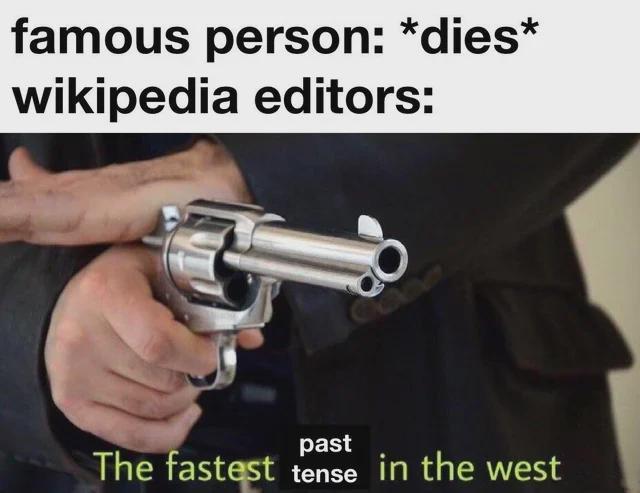
But have you ever stopped to think about the people behind that page update? The ones who spend their Tuesday night rewriting a celebrity’s biography from "is" to "was"? It’s a weird, fascinating, and oddly beautiful corner of the internet, and honestly, it’s a bit like being a digital grief counselor.
The "Is" to "Was" Club
Imagine you’re a volunteer librarian, but instead of shushing people, you’re dealing with millions of frantic, emotional readers. That’s kind of the vibe. These editors aren’t paid; they’re just super-dedicated volunteers who care deeply about accuracy and history.
Must Read
When a high-profile death happens, it’s like a fire alarm goes off in their community. They swarm the article, not to gossip, but to meticulously verify sources, update dates, and make sure the article reflects reality without any panic-driven vandalism.
You might think it’s morbid, but think of it as a digital embalming process. They’re preserving the person’s legacy in real-time, ensuring the record is straight for the next hundred years.
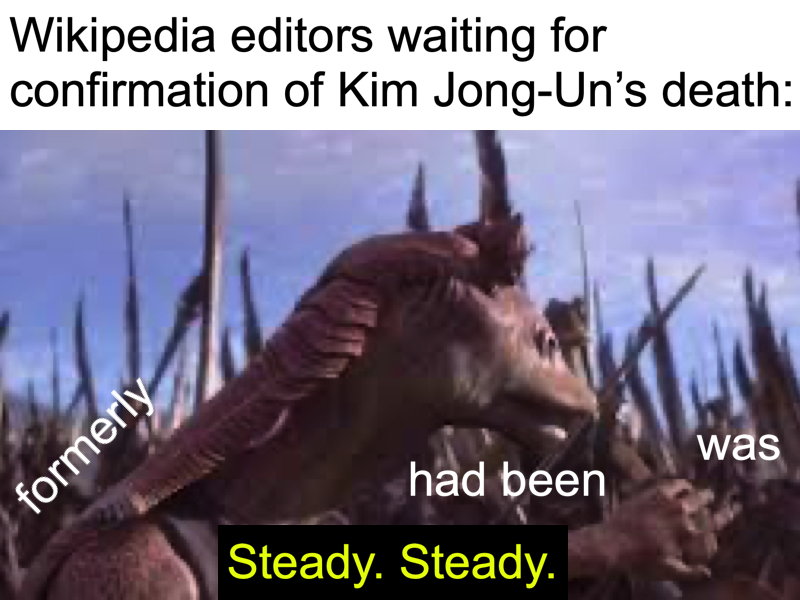
The Speed of the News Cycle vs. The Patience of Editors
Here’s where it gets really cool. The moment news breaks, there’s a mad rush. One editor might add a sentence, then another editor corrects a typo, then someone else reverts it because the source is a tabloid. It’s a chaotic, beautiful storm.
They have to balance speed with reliability. It’s like they’re cooking a gourmet meal while a food critic is standing over their shoulder, screaming. They can’t just copy-paste the first tweet they see; they need a solid, reputable obituary or statement first.

And yeah, sometimes they mess up. They’ll post a death date that’s wrong, and then a relative or a friend will pop in to correct it. That’s when it becomes deeply personal. It’s a reminder that behind every "citation needed" tag is a real human life.
Why This Is Weirdly Awesome
Here’s the thing that gets me: these editors are guarding the memory of us all. Think about it—when you look up a historical figure, you trust that the information isn’t just a random rumor. These folks are the unsung heroes of that trust.

They’re also handling an insane amount of emotion. Strangers will comment on talk pages, arguing about whether a musician’s cause of death was "too private" to include. The editors have to navigate that—deciding what’s factual and what’s simply intrusive gossip. It’s a heavy responsibility, right?
It’s kind of like they’re the bouncers at the VIP section of history. They’re not letting in every random rumor that wants to party, but they are letting in the verified, respectful facts.

A Little Respect, Please
So the next time you refresh a page and see a neat, clean update about someone’s passing, pause for a second. Somewhere, a person with a username like "HistoryBuff42" just spent two hours verifying a birth date so you could get the gist in five seconds.
They’re not doing it for fame or money. They’re doing it because they believe that stories matter, even after the final chapter ends. They’re the quiet, tireless archivists of our shared human experience.
And honestly, in a world that can feel pretty chaotic, that’s a weirdly comforting thought. It’s a tiny, digital act of care, repeated millions of times, for every soul that leaves the timeline. Pretty cool, huh?


![[OC] The number of people with Wikipedia pages that died in a given](https://preview.redd.it/the-number-of-people-with-wikipedia-pages-that-died-in-a-v0-deuspubx9c981.png?auto=webp&s=53c080ecf2a43449a8a6c436f8b1d0e36476abbe)