What's The Point Of American Express
Every time you hand over a piece of plastic, you are initiating a complex, split-second ballet of data transmission, risk assessment, and fraud detection algorithms. Most people view a credit card as a simple loan tool, but American Express (Amex) operates on a fundamentally different biological and economic principle. It is not a bank in the traditional sense; it is a closed-loop network, acting simultaneously as the issuer, the lender, and the payment processor. In the world of financial engineering, this means that every transaction you make generates a real-time torrent of behavioral data that is processed through a proprietary, high-frequency clearance system, akin to a neuronal synapse firing without an intermediary brain. This architecture alters the physics of your spending, shifting the incentive structure from "borrowing money" to "proving your reliability as a high-yield consumer."
From a pragmatic, life-optimization standpoint, the "point" of Amex is not the metal card’s weight or the lounge access; it is the network effect applied to your personal liquidity. When you use a Visa or Mastercard (open-loop), the merchant’s bank and your bank negotiate a fee. With Amex, you are trading with a tribal economy that charges merchants a higher interchange rate (typically 2.5% to 3.5% versus 1.5% to 2.5%) in exchange for a demographic that statistically spends more per transaction. This is not charity; it is a biological filter selecting for cardholders who exhibit spending patterns of affluence and reliability. For the consumer, this means the card is not a tool for the uninitiated; it is a performance enhancer for those who have already optimized their cash flow. The science of this system dictates that if you miss a payment or carry high revolving debt, you are fighting the algorithm, not working with it, turning a high-performance tool into a liability with a punishing interest rate.
The pragmatic question is whether the psychological friction of an annual fee (often $250 to $695) is justified by the measurable output. The answer lies in the data. Studies on consumer behavior show that the "pain of paying" is reduced when using a credit card versus cash, but Amex takes this a step further by converting spending into a gamified feedback loop of points and statement credits. To extract value, you must treat the card not as a wallet, but as a catalyst for specific, planned expenditures. The biological reality is that dopamine spikes on reward, but the science of optimization requires you to delay that gratification for the monthly statement cycle, ensuring that your points earn at a rate higher than the opportunity cost of your cash sitting in a high-yield savings account.
Must Read
The Neurochemistry of Premium Spending & The "Amex Bubble"
Delving deeper, the Amex ecosystem exploits a specific cognitive bias known as the endowment effect, amplified by the sunk cost fallacy of the annual fee. When you pay $695 for a Platinum card, you have already mentally spent that money. Your brain, seeking to justify the loss, shifts its risk tolerance, encouraging you to use the card for larger purchases or to aggressively chase the Membership Rewards (MR) points. This is a neuro-chemical loop: the anxiety of the sunk cost is alleviated by the anticipation of a "free" flight or a hotel upgrade. The Amex algorithm knows this, which is why their approval process often looks at total spending velocity and income stability rather than just credit utilization. They are measuring your metabolic rate of money—how quickly and consistently it flows through your accounts.
There is also a biological component to the concept of "Amex Acceptance." Unlike Mastercard’s ubiquitous reach, Amex historically had higher merchant fees, leading to a patchwork of acceptance. This scarcity creates a stress response in certain consumers (the fear of being declined), which ironically improves spending discipline. The pragmatic hack here is to understand that Amex is not a primary debit card; it is a routing mechanism for high-value, non-negotiable bills. The closed-loop system means that Amex has real-time visibility of your spending on dining, airlines, and groceries. They use this data to send you targeted offers, effectively acting as a behavioral nudge to steer your spending toward partners where they earn the highest kickback. To master this, you must treat these offers as biological "cheat codes"—only activate them if you were already going to buy that specific item, otherwise you are falling for a classic marketing-induced demand fallacy.
Furthermore, the science of credit scoring (FICO) has a paradoxical relationship with Amex. Because Amex is a charge card (pay-in-full) by default for many products, the credit utilization ratio (a major scoring factor) can actually become nullified if you pay monthly. This is a statistical advantage. By removing the revolving debt variable, you lower your credit utilization to near zero naturally, which tells other lenders that you are a low-risk borrower. It’s a systemic hack: you are using Amex’s high-friction, high-reward structure to artificially suppress a negative metric on your credit report, while simultaneously building a history of high-limit, consistent payments. This is financial biology at its finest—adapting your habits to the environment rather than fighting the terrain.
Engineering Your Life: The Pragmatic Amex Optimization Protocol
To truly understand the point of Amex, you must stop thinking of it as a credit card and start thinking of it as a subscription for efficiency. Here are the strict, measurable strategies to extract maximum utility from the system without falling into the debt trap.
1. Calculate Your Effective Annual Fee (EAF) rigorously. Do not look at the $695 fee in a vacuum. Use the formula: EAF = Annual Fee - (Value of Automatic Credits + Value of Points Earned on Required Spend). For the Platinum card, if you use the $200 airline credit, $200 Uber credit, and $240 digital entertainment credit, your fee drops to $55 with zero points counted. If you don’t use those credits, the card is a biological drain on your capital. Rule: If your EAF is not below $100, you are losing to the algorithm.
2. Leverage the "Pay Over Time" Feature as a Zero-Interest Float. Amex offers "Pay Over Time" on charge cards, which allows you to carry balances on certain purchases. This is a hidden hack. If you have a sudden large purchase (e.g., medical bill or appliance), enrolling in this feature can give you a grace period of 30-60 days at 0% APR, provided you pay the rest in full. This acts as a free, short-term liquidity bridge, allowing your cash to stay in a high-yield savings account earning 4-5% APY for an extra month. Metric: Track the interest you earn on your cash float; if it exceeds $10/month, the card is paying you.

3. Use the Amex Travel Portal ONLY for the "5x" multiplier, but verify base prices. The biological hack here is to buy refundable flights on the portal to get 5x MR points, then cancel the flight for a full credit. You keep the points. This is a legitimate gray-area optimization. You are effectively buying points at a subsidy. Actionable step: Execute this once a month with a refundable fare under $200 to accumulate points at a cost basis of 1 cent per point, then use those points for international business class seats (where valuation exceeds 5 cents).
4. Dissect the "Amex Offers" engine bi-weekly. Amex Offers are targeted, stackable discounts. Treat them like a compounding interest on spending. Add every relevant offer to your card, even if you don't plan to use it. The act of adding it to your Card Member dashboard doesn't commit you, but it does trigger targeted "spend-based" bonuses later. Rule of thumb: Only spend to hit a "Spend $500, Get $100" threshold if the item is a non-perishable or you can resell it on the secondary market. Any other use is a mathematical loss.
5. Prioritize the 'Centurion Lounges' and Global Entry as a time-efficiency hack. Your time is your most non-renewable resource. The value of expedited security (Clear + Global Entry) and lounge access is directly quantifiable. If you value your time at $50/hour, skipping a 30-minute security line at an airport saves $25. Over 10 trips a year, that’s $250 in saved time—before you even eat a free meal. Pragmatic action: Calculate your hourly wage, then multiply by 2 hours per flight to see if the lounge access justifies the fee. For most professionals making over $80k/year, it does.

Frequently Asked Questions: The Data-Driven Troubleshooting Guide
1. Is the American Express Platinum card worth it if I only fly 2-3 times a year?
Strictly mathematically, no—if you look at lounge access alone. However, you must consider the opportunity cost of the credits. The automatic credits (airline, Uber, Saks, entertainment) total roughly $800 in value annually if you use them strategically. If you can engineer your daily life to use these credits (e.g., buy Uber gift cards as gifts, use the digital credit for cloud storage you already pay for), you are effectively getting paid $105 to hold the card. If you cannot, the card is a net negative. Actionable fix: Purchase refundable airline tickets on your preferred airline using the credit, then cancel them after 24 hours; Amex still issues the credit back to you as a statement credit in most cases—but check current terms. This converts a travel-specific credit into a general balance reduction. For infrequent travelers, the booking portals' 5x points aren’t enough to justify the fee, but the credits can be.
2. Why does Amex charge merchants higher fees, and does that affect my experience?
Biologically, you are part of a correlated risk pool. Amex cardholders have higher average spending and lower default rates. Merchants pay more because they get access to your demographic. The systemic reaction is that some small businesses will reject Amex. The pragmatic hack is to carry a Visa card as a backup—not for spending, but for situational friction. When a merchant declines Amex, you lose points. The data shows that the points lost on a $50 transaction are worth about $1. If you spend 30 seconds of your time to pull out another card, you have lost money. Optimization: Use Amex for online purchases where acceptance is 100%, and use your 2% cashback Visa for brick-and-mortar small businesses. This maximizes your average return to 2.5%+ everywhere.
3. How do I avoid the high interest rate if I accidentally carry a balance?
The first rule of Amex is that interest rates are not your friend. They are often variable and can exceed 25% APR. The biological trap is the "Minimum Payment" option—it is designed to maximize your lifetime value to the bank. Strict protocol: Set up your checking account to auto-pay the Full Statement Balance. If you find you are carrying a balance, you are in the danger zone. The only scientific workaround is the "Pay Over Time" feature, which sometimes offers 0% APR promotions for 6-12 months on specific large purchases. If you carry a balance, you must immediately move it to a balance transfer card with a 0% intro APR to stop the compound interest hemorrhaging. Metric: If your revolving balance is more than 10% of your credit limit, you are not an "Amex member," you are a liability to be milked.

4. How are Membership Rewards points valued, and how do I maximize their redemption?
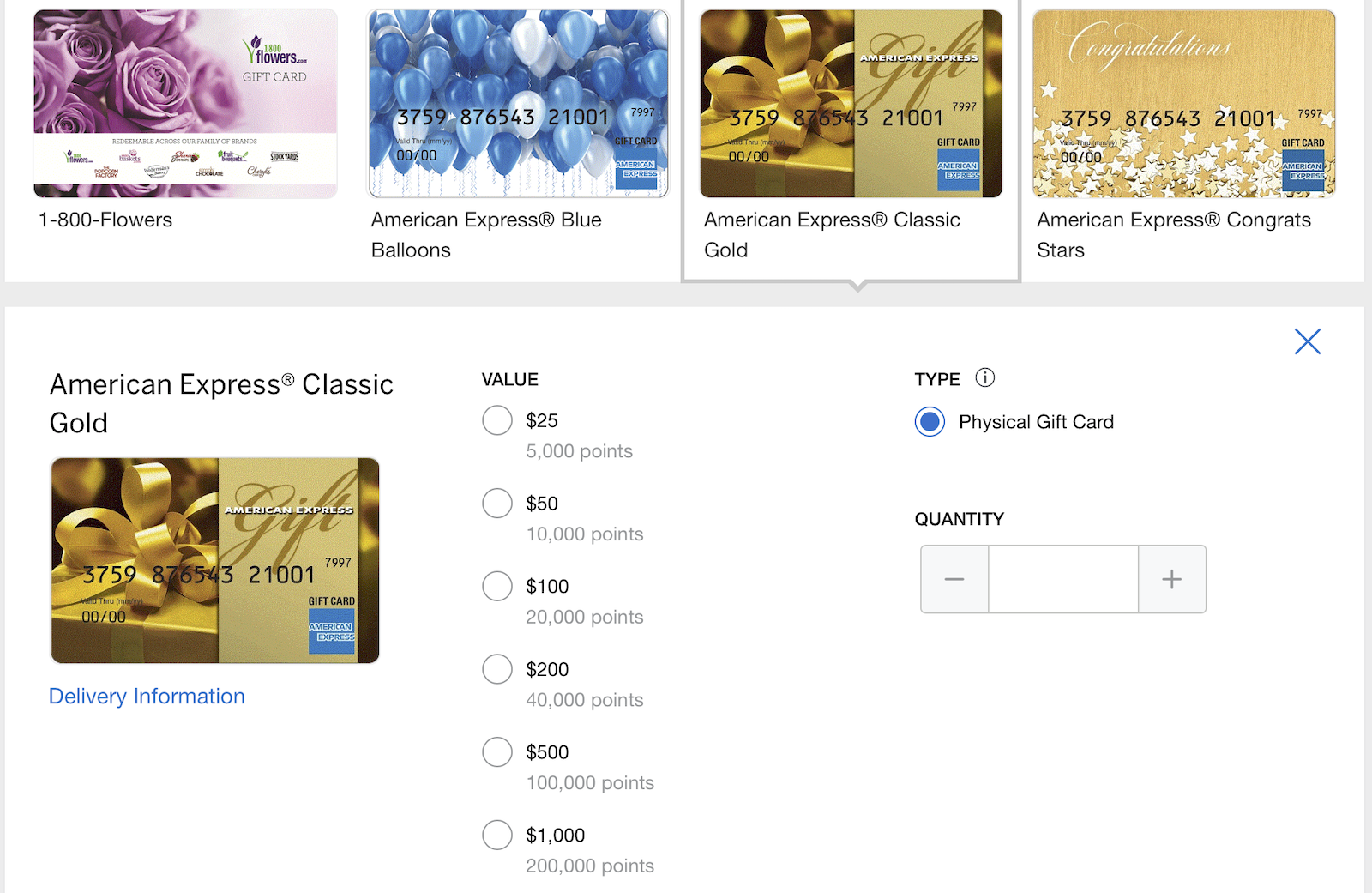
MR points are a currency, and their value fluctuates based on redemption method. If you redeem them for gift cards, you get 0.5 to 1 cent per point (cpp). If you redeem for flights through transfer partners (Aeroplan, Avianca, ANA), you can achieve 2 to 5 cpp. The science of redemption is using dynamic pricing vs. fixed pricing. The hack is to search for "sweet spot" routings, such as booking a domestic Delta flight through Aeroplan for 6,000 points. Actionable strategy: Never redeem for merchandise. Always transfer to airline partners. Sign up for airline loyalty programs even if you don’t have elite status; this gives you access to their award charts. Track your points' value monthly. If your average cpp is below 1.5, you are mismanaging your asset.
5. Does opening an Amex card hurt my credit score due to the hard inquiry?
Yes, a hard inquiry will temporarily drop your score by 5-10 points (depending on your file). However, Amex has a "soft-pull" check if you already have a card and apply for another. Over a 6-month horizon, the inquiry is negligible. The more significant biological factor is Credit Age. Closing an old Amex card hurts your average account age. Pragmatic tech: Do not close old Amex cards unless they have an annual fee you refuse to pay. Instead, call and ask to "Product Change" to a no-fee card like the Amex Blue Cash Everyday (0 fee). This preserves your credit history and keeps the line open. The data shows that having 2-3 Amex cards (one charge, one credit) can stabilize your utilization ratios better than having 5 different bank cards.
The Efficiency Feedback Loop
Respecting the closed-loop science of Amex forces you to become a conscious operator of your financial biology. You move from being a passive consumer reacting to marketing to an active engineer who measures inputs and outputs. The card teaches you to value liquidity, to respect the mechanics of interchange rates, and to see the hidden subsidies in your daily purchases. This is not about being "rich"; it is about being accurate. When you internalize that every transaction has a data point and a potential rebate, you stop spending impulsively. You spend strategically, which in turn reduces financial anxiety—a known biological stressor that impairs cognitive function.
Ultimately, the point of American Express is to provide a high-velocity training ground for financial literacy. It rewards those who understand the physics of float, the chemistry of credit scoring, and the psychology of delayed gratification. By mastering Amex, you are not just optimizing points; you are optimizing your own decision-making circuitry. You learn that the best "life hack" is not avoiding fees, but extracting more value from the system than the fee represents. This pragmatic mindset—measuring, analyzing, and adjusting—is the closest thing we have to a biological upgrade in the modern economic jungle.