What's The Best Free Streaming App

To truly understand the quest for the best free streaming app, you have to rewind the tape to a time when the very concept of "watching what you want, when you want" was the stuff of fever dreams. I remember the late 1980s and early 1990s, a era defined by the sacred ritual of the Friday night trip to Blockbuster. The air smelled of popcorn and plastic VHS cases, and the most profound existential crisis of the week was choosing between a lesser-known indie gem or the blockbuster that was, inevitably, “already rented out.” The human necessity then wasn’t just about entertainment; it was about ownership and anticipation. We paid for physical media, lugged it home, and were bound by the tyranny of the 24-hour rental. If you forgot to rewind the tape, you were a social pariah. This was a world of scarcity, where the "app" was a physical shelf, and the "data plan" was the gas in your car.
Then came the shuddering, pixelated revolution of the late 1990s and early 2000s. Napster had just destroyed the music industry’s business model, and a shadowy new frontier emerged: the torrent site. Platforms like Kazaa and LimeWire were the wild, lawless predecessors to the modern streaming app. They weren't apps at all; they were clunky software on a desktop PC that made your dial-up modem scream in protest. The user experience was horrendous—a 700MB movie could take fourteen hours to download, only to discover the file was a dud or a virus masquerading as a blockbuster. Yet, this era was crucial because it planted the seed of an audacious idea: the content could come to you, for free, without the physical constraint of a store. It was chaotic, ethically dubious, and gloriously democratic, but it was a nightmare for the average person who just wanted to unwind after a long day. The initial human necessity had shifted from ownership to convenience—and torrents, with all their danger, were the first ugly, raw prototype of that dream.
It wasn’t until the late 2000s that the titans stepped in to civilize the chaos. YouTube, launched in 2005, was the first to truly democratize video, but it was a messy repository of cat videos and low-res clips. Then, in 2007, a giant leap occurred: Hulu launched as a joint venture to offer network TV shows online. It was free, but it forced you to watch ads—a concept that felt eerily reminiscent of television, but with the novelty of being on your computer. The "best free streaming app" back then was merely a browser tab. But the monumental shift happened with the introduction of Netflix’s streaming service in 2008, which took the DVD-by-mail giant and turned it into a digital library. However, it wasn’t free, and the idea of "free, legal, and high-quality" streaming still felt like a paradox—a myth whispered about in tech forums, always on the verge of being shut down by copyright lawyers. The longing was no longer for convenience alone, but for curation and legality without the financial burden.
Must Read
The Gold Rush of Free: From Ad-Supported to the Rise and Fall of the Aggregator
The true transformation of the free streaming app began to take shape in the 2010s, a decade I consider the "Wild West of Broadcast." The pioneers were apps like Crackle (owned by Sony) and Tubi (launched in 2014). These platforms bastardized the old TV model, resurrecting the "commercial break" as the price of admission. But the content was often the B-sides, the old catalogues, the films that had fallen out of the cultural zeitgeist. It was a digital graveyard with a nice UI. The bizarre thing about this era was the public perception: if you used a free app, you were viewed as either a cheapskate or a tech-savvy pirate who had found a weird loophole. There was a social stigma attached to it. Nobody bragged about watching a free movie on Crackle; it was a secret you kept, much like admitting you enjoyed a particular brand of frozen pizza. The ad-break frequency was jarring, with a 90-minute movie stretched to two hours by repetitive car and shampoo commercials.
Forgotten vintage facts abound from this period. Did you know that Popcornflix was one of the first to offer "free" movies without requiring an account, relying purely on geolocation to serve ads? It was a bizarre, frictionless experience that feels ancient now. Then, there was the strange, short-lived phenomenon of "pre-roll heavy" free apps like Vudu’s "Movies on Us" feature, which would make you watch a 5-minute ad block before the film started, a move that felt deliberately punitive. However, a more significant and darker transformation was the rise of "aggregator" apps in the late 2010s. These weren't legal services; they were scrapers that pulled pirated content from across the web into a slick, Netflix-like interface. Apps like ShowBox and Popcorn Time were stunningly efficient. They offered everything—brand new theatrical releases, 4K quality, absolutely free, with no ads. They were the apotheosis of the torrent dream: perfect UX, zero cost, total illegality.
The mainstream industry reacted with a mix of panic and inspiration. They realized they couldn’t out-lawyer the sheer demand for free, high-quality content. So, they hacked the user psychology. The big studios started licensing older catalogues to free ad-supported television (FAST) apps at a rapid clip. Pluto TV, which launched in 2014 and was acquired by ViacomCB (now Paramount) in 2019, transformed the game by eschewing the "on-demand" library model entirely. It went back to the future, replicating the linear television experience of my childhood—complete with channel guides and scheduled programming—but delivered entirely over the internet. It was a stroke of nostalgic genius. You weren’t choosing a movie; you were "turning on" the Horror Channel or the Classic TV Channel. This removed the decision fatigue of modern streaming and tapped directly into the passive viewing habits of the 20th century.
Finally, the late 2010s saw the democratization of the tools themselves. The "best free streaming app" began looking less like a single destination and more like a suite of services. Roku Channel, Apple TV app, and even Amazon’s Freevee (originally IMDb TV) started bundling free content into the platforms you already owned. They leveraged their hardware to offer free, ad-supported tiers that felt surprisingly premium. The ad experience itself was modernized—gone were the bumbling local car dealership spots, replaced by slick, targeted digital advertising that remembered my browser history. The industry had finally learned the lesson from the pirate apps: give the people the interface they want, and they will tolerate the commercials. The stigma faded, replaced by a savvy consumer logic that realized "free" was no longer a euphemism for "crap," but a legitimate, curated experience.
Hacking the Classics: The Modern Algorithmic Curation
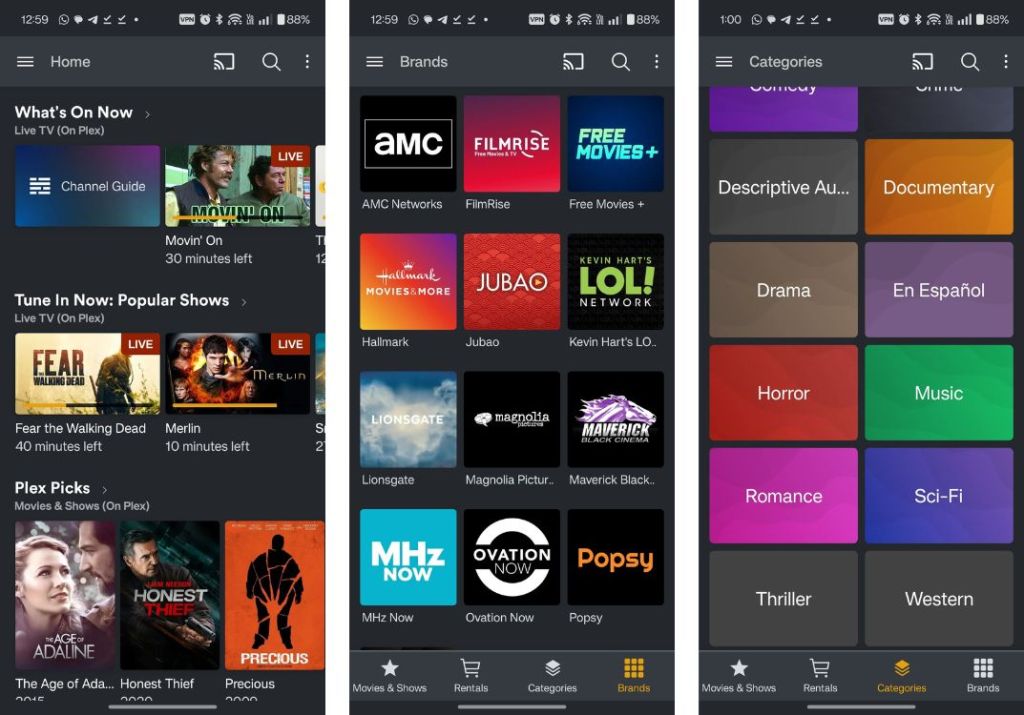
Today, the classic principles of the video store—the layout, the recommendations, the "New Releases" wall—have been entirely hacked and modernized for our fast-paced, fragmented world. The modern free app, be it Tubi, Pluto, or the free tier of the Roku Channel, is less a library and more a psychic prediction engine. They use algorithms that are aggressive and incredibly specific. They aren’t just suggesting "Action Movies"; they are suggesting "1980s Action Movies Featuring Villains Who Are British with a Grudge." This is a hack of the old "staff picks" system, where a knowledgeable video store clerk would guess your taste based on the last three movies you rented. The modern hack is to keep you on the platform longer, not to rent one movie, but to create a binge session lasting three hours on a Sunday afternoon. They serve up a dizzying array of micro-genres, and because the content is free, the barrier to "browsing" is almost zero. You will click into a trashy reality show you’d never pay for, simply because the algorithm made it look irresistible.
Furthermore, the modern hack is the "hybrid" monetization. These apps are no longer just about ads. They are increasingly using the free tier as a loss leader, a taste-maker for the greater cable ecosystem. You might watch the first two seasons of a show for free on a FAST app, only for it to be yanked and placed behind a paywall on a premium service for the third season. This "content teaser" model is a direct evolution of the old sitcom pilot, which was broadcast free on major networks to lure you into a long-term viewing commitment. The apps have also hacked the concept of "channel surfing" with AI, creating endless 24/7 feeds of shows like Bar Rescue or Forensic Files, capitalizing on the ASMR-like comfort of familiar voices in the background. It’s not about watching; it’s about companionship. The nostalgic hum of a TV in the living room has been digitized, and the app is smart enough to know that sometimes you don't want choice—you just want a safety blanket of predictable content.
Frequently Asked Questions (The Nostalgic & Modern Crossroads)
1. My Grandparents used to watch "free" TV with a rabbit-ear antenna. How is this different from the free streaming apps of today?
There is a deep, poetic resonance between the rabbit-ear antenna of the 1960s and the modern free streaming app. In the analog days, "free" was a function of physics—you were capturing electromagnetic waves delivered through the air, paid for by advertisers. The reception was a gamble; walking across the room or a passing airplane could turn your favorite show into a blizzard of static. The signal was local, limited to a handful of channels, and governed by the laws of nature and geography. This was a "free" born of broadcast necessity; you couldn't not get it if you were in range, which made it the great equalizer.
Today’s free streaming app delivers "free" through digital compression and vast data centers. But the underlying social contract is identical: you trade your attention for entertainment. The static of the antenna is replaced by the buffering wheel; the limit of 4 channels is replaced by the infinite scroll. Yet, the modern service has an advantage the antenna never did: personalization. The antenna treated you as a monolith of the community, showing the same news and sitcom to everyone. The modern free app treats you as an individual, tracking your quirks to build a profile. However, the core myth persists—that "free" means you are not the customer, but the product. With the antenna, the product was your attention for the mass-advertiser. With the app, the product is your specific, data-rich attention for the targeted-advertiser. The medium has changed from radio waves to fiber optics, but the bargain—and the captivity—remains eerily the same.
2. Is it true that these free apps are only showing "garbage" or old movies that nobody wants?
This is a common myth that was absolutely true in the 2010-2015 era, but has been aggressively debunked in the last five years. In the early days, apps like Tubi and Popcornflix survived by licensing the "b-stock" of Hollywood—the direct-to-DVD sequels, the obscure foreign films, and the syndicated reruns that no cable network wanted. It was effectively a digital clearance bin. However, the landscape shifted dramatically around 2019-2021, when the streaming wars began exhausting the budgets of the parent studios. These studios realized they were sitting on massive libraries of valuable content that was generating zero revenue by sitting in cold storage.
Today, the free apps are where prestige television goes to be syndicated. You can find critically acclaimed dramas, beloved 90s sitcoms, and surprisingly recent theatrical releases on these platforms. For example, Tubi and Pluto often have the entire runs of shows like The Shield or Buffy the Vampire Slayer—shows with massive cult followings. The modern free app offers a "catalogue" model, whereas the paid services (Netflix, HBO Max) are focusing on "originals". The free apps are now the museum of the 20th and early 21st century pop culture. They are actually superior to the paid giants when you want to revisit a nostalgic sitcom from your youth. The curation may not be as glossy, but the supply of classic, beloved content is staggering. The "garbage" label is now simply a lazy stereotype; these apps are treasure troves if you know how to navigate them.
3. The ads on these apps are terrible. Will they ever go away or become less intrusive?
The paradox of the free streaming app is that the ads are the entire point—they are the engine that makes the "free" possible. However, the industry understands that intrusive advertising is the #1 reason users abandon the app. In the past decade, there has been a huge shift in ad frequency and length. Early free apps were infamous for taking 4-5 breaks in a 45-minute show, each break lasting two minutes. This was a direct port of the broadcast TV model. But now, these apps are experimenting with "premium" ad-light experiences.
Modern FAST apps are hacking their own monetization to improve user retention. Many now use "pod" ads—fewer, shorter breaks—often at natural pauses in the narrative. You might see a break after a major character exits a scene, rather than in the middle of a dramatic dialogue. Furthermore, the rise of "pause ads" (static banners that appear when you pause the screen) is a clever way to monetize without interrupting the flow. As for them going away? They cannot, unless the app adopts a hybrid subscription tier (which many are now doing—offering Fox, The Roku Channel, and Peacock with a "Zero Ad" paid tier). For the truly free user, the ads are becoming more context-aware, shorter, and surprisingly more tolerable. The future is not about removing the ads, but making them feel less like an interruption and more like a digital breather. The golden age of a 30-second break every 15 minutes might be coming back, replacing the agitating 5-minute ad block—a nostalgic return to a more civilized interruption.
Looking forward to the next 20 years, the free streaming app is poised to evolve beyond the screen. Imagine a world where the "app" is an ambient presence in your home—baked into your refrigerator door, your car's dashboard, or your smart glasses. The ads will become interactive and contextual. You will see a shirt in a movie and ask your voice assistant to buy it, cutting out the middleman of a third-party ad. The line between content and commerce will vanish. The futuristic app will also utilize AI to generate personalized films or episodes in real-time, using the existing library and deep-fake technology to cast your favorite classic actors in new, generated scenes. This is a fascinating, slightly terrifying prospect. The free service will finally achieve perfect personalization—not just suggesting what to watch, but creating what you want to watch, funded by hyper-targeted product placements that feel like organic story elements.
But beneath the technological shimmer, the fundamental human necessity will remain what it has always been since the Blockbuster days: the desire for a shared, comforting escape from the monotony of life. The free streaming app will persist because it democratizes access to that escape. In a world of increasing economic disparity, the free tier will act as a cultural equalizer, ensuring that a child in rural Montana has the same access to the classics of cinema as a billionaire in Manhattan. The apps of 2044 won't be just about watching; they will be about belonging. They will curate our memories, revive our pasts, and offer a continuously refreshing well of stories, all for the seemingly impossible price of nothing but our time. And in the end, that is the most nostalgic and enduring promise of all: the magic of the story, free for the taking, just as it was when we were kids discovering a forgotten VHS tape in the back of a drawer.