What Stores Participate In Instacart

The first time you used Instacart, it probably felt like a minor miracle—a digital genie conjuring kale, oat milk, and a last-minute birthday cake from the ether directly to your doorstep. But beneath that seamless swipe-and-tap interface lies a sprawling, often misunderstood logistics empire. We tend to think of Instacart as “the grocery store,” but in reality, it’s more of a shape-shifting concierge service, a digital bazaar that has negotiated access to over 1,400 different retail banners across North America. Understanding who is actually on the platform is less about reading a list and more about unlocking the secret architecture of our modern consumption habits.
The company started in 2012 as a simple idea born from a sick friend who couldn’t make it to the store. Today, it has become the invisible hand that plugs the convenience of Amazon into the tactile, perishable world of fresh food. Knowing the full roster of participating stores isn't just a practical matter; it's a window into the psychology of choice, the economics of partnerships, and the strange cultural weight we place on where our groceries originate. This isn't just about what you can buy—it's about the entire ecosystem of trust, convenience, and brand loyalty that has been quietly rewritten in the last decade.
The Secret Hierarchy: Beyond the Big-Name Supermarkets
Most people can rattle off the obvious participants: Kroger, Costco, Albertsons, Publix, and Safeway. But the platform’s true genius lies in its long tail of partnerships. Did you know that Instacart delivers for Sephora, Bed Bath & Beyond, and even Petco? It’s a move that turns the app from a grocery runner into a general-purpose errand killer. This expansion is a calculated psychological play: by attaching itself to high-frequency, high-urgency categories (like beauty and pet food), Instacart positions itself not as a replacement for the supermarket, but as a permanent fixture in your daily life, a utility as essential as electricity.
Must Read
However, there is a dark underbelly to this diversity. The store list isn't uniform across the country; it’s a fragmented patchwork. A store available in Miami might be utterly absent in Seattle. This is due to complex regional licensing, legacy supply chains, and the cutthroat competition with UberEats and DoorDash. Instacart doesn't just add stores; it curates them based on data-driven "heat maps" of consumer demand. The lesser-known fact is that many small, independent grocery stores—the kind with handwritten deli signs—have been quietly phased out or never allowed in, leaving only those with the digital infrastructure to support real-time inventory syncing. This creates a stark cultural divide: your local bodega is likely absent, but the corporate behemoth two miles away is just a click away.
Then there’s the psychological hack known as the "Out-of-Stock" game. Stores on Instacart often have "virtual aisles" that don't exist in the physical location. For instance, a participating store like Mariano's or Wegmans might list seasonal items or promotional "digital-only" deals that are actually housed in a separate fulfillment center. This blurs the line between a store and a warehouse, forcing the shopper to realize they are not replicating a physical trip, but rather shopping a shadow version of the store—a curated, algorithmic interpretation of what you might want, based on purchase history and regional trends.
Navigating the Maze: Scenarios, Hacks, and Strategic Use
Consider the scenario of the "Costco Run." Without a membership, you might think you’re locked out. Instacart cleverly allows you to order from Costco without a membership, but the pricing is marked up anywhere from 15% to 25%. The psychology here is twofold: you save the cost of the annual fee, but you pay a "convenience tax" on every single item. The pro-move? If you are a Costco member, you can link your number to your Instacart account to see the in-store pricing. This is a case study in conditional discounts—the platform rewards those who already hold a loyalty card, turning the shopper into a dogged comparison hunter even from their couch.

For the health-conscious, the game changes entirely. Stores like Whole Foods are on Instacart, but notably, they are not available in all regions due to Amazon’s exclusive delivery contracts. However, you can access Natural Grocers or Sprouts Farmers Market, which offer better prices on specialty gluten-free items. The actionable takeaway here is to treat Instacart as a multi-brand aggregator, not a single store. You can open three tabs in your cart—one for bulk staples from Costco, one for organic produce from Sprouts, and one for international spices from H-Mart—and schedule them all for the same delivery window. This "fragmented cart" strategy mimics the old-school mall run but with the efficiency of a dispatch center.
Another practical insight involves the "store-specific coupons." Many users ignore the digital coupons available in-app, assuming they track the paper ones. They don't. Instacart has its own proprietary coupon engine that often stacks with the store's loyalty program. For example, at Kroger, you can sometimes apply a digital manufacturer coupon through Instacart that you cannot use in-store. The hack? Before you hit checkout, spend three minutes tapping "Deals" for each store. It’s a tedious habit, but it routinely shaves 10-15% off the bill. Furthermore, be wary of the "Flash Sales" on the app’s homepage; these are often loss-leaders from stores like Publix to lure you into the platform, and you can exploit them without buying anything else.
Finally, the delivery driver (the "Shopper") is your best and only ally in this digital scheme. Most shoppers are gig workers who know the store layout better than the employees. Your ability to secure a hard-to-find item—like a specific brand of artisan cheese—hinges not on the app's algorithm, but on your chat communication with the shopper. Treat them like a personal concierge, and you can unlock "backroom" inventory or substitutions that the app suggests incorrectly. Remember, the store list is just the door; the shopper is the key.
Frequently Asked Questions on Instacart Store Access
Does Instacart deliver from Walmart or Target?
Yes, but with massive caveats. Walmart is notably absent from Instacart’s core platform in most US markets, having launched its own rival service (Walmart+). However, there are exceptions in certain Canadian and select US metropolitan areas where partnerships exist. Target, on the other hand, is heavily integrated through a separate subsidiary called "Shipt," but Target is also available on Instacart in several states. The key difference is inventory: the Instacart-Target catalog is often more limited, excluding perishable items like fresh meat from the deli counter, pushing you toward their "Good & Gather" private label instead.
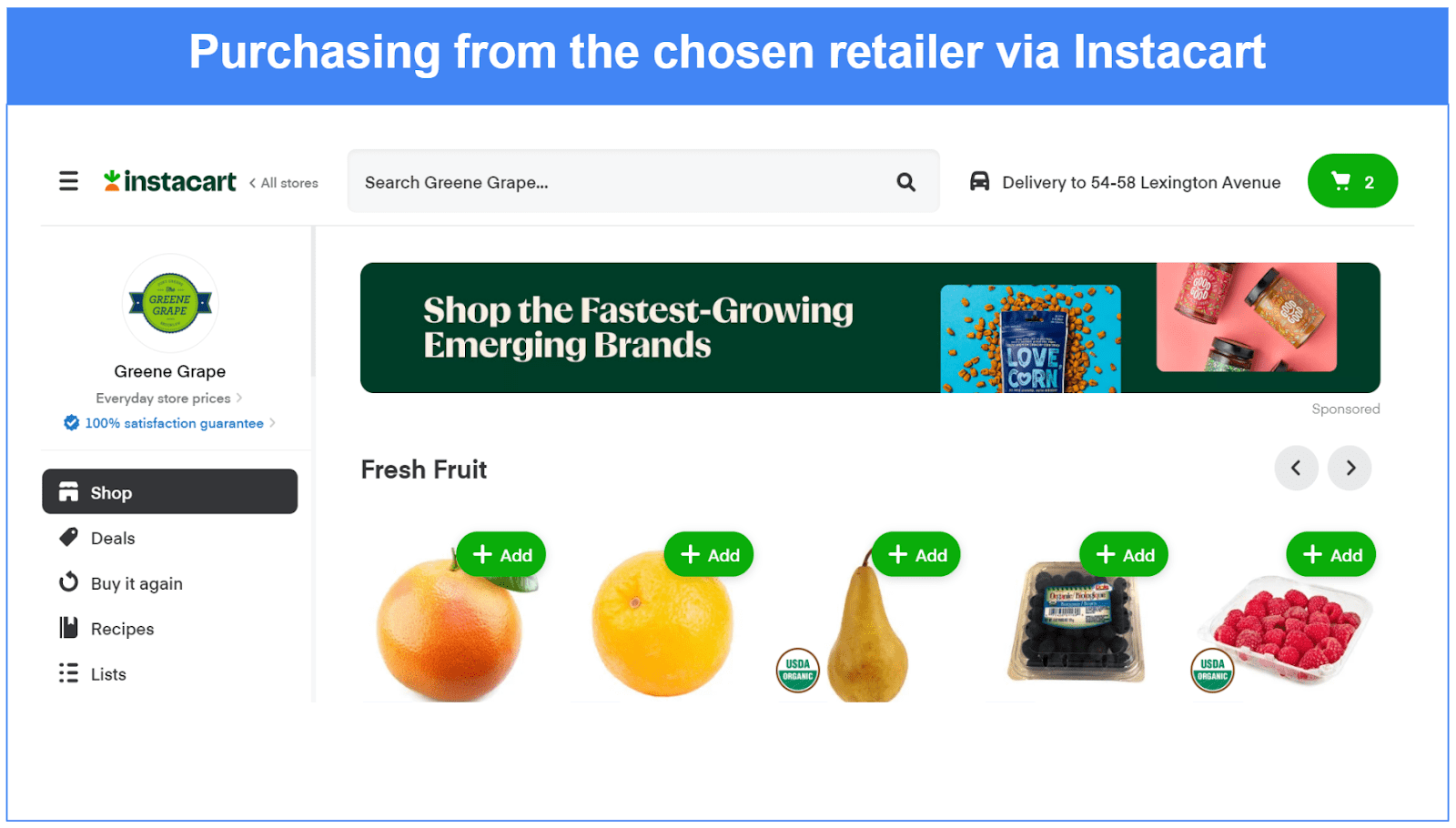
This cross-competition is a logistical nightmare for consumers. If you see Target on your Instacart app, check the item count—it will likely be lower than the physical store. The platform uses a "curated catalog" for these big-box stores, focusing on shelf-stable goods and household essentials. For fresh produce, you’re often better off using a dedicated grocery partner. Always cross-reference the delivery fee and the estimated time; Target orders frequently take longer due to complex order picking.
Are liquor stores and pharmacies included in Instacart?
Yes, and this is often the most underutilized feature. Instacart has partnered with major pharmacy chains like CVS, Walgreens, and Duane Reade, offering delivery of prescriptions and over-the-counter medicine. But the black sheep of the family is alcohol. Participating liquor stores vary dramatically by state due to strict alcohol beverage control (ABC) laws. In California, you can order from Total Wine & More; in New York, you can access various local wine shops. However, the platform requires a live ID scan from the shopper—a process that often adds 5–10 minutes to the delivery interaction.
The dark fact is that alcohol delivery is a high-margin business for Instacart, but it’s also the primary driver of "cold feet" cancellations. Shoppers often avoid these orders because of the potential for rejected IDs (fake or expired) which waste their time. From a user perspective, if you plan to order alcohol, do it early in the day and consider tipping the shopper an additional dollar amount in the chat before they arrive; it significantly reduces the chance of them "accidentally" forgetting your bottle of wine during the picking process.
Can I use EBT or SNAP benefits on Instacart?
Yes, and this is a game-changer for food accessibility. Instacart processes EBT SNAP payments for groceries at participating stores like Aldi, Food Lion, and Price Chopper. However, the restrictions are strict: you can only use EBT for eligible food items, not for taxes, delivery fees, or service fees. The app handles this in a confusing split-payment system where you must have a valid debit/credit card on file to cover the fees and tip.

The cultural impact here is paradoxical. On one hand, it democratizes access to groceries for those who cannot physically get to a store due to disability or lack of transportation. On the other, the platform’s service fees often make it more expensive than a physical trip, effectively taxing the poor for the convenience of eating. It forces a new kind of digital literacy—users must parse complex fee structures to see if the SNAP benefits actually outweigh the markup costs, a dark calculation that many new users miss.
How do I know if a specific local store is available?
You can't simply guess. The most reliable method is to open the app, input your delivery zip code, and then hit the "Search" bar. If the store isn't listed, it's sale is not due to a technical glitch, but to a lack of partnership. However, there's a hidden trick: change your delivery location to a nearby zip code. Sometimes, stores are available in a warehouse that covers a broader radius than the app initially suggests. If that doesn't work, use the website "Instacart Store Directory" (a third-party aggregator) to see which banners have a contract with the company.
Furthermore, check the "Store Ratings" on the app. High-volume corporate stores usually have 4.5+ stars. But local independent grocers often have lower ratings due to the shopper's difficulty in finding obscure items. If you see a local store with a 3.8 rating, it might still be worth trying, as the lower score likely reflects the difficulty for shoppers, not the quality of the food. The bottom line: availability is a live-data variable, not a static list.
What happens if I have a problem with an order from a specific store?
The refund and replacement policy is surprisingly universal across all stores, but the execution varies. Instacart's "Chat" support is notoriously hit-or-miss. The best strategy is to take a photo of the damaged or missing item immediately and state clearly that the store is non-compliant. Instacart typically issues a refund within 24 hours, but for high-value items (steaks, seafood) they may offer a courtesy credit instead of cash.

The dark secret is that stores do not handle customer service for Instacart orders. You cannot call the store to complain; you must go through the platform. This creates a massive accountability loophole. The store is technically the seller, but Instacart is the agent, and they often point fingers at each other. Your best defense is to use a credit card with purchase protection, which forces the card issuer to mediate. Also, be aware that "refunds" for items that were marked as "found" but were low-quality require a photo upload; without it, the case is auto-denied after 48 hours.
This obsession with store rosters, digital catalogs, and delivery radii speaks to a deeper human truth: we crave the feeling of control, and we are willing to outsource the labor of obtaining necessities to maintain that illusion. The app gives us the anxiety of the shop without the physical exhaustion, but it also introduces a new anxiety—the fear of the digital ghost in the machine, the missing item, the wrong substitution. It reflects our modern relationship with time; we simultaneously want to save it and feel guilty about the privilege of saving it.
Ultimately, the list of stores on Instacart is more than a commercial directory; it is a mirror of our values. We prioritize speed over ritual, convenience over connection, and ample choice over curated intimacy. The act of choosing a store on the app has become a quiet declaration of our identity—are you a Costco bulk-buyer, a Whole Foods purist, or a discount Aldi strategist? The platform doesn't judge; it merely facilitates the endless, silent negotiation between our aspirations, our budgets, and our stomachs.
As you swipe through your next order, remember that behind every available store banner is a phalanx of data analysts, contract lawyers, and gig workers. The magic trick isn't that the groceries arrive; it’s that we accept the invisible network of bias, markup, and algorithmic curation as a natural, seamless part of our day. The app may have replaced the grocery cart, but it has also replaced the serendipity of the aisle with the brutal efficiency of the search bar—and perhaps, that is the most honest grocery story of our generation.