What Is The Wayfair Employee Discount
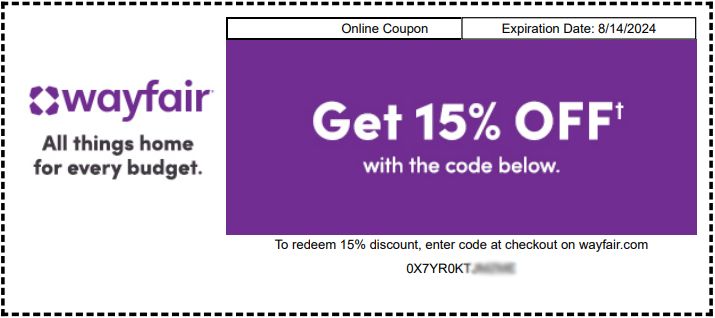
In the vast, algorithm-driven bazaar of modern e-commerce, Wayfair has carved out a peculiar niche. It’s the digital warehouse of everything for the home, from mid-century modern credenzas to industrial pipe shelving, often arriving in a dizzying array of boxes that seem to multiply on your doorstep. But beneath the surface of this furniture behemoth lies a tantalizing secret, whispered about in breakrooms and Reddit threads: the Wayfair employee discount. It’s not just a corporate perk; it’s a psychological key, a financial loophole, and a cultural marker that separates the insiders from the casual browser. Unlike the glitzy, public-facing deals of Black Friday, this discount operates in a shadow realm of proprietary codes and tiered access, making it one of the most intriguing, yet least understood, benefits in the retail landscape.
For the uninitiated, the idea of an employee discount might conjure images of a modest 10% off a lamp. But at Wayfair, the reality is far more layered, complex, and—depending on your perspective—downright advantageous. The company, which has grown into a $12 billion home goods empire, has historically been tight-lipped about the specifics, treating its employee benefits as internal intelligence. However, through leaked employee handbooks, forum discussions, and former staff testimonials, a clearer picture emerges: this isn't a one-size-fits-all code. It's a tiered system designed to reward tenure, manage inventory, and ironically, often serves as a gateway for employees to become accidental interior designers. In a world where the cost of living is skyrocketing, understanding this discount is less about trivial savings and more about decoding a strategic economic tool used by one of the world's largest retailers.
The Insider’s Playbook: Beyond The 15% Myth
Let’s debunk the first myth immediately: the Wayfair employee discount is not a static percentage. While many retail giants offer a flat 10-20% off, Wayfair’s approach is fluid and dependent on a matrix of factors. At its core, the standard discount typically hovers around 10% to 15% off most items, but this is merely the baseline. The real magic—and the dark fun—lies in the variable nature of the discount applied to damaged, returned, or open-box items. Employees often get access to a "scratch and dent" portal, where discounts can climb to 30%, 40%, or even 50% off, depending on the severity of the cosmetic damage. This turns the employee discount into a high-stakes game of visual inspection, where a barely visible scuff on a $2,000 velvet sofa translates to a windfall for a savvy staffer.
Must Read
But here’s where the psychology gets interesting. Wayfair operates on a drop-ship model for a massive portion of its inventory, meaning they don't physically hold all the goods. Consequently, the employee discount isn't always a simple price reduction at checkout. For big-ticket items like dining tables or outdoor pergolas, the discount might manifest as a store credit rebate applied after delivery, or a shipping waiver that saves hundreds of dollars. This creates a unique cognitive dissonance: the employee isn't seeing the "sale" happen in real-time. Instead, they engage in a delayed gratification loop, trusting the system to refund the difference later. It’s a clever loyalty mechanism, forcing employees to stay engaged with their paystubs and app notifications, effectively gamifying the employment experience.
Culturally, this discount has spawned a peculiar subculture of "Wayfair Mules." No, not the shoe, but employees who become unofficial personal shoppers for friends and family. Since the discount is strictly non-transferable, a thriving underground economy exists where employees purchase furniture for their entire social circle, meticulously tracking who owes what. This transforms the employee into a logistical middleman, juggling delivery windows and return policies for their mom’s new office chair or their cousin’s bunk bed. It’s a social currency that can make you incredibly popular—or incredibly resentful—depending on how often Aunt Carol needs a new area rug. The discount, therefore, is not just a financial tool; it’s a relational burden and a badge of honor, blurring the lines between professional life and personal obligation.
Strategic Shopping: Case Studies and Tactical Grids
To truly leverage the Wayfair employee discount, one must understand the concept of the Exclusion List. This is the corporate equivalent of a VIP velvet rope, and it’s where the discount loses its shimmer. Certain premium brands—think high-end outdoor furniture like Polywood or specific licensed collections—are often excluded entirely. Furthermore, the discount rarely stacks with existing promo codes like "SAVE20" or free shipping offers. Employees must navigate a brutal digital landscape where they have to ask themselves: Do I use my 15% discount, or do I use the public 20% off flash sale? The answer requires ruthless math and timing. The golden rule? The employee discount is best utilized during non-holiday periods when public discounts are low (around 5-10%), making the internal 15% a comparative steal.

Consider the case of Sarah, a former Wayfair customer service rep from Ohio. She realized that the discount applied to Wayfair’s sub-brands—Birch Lane, Joss & Main, and AllModern—but the percentages differed. On Joss & Main, which frequently runs flash sales, her discount was less impactful. But on Birch Lane, a more traditional and expensive brand, the employee discount held more weight. Her strategy was to target high-ticket, low-margin items like solid wood dressers, where even a 10% discount translated to $80 in savings, versus buying pillows where the discount was negligible. Her takeaway was simple: the discount is for furniture, not accessories.
Another tactical approach involves the "Marketplace" items. Wayfair acts as a host for third-party sellers, and the employee discount often does not apply to these items. An experienced employee will always check the SKU or the "Sold by" line before getting excited. If it says "Sold by Wayfair," you're golden. If it says "Sold by RandomVaseCo," the discount is a phantom. This forces employees to develop a hawk-eye for product sourcing details, turning every shopping session into a forensic audit. For the consumer reading this, the practical takeaway is to befriend an employee during their off-peak season, but for the employee, the actionable insight is to never assume the discount applies at checkout—always add the item to your cart and check the price breakdown meticulously.
Finally, there is the infamous "Associate Appreciation Event." Historically, Wayfair has held semi-annual internal sales that temporarily lift the exclusion list or boost the standard discount by an extra 5-10%. These events are the equivalent of Black Friday for the workforce, and they create a frenzied atmosphere where employees are refreshing the app at 6 AM for limited-stock clearance items. The dark fun here is that these events often coincide with massive supply chain dumps, meaning you’re not just getting a deal; you’re getting the furniture that has been sitting in a warehouse for two years, possibly with a quirky odor or a slightly warped leg. It’s a gamble, but for the financially brave, it’s a gamble worth taking.
The Five Cardinal Questions (Answered)
1. Can family members use the Wayfair employee discount?
Strictly speaking, no. The discount is tied to the employee's personal account and is designed for the employee's household use. However, the loophole—if you want to call it that—is that Wayfair doesn't generally require proof of address for delivery. Employees are allowed to purchase items and have them shipped to any address as a "gift." This is the loophole that fuels the "personal shopper" dynamic mentioned earlier. If a mother lives in a different state, the employee can order the couch, use the discount, and have it delivered to mom’s house without technically violating the policy, as long as the payment method is the employee's.

Where it gets sticky is in the realm of resale. If an employee is caught buying items with the discount and reselling them for profit on Facebook Marketplace or eBay, that is immediate grounds for termination. Wayfair's loss prevention team actively monitors for this, looking for patterns of multiple identical items being purchased and shipped to different addresses. The discount is a perk for personal use, not a business license. So, while the gray area of gifting is common, the black-and-white rule of resale is strictly forbidden.
2. Does the discount apply to Wayfair's other brands (Joss & Main, AllModern)?
Yes, but with a caveat. The discount generally applies across all Wayfair-owned properties, including Birch Lane, Joss & Main, and AllModern. However, the percentage might vary based on the brand's pricing structure. For example, Joss & Main carries a higher volume of flash-sale items, so the standard employee discount might be capped at a lower rate (e.g., 10% instead of 15%) to prevent employees from stacking the discount on already heavily reduced prices. Conversely, Birch Lane often maintains higher margins, allowing for a full 15% discount to be applied without breaking the bank.
The critical distinction lies in the Mother/Baby or Outlet sections. The Wayfair Outlet is a clearance center where prices are already 50-70% off retail. In these sections, the employee discount is almost always void. It’s a "last stop" for the item, and Wayfair calculates the final price to be so low that an additional discount would result in a loss for the company. So, while the discount is broad, it hits a brick wall when it comes to the outlet liquidation floor.
3. Is the discount applicable to installation or assembly services?
No. This is a common misconception. The employee discount applies solely to the product price and, in some cases, standard shipping costs. Services such as white-glove delivery, professional installation of ceiling fans, or TV mounting are contracted out to third-party vendors. Wayfair does not "discount" these services because they are billing the employee back at the cost rate they pay the vendor. If they offered a discount, they would be eating the labor cost, which is a financial non-starter for the company.

This means that if you’re an employee buying a massive armoire that requires assembly, you might get 15% off the armoire, but the $150 assembly fee remains a rigid cost. This often surprises employees who assume the perk extends to the entire transaction. The best workaround is to purchase furniture that qualifies for free standard shipping (which the discount usually reinforces) and to assemble it yourself, thereby circumventing the service fees entirely. It’s a missed opportunity for savings, but understanding this boundary prevents ugly surprises at the checkout screen.
4. How long do you have to work at Wayfair to get the discount?
The discount is typically available from your first day of employment, immediately upon completion of your onboarding paperwork and the creation of your internal accounts. There is no probationary period for the discount, unlike some companies that require 90 days of tenure. This is a smart retention tactic by Wayfair—by giving the perk immediately, they create instant loyalty (and a dependency on the discount that makes quitting harder).
However, the depth of the discount might increase with tenure. Long-term employees (those with 5+ years) often receive additional annual "milestone" credit vouchers that can be used on top of the standard discount. These aren't automatic; they are given as thank-you gifts during work anniversaries. So, while the base percentage is immediate, the truly spectacular savings are reserved for the loyal, long-haul employees who have endured multiple warehouse reorganizations and software migrations.
5. Do former employees keep the discount?
Generally, no. The discount is terminated on your last official day of employment. However, there is often a "grace period" of 24-48 hours after your final shift during which the system hasn't yet deactivated your account. Some employees joke about the "parting gift" of rushing to place a final order before the IT portal closes. This is risky, though, as any returning items or price adjustments after termination become impossible without the internal employee support line.
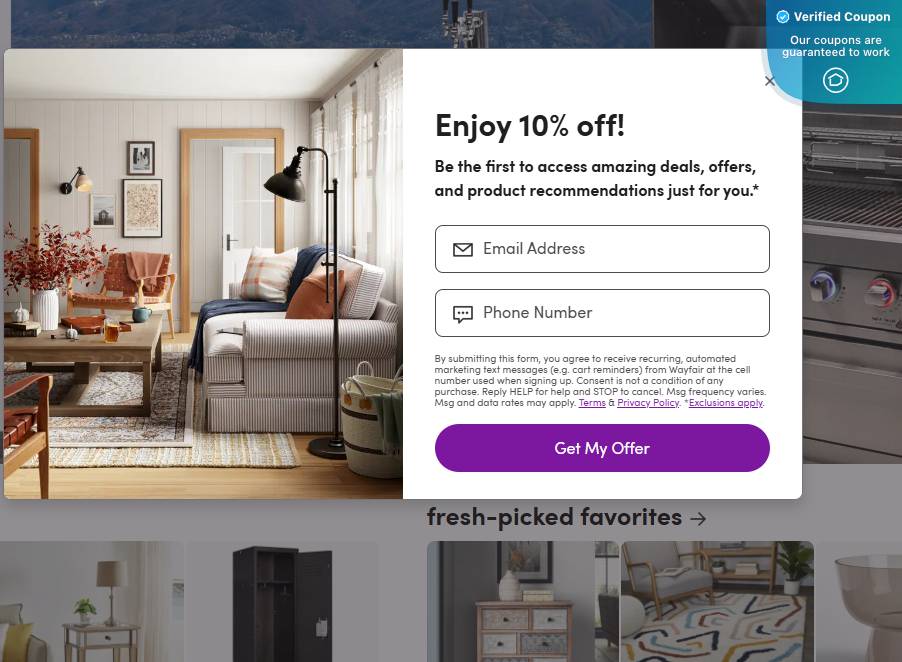
Surprisingly, there is a well-known anecdote in online forums about employees who transition to a "seasonal" or "on-call" status. These employees technically remain in the system and retain access to the discount, albeit at a reduced rate. If you are lucky enough to be kept on the books as a zero-hour contractor, you might find the discount persists for months after you stop actively working. It’s a loophole that HR is aware of but rarely closes unless the person is egregiously abusing the system.
At its heart, the Wayfair employee discount is a mirror reflecting our collective desire to feel special amidst a faceless crowd. We all want a secret handshake, a code word, or a discount pyramid that places us one rung above the average consumer. The fact that this discount exists is less about the actual furniture and more about the feeling of insider knowledge—the quiet satisfaction of knowing that the $1,200 chest of drawers you just bought cost the company $700, and you got it for $1,000. It’s a small victory in the exhausting war against retail inflation.
But it also speaks to human pragmatism. We are natural bargain hunters, wired to seek out the best deal to ensure our survival (or at least, our home’s aesthetic survival). The employees who maximize this discount are not just greedy; they are strategic thinkers applying their professional knowledge to their personal lives. This blurring of lines—where work knowledge becomes domestic power—is a defining feature of contemporary life. We no longer just "go to work"; we absorb the corporate playbook and use it to negotiate the outside world, turning our labor into a tangible, physical asset at home.
Ultimately, the discount is a contract of trust. Wayfair trusts its employees not to abuse the system, and employees trust that the discount will make their intense, often thankless customer service calls worth it. It’s a fragile ecosystem of give-and-take, highlighting that in retail, even the perks are a negotiation. So, the next time you see a perfectly styled room on Instagram, remember that behind that flawless aesthetic might be an exhausted Wayfair employee, armed with a discount code, a keen eye for damage, and the ultimate secret: the furniture in your living room is only worth what someone was willing to spend—or stress about—to get it.