What Is The Interest Rate Formula

Let’s be honest—when someone mentions the “interest rate formula,” your brain might conjure up dusty textbooks or painful math tests. But here’s the fun secret: this formula is the quiet engine behind your savings account, your car loan, and even that credit card you swear you’ll pay off next month. Learning it isn’t about becoming a mathematician; it’s about unlocking a superpower to understand how money grows or shrinks over time.
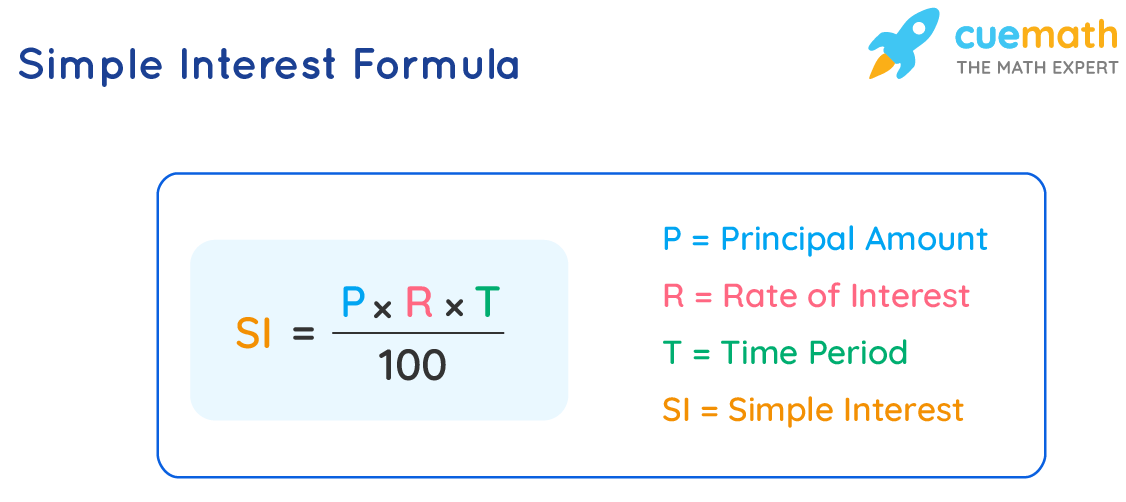
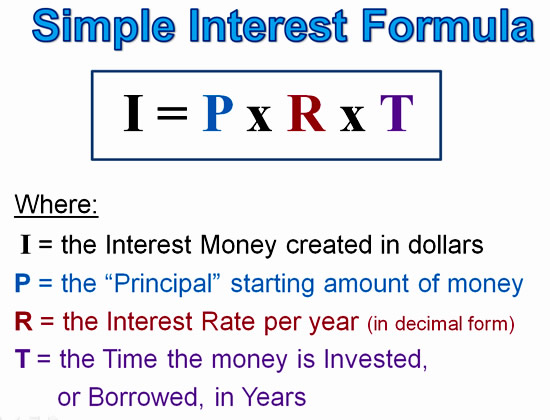
At its core, the interest rate formula is simply a way to measure the cost of borrowing or the reward for saving. It answers a deceptively simple question: “How much extra will I pay or earn?” The most basic version is Simple Interest = Principal × Rate × Time. That’s it. You take the starting amount (principal), multiply it by the percentage (rate), and then by how long you’re involved (time, usually in years). It’s a clean, predictable tool that takes the mystery out of financial decisions.
Why should you care? Because this formula gives you control. When you understand it, you can compare a 3% car loan versus a 5% one without relying on a salesperson’s smooth talk. You can also see why paying off high-interest debt feels like sprinting on a treadmill—the rate dictates how hard you have to work. The benefit isn't just financial literacy; it’s a quiet confidence that you’re making choices with open eyes, not blind hope.
Must Read
In daily life, this formula pops up more often than you’d think. Picture a student taking out a $5,000 student loan at a 4% annual rate for one year. Using the simple formula, they’d owe $5,000 × 0.04 × 1 = $200 in interest—that’s the cost of not having the cash upfront. On the flip side, if you stash $1,000 in a savings account earning 2% simple interest for two years, you’ll earn $40. Small numbers, but they train your brain to spot opportunities and traps everywhere, from store financing to “no interest for 12 months” ads.
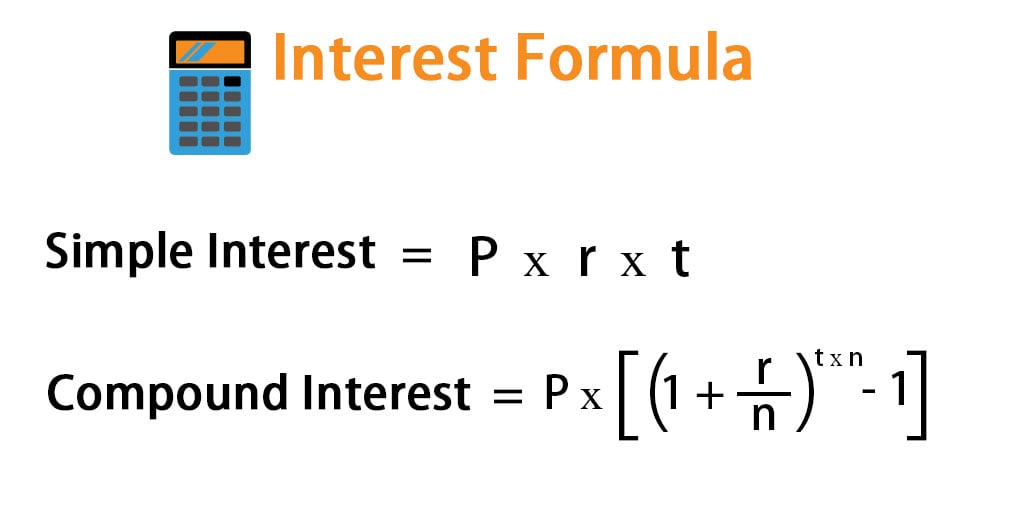
But here’s where it gets more interesting: real life often uses compound interest, which is interest on your interest. That formula is A = P(1 + r/n)^(nt), where n is how often it compounds. Don’t let the letters scare you—it just means your money accelerates over time. For example, a $1,000 deposit at 5% compounded monthly grows to about $1,051.16 after a year, not just $1,050. This is why starting to save early feels magical; the formula rewards patience exponentially.
Want to explore this without a calculator-induced headache? Start with simple numbers—use $100 as your principal and 10% as your rate. That makes every calculation a breeze. Next, try playing with an online compound interest calculator; it will show you a chart that makes the “interest on interest” lightbulb go off. Finally, check your own bank statements—look for the APY (annual percentage yield) and see how the formula quietly works behind the scenes.

Here’s a practical tip: always convert the rate to a decimal before plugging it in (so 5% becomes 0.05). And remember that time must match the rate’s period—if your rate is yearly, use years for time. If you get confused, just ask, “What’s the total I’ll pay or earn?” and work backward. The formula is a map, not a maze.
Ultimately, the interest rate formula is a lens for seeing the future value of your choices. It turns abstract percentages into tangible outcomes, whether you’re saving for a dream trip or paying off a pizza-funded credit card balance. Don’t memorize it out of duty; play with it out of curiosity. Once you see how a few dollars can grow or compound, you’ll never look at a price tag the same way again.