What Are Group Sizes In Batteries

Your Battery’s Secret ID Card
Think of battery group sizes like jeans sizes—but for your car, boat, or golf cart. You wouldn’t buy size 30 jeans for a size 40 waist, right? The same logic applies to the rectangular black box under your hood.
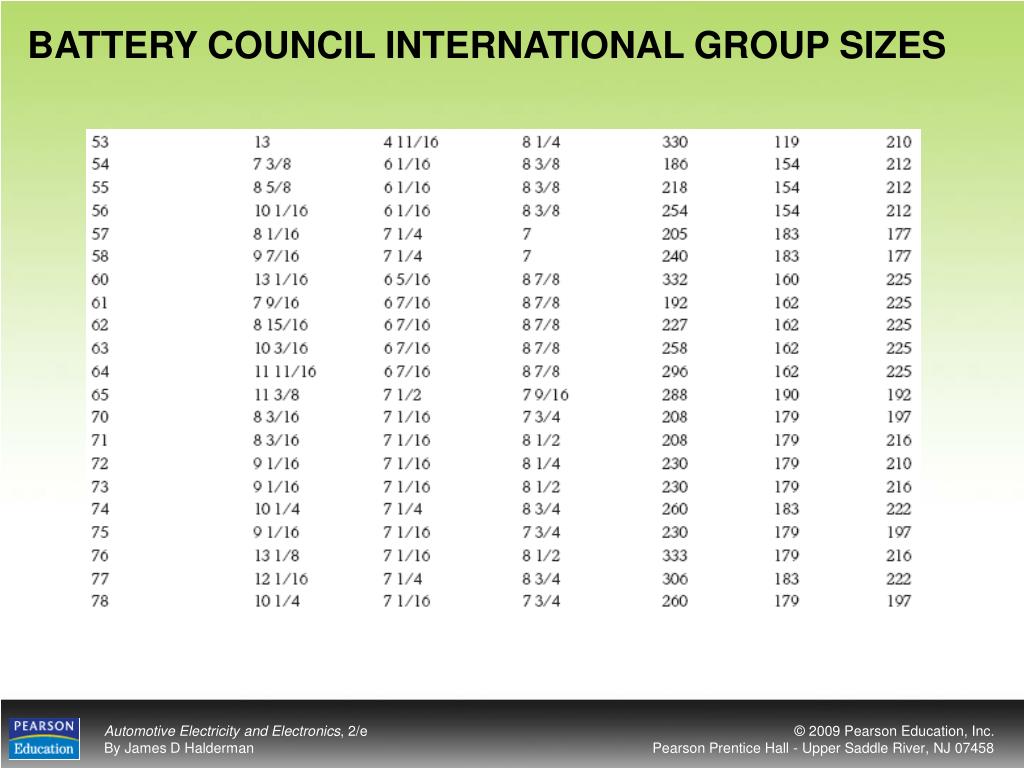
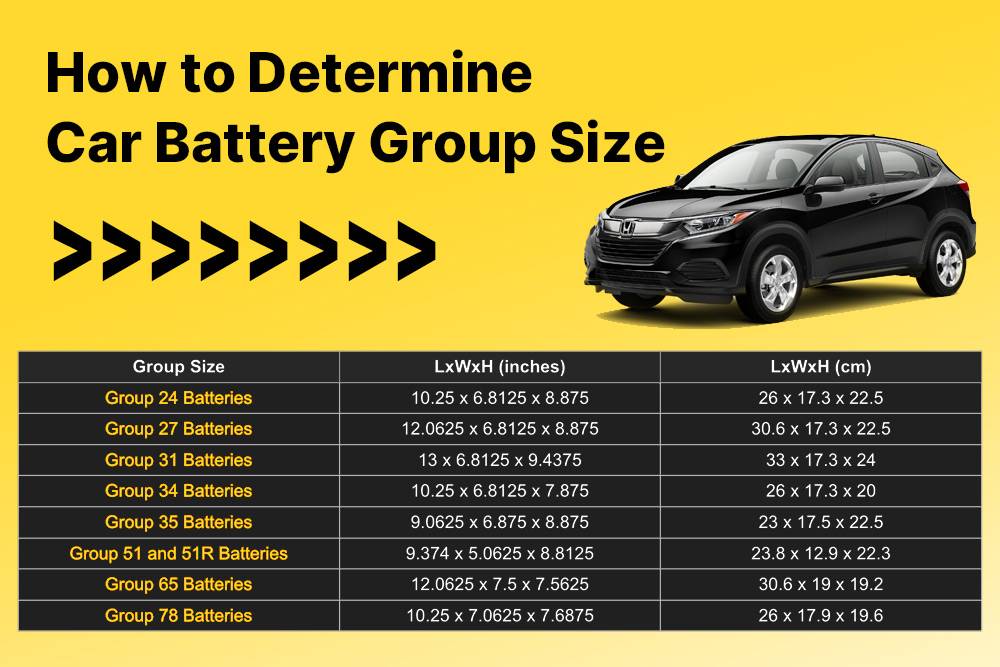
Group sizes are standardized numbers (like Group 24 or Group 31) that tell you the physical dimensions—length, width, and height—of the battery. It’s the battery’s official “waist measurement,” and it’s pure magic for anyone who hates guesswork.
No more shoving a battery in with a rubber mallet. No more using a tiny battery that rattles around like a lonely marble in a shoebox.
Must Read
Why Should You Care About a Number?
Because your car’s battery tray is like a custom-built glove compartment—it’s not flexible. A battery that’s too tall will slam into the hood like a bull in a china shop. Too wide, and it won’t slide into place, leaving you with a half-closed hood and a very angry mechanic.
But here’s the punchline: group size isn’t just about fitting. It also hints at power capacity—bigger group numbers often mean more cranking amps for starting your engine on a frosty morning.
That said, a bigger number doesn’t always mean “better.” It just means “bigger box,” and a bigger box can hold more lead plates, which equals more oomph.
The Common Crew: Meet Group 24, 27, and 31
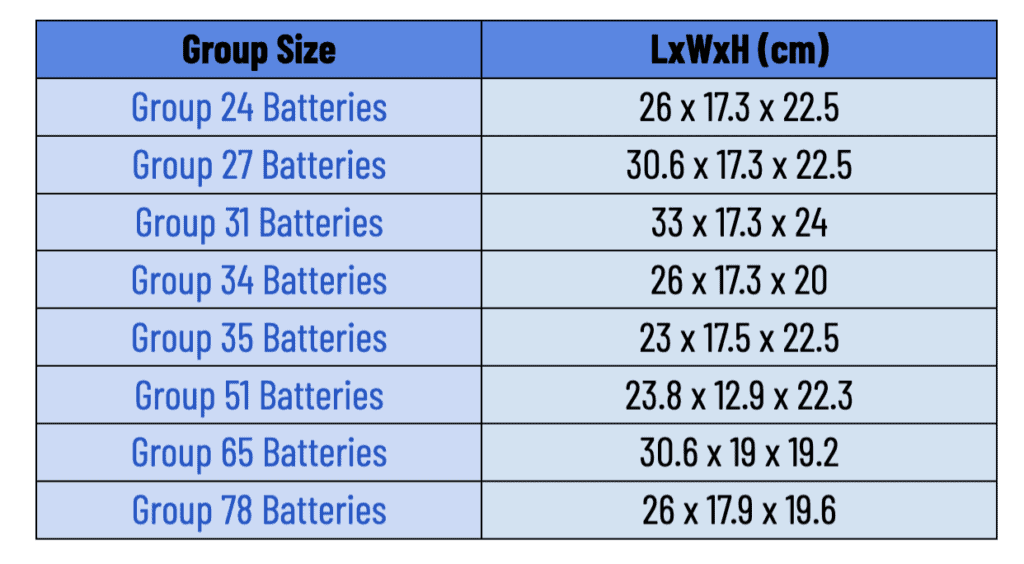
Let’s chat about the rockstars of the battery world. Group 24 is the dependable sedan—fits most mid-size cars and boats, not too flashy, gets the job done. Then there’s Group 27, the SUV—taller and beefier, ready for trolling motors and winches it’s got extra juice for your weekend adventures.
And finally, Group 31 is the monster truck—long, heavy, and an absolute beast for trucks with big diesel engines. You don’t need it for a compact car, just like you don’t need a snowplow for a driveway in Florida.
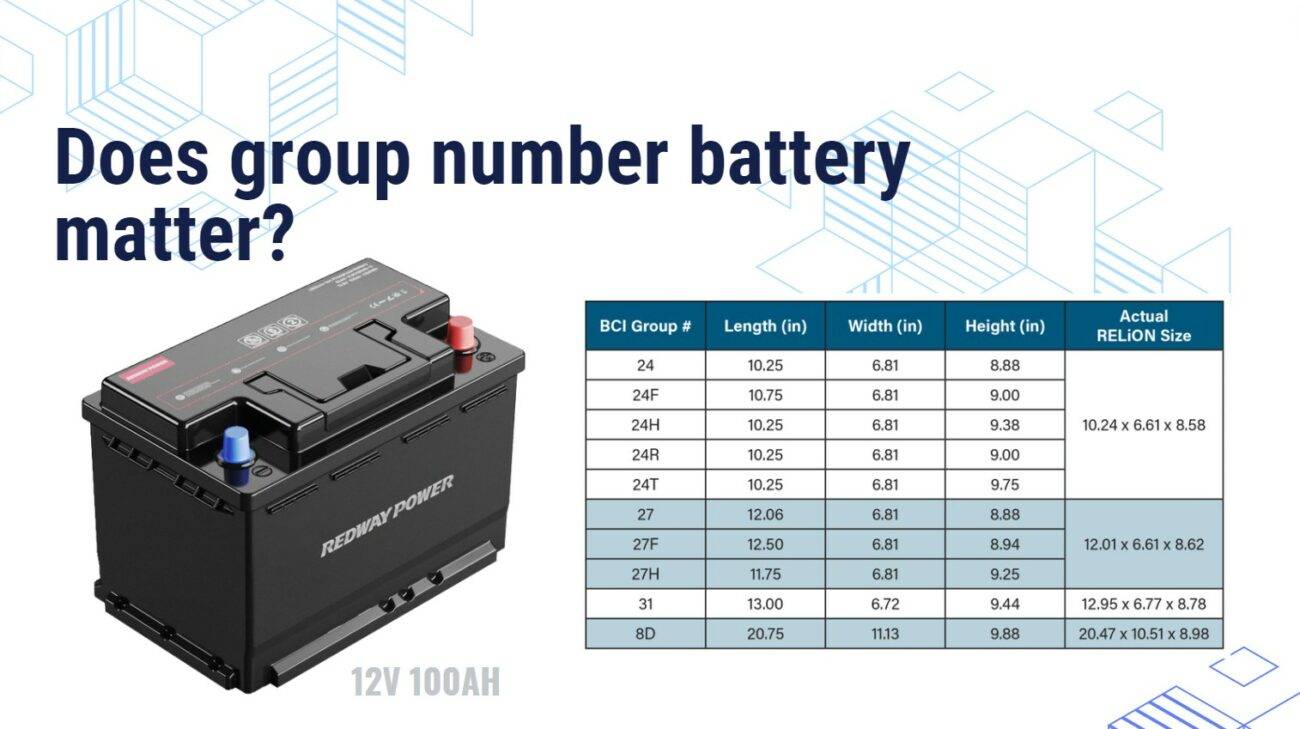
There are dozens of other groups—Group 35 for Japanese cars, Group 65 for Ford trucks—but the point is each number is a contract with your vehicle.
The “Almost” Trap: Don’t Rely on “It Looks Close”
You might think, “Oh, this battery is an inch shorter, but I’ll just add a piece of wood.” Stop right there, friend. That’s like wearing socks with sandals—it’s a choice, but it’s a bad one. Vibration can shake the battery apart internally, and then you’re stranded at the grocery store with a bag of frozen peas and a dead car.
Always check your owner’s manual or the label on the old battery. The group size is printed right there, usually with a BCI (Battery Council International) code, which is the official rulebook for all these sizes.
If you still can’t find it, ask a parts store clerk. They speak fluent battery, and they won’t laugh (too much).

A Quick Note on “Group Size” vs. “Power”
Here’s a juicy secret: two batteries with the same group size can have wildly different power levels. Think of it like two people wearing the same size shirt—one might be a marathon runner, the other a weightlifter. Both fit, but they perform differently.
So, you’ll see Cold Cranking Amps (CCA)—that’s how many amps the battery can shove out at freezing temperatures, perfect for deep winter starts. And Reserve Capacity (RC)—how long the battery can run your radio if your alternator dies, like a mini power outage hero.
Group size just says “the shape,” while CCA and RC say “the muscle.” Always pick the muscle that matches your climate and needs.
Final Cheer: Measure Twice, Buy Once
Battery group sizes are your best friend if you let them be. They transform a chaotic mess of cables and terminals into a simple, predictable puzzle. You’ll walk into the store, say “Group 35, please,” and feel like a certified gearhead—even if you only open the hood to check the oil (and you probably don’t).
So next time you replace a battery, give the group size a little nod of respect. It’s a tiny number doing a huge job—keeping your ride safe, snug, and ready to roar.
And remember: when in doubt, bring the old battery to the store. Worst case, the clerk gives you a funny look. Best case, you leave with a perfect fit and a story about how you almost used cardboard as a spacer. Don’t be that person.