Wedding Bands For Women Blue Nile
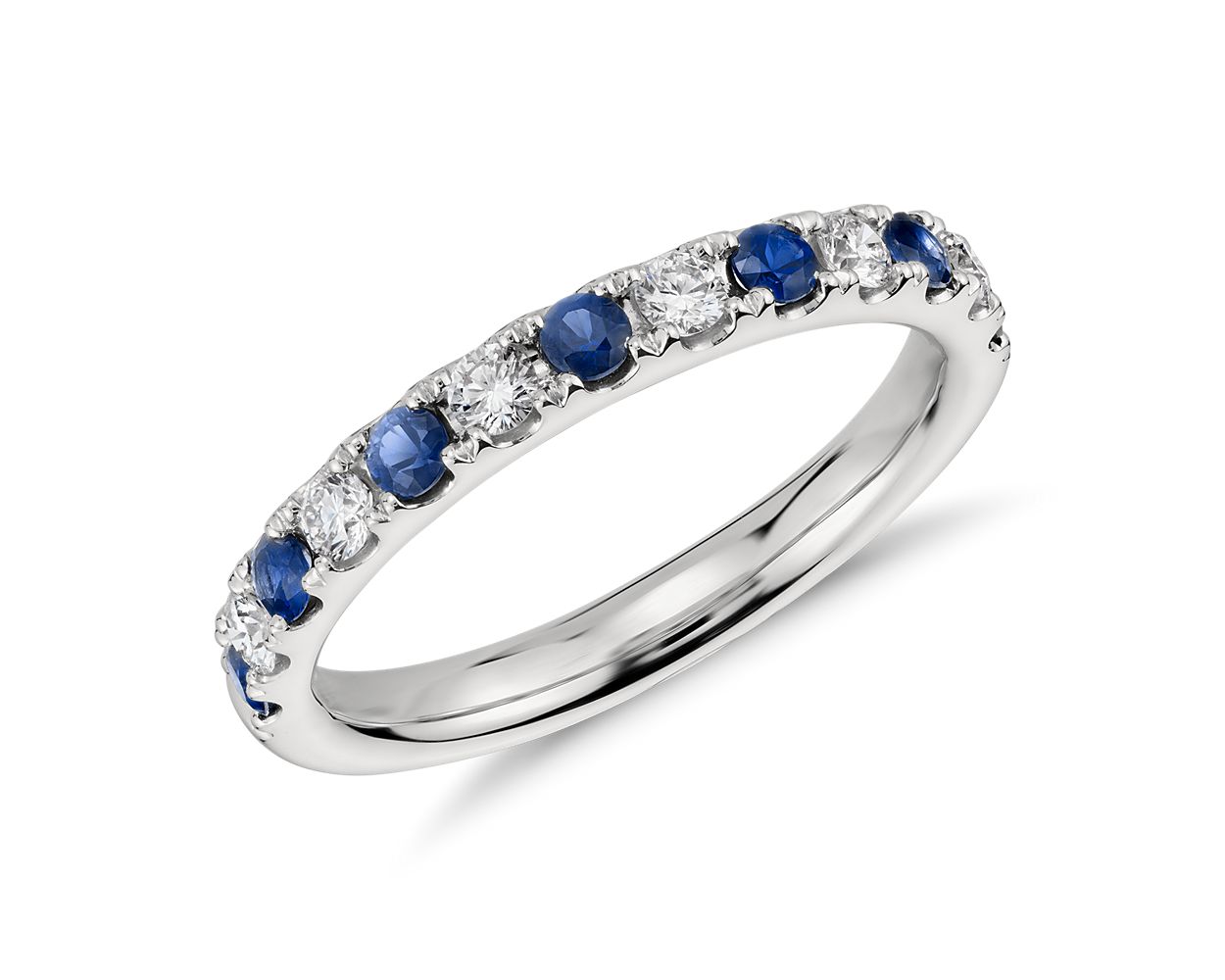
There is a peculiar magic in the moment a woman decides to wear a ring on her left hand that isn’t an engagement ring. For decades, that finger was a sacred, singular space—a declaration of a promise made, a life pledged. The wedding band, in its earliest incarnations, was less about personal adornment and more about a stark, transactional reality. In ancient Rome, the iron ring, or annulus pronubus, was a symbol of ownership, a token given by a groom to signal a contract secured. It was a utilitarian object, devoid of the gemstones and intricate artistry we associate with it today. The very idea of a woman choosing multiple rings, or a band that could rival the engagement stone in splendor, was not just a fashion faux pas; it was a social heresy. The humble beginning of the wedding band was rooted in possession, a physical shackle of commitment that had little to do with the woman who wore it and everything to do with the man who provided it.
Yet, as the centuries turned, the narrative began to shift, slowly and almost imperceptibly. The Victorian era, with its obsession for sentimentality and hidden meaning, transformed the band from a legal marker into a love letter. Gold, once a symbol of wealth, became a metaphor for purity and endurance. But even then, the design was overwhelmingly uniform—a simple, polished shank. The woman’s individual taste was subsumed by tradition. It wasn’t until the mid-20th century, specifically the post-war boom of the 1950s, that the female wedding band began to demand its own identity. The advent of the diamond solitaire engagement ring, heavily marketed by De Beers, created a hierarchy where the band was merely the supporting cast. It was thinner, simpler, often unadorned, designed specifically to sit quietly behind the main event. The notion of a woman buying her own wedding band, particularly one from a brand like Blue Nile, would have been almost inconceivable, as jewelry purchases of this magnitude were strictly the domain of the male partner, a final bastion of patriarchal finance.
The irony is that this very subjugation birthed the revolution. As women entered the workforce in droves during the 1970s and 1980s, earning their own disposable income and forging independent identities, the jewelry industry was forced to take notice. The wedding band was no longer just a gift; it became a statement of self. The need was no longer for a simple metal circle, but for an expression of personal style that could stand alone, sometimes even outshining the engagement ring. This shift in human necessity—from being marked as "taken" to being celebrated as "self-defined"—is the quiet earthquake that paved the way for the modern marketplaces we know today. It was the prelude to a world where a woman could log onto a website like Blue Nile, not to find a band that matches a ring she was given, but to find her ring, a piece of artistry that speaks to her hand, her life, and her future.
Must Read
The Digital Atelier: Forging a New Tradition
The transformation of the wedding band from a simple gold hoop to a personalized, high-jewelry piece is a story of technological disruption. Before the internet, the process was rigidly controlled by local jewelers and high-end boutiques. A woman had perhaps a dozen options in a velvet tray; the design was dictated by what was in stock, and the price was a closely guarded secret. This archaic model created a sense of scarcity and pressure, forcing often ill-informed decisions. The arrival of online retailers, with Blue Nile leading the charge in 1999, shattered this glass case. Suddenly, the entire world of gemstones and precious metals was available at one’s fingertips, with transparent pricing and a level of education that had previously been reserved for industry insiders.
But the more profound change was in the aesthetic philosophy of the bands themselves. For most of the 20th century, the "ladies' band" was conceptualized as a delicate, subordinate object. It was often manufactured with a lower profile and thinner width, reinforcing a frail aesthetic that was considered feminine. Many vintage pieces from the 1930s and 1940s are almost impossibly thin, prone to warping and bending, because they were designed to be worn next to a massive solitaire. The bizarre, forgotten truth is that these bands were often structurally unsound, serving a purely symbolic purpose over a practical one. Blue Nile and its contemporaries challenged this by offering bands in a variety of widths and profiles, from the comfortable flat to the sculpted comfort-fit, recognizing that a woman’s hand was capable of bearing a heavier, more substantial piece of jewelry.
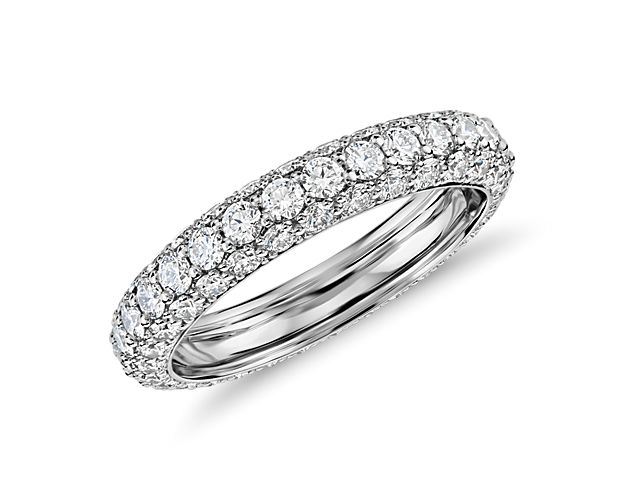
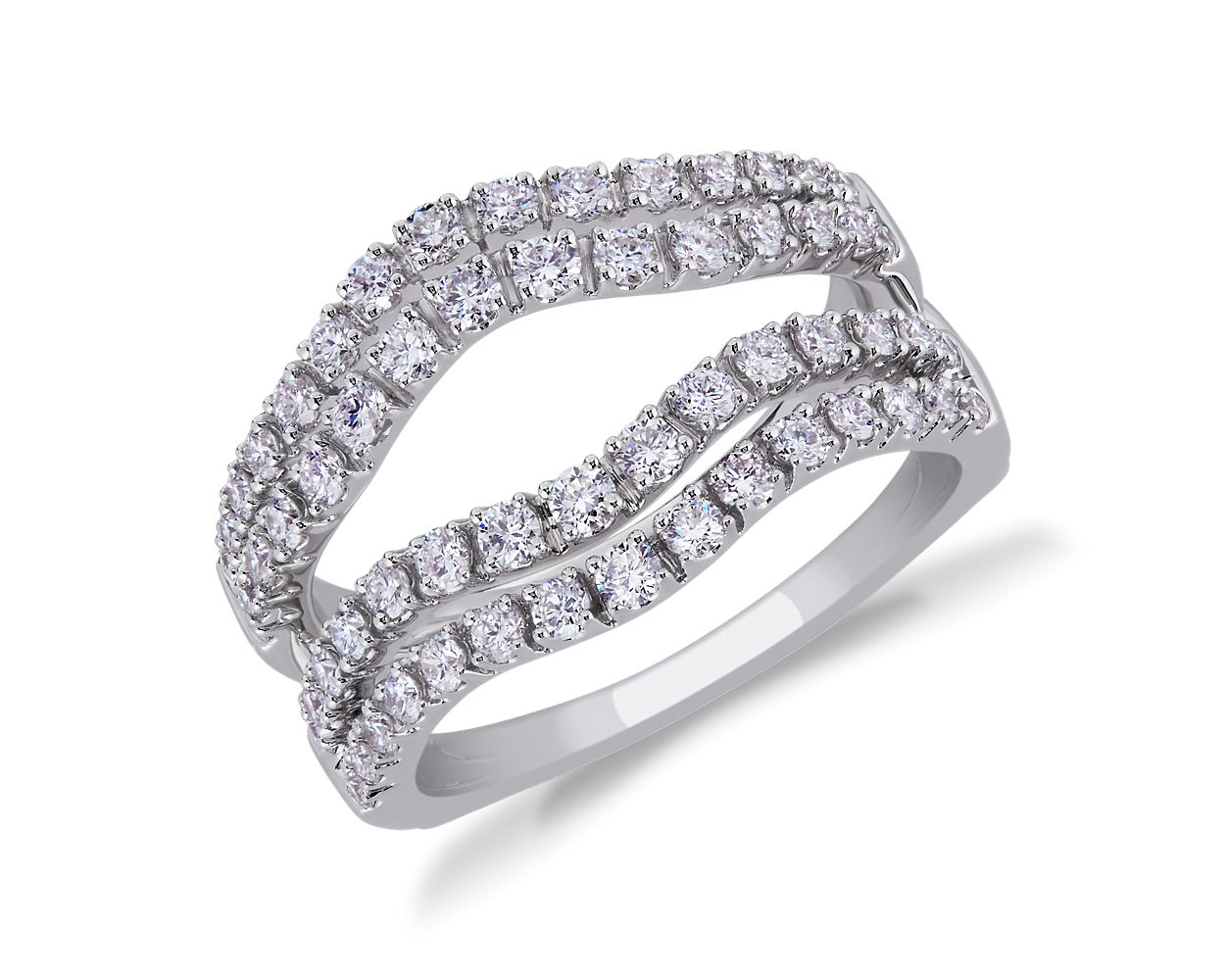
Furthermore, the introduction of alternative metals and diamonds was a radical departure. Previously, a diamond band was a symbol of immense wealth, often reserved for anniversary gifts in later years. Blue Nile democratized this by offering lab-grown diamonds and ethically sourced stones at scale, making the diamond band—once a rarity—a standard choice for modern brides. This also led to a strange, wonderful paradox: the "stacking" trend. In the 2010s, it became fashionable to wear the engagement ring, the wedding band, and an anniversary band all at once. This was a direct rebellion against the minimalist, single-band aesthetic of the past. It was a way for women to accumulate symbols of their own milestones, not just their marriage, creating a personal history on their finger that was visible to the world.
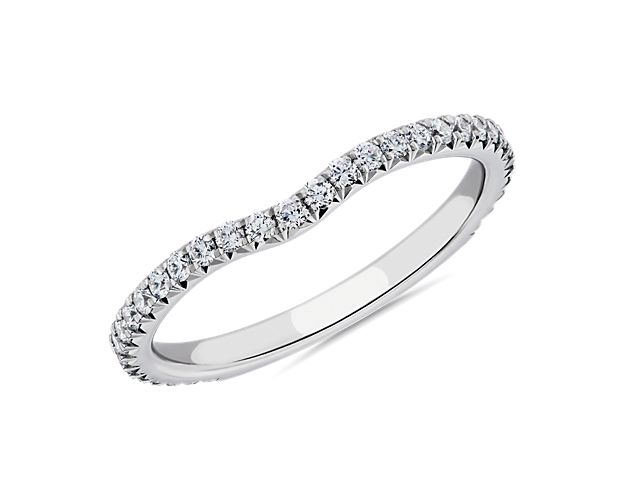
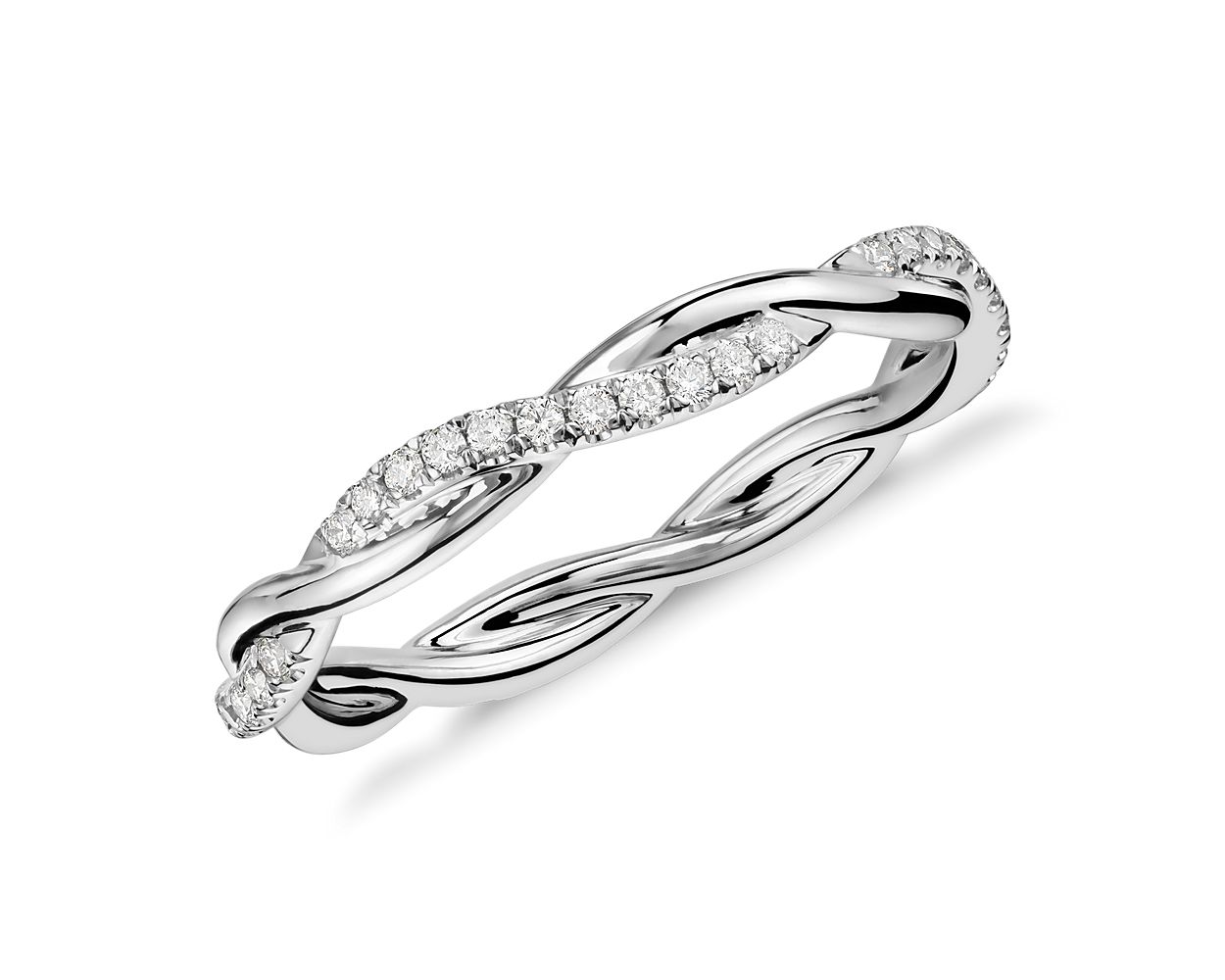
This digital atelier also allowed for a level of personalization that was previously impossible. In the past, a woman might have had her initials engraved inside the band—a private, hidden message. Now, the exterior of the band became a canvas. Pave-set diamonds, milgrain detailing, and twisted vines began to replace the plain shank. The technology behind the cut of the diamonds themselves evolved, with the 2020s seeing a surge in fancy shapes—oval, pear, and marquise—set into wedding bands, a dramatic departure from the round brilliants that dominated the past. This shift is profound; it moved the wedding band from a passive object of tradition to an active tool of self-expression. The band is no longer "just a band"; it is a piece of fine jewelry that happens to symbolize a wedding.
Hacking the Legacy: Modern Rituals and Personal Codes
Today, the classic principles of the wedding band are being "hacked" by a generation that values experience over ownership but, paradoxically, demands meaning in every object. The old rule of "never take it off" is being replaced by a practical, curated rotation. Women are buying multiple bands from Blue Nile to mix and match with different engagement rings, or to wear on their right hand when the left feels too heavy. This is a modernization of the Victorian era's "right-hand ring," but now it is a choice, not a social signal. The band is no longer a permanent shackle but a versatile accessory in a woman’s jewelry arsenal.
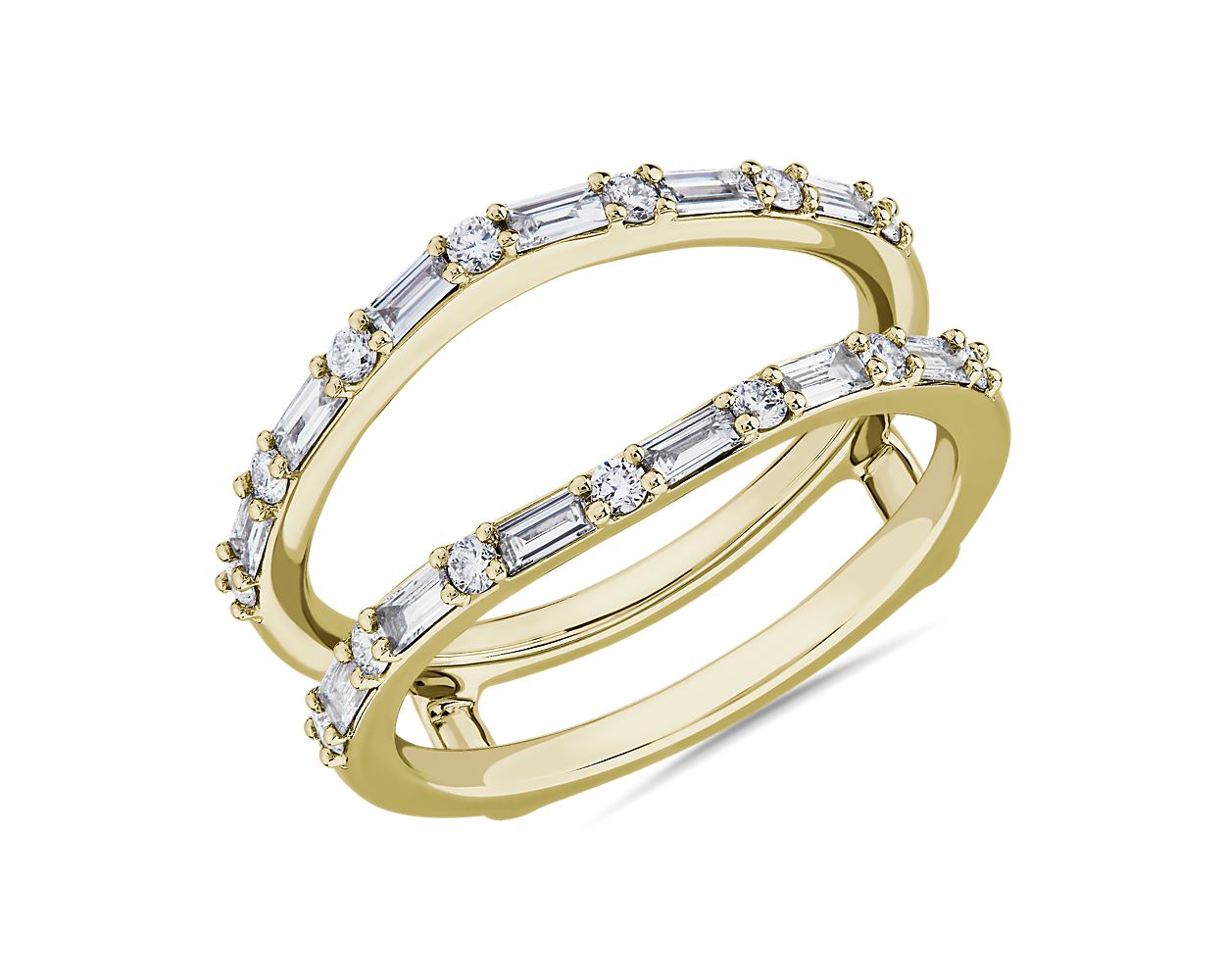
Furthermore, the concept of "mismatched" sets is gaining traction. Gone is the rigid rule that the wedding band must perfectly nestle against the engagement ring. Modern brides are hacking the silhouette, choosing bands with sharp geometric angles to contrast with a round stone, or opting for a solid, thick band to give a delicate solitaire a more modern, edgy foundation. They are also hacking the material itself. The traditional yellow gold is being replaced by mixed metals—a rose gold band paired with a platinum engagement ring—creating a two-tone effect that was once considered a design error. This symbolizes a fusion of identities, not just the bride and groom, but the bride’s own past style and her future evolution. This is not about following a rulebook; it is about writing a personal code, where the physical ring is a cipher for a life lived on one’s own terms.
Bridging the Past and Future: Your Most Pressing Questions
Why do some vintage wedding bands look so yellow and dull compared to modern ones from Blue Nile?
The nostalgic allure of a vintage band often lies in its patina, but that soft, mellow color is frequently a sign of age and alloy composition, not superior quality. In the early 1900s, gold was often mixed with higher percentages of copper to increase durability, which gives a distinct reddish-yellow hue. However, many vintage rings were crafted in 14k or even 10k gold because it was more affordable and harder than the pure 24k gold of ancient times. This higher alloy content can make the gold look less lustrous over time. Modern manufacturers like Blue Nile have perfected the alloy ratios, using precise amounts of silver, copper, and zinc to create a consistent, vibrant yellow gold that maintains its brilliance.
The difference also stems from finishing techniques. Vintage jewelry was often hand-polished with simple abrasives, leaving microscopic scratches that diffuse light and create a dull appearance. Today, Blue Nile utilizes electro-polishing and advanced tumblers that create a mirror-like finish, enhancing the natural reflective properties of the gold. Furthermore, the rise of rhodium plating, a technique popularized in the 1990s, has revolutionized white gold. Vintage white gold was naturally yellowish and had to be re-polished frequently. Modern white gold from Blue Nile is rigorously rhodium-plated, giving it a stark, bright white finish that does not exist in rings from the 1920s and 1930s. So, while the vintage ring carries a romantic history, its physical properties are often objectively inferior to the modern standards of durability and color we expect today.
Is it acceptable to wear my Blue Nile wedding band without my engagement ring?
The historical myth that the wedding band must always be worn closest to the heart, with the engagement ring on top, is a deeply entrenched tradition with origins in ancient Egypt, where the vena amoris was believed to run directly from the fourth finger to the heart. For centuries, this was a rigid rule. However, the modern reality is far more fluid. In the 2010s, as the "stacking" trend took over, women began breaking this rule deliberately. Wearing the band alone is not just acceptable; it is a powerful stylistic choice. It often provides a cleaner, more understated look for casual settings or professional environments where a large diamond might feel ostentatious.
From a practical standpoint, Blue Nile has engineered its bands to be "standalone" pieces, not just companions to an engagement ring. The profiles are designed to be comfortable and visually balanced when worn alone. Moreover, many women choose to wear their band on the right hand, a practice that gained popularity in the 1920s as a symbol of independence among the Suffragettes, long before it became a fashion trend. The ultimate authority here is not tradition but your own comfort and aesthetic. The ring is a symbol of your commitment, and its placement on your body is a reflection of your personal narrative. The rule today is that there are no rules, only the confidence with which you wear the symbol.
Will the lab-grown diamonds in modern Blue Nile bands be considered "fake" in the future?
This is the most profound question of our era, bridging the past’s obsession with rarity and the future’s demand for ethics and sustainability. For a century, the value of a diamond was intrinsically linked to its geological origin, a miracle of nature formed over billions of years. The myth of the "blood diamond" and the monopoly of mining cartels created a mystique around the "real" stone. However, the reality is that a lab-grown diamond is not "fake." Under a jeweler’s loupe, with the naked eye, and in chemical composition, it is 100% carbon, crystallized in the same cubic structure. It is a real diamond, just created in a controlled environment in a matter of weeks, a process perfected in the 2010s.

Looking forward, the historical arc suggests that our descendants will view lab-grown diamonds with the same reverence we hold for cultured pearls. In the 19th century, natural pearls were the ultimate status symbol, yet the invention of the cultured pearl in 1893 by Kokichi Mikimoto initially caused panic and devaluation. Over time, cultured pearls became the industry standard, with natural pearls becoming a rare, niche collector’s item. The same trajectory is likely for diamonds. The future will not see your Blue Nile lab-grown band as "fake" but as a testament to a more conscious, technologically advanced era. It will be seen as a symbol of intelligence—a choice to prioritize environmental stewardship and ethical sourcing over an arbitrary geological accident. The value of the ring will lie in the intention behind it, making it arguably more "real" than a stone dug from a contested mine.
As we look toward the next two decades, the trajectory is clear: the wedding band will cease to be a static object. We are already seeing the nascent stages of "smart rings" capable of tracking health metrics, and it is not a stretch to imagine the wedding band becoming a hub for our digital lives. Envision a band from Blue Nile that contains a chip storing your wedding vows, accessible via a haptic tap, or a ring that changes color subtly based on your physiological state, a living, breathing testament to the nervous excitement of love. The aesthetic will continue to diverge, with 3D printing allowing for hyper-customized, intricate lattice structures that are impossible to create with traditional casting, making each band a unique piece of computational art.
But amid this futuristic technological marvel, the fundamental human need at the core of the band will remain unchanged. It will still be a symbol of connection, a physical anchor for an emotional promise. The future band will not be about ownership or status, but about integration—a seamless blend of the metal on your finger with the data of your life and the beat of your heart. It will be less of a decoration and more of a companion. In twenty years, a woman’s wedding band will be a portal to her own history, a piece of jewelry that remembers and anticipates, bridging the ancient Roman shackle and the Victorian love note into a singular, personalized (perhaps even sentient) artifact that celebrates a union that is, ultimately, profoundly human.