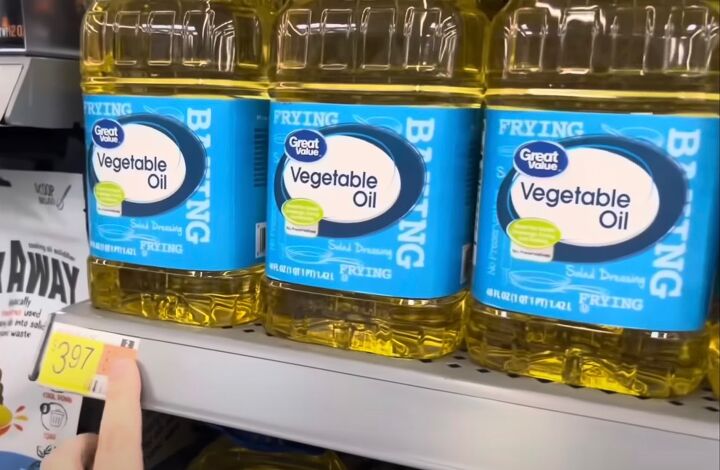
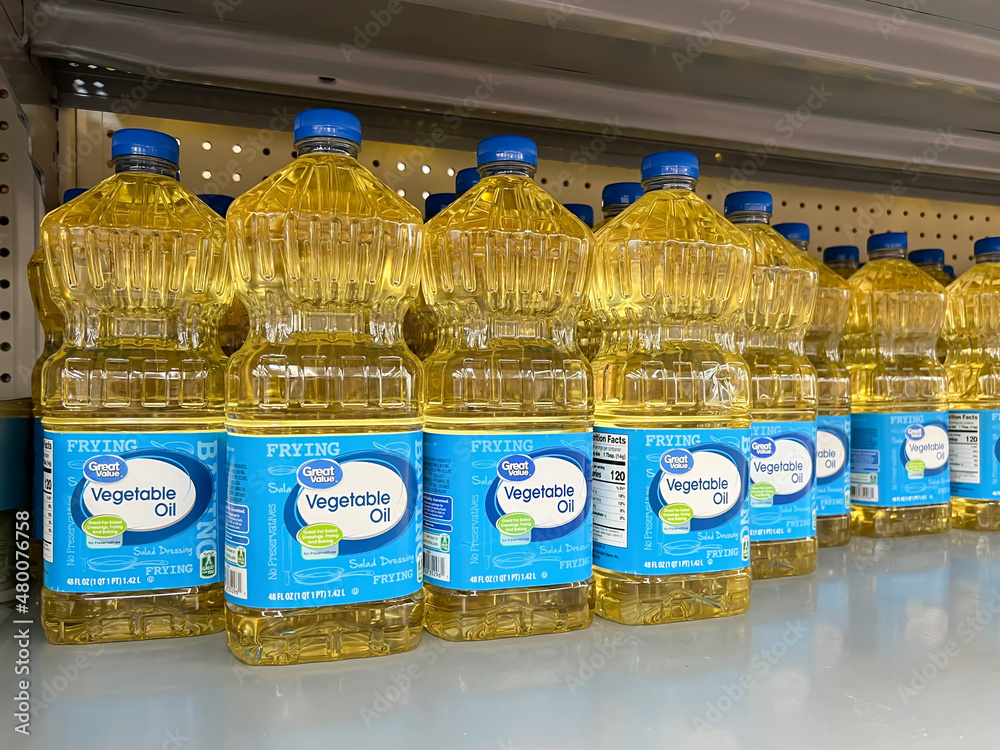
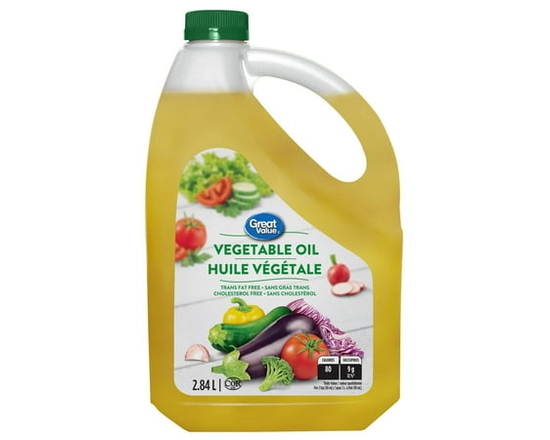
Walmart Great Value Vegetable Oil
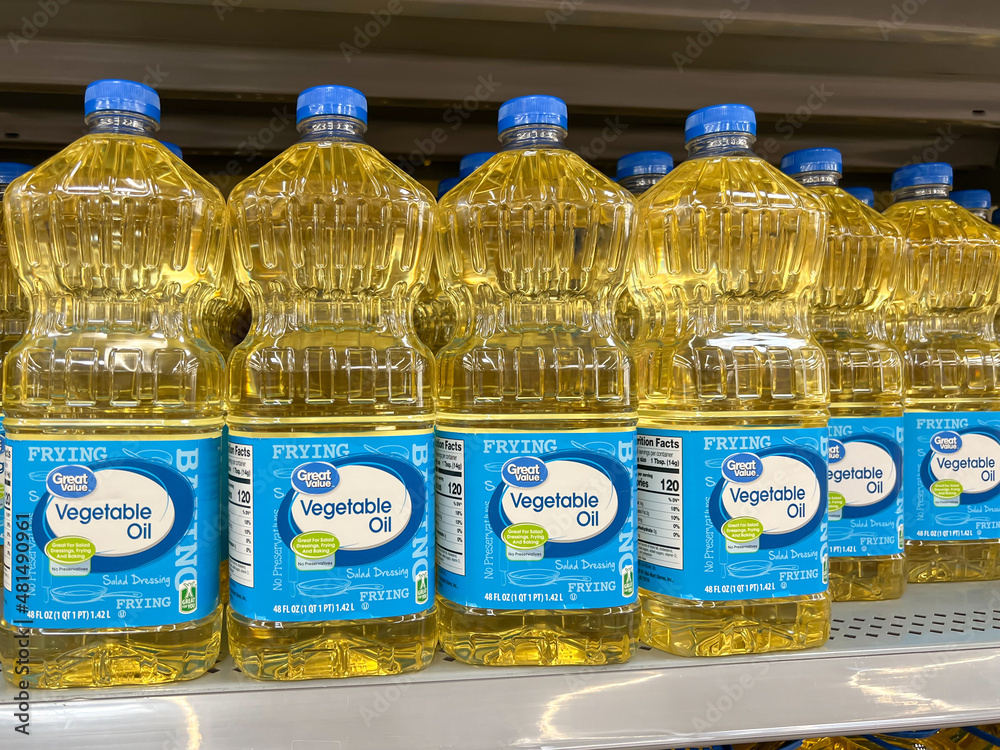
There is a quiet, amber-lit nostalgia that clings to the humble bottle of vegetable oil. Before the era of cold-pressed avocado sprays and artisanal walnut infusions, before the internet taught us to fear seed oils and revere tallow, there was the Great Value Vegetable Oil bottle. It sat, unassumingly, on the back shelf of a million American pantries, a translucent gold sentinel waiting for a cast-iron skillet or a box of yellow cake mix. Its history is not one of glamour, but of profound necessity—a necessity born in the mid-20th century when home cooks needed a neutral, reliable, and affordable fat that could do everything from frying a chicken to greasing a pan. The story begins not in a lab, but in the post-war boom of the 1950s, when corporate food systems promised liberation from the drudgery of rendering lard, and the grocery shelf began to fill with standardized, shelf-stable bottles that democratized cooking for a new suburban middle class.
Walmart’s Great Value brand, launched in 1993, was a masterstroke of affordability, but the vegetable oil within its clear plastic bottle carried a much older lineage. The precursor was the great soybean expansion of the 1940s, when American farmers, encouraged by government subsidies, turned the Midwest into a sea of green beans. The oil extracted from these soybeans was cheap, odourless, and had a high smoke point, making it the perfect workhorse for an emerging fast-food and frozen-dinner culture. Before soy, it was cottonseed oil, the “king of salad oils” in the 1920s, which gave way to corn, then to the soybean. The Great Value bottle is the great-great-grandchild of these agricultural shifts, distilled into a formula of soybean oil and a solum, almost apologetic, amount of antifoaming agent. It was never meant to be a hero; it was meant to be a reliable background player in the American kitchen, a silent partner to the instant mashed potatoes and the fried bologna sandwiches.
To understand its initial human necessity, one must remember the anxiety of the 1930s and 1940s, when butter was rationed and fat was a fetishized source of calories for hardworking bodies. For families on a budget, cooking oil was not an optional gourmet flourish; it was the difference between a fried egg and a boiled one, between a crispy schnitzel and a sad, steamed piece of meat. The Great Value Vegetable Oil, at a price point that undercut national brands by a dollar or more, became a quiet engine of equity. It allowed a single mother in a trailer park to make her daughter’s birthday cake from scratch, and it allowed a grandmother to pass down the sacred art of deep-frying turkey wings on a Tuesday. It was cheap, but it was never shameful; it was a canvas, and the canvas was always ready.
Must Read
The Great Forgotten Vintage Era: Fry-Babies, Chemistry, and the Plastic Bottle Revolution
If you close your eyes and recall the 1970s and 1980s, the Great Value bottle (or its generic cousins like “Food Club”) was often branded with a stark, utilitarian label—white, with simple red or black lettering that screamed “no frills.” This was the era of the “Fry-Baby” and the electric wok, where vegetable oil was not just a condiment but a bath for everything from corn dogs to yes, even Twinkies. The bizarre treatment of this oil in previous decades is almost comic by today’s standards. In the 1970s, it was not uncommon for cooks to reuse the same oil for weeks, filtering it through cheesecloth and storing it in the refrigerator, a practice that horrified modern food safety experts but was celebrated as “resourcefulness.” The oil was also a secret DIY beauty treatment; women would slather it on their elbows and ankles to soften skin, and men used it to condition a leather baseball glove, a single bottle serving a ménage à trois of kitchen, beauty, and maintenance duties.
The most forgotten vintage fact is that vegetable oil was once a death knell for the non-stick pan. In the 1960s, Teflon was new and flimsy, and the high heat needed to sear meat would cause the pan to off-gas and flake. The solution, ironically, was not to use non-stick but to rely on a “seasoned” cast-iron skillet, where a thin layer of Great Value oil was baked onto the surface to create a polymerized, slick coating. This technique was ancient, but the bottle of cheap oil made it accessible to every household. Bizarrely, the oil was also used as a furniture polish. A rag dampened with vegetable oil could make a pine table shine, and while it eventually went rancid and smelled like an old tire, the momentary glow was worth it. By the 1990s, the era of “dreaded trans fats” began to loom. The Great Value bottle of that decade contained partially hydrogenated soybean oil, a chemically altered fat that gave baked goods that perfect flaky texture but also clogged arteries at an alarming rate. The 1990s were a turning point, where the oil became both a comfort staple and a pariah, and the 2003 FDA mandate on trans-fat labeling forced Walmart and other retailers to reformulate, swapping out the hydrogenation for a fuller fat profile that was still cheap but slightly less villainous.
Another forgotten treasure of this era is the “oil change” for cars. A myth persisted that used vegetable oil could be filtered and poured into a diesel engine, and while that is technically true for biodiesel, desperate truckers in the 1980s would sometimes mix Great Value oil directly with diesel fuel, creating a smoky, popcorn-scented exhaust that clogged fuel injectors. This was a hack born of poverty, not eco-consciousness, and it often ended with a ruined engine and a lawnmower-like sputter. In the home, the oil was also used as a weapon against squeaky hinges, and a few drops would solve a stuck zipper on a pair of jeans. The point is that this was not a product; it was a utility, a cheap, messy, and miraculous solution to any household friction, be it mechanical or culinary.
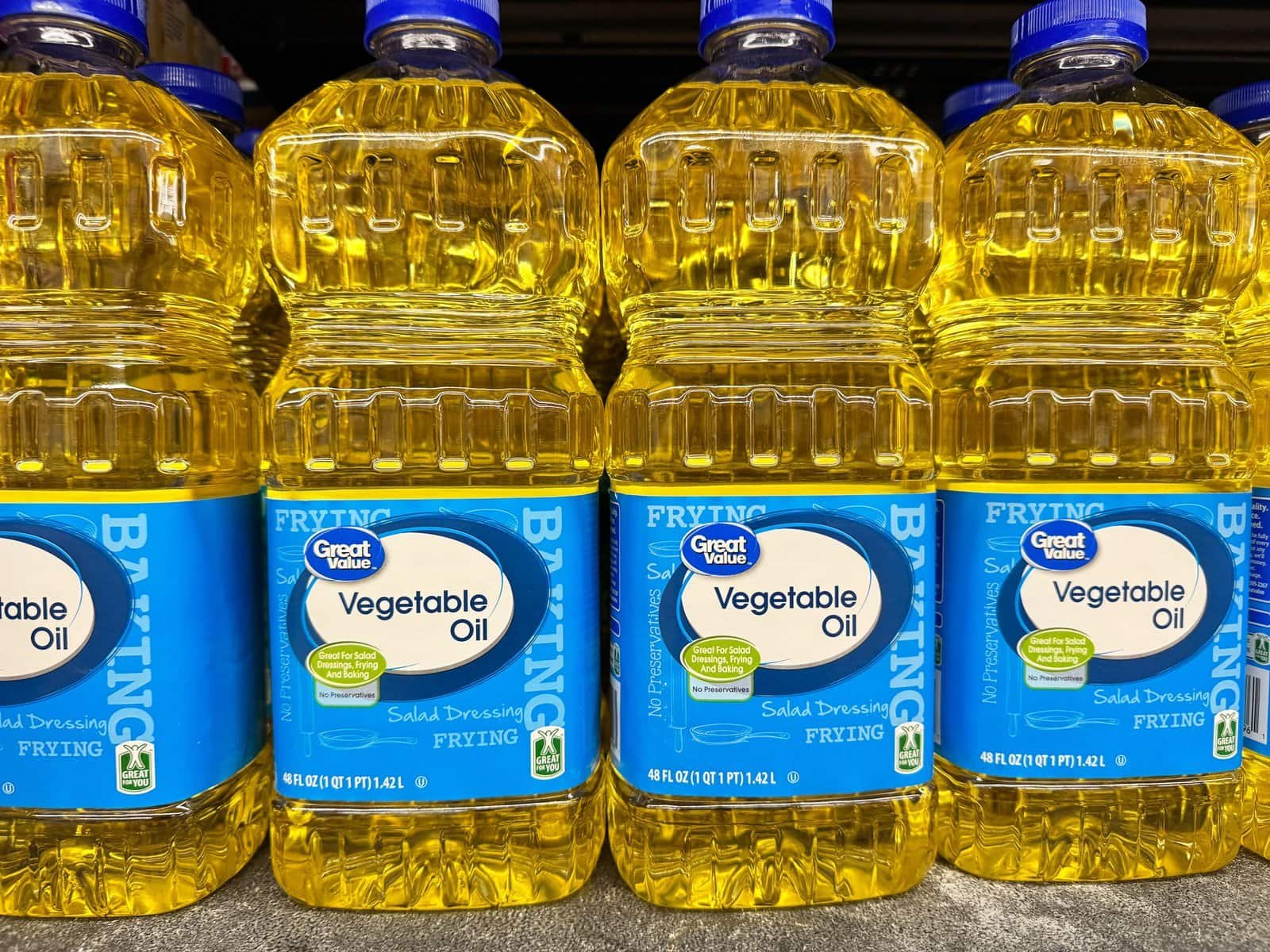
By the 2000s, the Great Value bottle underwent a design evolution, moving from the thick, heavy glass to a squeezable plastic bladder with a drip-less spout. This was a massive innovation—the drip-less spout was engineered with a special lip that allowed the liquid to “snap back” into the bottle, preventing the sticky ring of residue that had plagued kitchens for decades. It is a humble detail, but it represents a shift from pure commodity to consumer experience. The oil also became lighter in color, a result of better refining processes that removed more free fatty acids, extending its shelf life. Yet the flavor remained the same: neutral, slightly nutty, and utterly reliable. This era also saw the rise of the “bulk” size, a gallon-plus jug that looked like a jug of transmission fluid but was beloved by churches and family reunion cooks who needed to fry fifty chicken legs at once.
The Modern Hack: Cold-Pressed Nostalgia and the Air-Fryer Compatibility
Today, the classic principles of Great Value vegetable oil—neutrality, high smoke point, and low cost—are being “hacked” by a generation that has rediscovered the comfort of fried food but wants to hack the guilt. The modern air fryer, that ubiquitous kitchen gadget of the 2020s, uses a mere tablespoon of oil to achieve the crispness that once required a quart. Modern health influencers are not throwing away the Great Value bottle; they are using it smartly, mixing it with a few drops of toasted sesame oil for an unmistakable umami boost, or combining it with a little butter in a panic for a “ghee substitute.” The hack is in the dosing: a spray bottle filled with Great Value oil is now used for crispy Brussels sprouts, roasted potatoes, and even the dreaded “everything bagel” seasoning stick. The classic principle of “a penny of fat for a dollar of flavor” remains intact, only now it is measured in milliliters and calories, not pints.
Furthermore, the “hack” extends to preservation. The modern pantry no longer stores the bottle on a sunny counter; it is being tucked into a dark cabinet to prevent oxidation, a simple chemistry lesson that old-school cooks knew intuitively but never articulated. Today’s fast-paced world is seeing a revival of “seed cycling” and “oil pulling”—both of which, in their distorted forms, see avocados embarking on a wellness journey—but the great unspoken truth is that the classic soybean oil in the Great Value bottle is the exact same oil that powers the majority of restaurant fries and commercial baked goods. The modern hack is not to replace it but to conjugate it, pairing its stability with more flavorful oils. We are also seeing the rise of “blended” oils, where Great Value soybean oil is poured into a decanter with a sprig of rosemary or a few garlic cloves, infusing it with flavor overnight—a slow-living rebellion against the prepackaged garlic oil that costs four times as much.
Frequently Asked Questions: Myths, Truths, and History
Is Great Value Vegetable Oil just as healthy as olive oil or avocado oil?
The historical answer is a resounding “no,” but the modern answer is more nuanced. In the 1960s, vegetable oil was often touted as “heart-healthy” due to its zero cholesterol, but we now know that soybean oil is high in omega-6 fatty acids, which, in excess, can promote inflammation. However, the refined Great Value version has been stripped of most micronutrients, meaning it is essentially a pure fat source, devoid of the polyphenols found in extra-virgin olive oil. The myth that it is “toxic” comes from a misreading of high-heat oxidation studies. When you heat soybean oil to its smoke point of 450°F, it breaks down into free radicals and aldehydes. But the same is true for olive oil at high heat. For daily cooking, olive oil is superior for drizzling and low-heat sautéing due to its antioxidants, but for frying at 375°F, the Great Value oil is actually more stable than cheap extra-virgin olive oil due to its higher saturated fat content relative to monounsaturated fats. The real historical culprit was the trans-fats from the 1990s; today’s non-hydrogenated formula, in moderation, is not a health villain, but it is also not a health food.
Another myth involves the “rancidity” of the plastic bottle. Many social media influencers claim that the plastic leaches endocrine disruptors, specifically phthalates, into the oil. While it is true that heat and time can cause some plastic degradation, Walmart’s packaging uses a food-grade PET that is designed to minimize this. The bigger historical issue was oxidation—the bottle was left open on the stove for months, and the oil would go rancid, which actually creates more free radicals than any plastic. The answer is to buy the smaller size if you cook rarely and treat the oil like a perishable good. It is not a health food, but it will not kill you, and for a family on a food budget, it is a necessary source of calories and palatability.

Can I reuse and filter the oil multiple times, or was my grandma just reckless?
Your grandma was not reckless; she was practical, but she also knew a few tricks that modern cooks ignore. In the 1940s and 1950s, used oil was considered a valuable commodity, often strained through a coffee filter and stored in a tin can for the next fry-up. The reality is that you can reuse the oil once or twice if you fry at moderate temperatures and do not let food particles burn in the oil. The chemical process is called “thermal polymerization,” where the oil makes longer chains, becoming thicker and smokier. The myth is that you can keep reusing until it turns dark brown; the truth is that by that point, the oil has a high concentration of polar compounds, which are pro-inflammatory and carcinogenic. For home use, a single reuse is generally acceptable for breaded items, but never for fish, as the flavor transfers. Your grandma also employed a clever trick: she would drop a slice of raw potato into the oil while it heated. The potato acts as a “sacrificial” food, absorbing impurities and telling the cook the oil is ready when the potato floats.
Modern science has found a hack using a pinch of gelatin or a mixture of water and cornstarch to clarify the oil, pulling out the particulate matter. However, the most sustainable practice today is to simply use the oil three times and then responsibly dispose of it—not down the drain, but in a sealed container in the trash or a local biofuel drop-off. The nostalgic practice of keeping a “grease jar” under the sink is making a comeback, but with a new purpose: not for frying again, but for making soap or lubricating rusty bolts. The modern take is that while heat degrades the oil, filtration prolongs its life, but no fancy filter can undo the oxidative stress of time. So, use it once for fried chicken, twice for French fries, and then respectfully retire it.
Is there a taste difference between Great Value and premium brands like Crisco or Wesson?
This is the most contested question in the American pantry. In a blind taste test conducted in 2018 by a major cooking magazine, tasters could not consistently distinguish between Great Value, Wesson, and store-brand generic oils in a simple sauté. The reason is that all are heavily refined soybean or blended oils, with identical smoke points and nearly identical free fatty acid profiles. The historical difference was in the 1950s, when Crisco, a cottonseed oil-based product, had a distinct, creamy mouthfeel that unlike the older animal fats, left a “cleaner” palate. Now, with modern refining, the final product is stripped of any distinct flavor. The only real difference is cost and a placebo effect of “premium” branding. However, the texture difference appears in baking. The Great Value oil is homogenized with an anti-foaming agent, while some premium brands use a different emulsifier, leading to a marginally finer crumb in cakes.
The nostalgic truth is that the taste is mostly nostalgic itself. If you grew up with your grandmother’s fried pies made with Wesson, you will swear you can taste the difference. In reality, the oil is neutral, and the flavor comes from the food’s own crust and the Maillard reaction. The 1920s cottonseed oils had a slight nutty aftertaste, but soybeans are bred for neutrality. For the fiddly, expensive work of finishing a salad, you want an extra-virgin olive oil, but for deep-frying a turkey on Christmas, the Great Value bottle is not just a bargain; it is a performance, delivering identical results to the $15 artisan oils. Save your money, buy the great value, and spend the rest on a better cut of meat.
Looking forward to the next twenty years, the Great Value Vegetable Oil will undergo a transformation as radical as its shift from glass to plastic. We are on the cusp of precision fermentation, where fats will be grown in labs without any fields or soybeans. Imagine a bottle labeled “Great Value Precision Oil,” made from yeast that produces a triglyceride identical to soybean oil but without the agricultural footprint of water, pesticides, and land. This is not science fiction; start-ups like Zero Acre Farms are already prototyping such oils. The price point will be shockingly low, possibly lower than today’s commodity oil, as the infrastructure scales. The taste will be identical because it will be designed at the molecular level, but the supply chain will be utterly green, eliminating the deforestation issues currently associated with soybean farming in the Amazon and the monoculture blight of the Midwest.
Moreover, the future bottle itself may be edible. A packaging press using seaweed or potato starch could make a dissolvable wrapper that you throw into the pan along with the oil, eliminating plastic waste entirely. We may also see smart bottles with built-in sensors—a QR code that tells your phone the oil’s exact oxidation index, alerting you to the perfect frying window. The nostalgia for the dusty bottle on the back shelf will remain, but it will be transformed into a sleek, digital-savvy relic. In twenty years, your grandchildren will ask you, “Why did it come in a plastic jug?” and you will tell them about the 1993 launch, the Fry-Baby, and the church fish fry. The oil is not disappearing; it is merely changing its clothes, but its soul—that neutral, affordable, forgiving golden liquid—will remain the lubricant of the modern world.