Vector Analyzer Vs Spectrum Analyzer
The first time you see a spectrum analyzer’s waterfall display, it feels like staring into a digital aurora—a cascading ribbon of color that maps the invisible ghosts of radio frequency (RF) energy swirling around your smartphone, your Wi-Fi router, and even the microwave oven that just nuked your coffee. It’s a hypnotic, almost psychedelic view of a world we can’t see but are utterly dependent upon. Yet, in the corner of the lab, sits its quieter, more intimidating cousin: the vector analyzer, a device that doesn’t just look at the energy but interrogates it, asking questions about phase, impedance, and the very fabric of how signals reflect and refract off components. This isn’t just a comparison of test equipment; it’s a philosophical duel between seeing what is there versus understanding why it behaves that way.
Historically, the spectrum analyzer was the rockstar of the RF world, born from the need to see frequency-domain content—think of it as the musical equalizer of the electromagnetic spectrum. By the 1960s, sweeping superheterodyne receivers gave engineers their first true glimpse into the chaos of broadcast bands. But as technology marched from simple AM radio to complex QAM (Quadrature Amplitude Modulation) signals used in 5G and Wi-Fi 6, merely looking at the amplitude wasn’t enough. Phase became the new frontier. Enter the vector network analyzer (VNA), a device that measures both magnitude and phase, essentially giving you a 3D map of a circuit’s soul. Today, with the rise of software-defined radio and IoT devices, the choice between these two tools is no longer a technical footnote; it’s a strategic decision that determines whether you’ll spend your Friday night debugging a disaster or sipping a cocktail, knowing your signal path is pristine.
The Physics of Presence: Why Phase Changes Everything
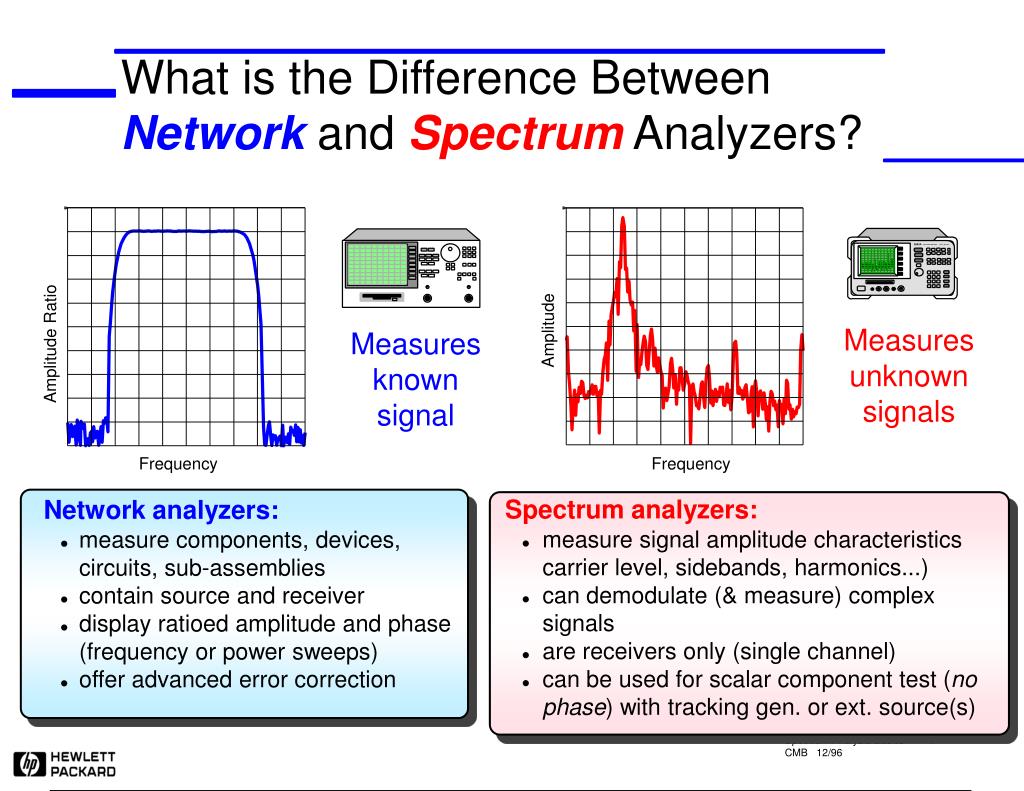
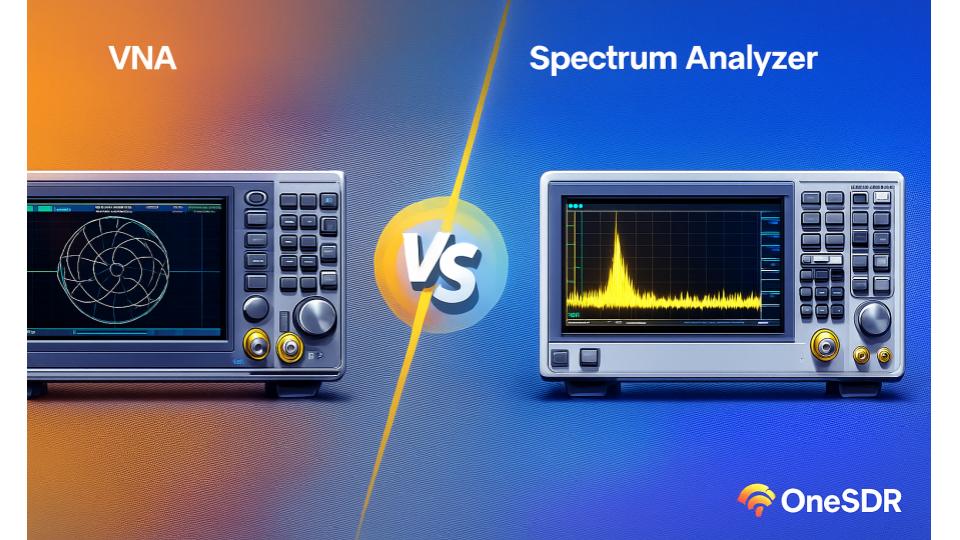
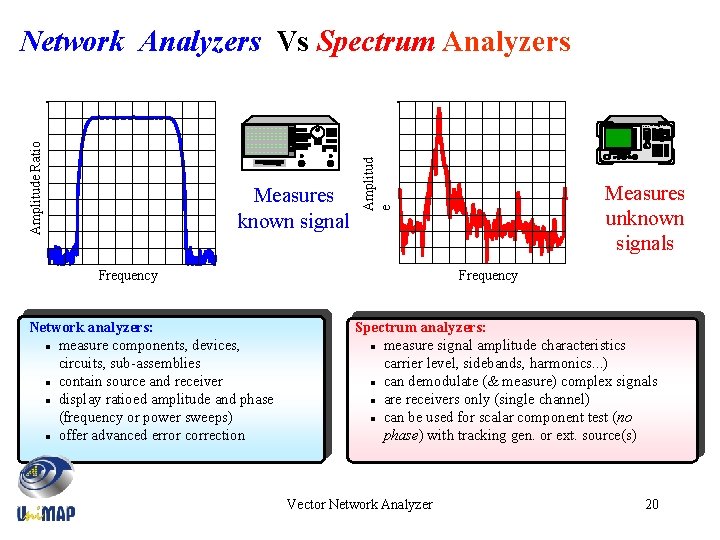
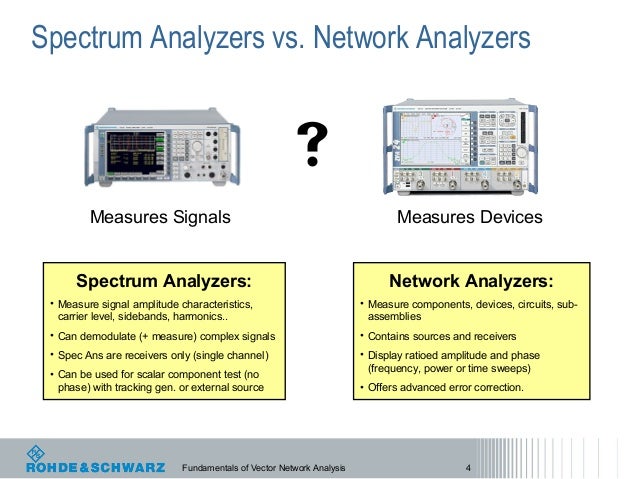
Here’s a dark, fun fact that most hobbyists don’t realize: a spectrum analyzer is, at its core, a glorified power meter with an attitude problem. It sweeps across frequencies, measuring the average amplitude of energy, but it is deaf to time alignment. This means if you have a signal that is perfectly clean but suffers from severe reflective losses (impedance mismatch), the spectrum analyzer will shrug its shoulders and say, “Looks great!” Meanwhile, that same signal is actually bouncing back into your transmitter, potentially frying your final amplifier stage. The spectrum analyzer cannot tell you if your antenna is a perfect radiator or a heat lamp in disguise. It only sees the gross output, not the subtle internal warfare of voltage and current waves colliding.
Must Read
The vector analyzer, conversely, is a master of the complex plane. It doesn’t just measure power; it measures the reflection coefficient (S11) and transmission coefficient (S21) using complex numbers—math that includes an imaginary component, which is frankly the most poetic thing in engineering. By injecting a known stimulus and measuring the phase shift of the returned signal, it reveals the story of group delay and VSWR (Voltage Standing Wave Ratio). Imagine throwing a stone into a pond and watching the ripples. A spectrum analyzer counts the ripples; a vector analyzer tells you exactly how the bottom of the pond is shaped based on the echo. This psychological shift—from observational analysis to interrogative testing—is why VNAs are often called “the lie detectors of the RF world.” They catch the deception that amplitude-only instruments miss.
Culturally, this mirrors our modern obsession with “surface-level metrics” versus deep structural integrity. We scroll Instagram and see a spectrum analyzer portrait—beautiful, colorful, but ultimately flat. Then a vector analyzer comes along like a therapist, asking, “But how do you feel about that frequency?” In the context of modern electronics, where a 1mm trace on a PCB can act as an inductor at 10 GHz, the spectrum analyzer is the artist, and the VNA is the surgeon. The former gives you a masterpiece of data; the latter gives you the pathology report. As 5G mmWave technology pushes into the 39 GHz band, components behave in bizarre ways—a capacitor might look like a resistor, a resistor might look like an antenna. Only a vector analyzer can untangle these pathological identities, making it the essential tool for the paranoid engineer who assumes everything is broken until proven complex.
Choosing Your Weapon: Scenarios, Case Studies, and Practical Alchemy
Let’s walk into a real-world scenario: you’re designing a low-noise amplifier (LNA) for a satellite ground station. You power it up, connect it to a spectrum analyzer, and see a beautiful, clean output sine wave with a noise floor of -120 dBm. You feel like a wizard. But then, the satellite signal doesn’t come in. The client is angry. You pull out the vector analyzer and discover that the input matching network has a return loss of only 5 dB, meaning 70% of your precious signal is being reflected back out of the amplifier. The spectrum analyzer lied to you—not maliciously, but naively. It only saw the amplified signal, not the 50-ohm impedance discontinuity that was killing your sensitivity. The VNA saves your career, revealing the importance of matching over mere amplification.
Another scenario involves troubleshooting a mysterious intermittent glitch in a smart home hub. You suspect interference from a neighbor’s baby monitor. A spectrum analyzer with a peak-hold function is perfect here; you can leave it running for hours to capture transient spikes—a classic “fishing” expedition. This is the hunting tool. But the moment you decide to replace the antenna, you must switch to a scalar network analyzer (measuring only amplitude) or a full VNA. Why? Because coax cables have parasitic capacitance and inductance, and cutting a random length of wire to “fix” an RF issue without measuring its electrical length (phase) is pure gambling. In this case, the spectrum analyzer tells you that there is noise; the VNA tells you how to terminate it properly. The actionable takeaway: use a spectrum analyzer first to identify the enemy’s presence, then use the VNA to arm yourself before entering the battlefield.
For the DIY enthusiast building a ham radio setup, the difference is often budgetary but also philosophical. A decent spectrum analyzer (like a TinySA) costs $50 and shows you the radio’s output. A cheap VNA (like a NanoVNA) costs $80 and shows you the antenna’s soul. The best practical workflow is the “spiral method.” First, use the spectrum analyzer to verify your oscillator is on the correct frequency and isn’t spewing spurious emissions. Then, disconnect the radio and connect the VNA to measure the return loss of your feedline and antenna. Adjust the antenna’s length until the VNA shows a dip at your desired frequency, indicating a sharp resonance. Reconnect the radio and use the spectrum analyzer again to confirm the final output power. By oscillating between the two, you get the “what” and the “why,” turning yourself from a button-pusher into an actual systems engineer.
Finally, consider the professional RF design shop. They don’t use one or the other; they use them in a brutal, efficient workflow. During production, a spectrum analyzer on the test line acts as a gatekeeper, rejecting units with excessive harmonics. But once a unit fails, it goes to the debug bench where a VNA performs a “time-domain reflectometry” scan, essentially sending a pulse and measuring the reflections to pinpoint a cracked solder joint down to the millimeter. This is like using an X-ray versus an MRI. The X-ray shows the break, but the MRI shows the tissue damage around it. In the industrial age of electronics, the spectrum analyzer is your quality control officer, while the VNA is your forensic pathologist. Neither is superior; they are two halves of a complete investigative mind.
Critical FAQs: The After Hours Q&A
Q1: Can a spectrum analyzer be used to measure impedance or SWR?
Technically, no. A spectrum analyzer is not a network analyzer. It measures power vs. frequency; it lacks a directional coupler and a tracking generator (unless you have a dedicated model with that feature). To measure SWR (Standing Wave Ratio), you need to compare forward and reflected power simultaneously, which requires phase information or at least a bridge circuit. You can infer SWR by using a directional wattmeter, but not from a simple spectrum sweep. The spectrum analyzer sees the result of a mismatch (reduced power output), but it cannot tell you if the mismatch is capacitive or inductive, which matters critically for tuning.
Think of it this way: if your car is pulling to the right, a spectrum analyzer tells you the speedometer is reading 60 mph, but it doesn’t tell you the tire pressure is low on the right front wheel. A vector analyzer, when set to measure S11, applies a signal and measures the reflected wave’s phase and magnitude relative to the incident wave. This gives you a direct impedance value (e.g., 30 + j15 ohms), from which you can calculate SWR. So, while you can guess the SWR from a spectrum analyzer’s amplitude hump, only a VNA gives you the true complex impedance, allowing for precise matching network design. In short: spectrum analyzer for power, VNA for the "load" itself.
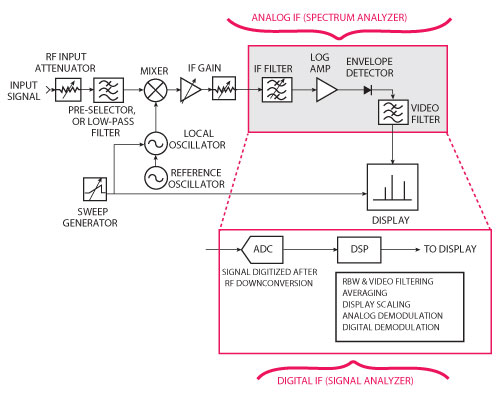
Q2: Why are vector analyzers typically more expensive than spectrum analyzers?
The cost disparity stems from hardware complexity and calibration methodology. A spectrum analyzer is conceptually simpler: a mixer, a local oscillator, a filter, and a detector. The signal path is unidirectional—input to display. A vector analyzer is a two-port (or multi-port) system requiring two coherent signal sources, four directional couplers, complex phase-locked loops, and precision mixers to measure both reflected and transmitted signals simultaneously. Furthermore, a VNA performs a rigorous "calibration" process using known standards (open, short, load, through) to remove systematic errors from the hardware itself—a process that can take minutes and requires internal memory chips to store error coefficients.
Moreover, the math involved in a VNA is far more intensive. It uses Fourier transforms and complex vector math to compute S-parameters in real time. The processors inside a commercial VNA (like a Keysight PNA) are bespoke, designed for floating-point arithmetic at high speeds. Spectrum analyzers, even high-end ones, use simpler logarithmic amplifiers and envelope detectors. This isn’t just about material cost; it’s about the intellectual property baked into the calibration algorithms. You are paying for the ability to achieve traceable accuracy (like ±0.01 dB), whereas a spectrum analyzer might have a ±0.5 dB amplitude accuracy, which is fine for general use but garbage for building a filter with 0.1 dB ripple requirements. The premium is on precision and the inverse problem-solving capability.
Q3: What is the difference in how they handle broadband signals (like 5G or UWB)?
For modulated broadband signals that span hundreds of MHz (like Wi-Fi 6E or 5G NR), a spectrum analyzer faces a fundamental dilemma: it sweeps slowly, meaning it effectively averages the signal's power over time, potentially missing fast transient events or showing a blurred peak. Modern spectrum analyzers use "zero-span" mode or "swept" mode, but for true demodulation and error vector magnitude (EVM) analysis, you need a vector signal analyzer (VSA), which is a third category but often confused with VNA. A VNA can measure a wideband signal's frequency response over a wide span, but it does so by using a sweeping tone (CW). It does not demodulate a QAM signal.
However, a VNA is exceptionally useful for testing the filter that processes that broadband signal. You can sweep the VNA across the entire 1.2 GHz Wi-Fi band to verify the bandpass filter’s flatness and phase linearity. A spectrum analyzer would show you the filter’s amplitude response, but if the filter has phase distortion, it will smear the QAM symbols, causing bit errors. Only the VNA shows you the group delay variation, which is critical for high-data-rate links. For the actual radiated signal, you need a spectrum analyzer to see the spectral mask, but to ensure the signal integrity inside the chip, you need the VNA. So: spectrum for the "air," VNA for the "circuit." Broadband signals demand both—the spectrum tells you about interference, the VNA tells you about the medium’s fidelity.
Q4: Are there software-based apps that can do the job of both tools?
Yes, but with significant caveats. Software-defined radios (SDRs) like an RTL-SDR can act as a rudimentary spectrum analyzer with the help of tools like GQRX or SDR#. They use a fast Fourier transform (FFT) on raw IQ data, giving you a live waterfall. However, their accuracy is limited by the front-end hardware’s flatness, and they have no capability to measure reflection coefficients. You can link an SDR to a directional coupler and a signal generator to create a poor-man’s VNA, but you will lack proper calibration and phase accuracy. Apps like "NanoVNA-Saver" are actually the software interface for a hardware VNA, not standalone software.
The core issue is that a genuine VNA requires a known RF source with a defined phase relationship to the receiver. Software alone cannot generate that signal unless your PC has a dedicated RF output with a shared clock. For hobbyists, there are "vector network analyzers" using a single-port reflectometer bridged to an SDR, but the dynamic range drops drastically. Conversely, using software to analyze a spectrum is trivial; FFTs are computationally easy. The takeaway is this: you can emulate 80% of a spectrum analyzer’s function with an SDR and a laptop for $30, but you cannot emulate a VNA’s calibrated phase measurement without significant hardware investment. The "silicon lottery" is a real thing in cheap adapters, and without a VNA, you’re flying blind.
Q5: Which tool is better for a beginner trying to learn RF electronics?
Start with a spectrum analyzer—specifically a cheap USB or handheld one. Why? Because it provides immediate visual satisfaction. You tune a signal generator, and you see a peak move. This builds intuition for frequency, amplitude, and bandwidth. It’s like learning to read sheet music before you compose a symphony. The psychological reward of seeing a carrier wave appear is immense, and it hooks you into the world of RF. A vector analyzer has a steep learning curve; the Smith Chart looks like alien hieroglyphics, and the calibration process is tedious and confusing without a solid grasp of vector math.

However, once you understand what a frequency is and how to measure power, you must graduate to a vector analyzer. The NanoVNA (around $50) is the perfect “gateway drug.” It forces you to learn about S-parameters, impedance matching, and the concept of complex numbers. The frustration of calibrating it teaches you discipline; the joy of measuring your first antenna’s resonance is an epiphany. In my opinion, a beginner should buy both—a TinySA for power checks and a NanoVNA for component testing—and use them together. The spectrum analyzer shows you goals; the VNA shows you obstacles. Learning both in parallel is the fastest way to become a dangerous RF engineer, but if you only have $80, buy the VNA, because you can use it to build proper antennas, which is the most common beginner failure point.
Reflecting on these two instruments, it’s fascinating how they mirror our human cognition. We crave the immediate, visual satisfaction of the spectrum analyzer—the bright peaks, the cool waterfalls—because it confirms existence. It’s the dopamine hit of seeing a signal on a screen. But our deeper survival instincts demand the vector analyzer’s scrutiny: the questioning of integrity, the search for hidden resonances, the worry about what’s reflecting back at us. In relationships, we often only look at the spectrum—what people show us on the surface—while ignoring the impedance mismatches, the phase shifts in communication that cause arguments to return like RF reflections.
The vector analyzer teaches us a profound lesson about life: that sometimes, the best way to improve a system is not to amplify the signal (crank up the volume) but to terminate the load properly (listen with patience). A spectrum analyzer might tell you a job is done because the output looks good. A vector analyzer tells you that the internal stresses (the standing waves) will eventually burn you out if you don’t address them. It’s the difference between being a promoter of your own success and being an auditor of your own reality.
In our daily lives, we are constantly switching between these roles. When we check our bank balance, we are using a spectrum analyzer—just observing the power level. When we examine our spending habits and look at monthly phase changes in our budget, we are using a vector analyzer—measuring the complex flow of cash in and out. The ultimate practical insight is to know when to stop looking and start interrogating. The modern world offers too much data (spectrum) and not enough understanding (phase). By mastering the vector analyzer mindset—asking “how did this reflect off my past impedance?”—we can build a life with lower VSWR, less wasted energy, and a much cleaner signal to the world.