
Urophilia Meaning In English
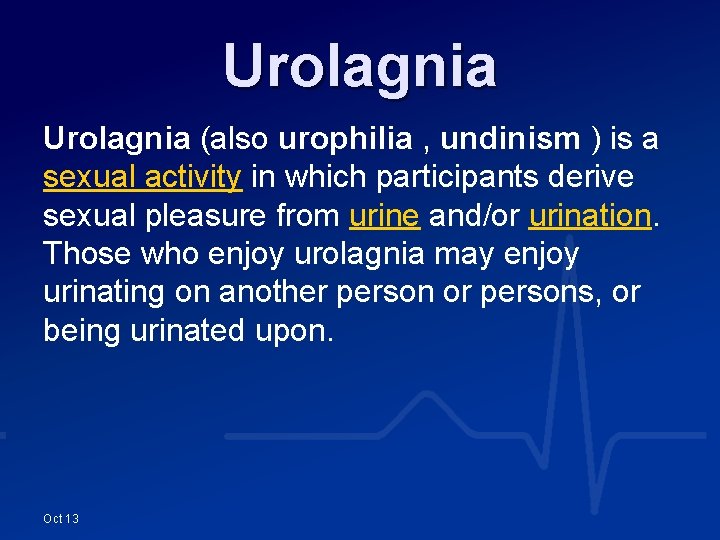
When it comes to exploring the intricacies of human behavior and preferences, we often stumble upon terms that might seem unusual or even taboo at first glance. One such term is urophilia, a concept that refers to a sexual interest in urine or urination. This can manifest in various forms, including golden showers, where one derives pleasure from being urinated upon, or simply enjoying the sight or sound of urination.
In understanding urophilia, it's essential to approach the topic with an open mind, recognizing that human sexuality is incredibly diverse. While it might not be a common or widely accepted preference, it's crucial to distinguish between consensual practices among adults and any form of non-consensual behavior. The kink community often uses the term to discuss and explore related fantasies and experiences.
Origins and Prevalence
The origins of urophilia are not well-documented, but like many sexual preferences, it's likely that the fascination with urine or urination has historical roots. Cultural references and artistic expressions can provide insights into how different societies have perceived and dealt with such preferences over time. From a medical standpoint, urophilia is considered a paraphilia, a condition characterized by abnormal or unnatural sexual desires, though the classification and understanding of such conditions are subject to ongoing debate and refinement.
Must Read
In terms of prevalence, urophilia is not among the more commonly studied or discussed sexual preferences, partly due to its taboo nature. However, the internet and social media have provided platforms for individuals with various preferences, including urophilia, to connect, share experiences, and discuss their interests more openly. This increased visibility can help in demystifying and normalizing discussions around sexual diversity, though it also raises concerns about privacy, consent, and the potential for exploitation.
Cultural References and Pop Culture
Cultural references to urophilia can be found in various forms of art and literature, often presented in a way that sparks intrigue or controversy. For instance, certain film and music genres might include themes or elements related to urophilia as a means of exploring sexual boundaries or challenging social norms. These references can serve as a gateway for discussions about sexual preferences and the importance of consent and respect in all sexual activities.

It's also worth noting that urophilia, like many sexual preferences, exists on a spectrum. Not everyone who expresses interest in urine or urination identifies with the term or participates in related activities. The spectrum of human sexuality is incredibly wide, and education and open dialogue are key to fostering a more inclusive and accepting environment. Whether through documentaries, podcasts, or online forums, there are numerous platforms where individuals can learn and discuss urophilia and other preferences in a safe and respectful manner.
Practical Considerations and Safety
For those interested in exploring urophilia, either personally or with a partner, safety and hygiene are paramount. This includes understanding the risks associated with urine play, such as infections and other health concerns, and taking appropriate precautions. Communication and consent are also essential, ensuring that all parties are comfortable and willing to engage in such activities.

In practice, this means discussing boundaries, desires, and any concerns with your partner(s) openly. It's also crucial to have access to resources and information that can provide guidance on safe practices and how to navigate the complexities of urophilia. The internet offers a wealth of information, from health advice to community forums, but it's essential to vet sources for reliability and respectfulness.
Reflection and Daily Life
Exploring topics like urophilia encourages us to reflect on our own attitudes towards sexuality and preferences. It's a reminder that diversity and individuality are fundamental aspects of human experience, and that fostering an environment of acceptance and understanding is vital. Whether or not one identifies with urophilia or any other specific preference, recognizing the importance of respect, consent, and open communication can enrich our relationships and personal lives.

In daily life, applying the principles of empathy, tolerance, and education can make a significant difference. This involves being open to learning about different sexual preferences, engaging in respectful conversations, and advocating for inclusivity. By doing so, we contribute to a more compassionate and enlightened society, where individuals feel safer to express their true selves and explore their desires in a consensual and respectful manner.
Ultimately, the exploration of urophilia and other sexual preferences should prompt us to consider our values and how we navigate discussions about sexuality. By embracing knowledge, acceptance, and respect, we not only enrich our understanding of human sexuality but also work towards creating a more welcoming and diverse community for all. This journey of discovery and dialogue is ongoing, and it's through our collective efforts that we can promote a culture of inclusivity and understanding, one conversation at a time.


