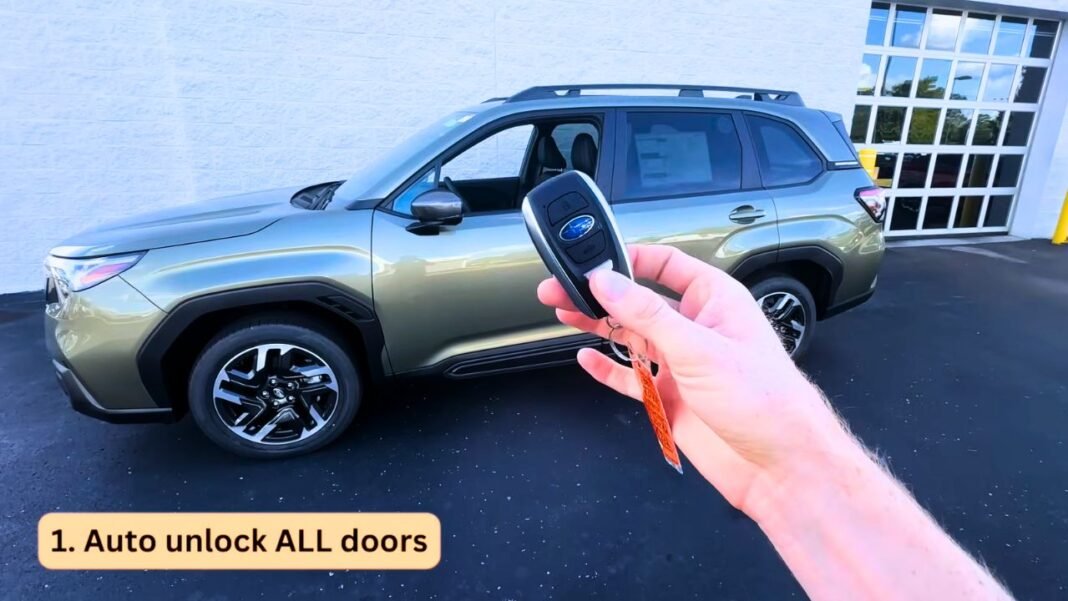
Unlock Subaru Outback Without Key
Long before the digital fingerprints of smartphone apps and the silent whispers of keyless entry systems, the relationship between a driver and their Subaru Outback was a tactile, almost ritualistic affair. The key was a physical extension of the self, a jagged piece of milled metal that jingled in a pocket and held the promise of liberation. But there was a darker, more anxiety-inducing side to this relationship: the moment of sheer, stomach-dropping panic when you realized that key was gone. Locked out of your car, staring through the glass at the steering wheel and the empty ignition, you became intimately acquainted with the vehicle’s unforgiving stubbornness. In the early 1990s, when the Outback first emerged as a rugged, go-anywhere wagon, the solution to a lockout was as primitive as the car’s utilitarian interior: a coat hanger, a slim jim, or the humiliating wait for a tow truck driver who looked at you with a mixture of pity and professional amusement. This was the humble beginning of a niche problem that would eventually spawn an entire industry of locksmithing tricks, technological workarounds, and a deep-seated cultural folk knowledge about the thin gap between the window and the rubber seal.
The initial human necessity was simple and urgent: survival. The Outback, unlike a city sedan, was often the vehicle of choice for the adventurous soul—the weekend hiker, the mountain biker, the dog-owning suburbanite who lived on the edge of the wilderness. Being locked out of an Outback wasn’t just an inconvenience; it was a potential safety issue. If you were deep in a trailhead parking lot at dusk, with the wind picking up and the temperature dropping, the ability to get back inside the cabin could be the difference between a story told around a campfire and a slippery slope towards hypothermia. The early solutions were crude. The infamous "slim jim," a flat strip of steel with a notch cut into it, was inserted between the window glass and the weather stripping, a delicate surgical procedure that required the finesse of a safecracker to hook the internal linkage of the door lock. More often than not, it left a legacy of scratched window seals and a newfound respect for the mechanical complexity hidden within the door panel. This was the era of the "hanger dance"—a forlorn figure contorted against the door glass, trying to snag the manual lock knob that, on the first-generation Outback, was a simple, satisfyingly chunky plastic button protruding from the door sill.
This nostalgic period of physical manipulation represents a fascinating era in automotive design. The Outback, in its JDM debut as the Legacy Grand Wagon, and its subsequent Americanization as the Outback in 1995, was built with an old-school mechanical ethos. The locks were simple, the linkage rods were exposed, and the possibility of forced entry was almost a design flaw. Locksmiths in the mid-1990s had a repertoire of "tricks of the trade" that involved inflatable air wedges—a plastic bladder that could be pumped up to create a gap large enough to insert a second tool. The goal was always the same: to reach the vertical rod inside the door that connected the handle to the latch mechanism. It was a game of physical geometry, a ballet of steel and rubber. These vintage facts might be forgotten now, buried under the software of modern vehicles, but they represent a time when a skilled professional could open a car in under 30 seconds without so much as a chip of paint being disturbed. However, the bizarre treatment of this topic in the late ’90s and early 2000s involved the rise of the "keyless entry remote" combined with the dreaded Valet Key. Subaru offered a basic remote fob, but many owners, living in the pre-smartphone world, treated it with a cavalier disregard, leaving it in the center console or, ironically, locking it inside the car alongside a spare key, creating a puzzle that required a locksmith and a lot of head-shaking.
Must Read
The Mechanical Waltz: The Forgotten Art of Forced Grace
The transformation of the lockout scenario took a dramatic leap forward with the introduction of the Subaru Keyless Entry and Immobilizer system in the early 2000s, specifically around the 2003 model year. This was the great bifurcation. Before this, the car was a machine that could be "jimmied" open by those who knew the mechanical secrets. After this, the car became a fortress of security, but a fortress with a glaring vulnerability—the driver’s own human error. The physical key still worked in the door lock, but the transponder chip inside the plastic head was now the true gatekeeper. If you lost the key, you couldn't just call any tow truck guy; you needed a dealer or a specialized automotive locksmith with a $10,000 diagnostic tool to program a new transponder to match the car’s ECU. This shift turned the locksmith from a "mechanical magician" into a "digital administrator." The bizarre treatments of this era included "hide-a-keys"—magnetic boxes hidden under the wheel well or bumper, which were effective until they froze solid in a Minnesota winter or rattled off during a high-speed gravel-road escape, leaving the owner stranded in precisely the environment the Outback was designed to conquer. Another forgotten fact is the "rubber door stopper" hack. Some owners discovered that if you deflated the front tire slightly (not flat, just low), you could gain enough leverage with a two-by-four wooden block to pop the door frame slightly, slipping a hook in to pull the handle from the inside. This method was incredibly risky, risking bending the door hinges and creating a permanent wind whistle, but it was a testament to the desperate ingenuity of the pre-digital age.
By 2008, Subaru introduced the Push-to-Start button on the Outback, a revolutionary moment that eliminated the physical key for ignition but paradoxically made the lockout problem even more acute. Now, the "key" was a passive fob that you kept in your pocket. You didn't need to pull it out; you just grabbed the door handle, and the car recognized the proximity signal. The danger here was the "confident walk"—you’d press the button, the car starts, you drive, you arrive at your destination, you step out, you close the door, and the car locks automatically. And the fob? It’s sitting on the passenger seat, mocking you through the glass. The solution to this new-age lockout was not a slim jim; it was a smartphone. Subaru pioneered the Starlink system in 2013, which allowed for remote locking and unlocking via a cellular signal. This was the bridge between the physical world and the digital cloud. However, this modern miracle had a humbling Achilles heel: you needed a charged phone and cellular coverage. In the remote canyons and desolate mountain passes where Outbacks love to roam, the cell signal drops to zero, and a driver with a dead phone and a locked car is thrown back into the Stone Age of 1995, forced to use the mechanical key hidden within the fob—except they don't have the fob because it's inside the car.
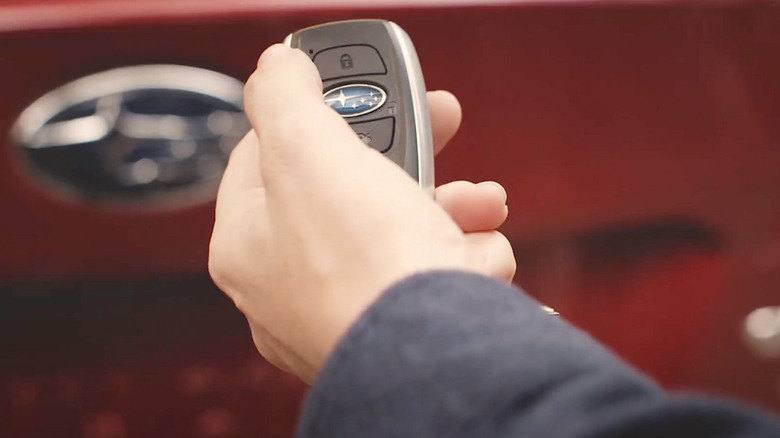
Forgotten vintage facts from this transitional decade include the rise of the "locksmith hack" involving a tennis ball. The myth was that you could cut a small hole in a tennis ball, press it against the lock cylinder, and the compressed air would pop the lock open. This was a complete urban legend, yet it persisted in gyms and ski lodges for years, leading many an Outback owner to smash a perfectly good Wilson ball against their driver’s side door in frustration, only to realize they’d just bruised their palm and dented their door panel. Another bizarre behavior was the "door-ledge shimmy," where passengers would climb through the rear hatch after opening it via the windshield wiper motor relay—a technique that required knowing which fuse to pull from the interior fuse box, which, of course, was located inside the locked cabin, making it useless. These were the "beta" eras of lockout technology, where the security was high enough to stop casual thieves but low enough that a determined owner with a specific screwdriver and a printed service manual could bypass the system in about seven minutes.
This era of mixed physical and digital security reached its peak with the 2015 redesign of the Outback, which incorporated a more robust advanced keyless entry system with stroking sensors on the door handles. The locksmithing industry had to adapt or die. The old-school locksmiths who refused to buy a laptop and a transponder programmer were relegated to opening classic cars. The modern locksmith became a "mobile IT specialist," carrying a tablet that could read the OBD-II port (if you could get into the car) or clone the signal from a fob at a distance (a process known as a relay attack, which is a security vulnerability that preys on the same technology meant to help you). The modern hack, used by most legitimate services, is the "door wedge and long-reach" tool. A wedge is inserted at the top of the window, and a long fiberglass rod with a specialized hook is used to press the "open" button on the driver's door panel—not the lock linkage, but the actual electrical switch. This requires extreme precision, as a wrong move can scratch the door's inner paint or break the delicate plastic switch mechanism. It’s a far cry from the mechanical linkage of the 90s, but it’s a testament to the adaptability of human craftsmanship in the face of obsolescence.
Hacking the Fortress: Modern Solutions for the Urban Adventurer
Today, the classic principles of lockout resolution have been repackaged for the fast-paced, ultra-connected world. The age-old trick of "hiding a spare key" has been digitized into the Subaru Starlink App and the physical "credit card key"—a thin, emergency key shaped like a credit card that sits in your wallet, providing a physical blade to open the driver's door in an emergency. This is a direct evolution of the old magnetic hide-a-key box, but with a higher degree of sophistication. The modern hack is the "PIN Code Access," a feature finally offered on the newest Outback models (around 2020), where you can unlock the car by touching a sequence on the keyless entry pad embedded in the pillar—a feature that was a standard on Fords since the 1980s, but for Subaru, it’s a revolutionary step backwards to a forward-thinking solution. This lets you leave your keys inside the car (locked) and still gain access using a sequence you have memorized, bypassing the need for a phone or a key fob entirely.

Furthermore, the locksmith industry has embraced "smart" technology, utilizing Bluetooth diagnostic adapters that can be paired with a locksmith's smartphone to authenticate a new key without the need for the dealer’s proprietary equipment, often doing it in under 15 minutes on the side of the road. The modern treatment of the lockout problem is no longer about "picking a lock"; it's about "reprogramming a network." But even with all this technology, the community around the Outback has developed a set of "hacker" folklore, including using a cleaned-out aluminum soda can cut into a strip to wedge between the window and the seal—an echo of the old slim jim—but used not to hook a linkage, but to physically wrap around the handle and pull it mechanically, bypassing the electronics. This works because Subaru made the mechanical handle override a legal requirement. This is a beautiful irony: the futuristic, computer-controlled fortress still has a mechanical weakness that dates back to the horse-and-buggy era of door handles.
The Common Predicament: Frequently Asked Questions
Is there truly a "trick" to unlock a Subaru Outback without a key using a shoelace or tennis ball?
The tennis ball myth is the most persistent piece of misinformation in automotive folklore. It originated in the 1990s with a viral email chain letter. The physics simply do not work: a tennis ball cannot generate the focused, high-velocity burst of air required to disengage the mechanical lock tumbler. If you attempt this, you will only get a face full of rubber and a bruised hand. However, the shoelace method has a modicum of reality, but only for older models from the early 1990s (first generation, up to 1994). If your Outback has the vertical manual lock knob, you can tie a slipknot in a sturdy shoelace, wiggle it down between the window glass and the weather seal, and then pull the slipknot tight around the knob, lifting it upward. This was a genuine technique used by owners in a pinch. But for any model after 1995, when Subaru switched to the integrated lock linkage in the door sill, this method is utterly futile. The modern fact is that the only reliable "trick" without tools is the Starlink App or recalling the PIN code access, if your car is equipped with it.
Modern Subaru Outbacks (2020 and later) are built with a "double-lock" feature that disables the interior door handle linkage when you press the lock button twice. This prevents exactly the kind of mechanical lever manipulation that a shoelace relies on. So, while the shoelace trick is a nostalgic nod to the simpler mechanical past, it is now entirely obsolete for the majority of Outbacks on the road. The best "trick" today is preemptive: always keep the physical emergency key separated from the main fob, either in your wallet or in a magnetic box hidden in a non-obvious location (like inside the rear bumper tow hitch cover), ensuring you always have a manual backup for the digital systems. This is the modern, cybersecurity-informed approach: you don't rely on a single point of failure.
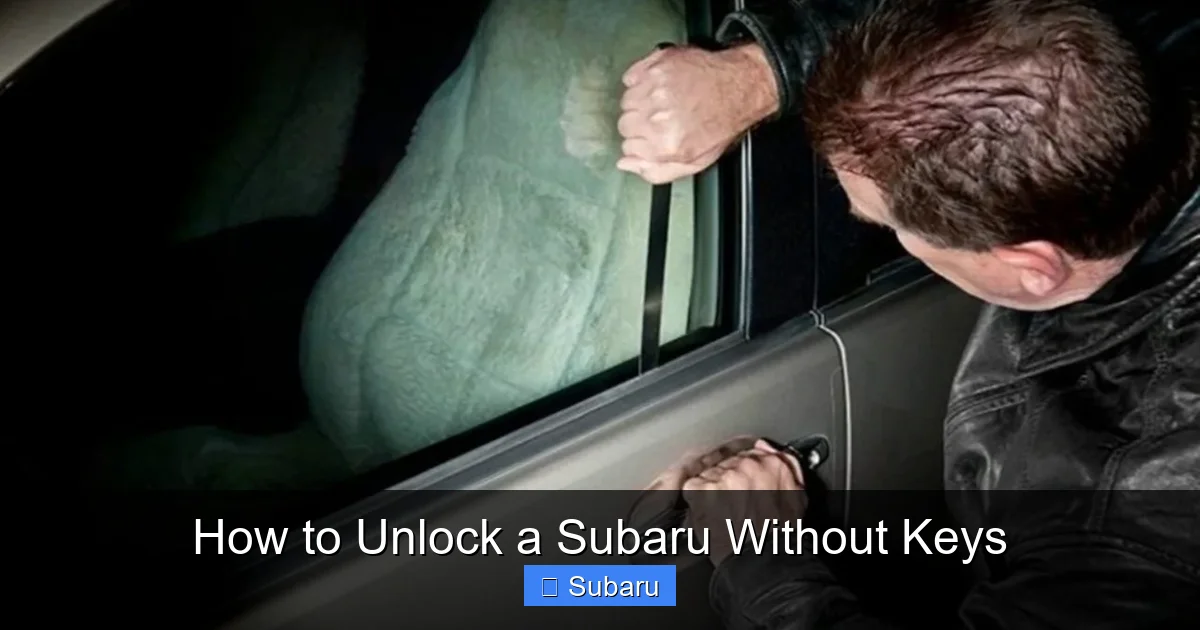
Can a locksmith open a Subaru Outback without damaging the car or the ECM, and how long does it take?
Yes, a reputable mobile automotive locksmith can open a modern Subaru Outback without any damage. However, their method has changed completely from the crude "long-reach" tools of yesteryear. For a 2015-2024 Outback, the locksmith will first attempt what is called "wave or proximity relay" only if they have the signal from your fob (which you likely don't have). Lacking that, they will use a process called "ECU cloning," which involves gaining physical access to the vehicle's OBD-II port. They must first open the door—which they do using a specialized "wedge and air pump" to create a gap at the top of the door, then they use a long, telescopic rod with a camera on the end (a borescope) to see inside the door cavity and locate the electrical harness. They will then use a specialized tool to plug into the OBD-II port without needing the ignition on, read the vehicle's VIN and security seed key, and program a new, brand-new key fob to the vehicle's immobilizer system. This process usually takes between 30 to 45 minutes. In contrast, a traditional dealer might take a full day and require the car to be towed to their service bay. The locksmith’s method is non-invasive to the bodywork, but it does leave a transient "ghost" in the ECU log, which is standard.
The historical myth that a locksmith can "pick" the door lock cylinder is outdated. Subaru stopped using mechanical wafer locks in the doors for the primary access around 2010; the cylinder is essentially gone, replaced by a cover cap. The only physical keyhole left is on the driver’s door, and it is only a mechanical backup if the battery is dead—it doesn't actually unlock the door electronically; it only activates a switch. Therefore, the modern locksmith doesn't think in terms of "picking" but in terms of "bypassing the sensor." The time it takes is largely dependent on the safety systems. If the locksmith attempts to force the door open with a wedge and the car has a burglar alarm, the siren will blare, which can be disabled only via the key fob or the app. A skilled locksmith will work quickly to disable the alarm through the vehicle's computer to avoid disturbing the neighborhood. It’s a careful marriage of mechanical physicality and digital diplomacy.
What should I do if I lose my only key fob, and are there any hidden owner-manual tricks to unlock the car?
Losing the only fob is a genuinely catastrophic event, spiritually and financially. The first step is to check the Subaru Starlink app. If your vehicle is equipped with Starlink (standard on all Outbacks since 2017) and you have an active subscription (often free for the first three years), you can remotely lock and unlock the doors. This is the first line of rescue. If you have no app access and the fob is truly gone, you must look at the Owner's Manual for the "hidden emergency key." Subaru provides a small, thin, non-electronic physical key hidden within the fob itself. If you have the fob but it’s dead, you can slide out this emergency key blade and use it in the small slot under the driver’s door handle cap. However, if you have no fob at all, you have no hidden key. In this scenario, the owner's manual also describes a PIN code access for the "Keyless Access" system—a series of five button presses on the touchpad in the B-pillar that you must have set up previously. If you didn't set it up, you are locked out, full stop.

The historical myth regarding the owner's manual trick is the "spare key under the carpet." Subaru does not hide a second key in the vehicle; doing so would be a security flaw that theft rings would exploit. If you cannot access the car via any digital or physical method, you have two options: call a locksmith to program a new fob (they need to open the car first, which they can do as described above), or call the dealer. The dealer will likely cost $300-$500 plus labor for a new fob and programming. The human necessity here is about preparation. The modern fact is that the "classic" solution of a magnetic spare key box is now recommended by Subaru itself in their wilderness driving guides, not for the key fob (which has a short range and cannot be jammed in a box), but for the emergency mechanical blade that comes with the fob. You can buy a spare mechanical blade cut at a locksmith for about $15 and hide it inside the hatch area under a plastic trim panel, ensuring you can always at least get into the cabin, even if you can't start the car without the transponder.
Looking forward, the next two decades will likely see the complete extinction of the physical key and even the manual override. The Subaru Outback of 2044 will likely use facial recognition cameras embedded in the B-pillar to unlock the door as you walk up, paired with biometric fingerprint ignition. The lockout problem will be transformed into a "recognition failure" problem. If you wear a bandage, hats, or heavy sunglasses, the car might deny you entry, and the solution will be a cloud-based "digital lanyard" that authenticates via a neural implant or a Public Key Infrastructure (PKI) system managed by your digital identity provider. The nostalgia of the slim jim will be a distant memory, a historical curiosity read about in automotive blogs. However, the human necessity will remain unchanged: the panic of being stranded. This might drive the resurrection of the mechanical backup as a "vintage safety standard." We might see a trend where high-end adventure vehicles, like the Outback, will offer a "mechanical mode" that physically locks out all software, forcing the driver to use a key, specifically to provide a security compromise in extreme situations where EMP attacks or cyber-terrorism could disable all electronic systems.
In twenty years, the conversation about unlocking your Outback will be less about "how do I get in?" and more about "who am I authorizing to get in?" The evolution will be from a physical key to a digital signature, but the core emotional resonance—the sigh of relief when the door clicks open—will be identical. As we move further into the cloud, the physical bastion of the car will become a node in our personal network, accessible via an algorithm of convenience and trust. The true legacy of the lockout saga is the engineering principle of redundancy. Even as we digitize every element, a wise engineer always leaves a hatch open. The next generation of Outback owners, raised on apps and touchscreens, will likely rediscover the simple joy of a physical key blade hidden in their wallet, a tiny steel artifact that represents a billion years of human mechanical evolution, a token of security that doesn't need a battery or a signal to work. And that, in a world of constant connectivity, is the ultimate luxury—a silent, encrypted way to come home.