U Haul Moving From State To State

There is a peculiar silence that settles inside a home the moment the last box is taped shut. It is not the quiet of emptiness, but the loud, reverberating hum of a life in transit. When that destination is another state, the silence is amplified by the sheer geography of the change—hundreds of miles, new time zones, and an entirely different landscape of seasons. We often think of a long-distance move as a logistical event, a matter of moving trucks and fuel budgets. But beneath the surface of bubble wrap and packing tape lies a profound psychological underworld. Our brains are hardwired for homeostasis, for the familiar neural pathways that map our routines, our coffee shops, and the sound of our neighbors' footsteps. When you initiate a cross-country move, you are essentially asking your psyche to perform a massive firewall update while the operating system is running.
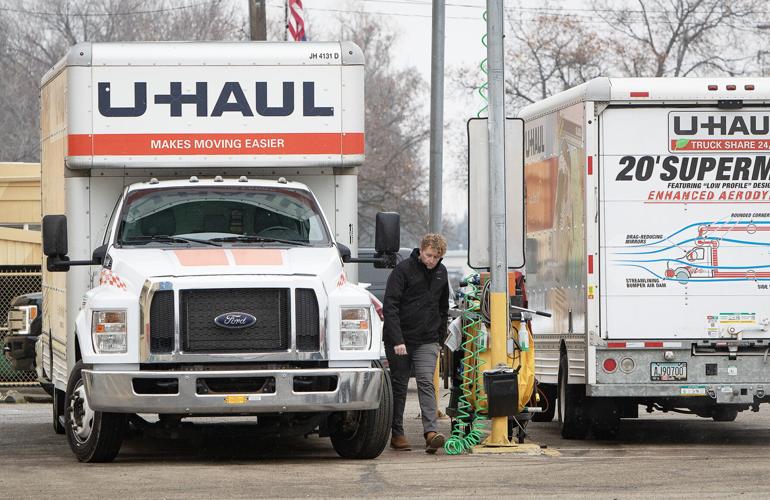
The relevance of this experience in our modern era cannot be overstated. With remote work dissolving geographic tethers, more of us are undertaking the U-Haul pilgrimage than ever before. Yet, the romanticized vision of a "fresh start" often collides with the gritty reality of existential displacement. We are not just moving objects from point A to point B; we are moving our identities. The U-Haul truck, with its iconic orange and white livery, becomes a mobile vessel for our anxieties, our hopes, and our unresolved attachments. Understanding the mental mechanics of this transition is no longer a luxury—it is a necessary survival skill for the modern nomad, a way to transform a potentially traumatic rupture into a rite of passage.
The Hidden Cartography of Loss and Anticipation
Long-distance moving triggers a unique cognitive bias known as the "endowment effect," but applied to places rather than possessions. We overvalue the home we are leaving simply because it is ours. As you drive away, the brain begins to hyper-edit memories, deleting the frustrating commute and the leaky faucet, while amplifying the golden hour light in the living room. This distortion creates a grief that feels irrational—how can you mourn a place you chose to leave? This grief is compounded by "anticipatory nostalgia," a phenomenon where you miss a place before you have even left it. You find yourself taking mental snapshots of the grocery store aisle, knowing that in a month, this mundane act will be a foreign ritual. It is emotionally exhausting to grieve something that hasn't ended yet, which explains the irritability and short tempers that often plague the weeks leading up to the move.
Must Read
There is also the insidious weight of "decision fatigue." Every choice, from which sofa to keep to which route to drive, taps into the same limited reservoir of cognitive energy. When you are moving across state lines, the sheer volume of micro-decisions is staggering. This fatigue lowers your emotional resilience, making you susceptible to catastrophic thinking. A minor traffic delay can feel like a cosmic omen; a scratched table leg becomes a metaphor for your entire life falling apart. It is crucial to recognize that this irritability is not a sign of failure, but a physiological response to an overloaded prefrontal cortex. You are not weak; your brain is simply running on fumes, desperately trying to process the spatial and temporal restructuring of your life.
Furthermore, the move disrupts your "place identity"—the intricate web of memories, relationships, and routines that anchor your sense of self. When you lose the external cues of who you are, you are forced to confront the internal narrative. Who are you without the local pub where everyone knows your name? Who are you without the familiar park bench? This confrontation can be terrifying, but it is also the fertile ground for growth. The U-Haul truck is effectively a container for your old self, and the highway is the liminal space where you decide what parts of that self are worth unpacking. The psychological hurdle is not the distance; it is the surrender to the unknown version of yourself that awaits on the other side of the state line.
Anchoring the Soul: A Toolkit for the Cross-Country Mind
To navigate this mental upheaval, you must treat your emotional well-being with the same rigor you treat the packing manifest. First, implement a strict "familiarity contagion" protocol. Before you leave, on your very first night in the new state, you must replicate a specific sensory ritual from your old life. It cannot be a grand gesture; it must be a micro-routine. Perhaps it is making your morning coffee in the exact same ceramic mug, or playing the same lo-fi playlist during your first dinner. This conscious mirroring sends a signal to your amygdala that the new environment, while foreign, contains pockets of safety. This is not about living in the past; it is about laying down a breadcrumb trail of comfort so your nervous system doesn't perceive the move as a perpetual threat.

Secondly, you must reframe the five-day drive (if you have one) from a logistical hurdle to a "grief processing retreat." The enclosed cab of a U-Haul becomes a soundproof chamber for introspection. Instead of plugging in a podcast or letting the radio drown out your thoughts, embrace periods of sacred silence. Let the miles wash over you. When a wave of sadness hits about the life you left, do not suppress it. Speak to it aloud in the cab. Say, "I acknowledge that I am sad, and that is okay." This act of naming the emotion, a technique borrowed from mindfulness therapy, reduces its neural intensity. When anxiety about the future spikes, use the horizon as a focal point for a breathing exercise—inhale for four counts, hold for four, exhale for four. The monotony of the highway becomes a moving meditation, rendering the physical journey a metaphor for the emotional one.
Thirdly, and perhaps most critically, you must schedule "digital exploration" as a non-negotiable task. The brain fears the unknown, but it calms down when the unknown becomes predictable. In the weeks before the move, spend 30 minutes a day using Google Maps street view to "walk" around your new neighborhood. Find the nearest grocery store, the pharmacy, the laundromat. Look up the local library’s event calendar. Join a local Facebook group for your new town and simply lurk—reading about local politics, weather complaints, or restaurant recommendations creates a cognitive map of the social terrain. This pre-loading of information turns the unfamiliar into the anticipated, significantly reducing the shock of arrival. You are not just moving to a blank spot on the map; you are moving to a place you have already visited virtually a hundred times.
Finally, establish a "post-move purge ritual." Once the boxes are unloaded, you must consciously create space for the new you. This does not mean throwing away your history, but rather curating it. As you unpack, ask yourself of every item: "Does this object empower my present or merely anchor me to my past?" If it anchors you, place it in a special "memory box" to be stored, not displayed. This physical curation helps to mentally separate the emotional baggage from the useful artifacts. Then, on your third day in the new home, go out and buy one single, new item—a plant, a piece of art, a ridiculously bright throw pillow—that could only exist in this new chapter. This deliberate act of acquisition tells your brain, "I am building here, not just shrinking my loss."
Navigating the Emotional Roadblocks: Your Questions Answered
Why do I feel so guilty for leaving my family and friends, even when the move is my choice?
This guilt is a manifestation of the "survivor's guilt" applied to geography. You are experiencing joy and anticipation about your new life, while simultaneously perceiving that your loved ones are left in a state of "lack." Your brain creates a zero-sum narrative: if I am happier, they must be sadder. This is a cognitive distortion. The guilt is not rooted in reality, but in your fear of being judged for prioritizing your own growth. It is a projection of your own anxiety about severing ties, disguised as empathy for others.

To untangle this, you must shift from a mindset of "abandonment" to "expansion." You are not leaving them; you are expanding the radius of the tribe. The love you have does not shrink with distance; it adapts its form. Schedule virtual "coffee dates" before the move to normalize the new method of connection. Acknowledge the sadness openly, but do not apologize for your excitement. You are giving your loved ones a gift: proof that change is possible, that life is not a fixed point but a journey. Your courage allows them to live vicariously through you. Guilt is a heavy passenger; you need to tell it to ride in the moving truck, not in the cab next to you.
How do I stop the panic of thinking I’ve made a terrible mistake during the drive itself?
This panic, often hitting around mile 500, is a classic "buyer's remorse" spike triggered by the prefrontal cortex going offline. When you are tired, hungry, and surrounded by highway strip malls, your brain's logical reasoning takes a backseat to the reactive amygdala. It whispers, "You have destroyed your life," not because it is true, but because it is stimulating a fight-or-flight response to a stressful situation. It is a biochemical reaction, not a rational analysis.
Combat this by using the "10-10-10" rule. Before you allow the panic to spiral, ask yourself: "Will this feel like a mistake in 10 minutes? Will it feel like a mistake in 10 months? Will it feel like a mistake in 10 years?" The answer to the first might be yes (because you are tired), but the answer to the second and third is almost always no. Additionally, force yourself to physically pull over at a rest stop. Walk around the truck. Touch the ground. This physical grounding interrupts the cognitive loop. Remind yourself that the decision was made by a competent, rested version of you. The exhausted, hungry version of you is not qualified to veto that decision. You are not turning back; you are merely pausing to let your nervous system catch up with your ambition.
My partner and I are fighting constantly during the packing. How do we stop the bleeding?
Moving is a high-stakes project, and conflict is a predictable symptom of stress, not incompatibility. The trigger is usually a division of labor imbalance. Each partner has a different threshold for chaos, and the move disrupts both. Typically, one partner becomes a "taskmaster" (hyper-focused on logistics) while the other becomes a "mourner" (focused on sentimental loss). These two roles are on a collision course because they have conflicting priorities.
The solution is to create a "designated alert system." Set a timer for 20 minutes. During those 20 minutes, you can complain, vent, and express frustration about the move, absolutely unchecked. When the timer goes off, all discussion must return to neutral logistics. This containment strategy prevents the resentment from bleeding into all facets of the relationship. More importantly, schedule unhurried time for intimacy—even if it is just 15 minutes of sitting on the empty floor, holding hands, and looking at the truck parked outside. Remind each other that the boxes are just things; the moving truck is carrying your shared life. You are on the same team, even if the final destination scares you both.
How long will it take to actually feel like I am "home" in the new state?
Psychologists suggest that the human brain takes roughly three to six months to form new "place attachments" robust enough to trigger a sense of belonging. However, the emotional timeline is different. The first three weeks are a honeymoon phase, followed by a dip of "cultural fatigue" around month two, where the differences (accents, traffic patterns, grocery layouts) become grating rather than interesting. This is normal. It does not mean you chose wrong; it means you are integrating.
To accelerate the process, consistency is key. Establish a weekly ritual immediately—a Saturday morning farmer’s market visit, a Sunday bike ride on a specific trail. Repetition is how the brain encodes memory into a location. Do not wait to be invited to join groups; create a recurring event (like a book club or a dog park meetup) that forces social interaction. Home is not a place; it is a sequence of repeated actions in a location. By stacking familiar routines in the new geography, you are effectively building a new neural map that will eventually replace the old one. Be patient; the loneliness is not permanent, it is the scaffolding upon which your new identity is being built.

I feel physically exhausted, but my mind races at night. How do I sleep?
This is a state of "hyper-vigilance." Your brain is on high alert because it is trying to process a massive influx of new sensory data. Every new sound, smell, and visual cue is being filed and cross-referenced, keeping your arousal system elevated. This is an evolutionary feature; your ancient ancestors needed to be alert in new caves to spot predators. Unfortunately, this makes restful sleep nearly impossible.
You must create a "security bubble" in your bedroom. Do not merely unpack your bed; prioritize unpacking your sleep environment first. Hang blackout curtains, plug in a white noise machine to drown out unfamiliar city sounds, and most importantly, bring a scent from your old home—a candle, a diffuser, or even a worn sweatshirt. Smell is the most primal sense, directly linked to the emotional memory centers of the brain. This olfactory anchor will tell your amygdala that you are safe. Additionally, practice "brain dumping" before bed: write down every worry, task, and to-do list on a piece of paper. Externalizing the mental clutter reduces the cognitive load. Your body will catch up to your mind; it just needs the same comfort it had before the chaos began.
Mastering the long-distance move is a profound exercise in self-trust. It teaches you that you are not a plant bound to a single patch of soil, but a resilient organism capable of photosynthesis in any climate, provided you bring your own sunlight. The experience strips away the scaffolding of external validation, forcing you to rely on the internal compass that you might have neglected. When you emerge from the U-Haul, blinking in the unfamiliar sun of your new state, you bring with you not just boxes, but a deeper understanding of your own adaptability.
This journey, for all its stress, is a reclaiming of agency. You have looked at the map of your life and dared to redraw the borders. The discomfort you felt is the price of expansion, and the growth that follows is the dividend. You learn that home is not a zip code; it is the quiet confidence you carry in your chest, the ability to look at the vast, unknown horizon and whisper, "I can build a life here." And you will. The road may have been long, but you have arrived—not just at a destination, but at a newer, more resilient version of yourself.