Top 10 Places To Visit In Chitrakoot
There are places you visit, and then there are places that visit you—imprinting themselves onto your consciousness long after you’ve left. Chitrakoot, a sleepy, sacred town straddling the borders of Uttar Pradesh and Madhya Pradesh, belongs emphatically to the latter category. This isn't a destination for adrenaline junkies or Instagram-bait luxury; it's a raw, myth-soaked landscape where the Vindhya hills whisper ancient Sanskrit verses and the Mandakini River flows with the gravity of a thousand-year-old secret. For the uninitiated, Chitrakoot is synonymous with Lord Rama’s fourteen years of exile, a sylvan canvas where he, Sita, and Lakshmana chose to spend over a decade of their banishment. But to reduce this region to just a chapter in the Ramayana is to miss its profound, almost psychedelic, spiritual frequency—a place where geography and mythology are so deeply intertwined that they cease to be separate entities.
Today, Chitrakoot is experiencing a quiet renaissance. It’s no longer just a pitstop for devout pilgrims; it’s becoming a magnet for the weary urbanite seeking a different kind of detox—one that cleanses the soul rather than just the colon. The town's charm is deceptive in its simplicity. There are no towering skyscrapers, no noisy nightclubs; instead, the soundtrack is the tinkling of temple bells, the rustle of sal trees, and the low, meditative hum of aarti. This article isn't a bland listicle; it’s a curated journey through the top ten spots that define Chitrakoot’s ethereal character, blending historical gravitas with the kind of dark, fascinating lore that makes a destination truly unforgettable. From caves that could drive a saint mad to hills that allegedly hold the secret to immortality, we’re diving deep into the heart of India’s most underrated spiritual wilderness.
The Unseen Currents: Beyond the Pilgrim’s Gaze
To understand Chitrakoot, you must first accept its paradox. It is a place of immense, tangible peace, yet its history is riddled with cosmic battles and divine trickery. The region’s name itself translates to “Hill of Wonders,” and the wonders aren't just scenic—they are psychological. Consider the Ramghat, the primary riverfront. While tourists see the serene steps leading to the Mandakini, the darker, more intriguing fact is that this river is believed to be drying up due to a curse. Legend has it that the river goddess, Mandakini, was so enamored by the beauty of the sage Atri that she manifested here, but she also carries a volatility that locals whisper about—the river has been known to change its course overnight, swallowing entire bathing areas, as if asserting its divine, untamable will. This tension between serene surface and chaotic undercurrent is the psychological underpinning of the entire town.
Must Read
Culturally, Chitrakoot was the original "silent retreat." Long before Vipassana became a corporate buzzword, it served as the ultimate crucible for introspection. The dense forests here were not just hideouts for the exiled royals; they were laboratories for the mind. The Chitrakoot Shodh Sansthan, an institute dedicated to the region's history, notes that the area was a melting pot for various ascetic traditions, including early Nath Panthis and Naga Sadhus. These wandering mystics deliberately chose the harshest jungle patches to meditate, believing that comfort was the greatest enemy of enlightenment. When you stand at the edge of these forests today, you can almost feel the residual energy of their fierce penance—a stark contrast to the sugar-coated spirituality sold in commercial ashrams. It’s a raw, unfiltered form of devotion that doesn't ask for your credit card, but demands your full presence.
The psychological impact of Chitrakoot on the modern visitor is measurable. The sheer density of mythological landmarks—over 400 distinct sites—creates a cognitive overload that paradoxically leads to mental clarity. Psychologists call this "awe experience," the feeling of being in the presence of something vast and incomprehensible. Walking the Hanuman Dhara or the Bharat Milap grounds triggers this primal awe, effectively shrinking your ego and re-calibrating your anxieties. It’s a form of involuntary mindfulness. In a world obsessed with digital dopamine, Chitrakoot offers a harsh, beautiful analog reset. You aren't just looking at ancient stones; you’re looking at the physical manifestation of human longing for meaning, a reminder that our need for narrative and purpose is older than any civilization we’ve built.
Your Itinerary of Wonder: Ten Essential Stops
Navigating Chitrakoot requires a strategic approach. You can't just wander aimlessly; the heat and the sheer spiritual density demand a curated path. The following ten locations offer the perfect spectrum—from high-energy activity hubs to deeply contemplative hermitages. Don't rush. Each site demands a minimum of 45 minutes to truly absorb its frequency. Wear comfortable shoes, keep a water bottle handy, and leave your cynicism at the hotel—this is a journey that rewards the open-hearted.
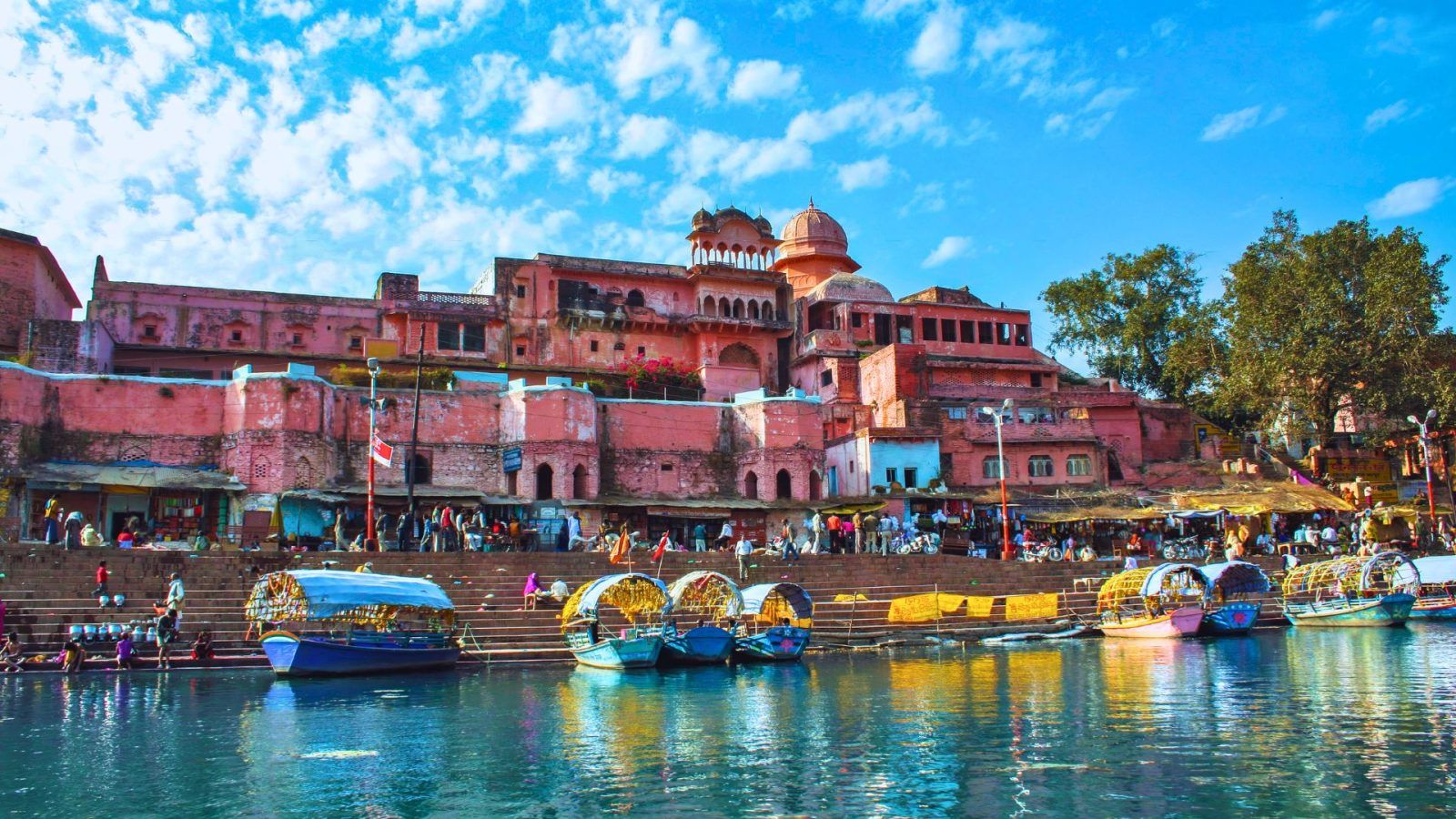
First, you must start at Ramghat at sunrise. This is non-negotiable. As the golden light breaks over the Mandakini, the massive stone steps transform into a living theater. You'll see priests performing ancient rituals with mechanical precision, while half-naked sadhus dive into the cold water with startling fervor. The atmosphere is thick with the scent of marigolds, camphor, and burning ghee. But here’s the practical insider tip: arrive by 5:30 AM to catch the Subah Aarti. The experience is less about religious belief and more about witnessing a choreographed spectacle of light and sound that has been repeated identically for perhaps 3,000 years. It’s a time machine that costs nothing but your early morning sleep.
Following the river upstream, you reach Kamadgiri Hill, the literal heart of Chitrakoot. This hill isn't just a rock formation; it’s considered a living deity. Devotees perform a circumambulation (parikrama) of the 5-kilometer base, believing that doing so is equal to visiting all four major pilgrimage sites in India combined. The walk is a fascinating sociological study—you'll see millionaire industrialists walking barefoot next to landless laborers, all stripped of their social signifiers by the sheer dust and heat. The hill is dotted with tiny shrines, each with its own quirky legend. One particularly dark fun fact: a section of the hill is known as the "Gayatri Shakti Peeth," where a ritual involving the sacrifice of a coconut to ward off the "evil eye" is performed with such violent force that it's a wonder the hill remains intact. It’s a visceral reminder that ancient spirituality was not always soft and gentle; it was a negotiation with ferocious cosmic forces.
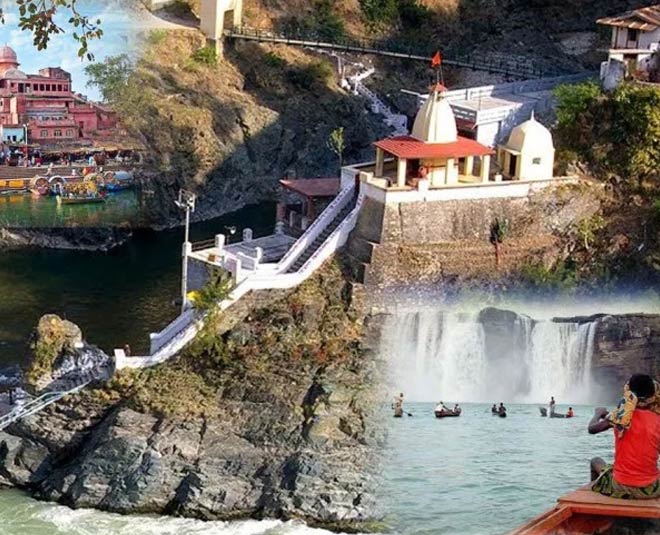
For the more adventurous, Hanuman Dhara is a must. Perched on a cliff, this temple features a natural spring that perpetually drips cold water onto a murti of Lord Hanuman. The climb is grueling—over 500 steep steps—but the payoff is an incredible view of the entire valley. The folklore here is darkly poetic: Hanuman, after burning Lanka, was suffering from the heat of his own aggression. To cool him down, he pressed his thumb into the mountain, creating this spring to cool his chest. It’s a metaphor for emotional regulation, a divine lesson in managing your own inner fire. The practical insight? Don't drink the water; it’s heavily mineralized and can upset a modern stomach. Instead, sit on the stone benches and just observe the manic energy of monkeys stealing prasad, creating a chaotic, yet perfectly organized, ecosystem of faith.
Next, carve out time for Bharat Milap Mandir. This is the site where Bharat met Rama to plead for his return to Ayodhya. Architecturally, it’s unremarkable, but historically, it’s a heavyweight. The temple hosts a massive festival in November (Diwali season) that recreates the meeting. However, the darker history is lesser known: this location was also a significant battleground during the 1857 uprising, where local rebels used the temple’s strategic position against British forces. The walls still bear faint scorch marks. It’s a poignant reminder that sacred spaces are often also strategic war rooms, holding dual histories of piety and violence. Don't just take photos of the deities; look at the architecture for the merger of Rajput and Bundela styles, evidence of the political patronage that kept these sites alive.
Venture further afield to Sphatik Shila, a massive, smooth rock slab where Sita supposedly sat to dry her hair. It’s a geological oddity—a proto-slate surface that is impossibly smooth, polished by centuries of pilgrims sliding across it. The spot is blissfully quiet compared to the main ghots. But here is the twist: recent geological surveys suggest this "shila" is not native to the region, hinting at ancient flood patterns or glacial erratic movement, making it a freak of nature that early people naturally assigned divine origin. Your takeaway here is to practice the art of doing nothing. Sit, touch the stone, and feel the bizarre, sensorial pleasure of a rock that is colder than everything around it. It’s a masterclass in finding stillness in a chaotic itinerary.
For a dose of mystery, visit the Gupt Godavari caves. This is where the darkness turns literal. The cave features two dark, winding tunnels—one wide, one narrow—that require you to crawl through pitch-black, cold water. Legend says Rama and Sita bathed here, hidden from demons. The psychological impact of navigating these tunnels is intense; claustrophobia hits even the most stable minds. It’s a forced exercise in trust, as you have to rely on the echoes of the guide's voice to navigate. The "narrow" tunnel is believed to lead to a hidden chamber that has never been fully mapped. Locals whisper that one of the tunnels connects all the way to Varanasi, a journey of 300 kilometers, used by ancient royalty to escape invasions. While you won't be checking that theory, the experience is a thrilling, primal encounter with the earth itself.
Do not leave without spending an hour at Janaki Kund. This is a deep, rectangular pond with startlingly clear, dark-blue water, surrounded by massive ancient trees. It’s believed to be where Sita performed her daily ablutions. The atmosphere here is palpably feminine—calm, nurturing, yet intensely powerful. Unlike the chaotic energy of Ramghat, this spot feels like a sanctuary for introspection. The darker fun fact: the trees around the kund are home to a massive population of king cobras, which are revered and fed milk by local priests. If you see a large, slow-moving sadhu sitting by the water, he is likely an intermediary for these serpents. It adds a layer of danger to the serenity, a reminder that nature always has its fangs, even in paradise.

To balance the spiritual with the historical, make a beeline for the Ram Darshan Mandir (also known as the Chitrakoot Raj Observatory). This isn't just a modern structure; it was built by the local royal family in the 19th century to house a massive stone telescope. This juxtaposition is fascinating—a temple built to house a weapon of scientific observation. The observatory was used to accurately calculate the dates of major festivals, combining astronomy with astrology. It’s a brilliant case study in how faith and science were not considered enemies in traditional Indian thought but partners in decoding the universe. The contemporary relevance is profound; it reminds us that rigor and belief can coexist. Climb to the top floor for a panoramic view of the river valley; it's Instagram-worthy but also historically rich.
Finally, enjoy the raw tribal energy of Ram Kachhara (also known as Ram Van). This is a dense, dark forest area where Rama supposedly stayed in a mud hut. Unlike the tamed temple gardens, this is a wild, untamed patch of nature, buzzing with cicadas and bird calls. It’s the best spot in the region for birdwatching, home to the elusive Indian Pitta and various kingfishers. The practical insight: hire a local guide. They will point out the "van" (forest) herbs that the exiled royals used for medicine, showing you a living apothecary. It’s a humbling realization that our modern pharmacopeia is rooted in these very plants. This location is your final thesis on Chitrakoot—a place where survival, exile, and nature create a masterpiece of resilience.
Frequently Asked Questions (Because You Will Have Questions)
1. Is Chitrakoot safe for solo female travelers?
Yes, generally speaking, Chitrakoot is safe for solo female travelers, but it requires a specific mindset. The town's primary demographic is pilgrims, which tends to skew towards an older, more family-oriented crowd. This drastically lowers the incidence of the aggressive street harassment you might find in larger tourist hubs like Goa or Jaipur. However, the remote cave areas like Gupt Godavari and the dense forest trails can be isolated. It is highly advisable to avoid these spots after 4 PM, as the lack of proper street lighting and the presence of wildlife (including monkeys and snakes) pose a greater risk than human interference.
Practical advice is crucial: dress conservatively—you should aim to cover shoulders and knees, not just for cultural respect but for practical comfort. Use the "local market" for your meals; these eateries are typically frequented by families and are far safer and more hygienic than the empty "fancy" restaurants. When hiring a guide for forest treks, insist on getting their ID card registered at the tourist office on the main road. Carry a portable charger because, in the deeper areas, network connectivity is patchy. With these precautions, you will likely find the locals incredibly protective of single female visitors, often going out of their way to ensure your safety, treating you like a visiting daughter rather than a tourist.
2. What is the best time of year to visit, and how many days are required?
The unequivocal best time is between October and February. During these months, the temperature hovers between 8°C and 25°C, making the extensive walking tours and hill climbs bearable. The winter fog adds a mystical layer to the river at dawn, making the Ramghat aarti experience almost otherworldly. Avoid the months of April to June; the heat is brutal, often exceeding 42°C, and the stone steps become scorching, making parikrama (circumambulation) a dangerous health risk. The monsoon (July-September) is lush and beautiful but brings leeches in the forest trails and slippery steps—a major hazard for elderly pilgrims.
For the itinerary I've detailed, you need a minimum of 3 full days. One day for the river belt (Ramghat, Janaki Kund, Kamadgiri), one day for the hill forts and caves (Hanuman Dhara, Gupt Godavari), and one full day for the forest and observatory. If you want to truly absorb the peace and do some serious meditation or spiritual study, extend it to 5 days. This will allow you to witness multiple aartis and experience the shifts in the town's energy from bustling morning to serene midnight. Rushing Chitrakoot is a mistake; its magic is in its slow, deliberate rhythm.
3. Are there any specific dress codes or behavioral rules to follow at the temples?
Yes, and they are non-negotiable. For all temples, but especially Ramghat and Kamadgiri, you must remove your shoes before entering the inner sanctums. There is a shoe-stand for a small fee (10-20 INR) for each temple. Leather items (belts, wallets, bags) are strictly prohibited inside temple sanctums as they are considered impure. Women are traditionally expected to cover their heads with a dupatta or scarf during the aarti, though this is increasingly lenient for tourists. The rule that trips up most modern visitors is the photography ban inside the main deity chambers. You can take photos outside, but the moment you step into the inner dome, put your phone away. Flash photography is believed to "disturb" the energy and is aggressively enforced by priests.
Behaviorally, you must refrain from touching the idols unless specifically invited by a priest for a blessing (which usually involves a donation). Pointing your feet at the deity or at the river is a major faux pas; sit in the Sukhasana (cross-legged) position if you are sitting on the floor. When you take prasad (blessed food), always accept it with two hands (right hand supported by left). More importantly, maintain a basic level of silence. This isn't a place for loud, boisterous banter. The locals believe the sound vibrations of the chanting are tangible, and your loud conversation disrupts the spiritual "field" they are trying to cultivate. Observe, participate softly, and you will be welcomed back with open arms.
4. How accessible is the region for elderly or mobility-impaired visitors?
Frankly, Chitrakoot is challenging for mobility-impaired visitors, and you need to plan meticulously. The core area, Ramghat, has long steps with a few newly installed ramps near the main gates, but these are limited. Kamadgiri hill offers the option of staying in a car for the parikrama, as there is a road that encircles the base, which is a game-changer for those who cannot walk long distances. The path allows you to roll down your window and receive darshan from the car at designated stops. However, Hanuman Dhara is completely inaccessible by wheelchair; the 500 steps are steep and uneven with no alternative route.
For Gupt Godavari, the cave entrance is flat, but the interior requires crawling on your hands and knees in slippery water, which is impossible for anyone with knee or back issues. My advice is to prioritize Ramghat, Bharat Milap (which is flat), and the Ram Darshan Mandir observatory (which has an external lift, though it requires a temple manager's permission to use). Hire a local auto-rickshaw driver for the entire day and explain the limitations clearly; they are resourceful and will know the back routes that have minimal incline. Always carry a folding stool in your vehicle—there are often queues, and finding a place to sit can be exhausting.
5. What is the local cuisine like, and are there good non-vegetarian options?
Chitrakoot is a strictly vegetarian town due to its religious nature; non-vegetarian food is virtually impossible to find in the main temple areas, and local taxis won't even drive you to places that serve it if you're looking for it. This is a detox destination in every sense. The food is predominantly North Indian, with a strong emphasis on Sattvic cooking—food that is not just vegetarian but avoids onion and garlic in many temples. You must try the Khichadi served at the main bhojanalayas; it’s a simple rice-lentil dish cooked with ghee and cumin, incredibly comforting. The Aloo Puri breakfast thali is a local staple, served with a fiery potato curry and a thick, sweet halwa.
For a unique local experience, seek out Bhalla (a soft lentil dumpling) served by street vendors near Janaki Kund; it's sour, spicy, and unlike the North Indian version you get in Delhi. As for hygiene, stick to eateries that have a high turnover of pilgrims. If you see a long line of locals, that's your signal. The famous sweet shops on the main street offer Jalebi and Rasgulla that are made fresh every morning. There is a modern cafe trend emerging, with a few places offering decent espresso and chemex brew, but the core of Chitrakoot's culinary identity is simple, filling, and soul-warming. Finally, always drink bottled water or water that has been visibly boiled, as the local well water, while considered holy, is not kind to unprepared urban gastrointestinal tracts.
Reflecting on Chitrakoot, you realize it serves as a mirror to our own frantic existence. We spend our lives building walls to protect ourselves, curating digital personas, and racing against the clock. Yet, standing on the banks of the Mandakini, watching a leaf float down the current without a care, you understand the profound futility of that rush. The town doesn't preach; it simply exhibits an alternative way of being. It shows you that a life can be structured around introspection and ritual rather than output and acquisition. The daily aarti, the constant chant, the simple act of walking barefoot—these aren't just religious acts; they are declarations of intent, a collective sigh of relief from the pressures of mundane existence.
What lingers after you leave isn't the photographs or the souvenirs, but the sensation of your own heart beating slower. You find yourself remembering the faces of the elderly pilgrims, their eyes reflecting a lifetime of struggle yet holding a strange, unshakable peace. The dark history of curses and battles reminds you that even in chaos, there is a search for order. Chitrakoot forces you to confront the uncomfortable question: if you were stripped of all your titles, your phone, your social circles, what would remain? And in the dusty, sacred silence of that hill, you might just find a terrifying, liberating answer. It’s not a vacation; it’s a pilgrimage to the core of your own humanity.
As you pack your bags to head back to the cacophony of modern life, you carry a piece of that Vindhya dust in your shoes. It will eventually wash out, but the echo of the temple bells, the cool touch of the cave water, and the profound stillness of the Kamadgiri parikrama will stay lodged in your neural pathways. You don't conquer Chitrakoot; it conquers you. And that is precisely its timeless, transformative charm. It gives you nothing you can sell, but it gives you everything you need to survive—perspective.