Tipping Appliance Delivery Home Depot
There was a time, not so very long ago, when the arrival of a new major appliance was a neighborhood event. I remember my grandmother’s washing machine—a colossal, avocado-green monstrosity—being hoisted up the front porch steps of her 1920s bungalow by two men in canvas aprons who seemed to possess an almost supernatural knowledge of angles, leverage, and the fragility of plaster walls. The transaction was simple: they delivered, they installed, they accepted a folded five-dollar bill and a glass of cold lemonade. There was no app, no delivery window that stretched like a rubber band across an entire Saturday, and, crucially, there was no awkward, second-long pause at the front door where you fumble for your wallet, wondering if a gratuity is expected, insulting, or simply forgotten. The tipping of appliance delivery drivers is a modern ritual, a strange handshake between the digital convenience economy and the deeply human desire to acknowledge physical labor, but its roots run far deeper than the corporate orange aprons of The Home Depot. To understand the paradox of the cash-stuffed envelope in a paperless world, we must first unbox the history of the delivery man himself.
The profession began as a trade of brute strength and local knowledge. In the pre-war era, appliance delivery was often handled by the department store’s own "moving men," who were essentially warehouse workers with a truck. They were salaried employees, and the idea of tipping them was almost unheard of—you tipped the hat-check girl, the waiter, the barber, but not the man whose job security depended on not scratching your new icebox. The unwritten contract was that you paid for the product and the store paid for the service. But as the post-war suburban boom exploded in the 1950s, and products like the television and the refrigerator became symbols of American prosperity, the delivery landscape shifted. Independent contractors and third-party haulers began to fill the gap, and with that shift, a gray area emerged. The driver, no longer a direct store employee, operated on thinner margins, and suddenly, a tip became less a charitable gesture and more a pragmatic lubricant for ensuring your new Kelvinator didn’t mysteriously take a detour through the neighbor’s rose bush.
The 1980s and 1990s solidified the awkwardness. The rise of big-box retailers like Home Depot, which opened its first stores in 1978 and exploded through the Reagan era, commoditized appliance buying. The warehouse experience was self-service; you didn't have a dedicated salesman, you had a stock number and a vast, echoing concrete floor. Delivery was often outsourced to regional moving companies, and the protocol was murky. Older guides and etiquette columns from the era are fascinating reads, often suggesting that a tip of $5 to $10 was “appropriate” for heavy items, but strictly for the driver, not the helper, and only if they performed above and beyond. This created a bizarre class system within the crew—the driver was the king of the curb, while the younger, sweatier helper was left hoping for the driver’s generosity. It was a period of silent, unspoken negotiation, where the fear of a scratched floor or a misaligned door was directly proportional to the cash you pressed into a calloused palm, all while pretending it was an afterthought.
Must Read
The Logistical Metamorphosis and the Death of the Handshake
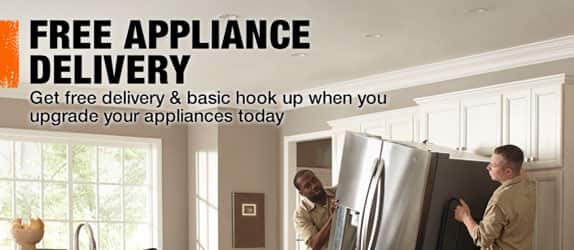
The true transformation, however, began with the digital revolution of the mid-2010s. Home Depot, like many giants, realized that the "last mile" was where customer satisfaction went to die—or thrive. They invested heavily in a proprietary logistics network, moving away from the grizzled independent contractors toward branded, uniformed teams driving white box trucks with the iconic orange logo. This shift was monumental for tipping etiquette. When you tip a uniformed employee of a multinational corporation, you are no longer compensating a subcontractor for their risk; you are, in effect, tipping a representative of the brand itself. The psychological contract changed from "thank you for not breaking my stuff" to "thank you for acting as a polite avatar for a $400 billion company." This has led to a bizarre cognitive dissonance for the consumer: we know these drivers are likely hourly wage earners, but the corporate sheen makes the cash handoff feel almost guilty, as if we are bribing a civil servant.
Forgotten vintage facts muddy the waters even further. In the 1970s, for example, the Federal Trade Commission actually sued several appliance retailers for deceptive delivery practices, where the "free delivery" was a myth—the cost was baked into the inflated sticker price, and the tip was expected to ensure the driver didn't damage the unit and then claim it was "pre-existing." Furthermore, the physicality of the job has diminished in one aspect and intensified in another. In the past, men manhandled 600-pound refrigerators with just a dolly and sheer will. Today, drivers use motorized stair-climbers, but the modern machines are complex, and the risk of crushing a knee or severing a finger in a hydraulic lift is arguably higher. This technical skill is rarely acknowledged by the casual tipper who sees only two men in clean shirts. The bizarre part of this era is the rise of the "no-tip" digital signature. The Home Depot’s online checkout process, unlike food delivery apps, offers no place to add a tip. This pushes the interaction strictly into the physical realm, forcing a transaction that feels more like an artifact from a bygone era, a last bastion of paper currency in a cashless society.

Another fascinating shift is the data-driven approach to delivery windows. In the past, you waited all day, possibly missing work. Today, you receive a text with a live GPS tracker, and the driver’s arrival is timed to a two-hour window. This efficiency, however, has inadvertently reduced our emotional connection to the person at the door. The driver is no longer a character in our day; they are a blip on a map that we are watching on our phone. Because we feel less human connection, our inclination to tip decreases. Studies on consumer behavior show that tip frequency correlates with the duration of the eye contact and the level of interpersonal banter. The modern, highly efficient delivery driver who hands you a tablet to sign and is gone in ninety seconds is actually less likely to receive a tip than the slower, chattier driver of yesteryear, despite doing the exact same labor. This is a paradox of progress.
We must also address the silent acceptance of the "threshold" rule. Home Depot has a clear policy: drivers are only required to bring the appliance to the first dry, covered area—the threshold of your home. They are not required to hook up your gas line, level the washer, or haul away the old one (that’s a separate fee). This has created a tipping rationale where customers feel compelled to tip specifically to extort additional service, like carrying the fridge up to the second-floor kitchen. It is a holdover from the 1960s when "white glove" service was the standard, and the tip was the distinguishing factor between premium and basic service. Today, the "goat path" (the route from the truck to the kitchen) has become a landscape of negotiation, where the customer’s offer of a "twenty for the effort" can magically transform a "we can't do that" into a "let's see what we can do." This is the raw, unspoken economics of the driveway.
Hacking the Ancient Ritual for the Modern World
The classic principle of the delivery tip—acknowledging extraordinary physical effort—is being hacked in two very distinct ways. First, the rise of "instant tip" via QR codes. Some drivers now carry personal Venmo or CashApp codes on their lanyards, gently suggesting digital gratuity. This might seem crass, but it solves the modern dilemma of having zero cash in your pocket. It is a hack that bridges the gap between the atomic-age paper bill and the blockchain era, but it also creates a permanent digital record of the interaction, removing the anonymous, elegant discretion of the cash handshake. It forces a level of transparency that makes many people uncomfortable, which is why it hasn't caught on broadly, but it is the logical endpoint of our cashless society.
Secondly, the modernization of the tip is the "bundle with review." In the age of the 5-star rating, customers are increasingly offering high ratings, favorable comments, and even a smile as a form of non-monetary compensation. However, analytics suggest this is a failed hack, as the drivers rarely see the reviews, and the corporate bonus structure is negligible. The better hack, used by savvy homeowners, is the "acceptable prepayment." Rather than handing over cash at the end, many now offer a cold bottle of water or a Gatorade upfront—a gesture that psychologically obligates the driver to be more careful. This is a brilliant, low-cost manipulation of human reciprocity. It costs a dollar, but it often yields the same result as a ten-dollar bill hidden in a handshake, because it triggers the ancient human instinct to repay kindness, not just labor.
Frequently Asked Questions on the Modern Delivery Grift
Is it insulting to tip a Home Depot delivery driver?
Historically, in the 1950s, it might have been seen as an insult to a salaried store employee, as it implied they were in a service role below their status. However, that world is extinct. Modern Home Depot delivery drivers are often employed by third-party logistics firms or are unionized sub-contractors, and their base pay is typically hourly with a focus on route completion, not customer interaction. A tip is not expected in the corporate policy, but it is universally appreciated. The assumption that it is insulting is a myth left over from the era of the white-collar floorwalker. The truth is, drivers see tips as a metric of their physical performance. They often compare "tip tallies" among colleagues at the end of the day. To not tip is seen not as an insult, but as a neutral, if slightly disappointing, outcome. If you offer a way to directly compensate for the sheer back-breaking work of moving a 400-pound washer up a slippery staircase, you are acknowledging their labor in a way that the receipt for the machine does not. The only truly insulting move is offering a tip and then taking it back, or offering a very small amount with a condescending tone. A silent, respectful handshake with a moderate bill is the golden standard.

How much should I tip for a basic versus a complex install?
Vintage etiquette guides from the 1980s recommended a flat $5 for a basic delivery, which adjusted for inflation would be roughly $15 today. However, the modern consensus among moving professionals is more nuanced. For a simple "drop and go" where the driver just leaves the appliance on the threshold, a tip of $10 per driver (not per crew) is considered a baseline courtesy. If the team has to navigate stairs, remove old appliances, or disconnect and reconnect hoses, the scale shifts. A complex install—like a refrigerator with a custom ice-maker line hookup or a stacked washer/dryer unit in a tight closet—warrants $20 to $50 per driver.
Critical modern fact: Home Depot drivers are prohibited from accepting tips and are explicitly told to politely decline. However, they are also trained to accept them if the customer insists. This creates a weird dance. The rule of thumb is to ask once, and if they decline, respect it. If they took the time to perfectly level the machine, aligned the doors, and cleaned up the packaging debris without being asked, that is where you break the $50 threshold. This is not a bribe; it is a performance bonus. It is analogous to the maître d' of a fine restaurant—the base fee is for the table, but the tip is for the experience.
What happens if I don’t tip? Will they damage my stuff next time?
This is the most persistent urban myth in home logistics. In the 1990s, there were rumors of disgruntled drivers sabotaging deliveries—claiming "damage in transit" for items they purposely dropped. While this happened, it was incredibly rare and usually involved uninsured fly-by-night contractors, not the corporate giants. With Home Depot’s modern tracking and driver performance metrics, retaliation for not tipping is virtually non-existent. The drivers are GPS-tracked, and their trucks are equipped with accelerometers that record any harsh bumps. Destroying your appliance would trigger an internal investigation and likely cost them their job.
Furthermore, the psychological contract has changed. Because the drivers are not direct employees of the store, they don't feel the same "brand loyalty" anger if you don't tip. They might grumble in the cab, but they will not enact petty revenge. The only real consequence of not tipping is that you forfeit your place in the "good customer" mental registry. If you have multiple deliveries in a year, the driver might remember you and do the bare minimum next time—no extra help, no generous positioning of the appliance. It is not a punishment, just a lack of discretionary effort. In the past, a gratuity ensured white-glove service; today, its absence just means you get the literal, contractually obligated service.
The future of this ritual is likely to bifurcate. In the next two decades, as robotic haulers and AI-assisted unloaders become more commonplace, the human driver will become a supervisor, a technician, and a safety officer. The physical labor will be done by exoskeletons and motorized pallets. When that happens, will we still tip? We don't tip the elevator repairman for doing his job. The tipping of the appliance driver is, at its core, a payment for sweat equity—a direct compensation for the biological strain placed on the human body. As that strain is mitigated by automation, the monetary tip will likely vanish, replaced by a button on your delivery app or a simple rating score.
However, the need to tip will evolve into a need to bribe for access in a world of automated schedules. Humanity will not lose its desire to jump the queue. In 2045, the irony will be profound: we might tip a human driver not to carry the box, but to manually override the routing algorithm so that our delivery comes before our neighbor's, or to ensure that the robot doesn't place the appliance in a technically correct but annoyingly inconvenient location. The tipping will cease to be about labor and become about discretionary logic. The last physical act of gratitude will transition into a digital coin for a cognitive favor. Yet, until the last human spine bends under the weight of a stainless steel refrigerator, the crumpled bill in the clean, gloved hand will remain our most honest acknowledgement of the physical cost of modern convenience—a tiny, awkward, and profoundly human interruption in an increasingly frictionless world.