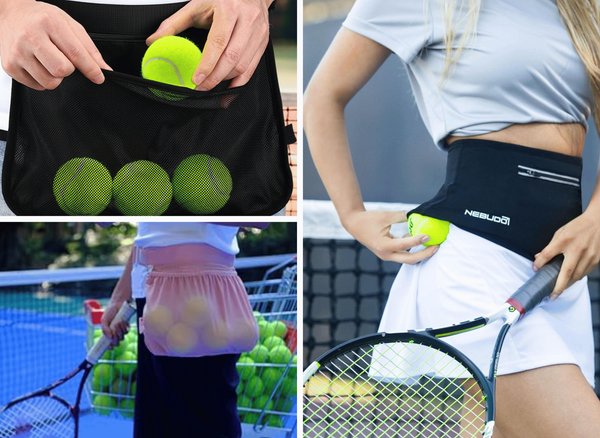
Tennis Underwear With Ball Pockets

Let’s be real for a second: if you’ve been within a ten-mile radius of a hardcore pickleball court, a Lululemon drop, or a TikTok “Get Ready With Me” that features a $98 “court skirt,” you’ve seen them. Tennis underwear with ball pockets. Not a figment of a deranged sportswear executive’s imagination—actual, structural, anatomically placed pouch real estate designed to cradle a neon-green sphere of pressurized fuzz directly against your pelvic floor. It started as a niche meme for Gen Z club kids, morphed into a silent status symbol for the athleisure elite, and has now mutated into a full-blown cultural phenomenon that pits comfort against decency, and function against fashion. We are officially living in the era of the pocketed panty, and frankly, the discourse is hotter than a third-set tiebreak in Miami.
The trajectory is baffling, even for the internet. Five years ago, the concept was relegated to obscure Amazon listings with three-star reviews complaining about “chafing seams.” Today, brands like Paume, Satisfy, and even high-street giants are selling out of sleek, minimalist briefs with side holsters that promise to eliminate the clunky “ball-in-bra” contortion act. The explosion is directly correlated to the “Court-Core” aesthetic dominating your feed—a weird amalgamation of preppy privilege, retro visors, and brutalist sports tech. The tennis pros have been gatekeeping this hack for decades, but now that your favorite influencer is wearing them under a micro-mini skort while filming a “what I eat in a day,” the secret is out. It’s no longer about playing better; it’s about looking like you could, while effortlessly holding a spare ball exactly where the sun doesn’t shine.
But let’s not pretend this is just about practicality. We are witnessing a silent revolution in how we negotiate the female gaze—and the male gaze, and the gaze of the guy who just wants to get to the water fountain. The modern tennis underwear is a battery of contradictions: it’s modestly functional yet aggressively suggestive, performance-driven yet deeply silly. It solves a real problem (where do you put the ball when you’re serving?), but it does so by turning your body into a utility belt. And honestly? That’s exactly why we can’t stop talking about it.
Must Read
The Subculture of the Second Serve: Bulges, Brands, and Bickering
Dig beneath the surface—pun absolutely intended—and you’ll find a toxic, sprawling ecosystem of purists and posers. On one side, you have the ATP/WTA diehards who claim that using a ball pocket in your underwear is the only acceptable option for serious play. They cite the “sacred rule” of not carrying balls in your hands between points, arguing that any delay disrupts the “rhythm of the game.” These are the same people who will scream at you for wearing the wrong socks. On the flip side, you have the “Skort Supremacists”—a loud contingent online who argue that any underwear with a pocket is a redundant gimmick, because the skort itself has a built-in liner pocket. The infighting is fierce, with comment sections devolving into personal attacks about sweat patterns and thigh gap measurements. It’s a civil war fought with passive-aggressive emojis and “actually, as a D1 athlete…” preambles.
Then there’s the fetishization factor. Let’s not be naive. The internet loves a hidden compartment. Search algorithms have turned “tennis underwear” into a bizarre keyword that intersects with sportswear fetishism, ASMR ball-squeezing sounds, and “pocket check” haul videos that feel borderline invasive. Brands are acutely aware of this, leaning into the reveal—showing the silhouette of the ball pressing against the fabric, emphasizing the “snug fit” necessary to hold the ball in place. It’s a weirdly intimate look into the mechanics of athletic performance, and it has spawned a niche of “pocket enthusiasts” who care less about forehand technique and more about the tensile strength of the elastic band. This duality—pure sport versus subtle porn—is the engine driving the viral loops. You can’t scroll past a behind-the-scenes U.S. Open vlog without seeing a player casually fish a fresh ball out of her waistband, and the comment section inevitably splits into “queen behavior” and “this is why I don’t watch tennis.”
Social media has also weaponized the concept of “quiet luxury” here. The cheapest versions scream with visible branding and neon stitching. The high-end ones, however, are whisper-quiet—matte black, seamless, with a pocket that is only discoverable upon tactile inspection. This has created a hierarchy of “ball pockets” where wealth is signaled by the absence of logos. Influencers stage intricate flat-lays comparing the pocket depth of a $120 pair from a Swedish technical brand versus a $15 pair from a sports mega-store. The drama is exhausting, yet we are glued to it. It’s a microcosm of consumer culture: we are not buying underwear; we are buying the idea of a ball being held securely by superior fabric technology.
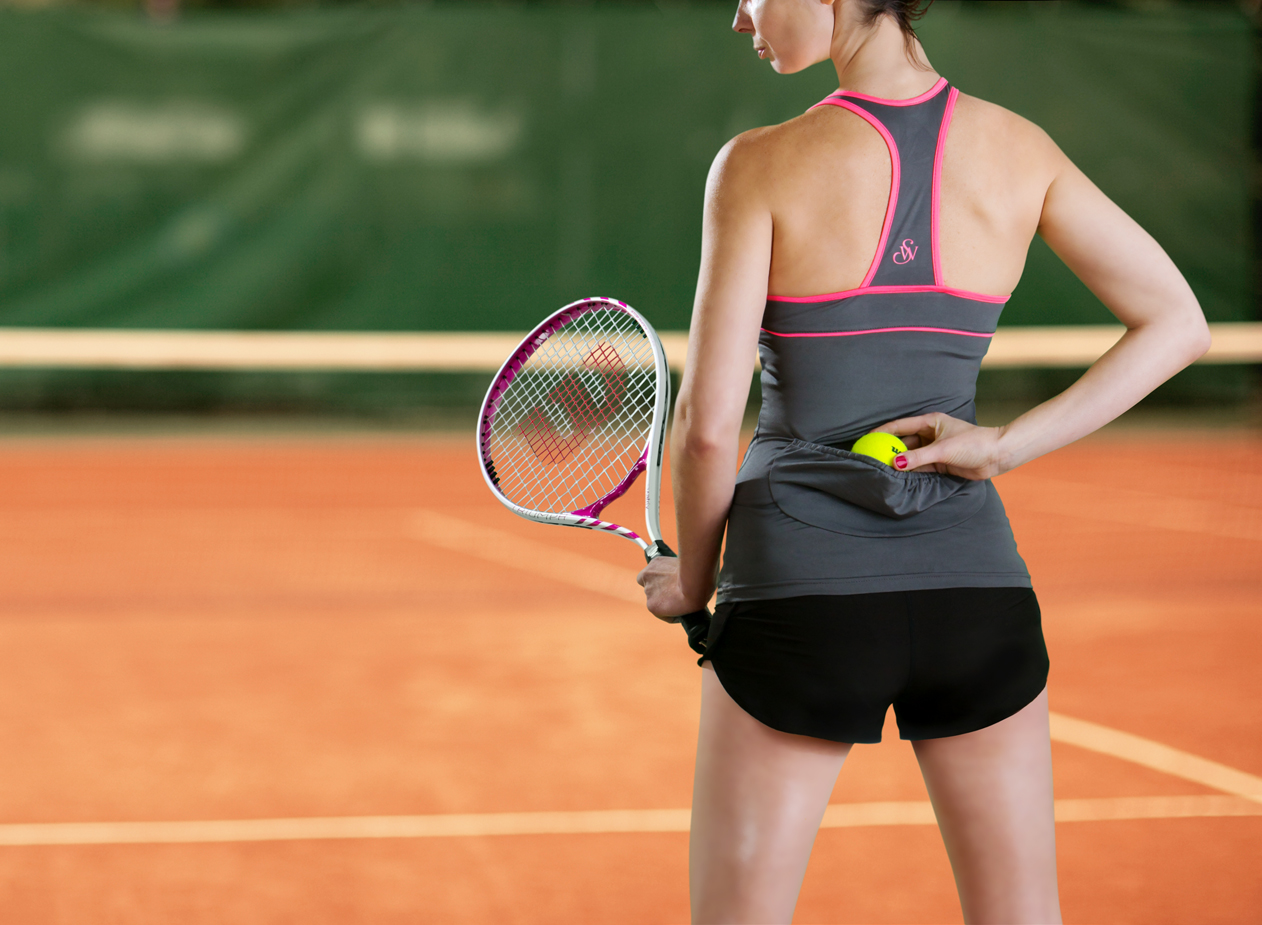
How to Navigate the Pouch Without Losing Your Mind (or Your Balls)
Alright, let’s get pragmatic. You’ve decided you want in. You want to feel the smug satisfaction of bouncing a ball off your hip, ready for action, with zero hand clutter. But the market is a minefield of cheap stitching, awkward wedgies, and pockets that are sized for golf balls rather than tennis balls. You need a strategy. First, measure your ball. Standard tennis balls are 2.57 to 2.70 inches in diameter. Sounds obvious, but many brands cut corners with a smaller “pocket pouch” that only fits a worn-out, half-deflated ball. If you play with pressureless balls (which are heavier), you need a deeper, reinforced pocket. Check the product specs—if they don’t list the ball diameter compatibility, walk away. You are not buying a mystery grab bag for your genitals.
Second, consider the fabric orientation. The best performing pockets utilize a high-tension “compression mesh” that grips the ball from two sides, not just a cotton drop-pocket. You want a pocket that sits flush against your hip bone, not in the front or directly on the center of your glute. The ideal placement is just under the iliac crest, around 2–3 inches below the waistband, angled slightly backward. This prevents the ball from bouncing during a lateral lunge and stops it from digging into your sciatic nerve when you sit between games. If a brand uses a horizontal slit pocket, you will lose every ball on a deep squat. Vertical is better; diagonal is king. Look for an internal silicone ribbing inside the pocket—it’s not a gimmick. It’s what holds the ball during a sprint rather than letting it eject like a torpedo from a sub.
Third, ignore the “one-size” nonsense. Your underwear size and your ball pocket needs are separate entities. If you wear a size M in regular briefs but a size S in compression shorts, you need to size up in the pocketed version. The pocket takes up room, and to avoid the “bulge hip” look (one side looking like you smuggled a tangerine), you need the base fabric to have give. Also, consider the waistband. A very tight, rigid waistband will fight with the pocket, creating a roll-over effect that makes you look like a muffin top with a tumor. You want a wide, elasticated waistband that sits high, distributing the compression. And wash them cold, always. Hot water will ruin the elastic tension in the pocket membrane, turning your precision engineering into a floppy cargo net.
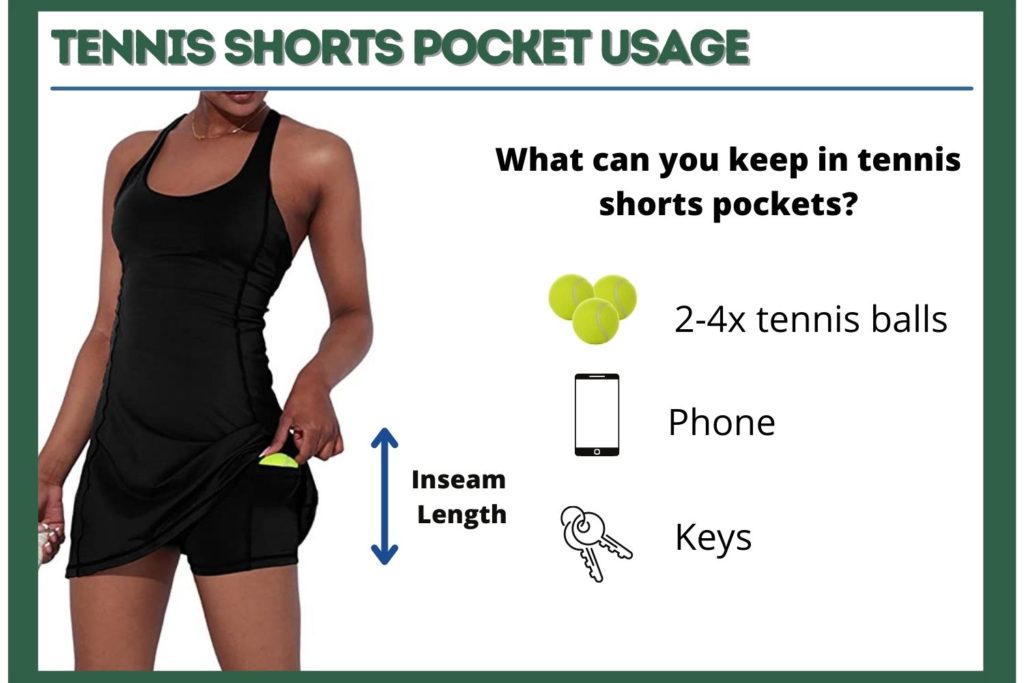
Finally, test the “walk test”. When you try them on, put a ball in and walk briskly across your living room. Then do a mock serve motion. Then do a jumping jack. If the ball stays put, you’ve found a winner. If it shifts or, worse, pops out and rolls across the floor while you’re trying to be athletic, bin it immediately. There is no breaking-in period. Also, be aware of the “double pocket” trend—some extreme designs have pockets on both sides plus a rear pocket for a phone. That’s overkill. You are not a tactical SWAT team member; you are playing a game of gentle, rich people’s cardio. Keep it to one pocket, maybe two, and always prioritize the ball pocket over a phone pocket. Carrying a phone there will disturb your center of gravity and likely bruise the bone. Save the tech for the duffel bag.
And if you’re buying these purely for streetwear? God bless you. But remember that wearing a ball pocket without a ball is like wearing a wallet without cash—it’s just a weird flap. Buy a practice ball (they are cheaper) just to fill the void and avoid the awkward, empty saggy pouch look. The look is only cool if the engineering is obviously being utilized.
Frequently Asked Questions (The Internet’s Burning Queries)
1. Is it sanitary to tuck a tennis ball into your underwear?
This is the number one clapback from tennis traditionalists, and it’s a fair point, but it’s also a bit dramatic. Think about it: your underwear is already a high-humidity, high-friction zone. Adding a ball with a felt texture creates a micro-environment that is essentially a Petri dish for sweat and bacteria. However, professional players have been doing this for decades, and the key is the ball’s coating. Tennis balls are treated with a specific felt that is actually quite absorbent, but it can also wick bacteria back onto your skin. The risk of a rash or folliculitis is moderate, especially if you leave the ball in place for an entire two-hour match. The practical solution is to rotate the ball positions—move the ball from your left pocket to your right pocket between sets to give the skin a chance to breathe. Also, never use a match ball that’s been lying on the court dirt, and never reuse that ball for actual play afterward. The felt will be damp with your bodily fluids, which is unhygienic for your opponent and frankly a little bit gross for you.

Furthermore, there’s the question of chafing. The seam of the pocket can rub against your hip bone, especially if you’re doing a lot of running. Look for underwear with a flatlock seam surrounding the pocket opening, and consider applying a thin layer of anti-chafe balm around the outer edge of the pocket. Don’t use talcum powder—it will clump with sweat and create a gritty paste that abrades the skin. For those with sensitive skin, I recommend wearing a looser-fitting outer short over the underwear, allowing the pocket to float slightly rather than pressing tightly against the dermis. The sanitization debate will never fully settle, but if you shower promptly after play and wash the underwear immediately, you’ll be fine. The secret is hygiene speed, not abstinence.
2. Are ball pockets in underwear sexist, or is this true women’s empowerment?
Oh, this is the intellectual rabbit hole of the century. Critics argue that the design forces women to conform to a male-derived pocketlessness in fashion, solving a problem that men never have to deal with because men’s shorts have pockets. By putting the ball inside the underwear, are we essentially saying women must sacrifice structural support for convenience? Or, conversely, is this a radical act of body autonomy? The pro-empowerment camp states that this allows women to wear stylish, minimal, non-baggy clothing while retaining full utility. It’s a middle finger to the fashion industry’s obsession with sleekness at the expense of function. The design says, “I will not carry a bulky purse, and I will not wear cargo shorts; I will embed the mechanics of sport into my very garment.”
I lean toward the empowerment side, with a caveat. The problem isn’t the pocket; it’s the marketing. Some brands have tragically leaned into the “sexy secret” angle, filming the insertion of the ball in slow motion with suggestive lighting. That’s not empowerment; that’s fetishization. But the actual physical engineering—that’s quiet genius. It allows for full range of motion, removes the distraction of hand-stashing, and, crucially, gives the player a mental edge. It’s a tactical advantage disguised as a piece of fabric. The wider cultural shift is that we are finally seeing women’s sportswear designed by people who understand that female athletes are not just smaller men. They’re different. They need different solutions. The ball pocket is a testament to that principle. If it’s sexist, then so are sports bras. It’s a tool, not a cage.

3. Can I wear tennis underwear for other activities like running or hiking?
Technically, yes. Physically, you might regret it. The ball pocket is specifically optimized for the lateral movement of tennis. For running, especially long-distance, the pocket creates an unbalancing centrifugal force. Every foot strike will cause the ball to shift slightly, and over three miles, that micro-abrasion will turn into a nasty hot spot on your hip. The same goes for hiking, where a heavy ball can bounce against your joint on uneven terrain. But there is a niche use case: pickleball. Pickleballs are lighter and smaller, so the pocket works beautifully for them. But for high-impact activities like HIIT or plyometrics, the pocket’s weight distribution is a liability.
If you absolutely must use them for other sports, use a dedicated ball that is not a tennis ball. A lacrosse ball is too heavy. A practice foam ball is lighter but doesn’t fit snugly. Honestly, the best crossover is for golf, if you are driving a cart and need to keep your range balls handy, but even then, the jostling is a distraction. My advice is to treat tennis underwear as a single-sport tool, much like a climbing shoe or a swim cap. The fabric technology is getting better, but you want a flat, seamless underwear for running. The pocket is a specialized adaptation for a specialized motion. Don’t force it. Your future self, free of hip bruises, will thank you.
So, is this a fleeting trend or the new standard? The cynic in me says that once the “court-core” aesthetic fades from fashion week, the sales will plummet, and these garments will be relegated to the clearance bin at your local pro shop. But the optimist sees a more profound shift. The integration of functional storage into skin-tight apparel is a logical evolution. We are moving toward a future where clothing is a system, not just a cover. The pocket is not the anomaly; it’s the precursor to other innovations—built-in cooling, electrolyte dispersion, even motion capture sensors. The ball pocket is the gateway drug to smart textiles.
What we are witnessing is the normalization of technical nudity—the idea that garments can be both brutally minimal and hyper-functional. Whether you use it for match point or for carrying your phone during a beer run, the tennis underwear with ball pockets has changed the conversation. It has forced us to ask: why don’t all our clothes have pockets? Why must we sacrifice style for utility? The answer, it seems, is lodged right between your hip and your iliac crest, waiting for the next serve. Stay pocketed, or stay irrelevant.