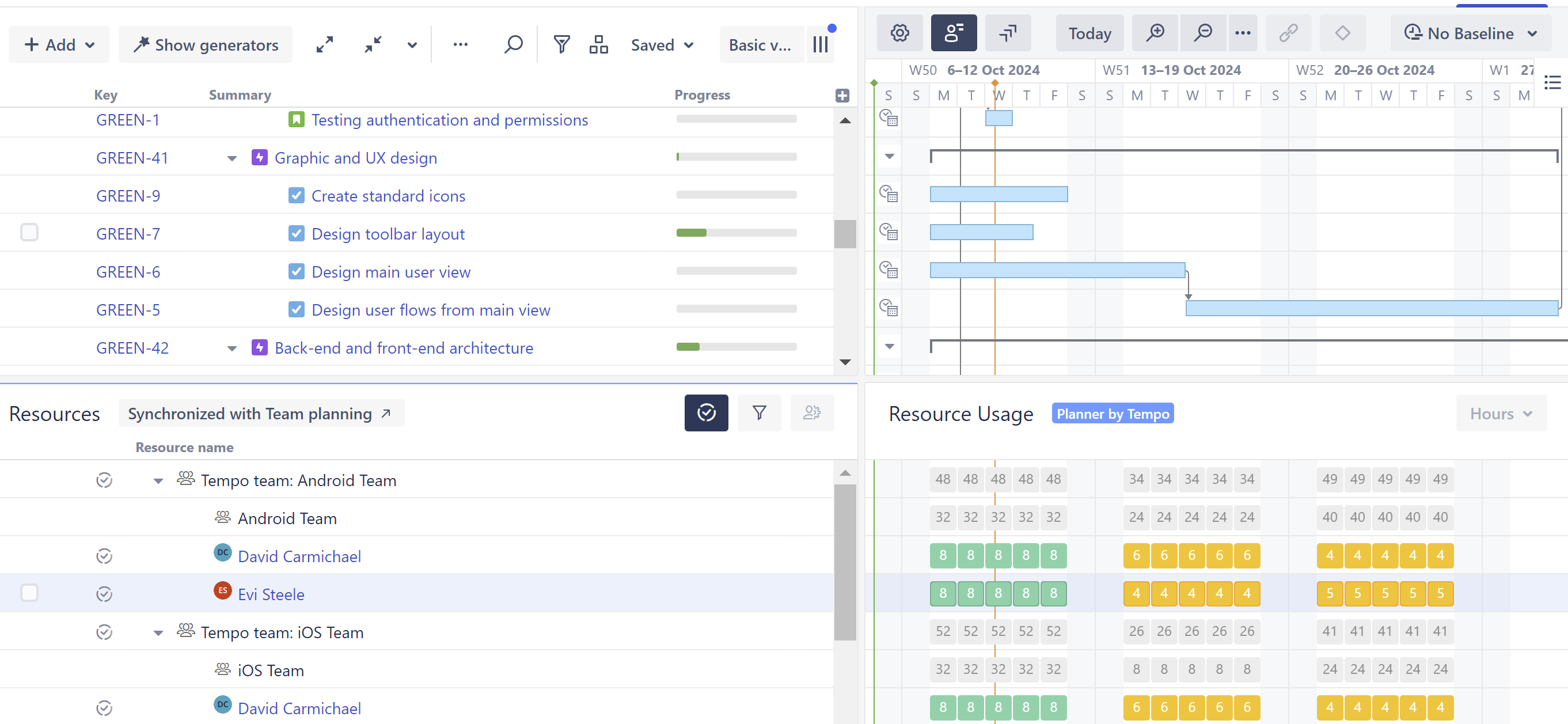
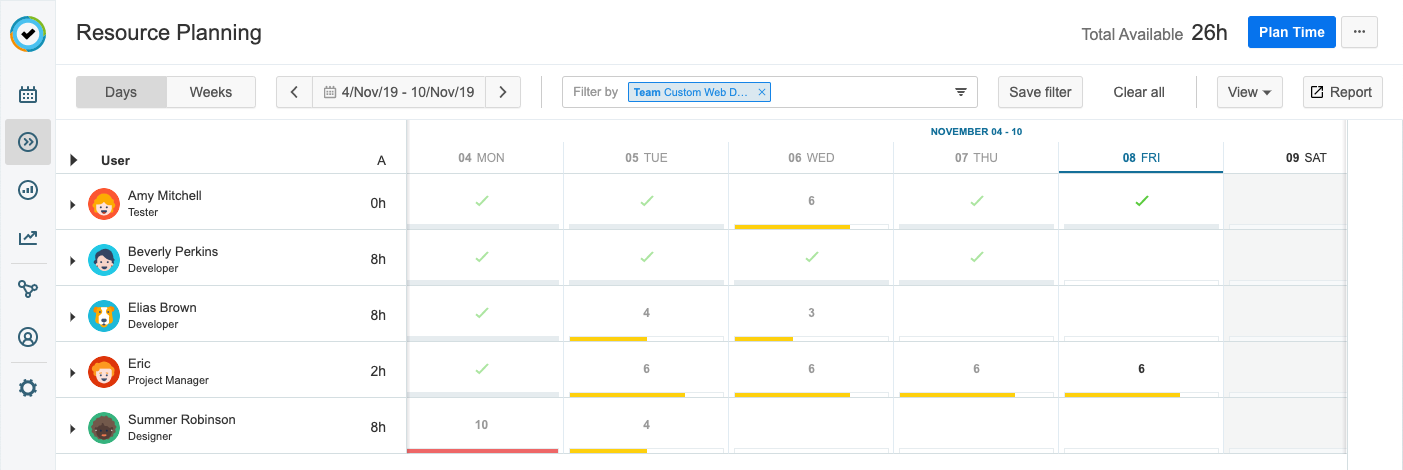
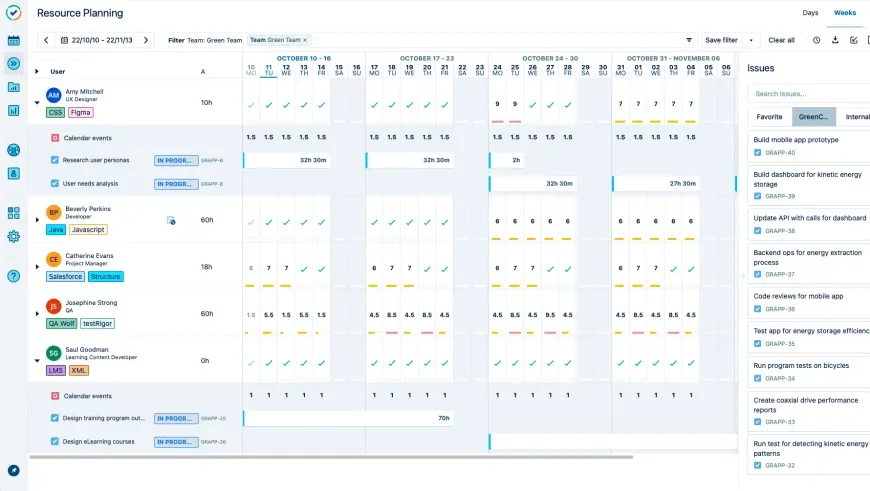
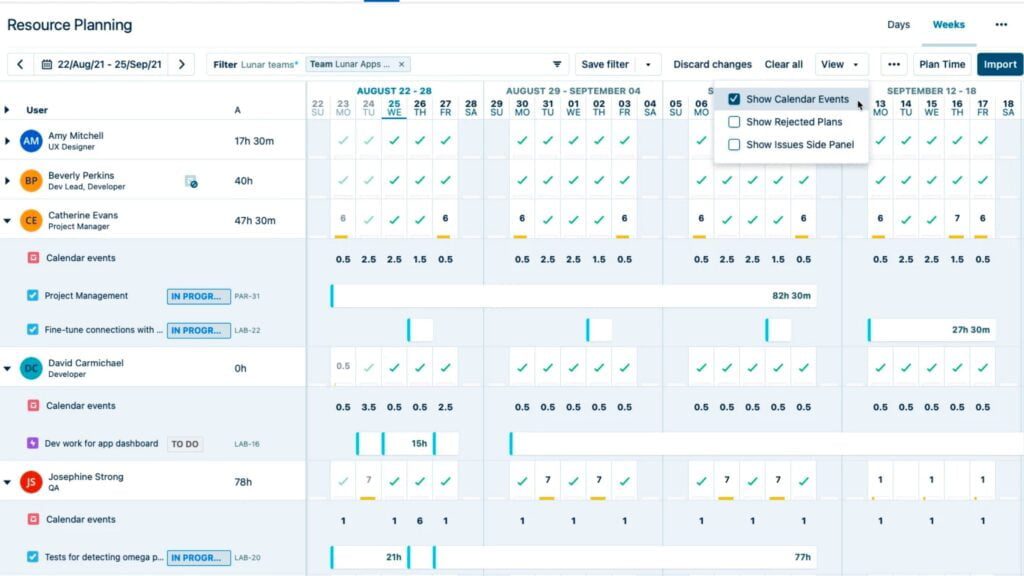
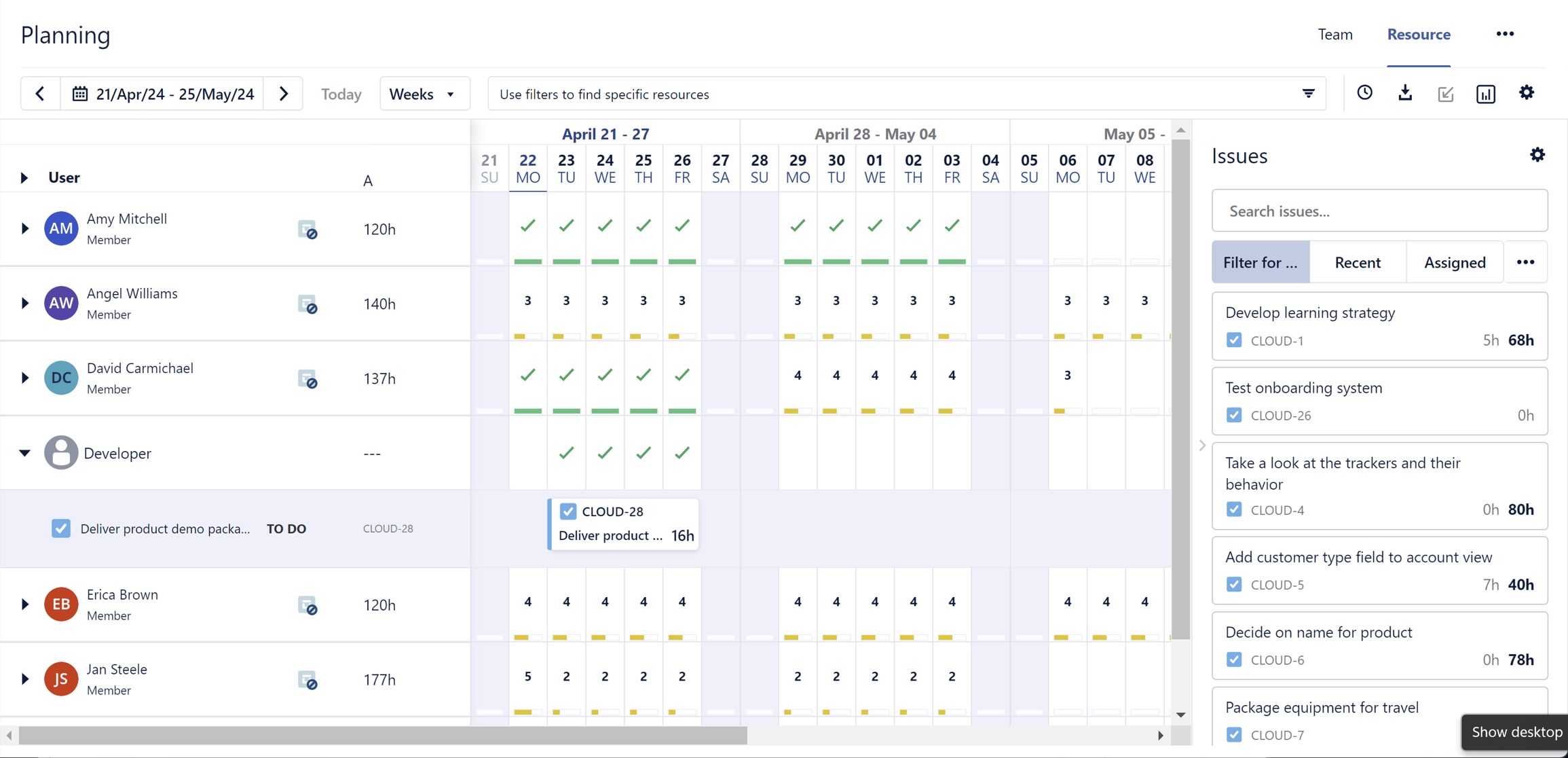
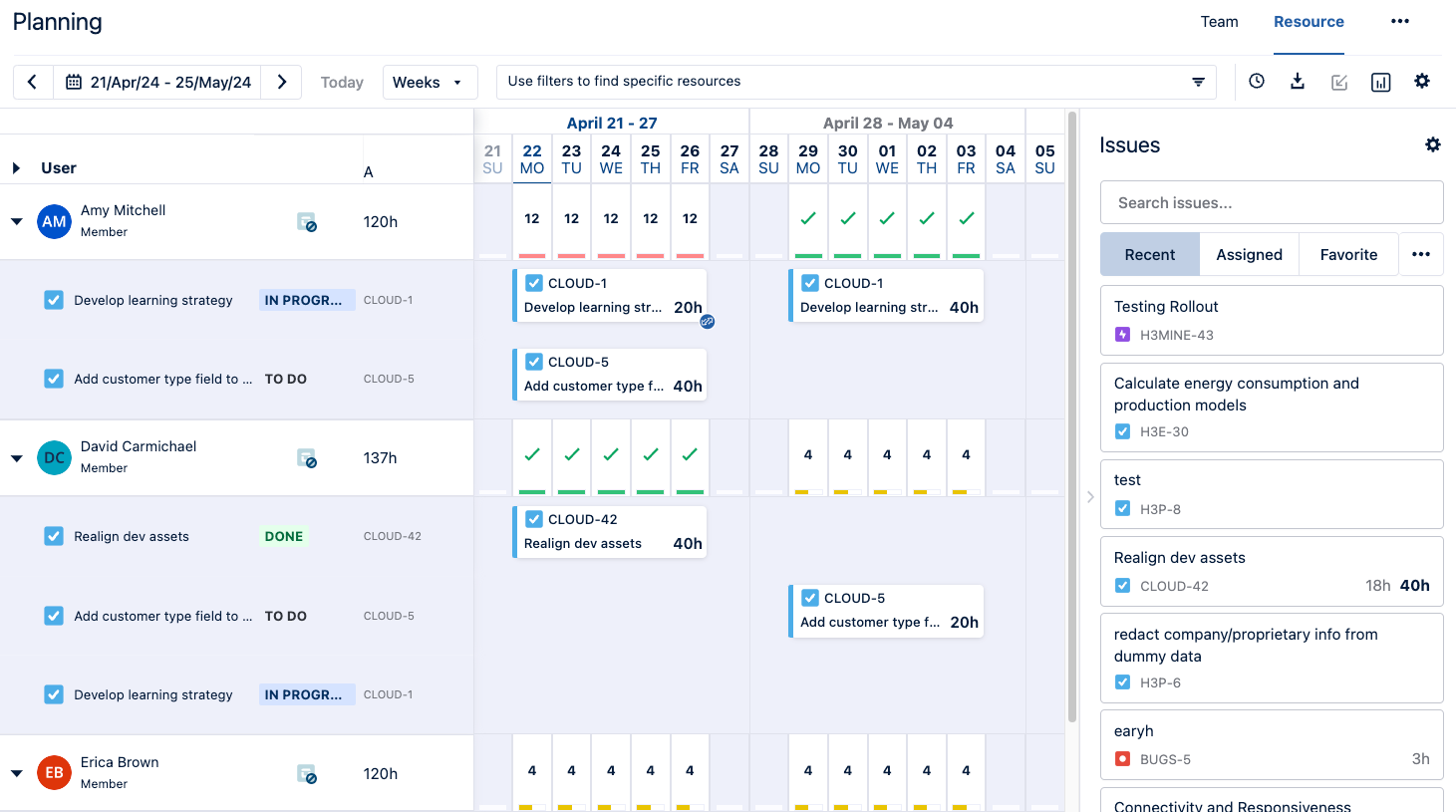
Tempo Planner - Resource Planning
There is a peculiar, quiet hum of anxiety that lives in the space between what we intend to do and what we actually accomplish. It isn't the loud, frantic stress of a burning deadline, but rather the low-grade static of a mind that feels perpetually behind. We often mistake this for a lack of discipline, a failure of willpower, or a simple case of poor time management. But the psychological root is far deeper and more tender: it is a crisis of self-trust. Every time we write a task list and fail to complete it, or overestimate our energy for the day, we are, on a subconscious level, telling ourselves a story that our word doesn't hold weight. This erodes the very foundation of our self-efficacy, making us feel like passengers in our own lives rather than the architects of our days.
In our modern, hyper-connected world, this internal dissonance is amplified by a constant stream of external demands. The average brain is not wired to handle the cognitive load of a dozen open projects, personal errands, and social obligations without a physical, external scaffolding. We try to hold our entire reality in our heads, and when it inevitably collapses into forgetfulness and missed opportunities, we internalize the failure. This is where the concept of a relational tool like a planner becomes not just a logistical aid, but a profound act of self-care. It is an intimate conversation with your future self, a promise written down that you are worthy of the time it takes to breathe, to focus, and to execute.
The Hidden Emotional Landscape of Your To-Do List
When we look at a blank page in a planner, we are not just looking at a grid of hours; we are looking at a mirror reflecting our deepest cognitive biases. The Planning Fallacy is one of the most tyrannical of these. It is the psychological phenomenon where we systematically underestimate the time required to complete a task, while simultaneously overestimating our own efficiency. Emotionally, this stems from a desire for a perfect, frictionless future. We look at a task like "Write report" and we see the end result, not the hours of stalled typing, the sudden need for research, or the mental fatigue that sets in after forty minutes. When the planner says three hours and the reality stretches to five, we feel a jolt of betrayal— not against the planner, but against the idealized version of ourselves we projected onto those hours.
Must Read
Another hidden hurdle is the confusion between being busy and being effective. Our brains are wired to seek reward, and checking off a small, easy task (like replying to an email) provides a quick dopamine hit that makes us feel productive. This often leads us to fill our resource plans with low-value "busywork" to avoid the heavier, more ambiguous tasks that threaten our ego. These are the tasks where we might fail, where our competence is actually tested. By choosing the shallow over the deep, we are engaging in a complex cognitive avoidance mechanism. We are emotionally protecting ourselves from potential disappointment, but in doing so, we end the day feeling exhausted yet profoundly empty, wondering where the meaningful work went.
Furthermore, there is a subtle but destructive emotional trigger embedded in the rigidity of our schedules: the feeling of being controlled. When a plan is too strict, with every minute accounted for, the brain's defense mechanisms kick in. It perceives the plan as a cage, not a sanctuary. This triggers a need for autonomy, leading to impulsive procrastination as a form of rebellion. It's the "you can't tell me what to do" child inside us, reacting to the "shoulds" on the page. This is why so many people abandon planners in February. They are not abandoning the tool; they are escaping a relationship that feels authoritarian and suffocating, leaving them to feel even more chaotic and untethered than before.
Nurturing the Mind: A Framework for Sustainable Resource Planning
The first step toward healing your relationship with your time is to shift your mindset from tracking to budgeting energy. Your energy is a finite, fluctuating resource, much like a savings account. Open your planner and do not look at the time blocks first. Instead, look at your week and rate your expected energy levels on a scale from 1 to 10. Are you a morning person? Do you have a repetitive administrative workday that drains your cognitive reserves? The goal is to align your highest-priority, most cognitively demanding tasks (deep work, creative writing, strategy) with your peak energy windows. When you write a task like "Strategic Planning" at 3:00 PM on a Thursday when you are usually exhausted, you are setting yourself up for failure. Stop asking "How much time do I have?" and start asking, "How much emotional bandwidth do I have?" This single shift validates your internal state and treats your fatigue with compassion rather than contempt.
Secondly, adopt a philosophy of buffering. Life is not a graph; it is an ocean with unpredictable waves. When you create a resource plan, you must psychologically accept that interruptions and delays are not personal attacks on your plan—they are simply the texture of reality. Build in "buffer blocks" of unscheduled time—perhaps 30 to 60 minutes a day—which you treat as sacred. These are not for efficiency; they are for emotional shock absorption. If a meeting runs over, if a child gets sick, or if you simply need to stare out the window to process your thoughts, these buffers absorb the impact. This prevents the domino effect of missed tasks that triggers a spiral of self-criticism. By planning for imperfection, you are giving your inner perfectionist permission to relax, knowing that there is structural space for the messiness of being human.
Next, implement the "Big 3" ritual every morning. Before you look at the entire overwhelming vista of your planner, you must identify the three outcomes that, if achieved today, would make the day feel like a success. This is a cognitive filter. It forces your brain to prioritize based on values, not urgency. Write these down. They become your non-negotiables. When distractions arise—and they will—you can look at your planner and ask, "Does this new request support my Big 3?" Most of the time, it does not. This practice is a profound act of boundary-setting. It gives you the language to say "no" to others because you are saying a deeper "yes" to your own well-being. It anchors your self-worth to the quality of your focus, not the quantity of your output.
Finally, schedule a weekly "Planning Retreat" for yourself—a 30-minute date with your planner where you review the past week and set the next. This is not a logistical chore; it is a psychological closing ceremony. Celebrate the wins, no matter how small, to solidify the neural pathways of accomplishment. Look at the uncompleted tasks with curiosity, not judgment. Ask, "Why did this get neglected? Was it too big? Did I lack the energy? Was it actually important?" This reflective loop transforms the planner from a judge into a counselor. It allows you to adjust your estimates for the future based on reality, gradually training your brain to trust your planning again. This trust is the ultimate remedy for anxiety, as it whispers to your nervous system, "We have a handle on this. We are safe."
Frequently Asked Questions About the Emotional Side of Planning
Why do I feel so anxious when I look at an empty planner page?
An empty page is the visual representation of infinite possibility, and for our brains, infinite possibility is dangerous. It triggers the "fear of missing out" on the best possible use of our time. Subconsciously, we know we cannot do everything, so the blank space forces us to confront our limitations and mortality. The anxiety you feel is not about the paper; it is about the existential pressure to choose a finite path while standing at the crossroads of infinite options.
To ease this anxiety, you must create a "frictionless start." Do not begin with a plan; begin with a brain dump. Write down every single thing that is swirling in your head—tasks, worries, errands—without judgment. This offloads the cognitive load from your working memory. Once it is on the paper, you are no longer carrying the weight of remembering. Then, you can begin to categorize. This process transforms the overwhelming vacuum of the empty page into a simple, contained receptacle for your thoughts, signaling to your brain that you are taking control of the chaos rather than being controlled by it.
I start with a plan but abandon it by mid-morning. Is this a sign of laziness?
Absolutely not. Abandoning a plan is rarely a sign of laziness; it is a sign that the plan is misaligned with your current reality. This misalignment often occurs because we plan for an "optimal" version of ourselves—the rested, caffeinated, fully inspired version—rather than the actual version that woke up tired or received an unexpected emotional blow. When the plan doesn't match the reality, our brain quickly calculates that the cognitive cost of forcing the task is too high, leading to a panic response of avoidance.
Instead of labeling this as a failure, treat it as data. Your mid-morning abandonment is feedback. It is your nervous system telling you that its resources are being mismanaged. The practical, compassionate fix is to have a "Plan B" pre-written in your planner. If you miss the morning window, you don't throw the day away. You look at your energy and you say, "Okay, we are shifting the deep work to the afternoon and moving this admin task to tomorrow." This flexibility is not a weakness; it is the hallmark of emotional agility. It is the ability to stay committed to your values while adapting your methods in real-time.
How can I stop feeling guilty when I don't finish everything on my list?
The guilt you feel is rooted in the core belief that your worth is tied to your productivity. This is a societal conditioning that measures human value by output. To break this cycle, you must separate your identity from your task list. You are not the uncompleted report; you are the person who is working on it. The guilt is a protective mechanism trying to push you to conform to external expectations, but it often results in paralysis rather than progress.
To mitigate this, you must institute a "Completed List" alongside your "To-Do List." At the end of the day, write down everything you actually accomplished—including the emotional labor, like being patient with a difficult colleague, or taking a walk to clear your head. This trains your brain to see the broader scope of your contributions. Additionally, reframe the ending of the day. The goal of the day is not to have an empty planner; the goal is to go to bed knowing you handled the day with intention, whatever that looked like. Let go of the "should have" and embrace the "I did what I could with what I had."
Does spending time on planning actually waste time?
To a mind that is conditioned to see only the immediate output of action, planning can feel like a wasteful delay. This is the "Zeigarnik Effect" at play—our brains keep nagging us about uncompleted tasks, making us feel we should be "doing" things right now. However, psychologically, planning is the highest leverage activity you can perform. It is the difference between running through a forest with no map versus climbing a hill to see the terrain before you descend.
Effective planning creates a state of reduced cognitive load. When you plan, you are essentially "closing the loop" on open mental loops, freeing up your working memory to focus on execution. The 15 minutes you spend planning in the morning can save you hours of dithering and context-switching later. More importantly, it reduces the emotional exhaustion that comes from constantly deciding what to do next. Planning is not a delay; it is an investment in your future peace of mind. It is an act of pre-emptive kindness to your future self, ensuring they don't have to navigate the day in a state of reactive chaos.

Is it normal to feel overwhelmed by using a digital planner versus a paper one?
Yes, this is a highly common and valid psychological response. Digital planners often come with features like notifications, color coding, and synchronization that, while powerful, can trigger a feeling of "digital clutter." The constant pinging of reminders mirrors the constant pinging of social media notifications, activating the stress response. The tactile, linear nature of a paper planner tends to engage the brain differently, often slowing down your thought process and allowing for more mindfulness.
If you feel overwhelmed, it is a signal that your planning system is not matching your cognitive style. If you are someone who processes best through kinesthetic movement (writing), a paper planner will feel like a sanctuary. If you need to move tasks around easily and access them from anywhere, a digital tool is better. The key is to not force a tool that adds friction. The planner is not the master; it is your servant. If the tool causes more stress than it alleviates, change it. This act of choosing the right tool is a profound exercise in self-knowledge and boundary-setting, validating that your comfort and mental clarity are the highest priorities.
Mastering resource planning is, in its purest form, the mastery of self-compassion. It is the daily, disciplined act of looking at your finite human energy and treating it with the same respect you would show a rare and precious artifact. When you stop using the planner as a whip to beat yourself into productivity and instead use it as a map to navigate your personal landscape, the pressure dissipates. You begin to realize that time is not the enemy; the anxiety about time is the enemy. By externalizing your commitments, you release your mind from the exhausting job of tracking everything, allowing it to focus on the only thing that truly matters: the present moment of execution or rest.
In this way, the planner becomes a tool for presence. It allows you to be fully engaged with your family, your work, or your solitude, because you know that the other parts of your life are captured and scheduled for later. This creates a profound sense of balance—a state where you are not haunted by the past (what you forgot) or anxious about the future (what you must do). You are anchored in the now, secure in the knowledge that you have a thoughtful, empathetic system supporting your every move. This is the quiet, profound victory of resource planning: it gives you back the permission to simply be, rather than constantly striving to do.