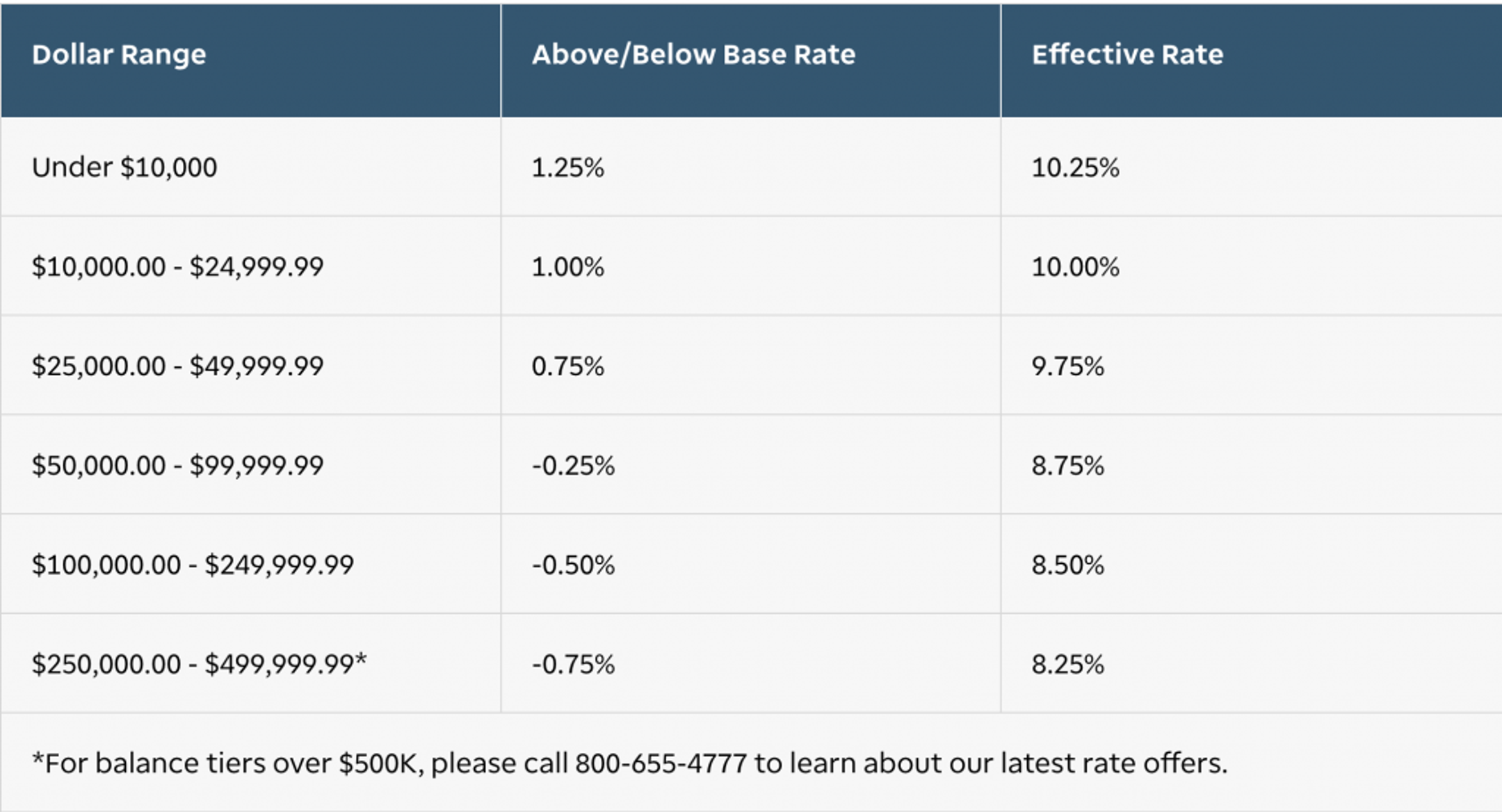
Td Ameritrade Interest Rate On Margin

Let’s be honest: the word “margin” sounds like something you’d order at a fancy brunch, not something that keeps you up at night. But if you’ve ever dipped your toes into the world of trading with borrowed cash from TD Ameritrade, you know it’s less about avocado toast and more about a quiet, persistent buzz in your portfolio. The interest rate on margin is basically the monthly subscription fee you pay for the privilege of playing with money that isn’t technically yours. It’s like renting a sports car for a weekend—thrilling, slightly reckless, and you’re definitely paying for the experience.
So, what is this mystical rate, anyway? Think of it as the price tag on a financial “IOU.” When you use margin, you’re borrowing against your existing investments to buy more stocks, and TD Ameritrade charges you interest on that borrowed amount. It’s not a flat fee, either; it’s a floating rate that changes based on a benchmark called the fed funds rate, plus a markup from the broker. Basically, when the Fed sneezes, your margin account catches a cold—and your wallet feels the sniffles.
The “I’ll Pay It Later” Trap
Here’s the kicker: unlike your gym membership, you don’t get a monthly reminder that says, “Hey, you owe $50 for those pull-up bars you never used.” Margin interest gets added to your balance daily, which is worse. It’s like a silent roommate who eats your leftovers and never apologizes—you only notice when the fridge is empty (or when your trade goes south). For example, if you borrow $10,000 with a hypothetical rate of 11%, you’re looking at roughly $3 a day in interest. That’s a coffee, a bagel, and a tiny bit of existential dread, every single day.
Must Read
The current rates at TD Ameritrade (now part of Charles Schwab, but let’s not get sidetracked) are tiered based on how much you borrow. Borrow a little, pay a higher percentage; borrow a lot, and they’ll knock the rate down a bit. It’s like a loyalty program for people with questionable financial hobbies. But even the “best” rate, which might hover around 10% to 13% depending on the market, is not loose change. That’s higher than most car loans and definitely higher than your grandma’s savings account—she’s judging you from the grave.
Why You Should Care (Even If You’re Not a Day Trader)
You might think, “I’m not a hot-shot trader, I just buy index funds and pray.” But here’s the everyday connection: margin is the financial equivalent of deciding to pay for dinner with a credit card when you only have cash for a sandwich. The convenience feels great at the moment, but the bill comes due with a side of regret. If you’re using margin to “average down” on a stock that’s falling, you’re basically doubling down on a bet with borrowed chips. And when the stock keeps falling, you’re not just losing money—you’re losing money plus interest on the money you lost. That’s the financial version of a double-fudge sundae with a laxative drizzle.

I remember a buddy who thought he was a genius for buying Tesla on margin right before a dip. He didn’t just feel the dip; he felt the interest accumulating like a slow leak in his tire. He’d check his app every morning, mutter “that’s the cost of doing business,” and then quietly eat a sad desk salad. A month later, he paid off the margin with his regular paycheck, realizing he’d essentially worked four extra days just to cover the “borrowing fee.” The stock eventually recovered, but his ego didn’t.
The Sneaky Math You Ignore
Here’s the real kicker: try to calculate your effective rate after a win. Say you make a 15% gain on a trade using margin. Sounds great, right? But if you paid 12% interest on the borrowed funds over three months, your net profit shrinks to something like 9%—and that’s before taxes. Suddenly, your “smart play” is only slightly better than a high-yield savings account. It’s like running a marathon and then realizing you ran it while carrying a backpack full of bricks. You finished, but your back hurts and your time isn’t impressive.

The easy-going advice? Treat margin like a hot sauce. A tiny dab can spice up a meal (or a portfolio), but a whole bottle will ruin your day and possibly your stomach lining. If you don’t have a crystal-clear exit plan, using margin is like singing karaoke after two glasses of wine—you think you sound great, but everyone in the room is wincing. TD Ameritrade will happily lend you the money, and they’ll get their interest no matter what. They’re the casino, and you’re the one holding the dice.
And please, don’t convince yourself that you’ll “just pay it off next week.” The market doesn’t care about your plans. Next week can turn into next month, and next month turns into a line item on your credit report. I’ve seen people carry margin balances for years, paying thousands in interest, all while telling themselves they’re “waiting for the rebound.” The only thing rebounding is the broker’s profit margin.
So, before you hit that “Trade on Margin” button, ask yourself: Is this loan worth the price of my peace of mind? The rate at TD Ameritrade is transparent—you can look it up right on their website—but the real cost is the anxiety. That interest rate isn’t just a number; it’s the rent you pay for living in a house of financial cards. And trust me, the landlord always collects.