Stores That Sell Unlocked Iphones
Remember when buying a phone felt like negotiating a hostage release? You’d walk into a carrier store, squint at a confusing tier list of data plans, and sign away your firstborn for a “free” upgrade that was secretly a 36-month financial leash. Then, the great unshackling happened. The phrase “unlocked iPhone” went from tech-bro jargon to a full-blown cultural flex, popping up on TikTok hauls, Reddit rabbit holes, and X (formerly Twitter) threads faster than you can say “eSIM.” Today, the unlocked phone isn't just a device; it’s a lifestyle statement. It screams, “I don’t do contracts, I don’t do bloatware, and I certainly don’t do customer service hold music.” As carriers squeeze margins and e-commerce giants like Amazon and Best Buy lean into the gray market hustle, purchasing an unlocked iPhone has become the digital equivalent of buying a house without a realtor—thrilling, slightly risky, and potentially life-changing for your wallet.
The discourse has exploded because we are living through the era of the hyper-conscious consumer. We’ve watched too many YouTube teardown videos and read too many “carrier vs. unlocked” comparison articles to feign ignorance. The pandemic normalized buying everything online, including high-ticket electronics, and the rise of resale platforms like Swappa and Back Market gave the second-hand market a slick, Gen-Z-friendly makeover. Now, the question isn’t if you should buy an unlocked iPhone; it’s where you should buy it without getting scammed into buying a shiny brick from a guy named “TechDeals_4U” on Instagram. The conversation has shifted from “Does it work?” to “Is it truly carrier-free?” and “Should I finance through a credit card or a retailer to optimize my rewards?” It’s a jungle out there, and we’re here to arm you with a machete and a map.
But hold your horses (and your Apple Pay). This isn’t just about walking into a store and grabbing the shiniest slab of aluminum and glass. The unlocked phone market is a bizarre ecosystem—a weird hybrid of luxury retail, bargain-bin grifting, and tech-savvy arbitrage. It’s a space where the Apple Store’s pristine white tables sit in stark contrast to the chaotic energy of a third-party electronics bazaar in a strip mall. And the internet is eating it up. From viral “unboxing” videos that hyper-fixate on the absence of carrier logos to finance bros explaining how you can get 0% APR on a $1,400 phone, this topic is now firmly woven into the fabric of modern digital life. So, let’s dive into the glittering, slightly chaotic world of unlocked iPhones—where the contracts are fake, the savings are real, and the consumer is finally (mostly) in charge.
Must Read
The Wild, Weird Subcultures of the Unlocked Market
Behind the clean UI and the minimalist marketing, a fascinatingly toxic subculture has spawned around the unlocked phone trade. First, you have the “Carrier Loyalists” vs. the “Unlock Army.” The Loyalists argue that buying an unlocked phone at full price is financially irresponsible when carriers offer massive trade-in cash incentives—often $800 to $1,000 off a new Pro Max. Meanwhile, the Unlock Army fires back with screenshots of their monthly bills showing a $25 prepaid plan, mocking the Loyalists who pay $90 a month for “premium” data that they never use. This digital turf war plays out in the comments of every major tech outlet’s YouTube channel, often devolving into petty arguments about coverage maps and 5G UW icons. It’s not just about money; it’s about identity. Are you a churner who switches networks every month for a free Netflix subscription, or are you a minimalist prepaid warrior who functions on 5GB of data and pure spite?
Then there’s the darker, more shadowy subculture: the “Refurbished Roulette” players. These are the folks who scour eBay auctions and third-party Amazon listings for “A+ condition” or “Open Box” deals. They live for the thrill of a $700 iPhone 15 Pro Max that’s supposedly just a “scratch on the screen protector.” This community has its own etiquette, its own horror stories (buying a phone that’s activation-locked to a dead man’s iCloud), and its own victory laps. Social media platforms are flooded with “Did I get scammed?” videos and “POV: You risked it for the biscuit” clips. For every happy customer, there are three warning threads about counterfeit screens that wash out in sunlight. It’s a high-stakes game of digital whack-a-mole, where the reward is saving three hundred bucks and the penalty is owning a device that doubles as a paperweight. The culture is toxic, addictive, and endlessly entertaining—a perfect microcosm of the broader “flip it” economy that dominates internet commerce today.

How to Navigate the Unlocked Maze Without Losing Your Sanity (or Wallet)
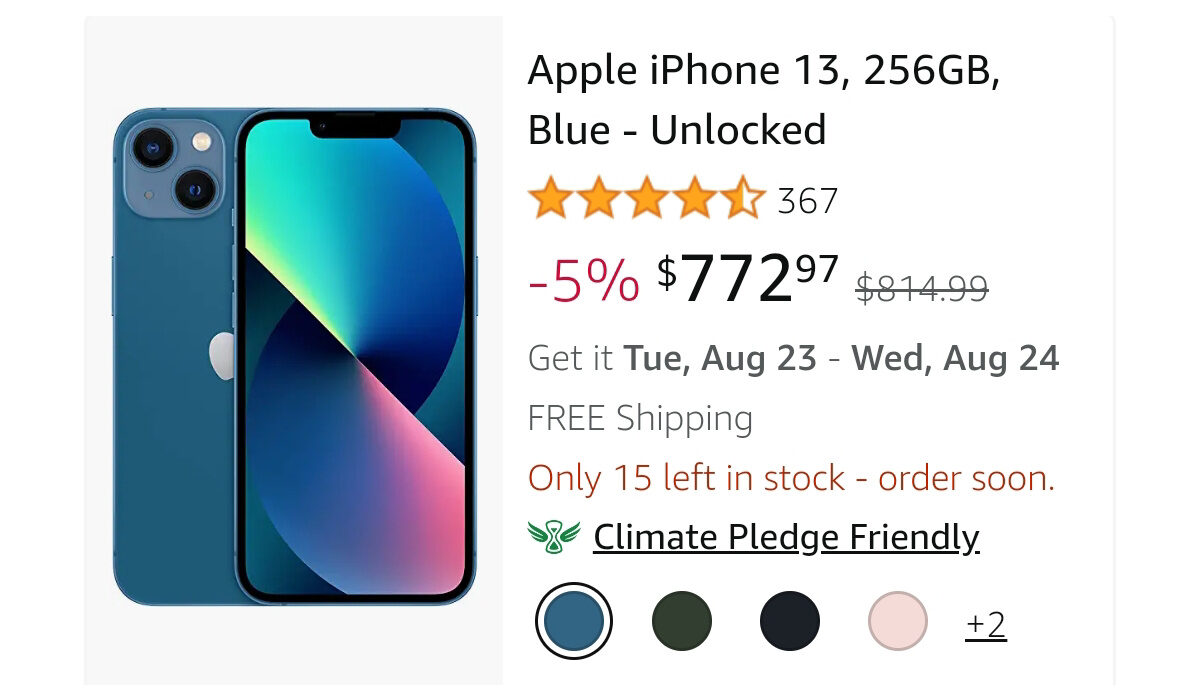
Okay, so you’ve decided to join the revolution. Congratulations. But before you whip out your credit card, you need a battle plan. The first rule of Unlocked Club is to never trust the phrase “Guaranteed Unlocked” on a listing without reading the fine print. Many resellers list “Global” or “International” versions, which may lack the specific band frequencies required for your local 5G networks. That’s how you end up with a lightning-fast phone in a dead zone. Stick to reputable retailers. The Apple Store, of course, is the gold standard—utterly reliable, but you’ll pay a premium for that stability. For the slightly more adventurous, Best Buy and Amazon are solid options, provided you filter for “Ships from and sold by Amazon.com” or “Best Buy” as the seller, avoiding third-party drop-shippers like a plague. If you’re really trying to stretch your dollar, refurbished experts like Back Market or Gazelle offer warranty-backed devices that have been through rigorous 50-point checks. Skip Craigslist unless you’re buying a used car and a burner phone at the same time.
Second, you need to understand the financial engineering behind the purchase. Unlocked phones are expensive—period. But the savvy move here is to look at the ecosystem of retail credit cards. The Apple Card, for instance, offers 3% daily cash back on Apple purchases and a 0% APR for six months on new iPhones. It’s a legal cheat code. Similarly, the Best Buy credit card often runs 12-month financing on premium mobile devices. This allows you to spread the pain without paying a cent of interest, effectively giving you an “unlocked” device but with carrier-level payment flexibility. Contrast that with the psychological trap of carrier financing: you’re paying the same price, but you’re locked into a two-year agreement with an ETF (early termination fee) that looms over your head like a guillotine. The unlocked path is about freedom, and that freedom includes the freedom to pay off your balance quickly or roll it over interest-free without a termination penalty.
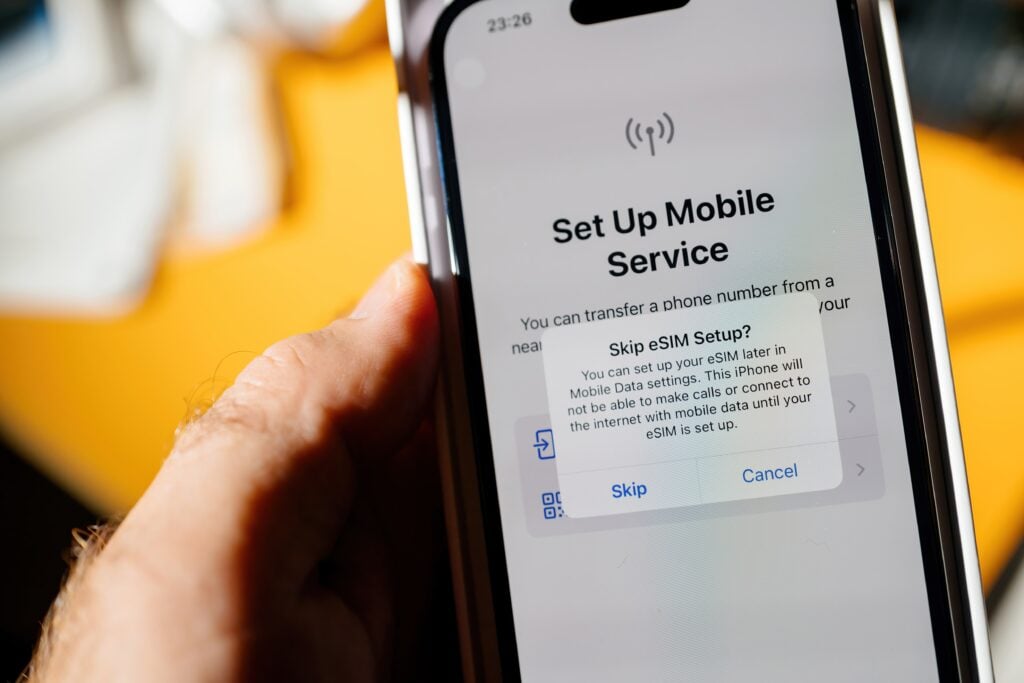
Third, and this is crucial: do not ignore the eSIM factor. The modern unlocked iPhone (iPhone XS and later) is almost exclusively eSIM or dual-SIM, meaning there’s no physical SIM tray in some regions (specifically the US). This is brilliant because it makes switching carriers as easy as scanning a QR code from a pitch deck. You can be on T-Mobile in the morning and switch to AT&T by lunch without visiting a store. However, this convenience comes with a caveat: international travel. With an unlocked eSIM phone, you can buy a local data plan from Airalo or Holafly for $20, skipping the international roaming exorbitance. If you buy a carrier-locked phone, you’re stuck paying $10 a day for 500MB of slow data. The unlocked phone is the ultimate travel hack, turning a work trip to Lisbon or Bangkok into a frictionless browsing experience. It’s not just a convenience; it’s a lifestyle upgrade that makes your globe-trotting friends jealous.

Finally, to avoid the classic pitfall of buyer’s remorse, verify the IMEI before you finalize. This is non-negotiable. Whether you’re buying from a retail store or a certified refurbisher, get the IMEI number and run it through a free IMEI checker (or Apple’s activation lock status page). This will tell you if the phone is blacklisted for theft, whether it has a pending financial agreement with a carrier, and if it’s still under Apple’s factory warranty. A legit seller won’t blink if you ask for the IMEI to verify—in fact, they’ll expect it. If a seller hesitates, walk away. That instant rejection saves you from a world of pain. Also, consider the trade-in value of your old device. Services like Swappa are fantastic for selling your old unlocked phone to a community of enthusiasts, often yielding 10-15% more than trade-in offers from carriers or Apple. You’re not just buying a phone; you’re managing a mini-asset portfolio. Treat it with the same seriousness you’d give a stock purchase.
The FAQ Throwdown: Settling Internet Debates
Is it actually “unlocked” if I buy it from a carrier like T-Mobile or AT&T?
Here’s the rub. Legally, in the US, carriers are required to unlock your phone upon request once you’ve either paid off the device or fulfilled your contract terms. So, yes, a carrier-sold iPhone is lockable, but it comes with a distinct asterisk. They are sold with a carrier lock, and they will only function on that network until you beg them for an unlock code. This is a massive pain point. You cannot simply pop in a Verizon SIM card on day one if you bought it from T-Mobile. You have to wait, often weeks or months, and navigate a web of automated phone prompts. This reality is why the “factory unlocked” crowd is so smug. Factory unlocked devices—sold by Apple directly or authorized resellers—have zero carrier software, zero carrier locks, and zero waiting periods. You buy it, you put in any SIM, and you’re off to the races. The internet debate often boils down to a misconception that carrier phones are “unlocked” because they can be eventually unlocked. Technically true, but it’s the difference between buying a house that’s almost finished and one that’s move-in ready.
Moreover, there’s a subtle difference in the firmware. Carrier-locked phones often have carrier bundle files that can affect how wifi calling or 5G switching works. These files are usually updated to the global standard once unlocked, but sometimes you get a ghastly T-Mobile boot screen or pre-installed carrier apps that you can’t remove without a hard reset. Is that worth a few hundred dollars in subsidy savings? Maybe, if you’re a patient soul who doesn’t mind administrative hurdles. But for the generation that wants instant gratification delivered to their door via drone, the factory-unlocked unit is the only path to true digital Zen. Always read the fine print of the listing: “Sim-free” is the magic phrase on Apple’s site—it’s the default, pure, unadulterated state.

Is buying a refurbished unlocked iPhone a bad idea?
It’s not a bad idea; it’s a nuanced idea. The stigma attached to refurbished phones dates back to the early 2010s when “refurbished” meant “glued together in a basement.” Today, the market is heavily regulated, especially with the rise of certified refurbishers like Apple’s own Refurbished Store. Apple’s refurbs come with a brand new battery, a new outer shell, and the same one-year warranty as a new phone. That’s a steal—literally. The savings can be anywhere from 15% to 20% off retail, and you still get the full Apple experience. However, the danger zone is the gray market of third-party refurbishers on Amazon or eBay. These guys will buy a broken phone, drop in a generic Chinese OLED screen that has poor color accuracy, and call it “A” condition. The price is tempting—often $150 less than Apple’s—but you’re gambling with your display quality and water-resistance seals that might have been destroyed during the repair.
The wise approach is to look for specific grading criteria. Look for listings that specify “Battery health ≥ 90%” and “Genuine Apple parts” explicitly stated. If a seller is vague about the parts used, or just says “replacement screen” without specifying it’s an original, run away. The internet debate rages because some folks have won the refurb lottery—getting a perfect device for a rock-bottom price—while others have lost, receiving a device that overheats and dies by noon. To mitigate risk, use platforms that offer buyer protection and a solid return policy (15 days minimum) and always pay with a credit card that offers purchase protection. If the subculture of “refurb roulette” scares you, stick to Apple’s official store. Yes, you’ll pay a bit more, but you’re paying for the peace of mind that comes from knowing the battery is genuinely new, not just “showing” as new.
Will buying an unlocked phone affect my 5G speeds or coverage?
Here’s the techy truth bomb: an unlocked phone is exactly the same hardware as a carrier-locked phone. It has the same modem, the same antennas, and the same capability to connect to 5G towers. There is no phantom “unlocked 5G” that’s slower. The actual difference lies in the carrier profiles and the specific bands your carrier uses. When you buy a carrier-specific phone, it comes pre-loaded with the appropriate carrier settings and band priorities, which can optimize the handshake between the phone and the tower. An unlocked phone will dynamically download the right carrier profile when you insert the SIM card, but sometimes it doesn’t have the exact, carrier-optimized carrier bundle that includes advanced features like standalone 5G (5G SA) or Voice over NR (VoNR). In practice, you might see slightly slower peak speeds initially, but that usually corrects itself after a software update or a reboot.

More importantly, coverage is dictated by the physical location of the towers and your phone’s modem—not by the unlock status. If you live in a rural area where Verizon has the best coverage, an unlocked iPhone will happily connect to those towers as long as the region is supported. The real issue with coverage is buying a foreign unlocked model. If you buy a European iPhone (a “B” model) and bring it to the US, it may lack the mmWave 5G antenna needed for ultra-fast speeds in dense cities like New York or Chicago. That’s where the “Global” vs. “Domestic” debate gets real. Do your research: ensure the specific model number (e.g., A3104 for US) matches your region. If you buy a US-unlocked model, you are getting the premium 5G experience. The fear that “unlocked” means “inferior” is pure FUD (Fear, Uncertainty, Doubt) spread by carriers to keep you on their leash. The unlocked path offers the same coverage, and often better, because you can switch carriers instantly if one’s signal sucks in your apartment.
So, is this unlocked revolution a passing fad or the dawn of a new era? It’s the latter, folks. We’ve crossed the Rubicon. The carrier’s monopolistic grip on hardware is loosening, primarily because hardware is now a boring commodity. The smartphone is a mature product—we’re not seeing revolutionary leaps in battery life or the invention of a new button every year. As such, the consumer’s focus has shifted from “subsidized upgrade” to “asset ownership.” We are moving into an era where people think of their phone like a laptop or a camera—a tool you buy outright and maintain for three to four years. The eSIM standard, combined with the aggressive growth of prepaid carriers like Mint and Visible, makes the unlocked phone the only logical choice for the financially savvy and the privacy-conscious. It’s the same shift we saw with cable TV; people cut the cord, and the contract-based subsidized phone model is next on the chopping block.
But don’t expect the chaos to die down. The drama of the unlocked market—the scams, the deals, the smug Reddit users posting their low bills—is part of the fun. It’s a new form of consumer entertainment. As long as there’s a price difference to be exploited and a network to be tested, there will be forums, TikTok gurus, and YouTube reviewers dissecting every purchase. The unlocked iPhone isn’t just a product anymore; it’s a culture. It represents a rebellion against the opaque, bind-laden past of mobile telecom. So go forth, buy that sim-free beast, and enjoy the guilt-free satisfaction of knowing you can walk into any store on any continent, hand them your phone, and say, “Top me up.” That, dear reader, is the sweet, unshackled sound of pure digital freedom.