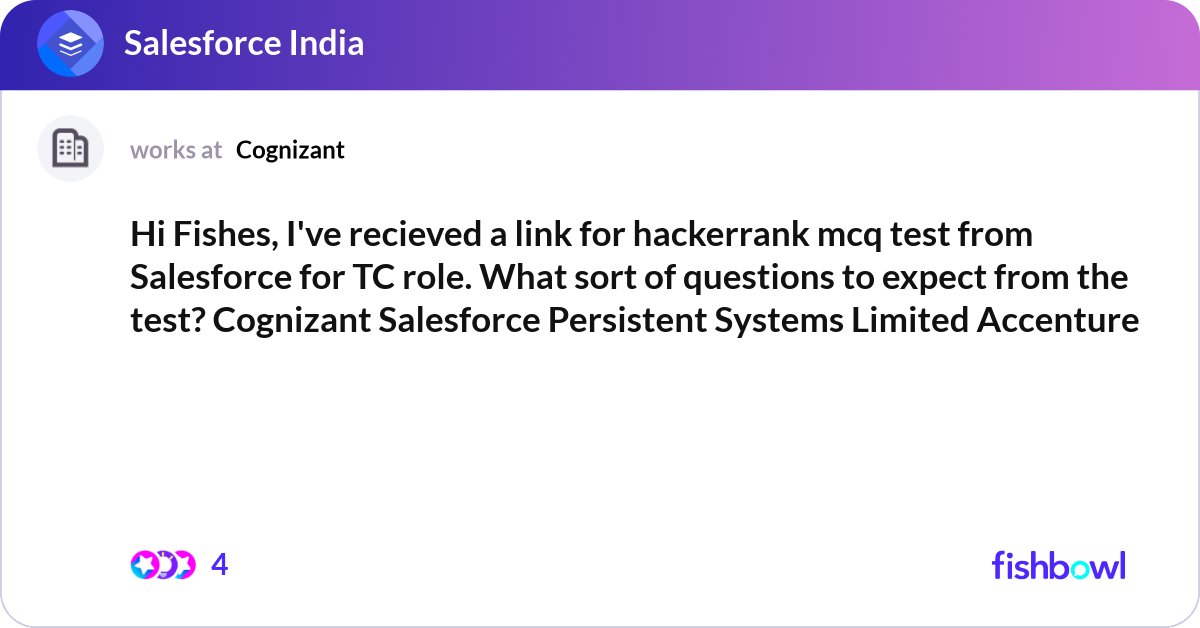
Salesforce Hackerrank Test Questions
Okay, so you’ve decided to take a shot at Salesforce. Maybe you’re eyeing that shiny admin cert, or perhaps you’re a dev who wants to play in the clouds. And then it hits you: the Hackerrank test. Cue the dramatic music.
First, take a deep breath. It’s not a haunted house. It’s just a weird, digital obstacle course where they ask you to prove you know your stuff. I’ve been there, staring at a blinking cursor, feeling like I forgot my own name. Let’s unpack this together, shall we?
What Even Is This Test?
Think of it as a first date with a company, but instead of small talk, you’re clicking through logic puzzles. They want to see if you can actually use Salesforce, not just talk about it on your resume. It’s a mix of multiple-choice questions, coding challenges, and sometimes, those terrifying “build a thing” prompts.
Must Read
The secret? It’s less about memorizing every button and more about thinking like a Salesforce pro. They don’t expect perfection; they expect problem-solving. But they do test your patience, that’s for sure.
The Good Old Multiple-Choice Section
This part is like a pop quiz from a professor who loves jargon. Expect questions on object relationships, like “What’s the difference between Lookup and Master-Detail?” Or “Which automation tool would you use for a simple approval process?” It’s basically a vocabulary test with a side of logic.
My advice? Don’t overthink it. If you’ve ever clicked around a sandbox, you’ll know 80% of this. The other 20% is about best practices—like, “When should you use a queue instead of a case?” Honestly, sometimes I answer these by asking myself, “What would a very careful consultant do?”
The Infamous Coding Section (If You’re a Dev)
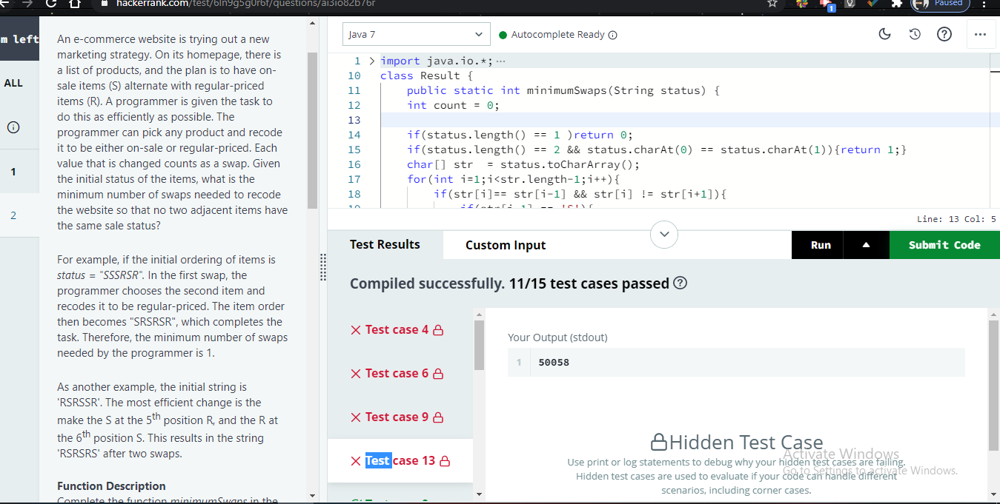
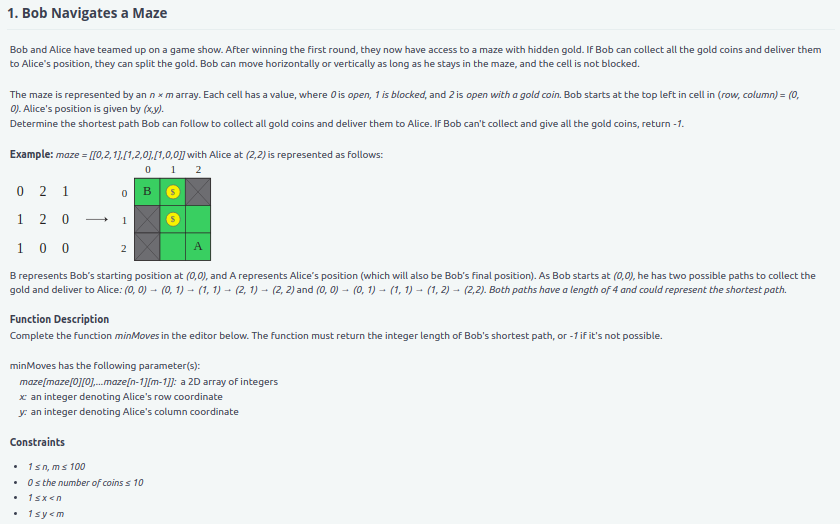
Here’s where the palms get sweaty. If you’re not a developer, skip this paragraph and go get coffee. But for the coders out there, brace yourself for Apex and SOQL questions. They’ll ask you to write a trigger, maybe sort a list, or fix a bug that looks like spaghetti.
The trick is to not write perfect code. Nobody does that in 30 minutes. Instead, write something that shows you know how to loop, query, and avoid a governor limit meltdown. And for the love of all things metadata, comment your code. They love seeing a brain that talks to itself.
The “How Would You Build This?” Nightmare
These are the open-ended questions that feel like a riddle wrapped in a mystery. Example: “Design a custom object to track employee onboarding.” Sounds simple, right? Wrong. They’re watching to see if you mention lookup fields, roll-up summaries, or maybe a little Flow magic.
Don’t just give a barebones answer. Talk about why you’d pick a certain field type. Mention edge cases, like “What if the employee quits?” That kind of thinking makes you look like a seasoned architect, not a newbie. Plus, it’s fun to sound smart while typing furiously.
My Cheat Sheet (Shhh, It’s Not Really Cheating)
First, read the question twice. I can’t stress this enough. I once lost points because I missed the word “not” and built the exact opposite of what they asked. On the flip side, don’t spend 10 minutes on one question. Time is your enemy and your best friend.
Second, use your resources. Yes, you can open a second tab to look up syntax. Just don’t make it obvious that you’re copying and pasting. And if you get stuck, write a pseudo-code answer. Sometimes they give partial credit just for the effort. I’m not saying that’s fair, but it’s reality.

Also, stay hydrated. No joke. I’ve made silly mistakes because my brain was 90% cortisol and 10% actual thought. A glass of water next to your keyboard is a tiny shield against panic.
Common Questions You’ll Actually See
Here’s the tea. You’ll see a lot about Salesforce Flow these days—it’s the shiny new toy, so they love it. Expect something like, “When would you use a Screen Flow vs. an Autolaunched Flow?” The answer is basically, “Screen Flow needs human input; Autolaunched doesn’t.” Easy, right?
Then there’s the classic “Picklist vs. Text Field.” That’s a gift. The answer is always “Picklist for standardization, Text for freeform.” You’ll also get a question about Sharing Rules or OAuth, and you’ll nod like you totally knew that. Just remember: Sharing rules grant additional access, they don’t restrict.

The Aftermath
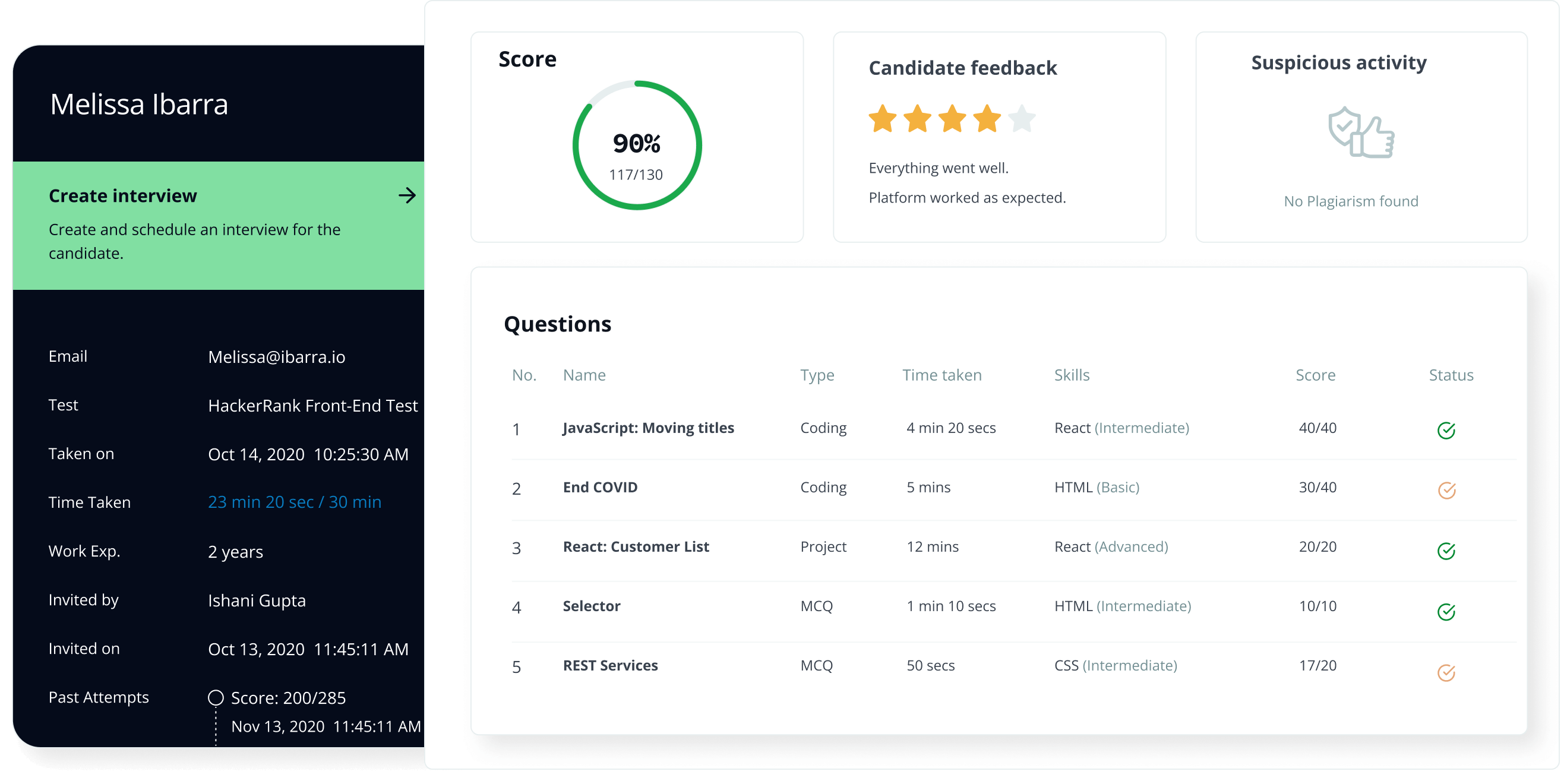
When you hit “Submit,” you’ll feel a mix of relief and dread. That’s normal. The score isn’t the whole story—companies look at your thinking process, not just the final number. So even if you bomb one section, you might redeem yourself with a clever comment in another.
And if you fail? So what. It’s a learning experience. Really. Go look up the answers, practice in a developer org, and try again next month. The test is a hurdle, not a wall. Trust me, I’ve tripped over it a couple times, and I’m still here, sipping my coffee.
So go smash that test. Maybe you’ll even laugh at how weird it is. And if you don’t, well, at least you’ll have a wild story to tell your friends. Just promise me you’ll treat yourself to a cookie after. You’ve earned it, champ.