
Saeco Starbucks Espresso Machine

There is a curious alchemy that happens when a global behemoth like Starbucks decides to partner with a legendary Italian engineering firm like Saeco. It’s a marriage of convenience that has, over two decades, produced one of the most ubiquitous, misunderstood, and quietly revolutionary appliances in modern kitchens: the Saeco Starbucks Espresso Machine. This isn't just a machine that pushes hot water through ground beans; it is a cultural artifact, a psychological crutch, and a testament to the idea that greatness often hides behind a plastic facade. Born from a 2005 partnership between the Seattle coffee giant and the Philips-owned Italian manufacturer, these machines were designed to bridge the chasm between a $7 café latte and the desperate, pre-caffeinated reality of a Tuesday morning. They promised barista-level precision without the required art school haircut or ironic mustache.
Why does this machine matter in 2025? Because we are living in a golden age of home barista culture, yet most of us are still trapped in a limbo of convenience versus craft. The Saeco Starbucks machine—whether the iconic Barista model, the Via Venezia, or the high-pressure Inspira—serves as the gateway drug. It is the machine that convinces you that you, too, can produce crema thick enough to hold a coin, without having to sell a kidney for a La Marzocco. It represents a peculiar moment in history where corporate synergy accidentally produced hardware with genuine soul. But to understand its magic, you have to dig beneath the warmed milk and look at the dark, pressurized mechanics that make your morning ritual possible.
The Dark Science of Crema: Pressure, Time, and Deception
Let's get one thing straight immediately: the Saeco Starbucks machines are not "espresso" in the traditional, purist Italian sense. They are brewing at a solid 15 BAR of pressure—a spec that sounds impressive until you realize that commercial machines often brew at 9 BAR, the sweet spot for extracting delicate oils and sugars. The Saeco uses that excessive pressure to create a thick, fake crema that pleases the Western palate. This is not a flaw; it is a psychological masterstroke. We do not drink espresso for its taste alone; we drink it for the ritual of seeing that honey-colored foam swirl to the surface. It’s a visual placebo. The machine is, essentially, a master of benevolent deception, tricking your brain into thinking you are a connoisseur while you are actually drinking a highly pressurized, slightly bitter, but deeply satisfying liquid.
Must Read
But there is a darker, funnier fact hidden in the steam wand. Most users never use it correctly. The wand on the Saeco is notoriously finicky—it uses a "Panarello" tip that sucks in air to froth the milk, but it does so aggressively. If you don't angle it perfectly, you get massive bubbles the size of soap suds, not microfroth. This is a secret initiation ritual; learning to hold a cold pitcher at a 45-degree angle while swirling your wrist is the modern equivalent of learning to tie a Windsor knot. The machine isn't just making coffee; it is teaching you about frustration tolerance. It forces you to slow down, to listen to the high-pitched hiss of steam, and to admit that you are not in control.
Culturally, these machines represent a shift in domestic power dynamics. Before the Saeco, espresso was a public act—a performance for the barista behind the counter. By bringing it home, Starbucks and Saeco effectively colonized the kitchen counter. The machine became a silent status symbol, a bulky statement of "I take my coffee seriously, but not seriously enough to read a manual." It democratized the crema, allowing suburban parents and dorm-room students to experience a slice of Italian café culture without acquiring the necessary Italian posture. It is a bridge between the analog world of grinders and portafilters and the digital world of one-touch convenience, awkwardly straddling both with a plastic casing that is, frankly, ugly as sin—yet we love it.
Scenarios and Actionable Takeaways: Living with the Beast
Let us imagine a case study: Sarah, a graphic designer in Chicago, buys a used Saeco Starbucks Barista from a Facebook Marketplace listing. She has no idea that the previous owner never descaled it. The first shot tastes like battery acid mixed with regret. This is the machine's greatest test. The number one actionable takeaway is that these machines are built to last, but they are not built to be ignored. You must descale them. Not occasionally. Obsessively. The internal brass boiler is a magnet for calcium, and if you skip this step, you are essentially brewing your coffee through a tiny stalactite cave. Sarah will learn, after two weeks of bitter tears, that a $5 bottle of citric acid solution is her best friend.
Another scenario: John, a tech entrepreneur, buys the Super-Automatic version (the one that grinds the beans for you). He expects it to be a miracle of science. He fills the hopper with pre-ground, oily dark roast from a local roaster. Within three days, the grinder jams, clogged with oil. The keys to success here are bean selection and grind calibration. You cannot use cheap, oily beans in a super-auto; you need beans that are dry-processed or washed, and you must be willing to adjust the internal burr setting, which requires a tiny Allen wrench and a lot of swearing. The takeaway? These machines reward the tinkerers. They are not appliances; they are hobbies with heated water.

For the practical reader, the biggest takeaway is understanding water temperature. These machines often brew slightly too cool, around 180°F (82°C), not the ideal 195-200°F. To counteract this, you can pre-heat your cup by running a blank shot through the group head before you lock in the portafilter. This costs you three seconds and saves your espresso from being sour. Similarly, always use the double-shot basket, even if you want a single shot. The single basket is a claustrophobic nightmare that causes choking and over-extraction. Using the double basket with a standard amount of coffee yields a faster, sweeter shot. Finally, invest in a decent grinder—even a hand grinder—because the Saeco's built-in grinder (if it has one) is adequate, but its true potential is unlocked with a fresh, external grind.
Consider the case of Tom, who modded his Saeco. He removed the Panarello wand and attached a true stainless steel steam tip. He replaced the pressure valve to lower the bar to 9 BAR. He installed a pressure gauge. This is the dark rabbit hole of the Saeco community—a cult-like following of hackers who refuse to let a "starter" machine stay a starter. The takeaway is that this machine is not a sealed black box; it is a chassis for obsession. You can rebuild it, you can tune it, you can turn it into a monster that rivals machines costing ten times more. This is the beauty of the corporate collaboration: they sold millions, but they couldn't engineer away the tinkerer's itch. The machine practically begs to be modified, a silent challenge to the modern consumer culture of disposability.
Frequently Asked Questions (The Honest Truth)
1. Why does my Saeco Starbucks espresso machine make sour shots?
Your shot is sour for one reason: under-extraction or temperature instability. The Saeco boilers are small, so after the first shot, the thermal mass drops drastically. If you pull a shot immediately after turning it on, the water might be too cold to extract the sugars. The sourness is actually, scientifically, tasting acidity that hasn't been balanced with caramelization. Also, check your grind size. If it is too coarse, the water whooshes through in less than 10 seconds, stealing nothing. Fix this by pulling the shot for 25-30 seconds. If it’s still sour, pre-heat the portafilter by leaving it locked in the group head while the machine warms up. Do not rush the warm-up; give it at least 15 minutes for the metal to saturate with heat. Finally, question your coffee roast. Light roasts are notoriously acidic; switch to a medium or dark roast specifically designed for espresso to get that molasses-like sweetness.
Alternatively, you might be using stale beans. If your beans have been sitting in the hopper for two weeks, the oils have oxidized, leaving behind vegetal and sour notes. You need to cycle the beans out of the grinder frequently. The Saeco’s grinder retains grounds, so if you switch roasts, you need to purge at least 20 grams of coffee through it to clear the old stuff. Treat the machine like a musical instrument; it needs to be warmed up and cleaned to hit the right notes. A shot that tastes sour is your machine telling you it is cold and dirty. Listen to it.
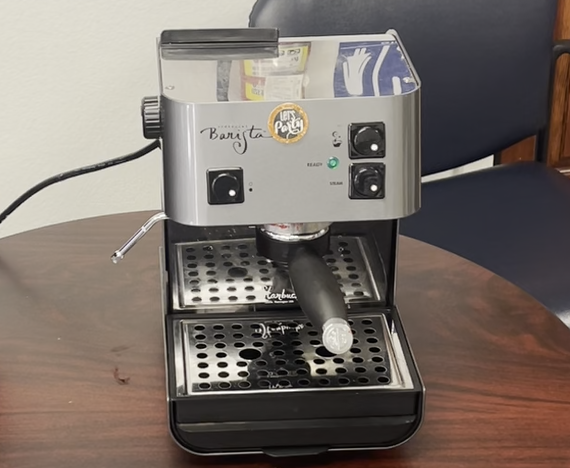
2. Is it safe to use the steam wand and brew espresso at the same time?
Technically, the machine has a single boiler. This means it cannot brew and steam simultaneously effectively. If you try to pull a shot while the steam wand is on, you will get a very fast, watery shot because the boiler is now pressurized with steam, not hot water for extraction. You must toggle between modes. The physical switch on the Saeco is your friend. Use it to brew your shot, then flip it to the steam position, which stops the water flow and heats the boiler further to generate steam. This is a sequential ritual, not a parallel one. Many users get frustrated and think the machine is broken when they try to multitask like a commercial café. But this limitation is actually a blessing; it forces you to slow down, to work in stages, and to appreciate the craft of the process.
Another danger is burning out the thermal fuse. If you leave the steam switch on for a long time and then immediately turn it to brew, the sudden pressure change can shock the thermostat. A better workflow is: Brew your shot first (the boiler is at 9-15 BAR for brew), then allow a 10-second rest, then switch to Steam. When you are done steaming, purge the steam wand into a rag and then run water through the brew group to cool the boiler back down to brew temperature. If you don't, your next shot will be scorching hot and taste burnt. This is a transition dance that takes about a minute. Respect the single boiler, and it will respect you back with decent crema.
3. How often should I clean the internal mechanisms of my Saeco?
The honest answer is more than you think. The grinder and the brewing group collect coffee oils that turn rancid. A good rule of thumb is to clean the outer grinder burrs weekly using grinder cleaning tablets (like Urnex Grindz). Run a tablet through, then discard the first 10 grams of coffee after the tablet. For the internal brewing chamber, you want to use a mild detergent or backflush. If your model has a blind filter (a disc with a small hole), you can run a backflush cycle with a drop of espresso machine detergent every 20 shots. If you do not do this, you will eventually taste a bitter, ashy residue in your cup—that is oxidized old coffee sludge. It is not just about hygiene; it is about flavor sustainability.
On the exterior, the drip tray is a bacterial heaven. Do not just empty the water; wash it with hot soapy water daily if you use the machine daily. The steam wand must be wiped and purged immediately after every frothing session. Milk protein solidifies at high temperatures and creates an impenetrable layer that harbors bacteria and ruins the texture of future milk. If your milk foams poorly, it is almost guaranteed to be a dirty steam wand. Descaling is another beast: depending on your water hardness, you should descale with a commercial descaling solution every 2-3 months. The symptoms of scale buildup include slow water flow and a boiler that overheats, causing the machine to shut off. If your machine is suddenly silent in the middle of a brew, that's the boiler’s overheat sensor popping. You have ignored the scale for too long.

4. Can I use any brand of coffee beans, or does it have to be Starbucks?
You can absolutely use any brand. The Starbucks branding on the machine is a marketing collaboration; the machine itself is agnostic to the bean. However, there is a functional nuance. Starbucks beans are famously roasted very dark and oily. In a super-automatic machine, that oil can gum up the grinder’s mechanism over time. In a manual, semi-automatic model (like the Barista), you have more control, so oily beans are fine as long as you clean frequently. If you use a light-roast, single-origin bean with high acidity, the Saeco might struggle to extract the subtle flavors because the temperature stability is not as precise as a dual-boiler machine. The best beans for this machine are medium-dark roast blends that give a robust body and a forgiving sweetness. The machine's default pressure will crush a delicate Ethiopian bean, turning it into a muddy, bitter soup. So it is not about the brand—it is about the roast profile. Try a Brazilian or Colombian dark roast; they are resilient under the brutal 15 BAR pressure.That said, the machine’s grinder (in the super-auto models) is designed with a specific burr geometry that works best with pre-ground or moderately oily beans. If you buy a bag of beans from a roaster that is extremely light and hard, the conical burr might struggle and stall. Conversely, if you buy pre-ground espresso, it might be too fine for the Saeco’s non-traditional basket, causing a slow drip with blonde streaks—a sign of over-extraction. The key is to buy whole beans and grind them yourself at a setting you’ve dialed in, generally a few clicks coarser than "espresso fine" if you have a high-end grinder. Treat it as an equipment system, not a branded subscription service. The best coffee for the machine is the one you actually like to drink, provided it is not stale and is ground correctly.
5. Why does my machine leak water from the bottom or the side?
A leak is usually not a ruptured tank—it's typically a blocked or misaligned seal. The most common culprit is the O-ring seal around the boiler or the group head valve. Over time, mineral deposits and heat cause these rubber rings to become brittle and lose their elasticity. If you see water pooling under the machine, it is often dripping from the pressure relief valve, which is opening to release excess pressure because the brewing path is obstructed. This obstruction is usually a clogged screen in the portafilter or a tight grind that has jammed the "solenoid valve" (if your model has one). First, try soaking the portafilter and the group head in a commercial cleaner to dissolve coffee oils. If the leak persists, you likely need to replace the O-ring kit, which costs about $10 and requires a screwdriver and 20 minutes of YouTube. It is a dirty job but a simple one.
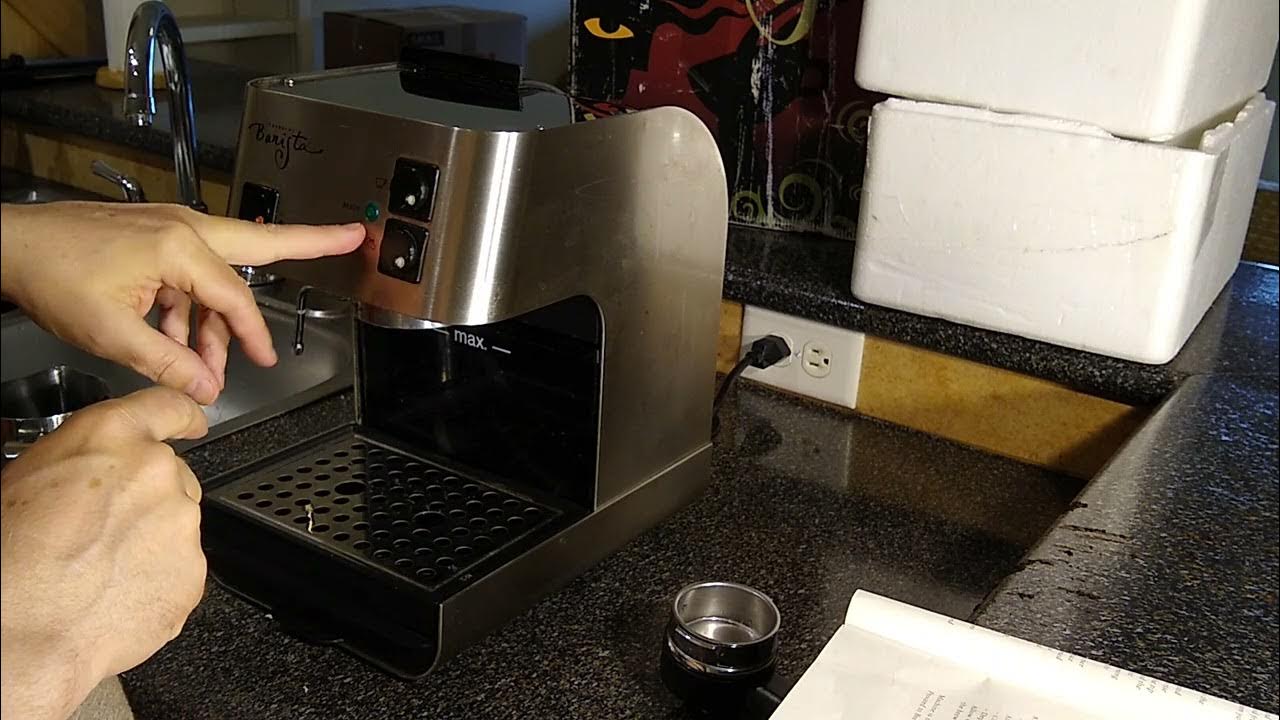
Another source of leakage is the steam wand's internal gasket. If you froth milk with the wand angled too far sideways, milk can back up and corrode the internal seals. Eventually, water will seep out from the steam knob area. The final possibility is a cracked boiler if you ran the machine dry. If you let the water tank run completely empty and the pump continuously ran, the element can overheat and fracture the boiler housing, causing a slow, stubborn drip. This is the only fatal condition; a cracked boiler is not worth repairing unless you have an emotional attachment. For everything else, the parts are readily available online. The machine is repairable, which makes it a stunning outlier in the modern, throwaway appliance market. A leak is not a death sentence; it is a diagnostic call.
Stepping back from the brass and the plastic, the Saeco Starbucks Espresso Machine teaches us something profound about our relationship with convenience. We want the trophy of a perfect espresso, but we rarely want the labor. This machine gives us a shortcut, but not a free pass. It demands our attention—a few minutes of daily ritual, a moment of scrubbing the portafilter, a careful listen to the hiss of steam. In a world that is collecting dust in the drawers of our unused bread machines, the Saeco earns its place on the counter by reminding us that the friction is the point. The act of grinding, tamping, locking, and pressing is a form of therapy, a micro-meditation that separates the overslept from the awake. It is a silent partner that asks for just enough effort to make you feel like you have earned the reward.
There is a human truth in its pressurized innards: we all crave a little finesse in our lives, even if it comes from a machine stamped with a corporate logo. The Saeco Starbucks machine is a relic of a time when corporations believed in engineering and manufacturing that could last a decade, not a season. It embodies the irony of consumerism—you bought it for the logo, but you keep it for the craft. It is the underdog that hums on your counter, occasionally sputtering, but always, eventually, delivering that dark, frothy miracle.
So next time you pull that handle and the machine groans like a sleepy dinosaur, smile. You are not just making coffee; you are participating in a ritual that bridges Seattle’s hipster energy, Italy’s industrial legacy, and your own human need for a pause. It is dark, it is fun, and it is inherently imperfect—which is exactly what makes the first sip taste so goddamn good. The machine may be a corporate handshake, but the espresso is yours, and yours alone.


