Replacing Batteries In Ford Key Fob
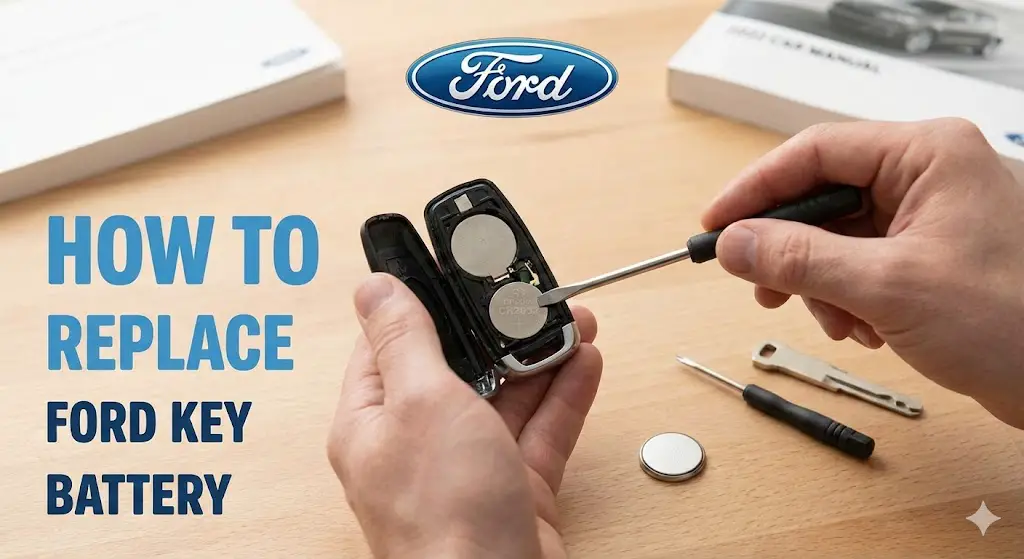
At the precise moment your thumb depresses the button on your Ford key fob, a cascade of physics and engineering unfolds in milliseconds. The fob’s internal circuitry, powered by a nominal 3-volt cell, generates a 315 MHz or 433 MHz radio frequency signal—depending on your region and model—which is then amplitude-shift-keyed with a rolling cryptographic code. This is not a simple "beep"; it is a tightly choreographed burst of electromagnetic radiation that must travel through the air, reflect off your vehicle's body panels, and be demodulated by the Body Control Module (BCM) to authenticate the challenge-response algorithm stored in its memory. When that battery weakens, the voltage sag under load—often dropping below the 2.4-volt minimum required for the transmitter’s oscillator circuit—introduces timing jitter and reduced transmission power, leading to the dreaded "press harder, stand closer" phenomenon that plagues millions of drivers annually.
From a systems perspective, you are not just replacing a battery; you are recalibrating a closed-loop environmental sensing network. The fob’s internal ceramic resonator requires a stable voltage to maintain its resonant frequency. As the alkaline or lithium cell depletes, internal resistance rises exponentially, particularly in cold weather. According to electrochemical kinetics described by the Arrhenius equation, a 10°C drop in temperature can halve the battery’s available discharge current. This is why your fob fails on a freezing January morning but seems to work fine in July. The pragmatic solution is not merely swapping cells blindly—it is understanding the battery's state-of-charge (SoC) versus state-of-health (SoH), and preemptively replacing it before the BCM logs a "low fob battery" diagnostic trouble code, which can sometimes trigger false passive-entry errors.
The science here is the silent triumph of miniaturized power. Most Ford fobs use a CR2032 (20mm diameter, 3.2mm thick) lithium manganese dioxide cell. This chemistry offers a flat discharge curve, maintaining 3.0 volts for roughly 90% of its life, then dropping off a cliff. Unlike alkaline cells, lithium coin cells have a high energy density (~700 Wh/L) but also a high internal impedance. If you wait for total failure, the BCM may have already failed to receive three consecutive valid codes, forcing you to manually unlock the door and hold the fob against the backup ignition reader—a procedure that wastes your time and puts unnecessary mechanical stress on the lock cylinder. The optimization hack is to treat your fob battery as a consumable with a half-life, not a "forever" item.
Must Read
The Chemistry of Failure: Why Your Fob Deteriorates Invisibly
Digging deeper, the battery in your Ford fob is undergoing a continuous, non-reversible chemical reaction even when not in use. Lithium manganese dioxide cells have a self-discharge rate of approximately 1-2% per year at room temperature—but this is not a constant. The electrolyte, typically a lithium salt dissolved in an organic solvent like propylene carbonate, slowly decomposes on the anode interface, forming a solid electrolyte interphase (SEI) layer. This layer acts as an electrical insulator, increasing the overall cell impedance. Over three to four years, this internal resistance can triple, even if the fob was never pressed. When you press the button, the instantaneous current draw—often 10-20 milliamps for 50 milliseconds—causes a voltage dip due to this resistance, which is insufficient to drive the radio transmitter cleanly.
Furthermore, the BCM in modern Fords (especially models from 2016 onward with passive entry, like the Explorer, F-150, or Mustang) does not simply check if a signal exists; it measures the Received Signal Strength Indicator (RSSI) and timing characteristics. A degraded battery causes the fob's crystal oscillator to take longer to stabilize, leading to a longer preamble period. If this preamble exceeds a hard-coded timeout (often 20 milliseconds), the BCM drops the frame. You might observe this as the car only responding when the fob is pressed exactly twice, or when you hold it directly against the door handle. This is not a faulty car; it is a mathematical certainty of a starving power source.
Biologically, we are wired to ignore weak signals until they become catastrophic. This is a form of cognitive bias known as "normalcy bias," where we assume the fob will work because it did yesterday. However, the electrochemical reality is that the voltage under load can be measured with a multimeter, and the plateau of the discharge curve gives you a false sense of security. A fresh CR2032 has an open-circuit voltage of 3.0V; a dying one might still read 2.9V with no load. Only when you hook up a 10-ohm test resistor, emulating the fob's draw, will you see the sag to 2.2V. This is why self-diagnosis by pressing the button and watching the LED is useless—the LED only needs 1.8V, while the RF chip needs 2.4V. The pragmatic lesson is to distrust sensory evidence and trust quantitative load testing.
Strategic Optimization: The 4-Step Battery Replacement Protocol
To master this mundane task, you must adopt a data-driven, zero-waste approach. First, procurement precision: do not buy random CR2032s from the checkout aisle. Purchase reputable brands (Energizer, Panasonic, Murata) with a stated shelf life of 10 years. Check the production date code—lithium cells degrade on the shelf, so aim for a battery manufactured within the last 12 months. For Ford fobs specifically, the critical spec is not just voltage but low self-discharge and high pulse capability. A battery designed for a medical glucometer may have lower pulse current than one designed for automotive remote entry. Look for the "automotive grade" designation on the packaging.
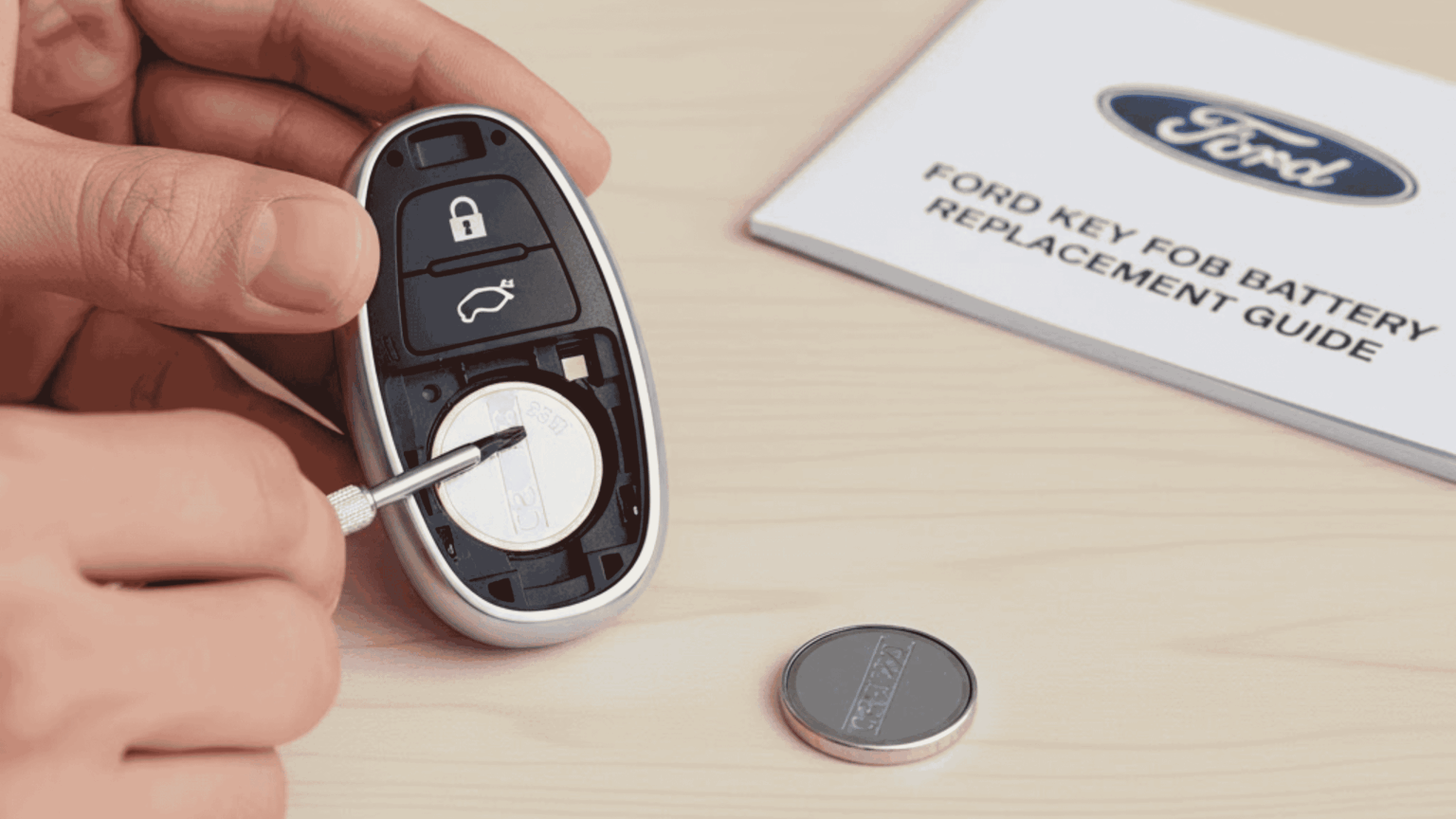
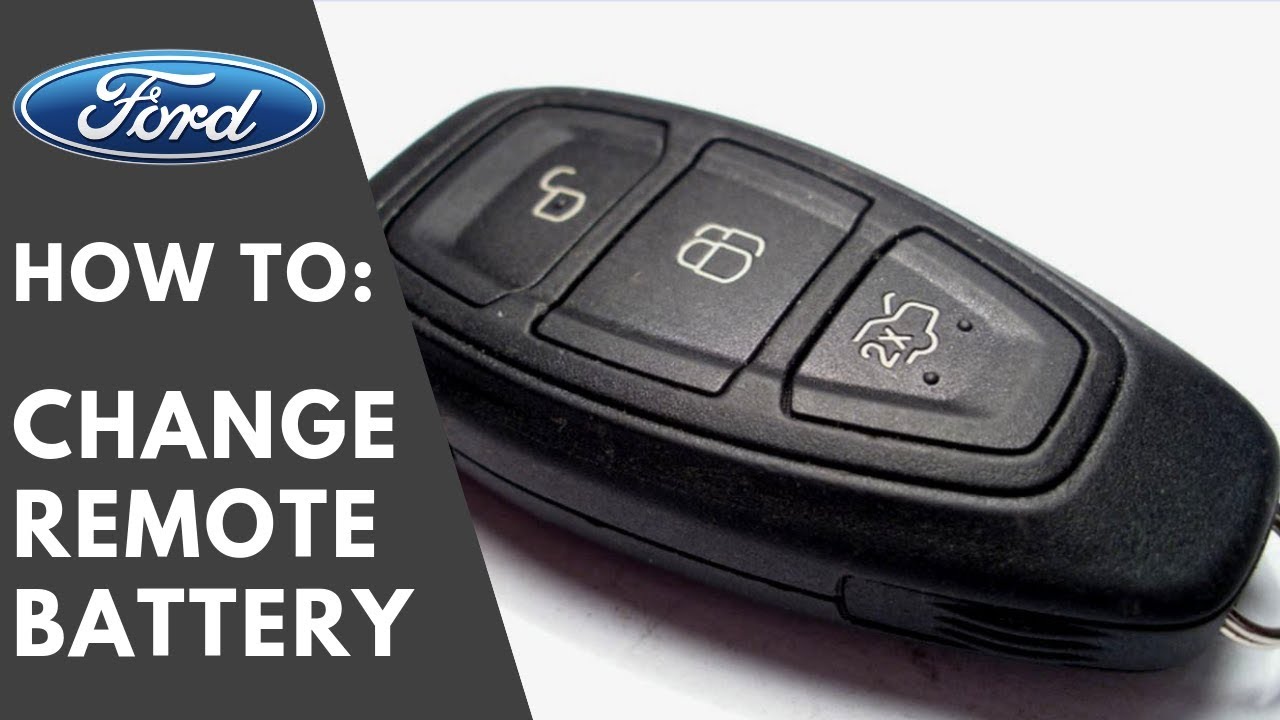
Second, structural disassembly hygiene. The Ford fob (typically the 4-button or 5-button style) separates at a seam. Use a stiff plastic pry tool, not a metal screwdriver—metal will scratch the ABS housing and compromise the waterproof gasket. Insert the tool into the small notch at the base, and apply even pressure to unclip the internal latches. Do not force both halves apart; instead, work your way around the perimeter, releasing one latch at a time. Once open, you will see the circuit board. Before touching it, discharge static electricity by touching a grounded metal object. Static discharge above 3,000 volts can damage the CMOS microcontroller, even though you cannot feel it below 4,000 volts.
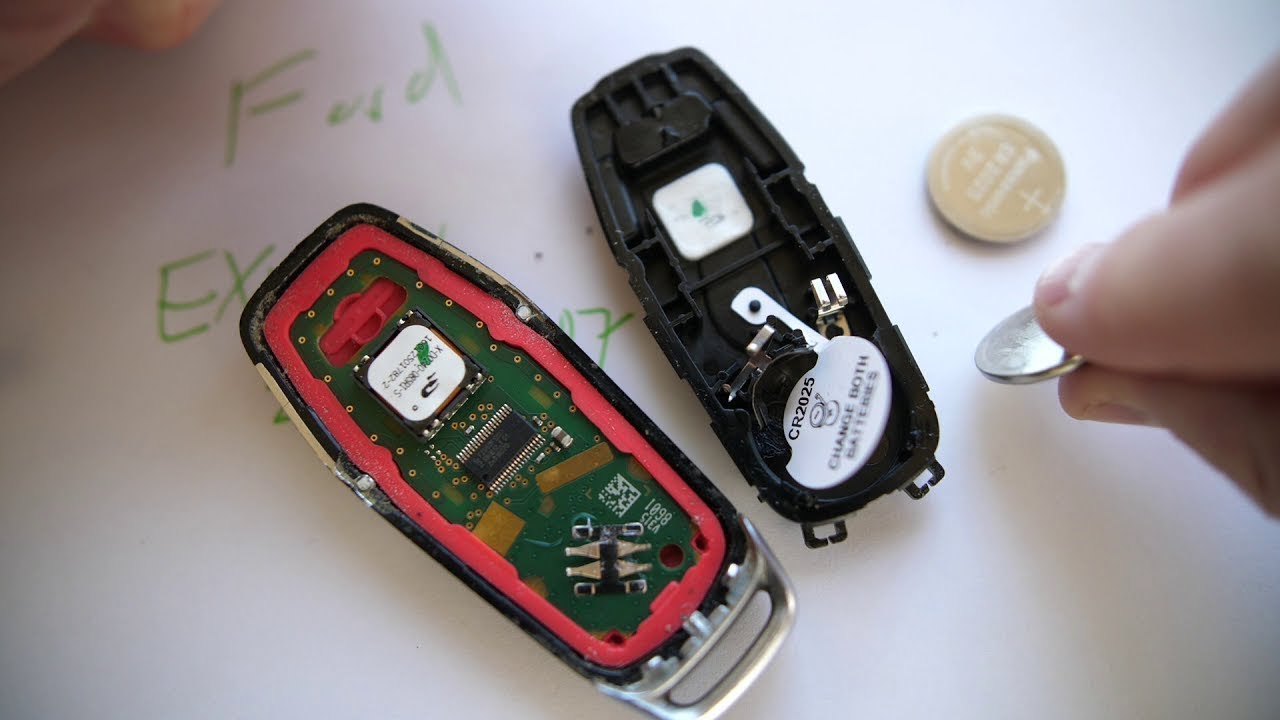
Third, the removal and replacement physics. Remove the old cell gently; it is often held by metal retention clips. Use a plastic prying tool to lift the battery from one edge, avoiding contact with the positive and negative terminals simultaneously with the same tool. Insert the new battery positive-side up (marked "+" on the visible face). This is non-negotiable. Reversing polarity can permanently damage the diode bridge and cause the fob to become unresponsive. Press down firmly until the battery clips engage fully. Visual confirmation: the battery should be flush with the PCB, not rocking. After closing the fob, do not immediately test it next to the car; instead, test it at a distance of 10 meters (the ISO 23278 standard for remote signal range). If it works at range, the battery is healthy. If only works at 2 meters, the battery is likely counterfeit or low-quality.
Fourth, synergy with the vehicle system. After replacing the battery, some Ford models (2021+ with "phone-as-a-key" and BLE) require a resynchronization. Do not panic. Simply press the lock and unlock buttons simultaneously for 5 seconds while standing outside the vehicle. This re-establishes the rolling code counter. If your fob has a mechanical backup key blade, now is the time to lubricate the blade dry—use a graphite powder, never oil, which attracts dust. Finally, record the replacement date on a sticker inside the fob housing. A CR2032 in a Ford fob has a projected life of 1,500 presses or 3 years of passive entry usage, whichever comes first. By tracking this, you align your maintenance with the battery's half-life, predicting failure before it predicts your morning commute.
Frequently Asked Questions: The Vector of Practical Troubleshooting
FAQ 1: Why does my Ford fob work from 10 feet but not from 30 feet after a battery change?
The most common cause is not the battery but the electrical contact resistance between the battery terminals and the PCB clips. If you slightly bent the retention clips during removal, they may no longer apply the requisite 1.5 Newtons of force to the battery surface. This creates a high-impedance junction, which causes voltage drop under load. Inspect the clips: they should look slightly domed, not flattened. Use a wooden toothpick to gently lift the clips outward by 1mm before seating the new battery. If the clips are silver and shiny, that is excellent; if they have a dull gray oxide layer, clean them with a soft eraser.
Second, your fob may be transmitting on the 433 MHz frequency, which has worse propagation through metal compared to 315 MHz. If your vehicle has a metalized windshield (common in Ford SUVs with heated windshields), the RF signal is attenuated more. Test the fob from a different physical angle—hold it at chin height, not hip height. The human body is 60-70% water, which strongly absorbs 433 MHz radiation. If you hold the fob in a closed fist, your hand acts as a Faraday cage component, reducing effective range by up to 40%. Open your hand and let the fob breathe.

FAQ 2: Can I use a CR2025 battery instead of a CR2032?
Physically, the CR2025 is 20mm in diameter but only 2.5mm thick, versus the 3.2mm of a CR2032. It will fit in the tray, but the total volume is 22% less, meaning a proportionally lower total capacity (about 150 mAh vs 220 mAh). More critically, the CR2025 has a higher internal impedance due to the thinner cathode. Under the fob's pulsed current demand of 15mA, the voltage sag will be more pronounced, reducing your effective transmission range and causing test failures in cold weather. Do not use a CR2025 as a permanent replacement. It can cause the BCM to fail authentication due to timing violations. Use it only as a 10-minute emergency boot if a CR2032 is unavailable, but do not drive with it—passive entry will glitch.
FAQ 3: My Ford fob works but the trunk release button only works intermittently. Is it the battery?
Not necessarily. The trunk release button uses the same RF transmitter but sometimes has a separate silicone contact pad. If the battery were weak, all buttons would fail simultaneously. If only one button fails, the issue is mechanical wear: the carbon pill on the underside of the rubber button has worn down, or there is a micro-crack in the circuit board's copper trace circling that button. Use a multimeter in continuity mode—disassemble the fob, press the button manually with a probe, and check for resistance across the two copper contacts. The resistance should be less than 100 ohms. If it is above 1k ohm, clean the contacts with isopropyl alcohol. If that fails, the board requires soldering, which is beyond simple battery replacement.
FAQ 4: Why does my Ford require me to press the "Start" button with the fob after a battery change?
This is a security protocol called "immobilizer handshake." Modern Ford systems disable the RFID chip in the fob if it detects that the battery was removed, to prevent relay theft. When you replace the battery, the fob's memory state resets. The vehicle's BCM does not accept the previously predicted rolling code sequence. By pressing the "Start" button with the fob physically touching the antenna pad (usually in the center console cup holder), you activate a backup NFC (Near Field Communication) coil inside the fob. This coil is powered inductively, not by the battery. This action resynchronizes the rolling code counter to the vehicle's value. If you skip this step, the passive entry will work intermittently for a few hours, but then fail. Always perform this resync methodically.
FAQ 5: Does cold weather really kill my car fob battery faster?
Yes, but it is not permanent damage—it is a reversible thermodynamic slowdown. At 0°C (32°F), the internal resistance of a CR2032 increases by 30% to 50%. At -20°C, the available current can drop by 60%. The lithium cell chemistry does not freeze, but the electrolyte viscosity increases, hindering ion mobility. When you bring the fob inside your pocket, the battery warms up and returns to normal. The optimal hack is to store a spare CR2032 in your inner jacket pocket, not your glove box, so it is body temperature when installed. Furthermore, warming the fob in your hand for 30 seconds before pressing can reduce voltage sag significantly.
Respecting the science of the key fob battery transforms a trivial nuisance into a moment of calibration with the physical world. We are surrounded by invisible chemical reactions that gated by entropy and thermodynamics; when you understand that a 3-gram lithium coin cell is performing a sterile high-speed cryptographic handshake, you stop being a passive victim of dead batteries and become an operator of your own logistics. The knowledge that a battery's capacity is finite, its discharge curve predictable, and its failure modes measurable, is deeply empowering. You no longer suffer from "range anxiety" or the panic of a stranded vehicle; instead, you schedule maintenance like a pilot checking fuel gauges.
This is the synthesis of biology and engineering: our brain's prediction error throws a fit when the fob fails, but our pre-frontal cortex, armed with the Arrhenius equation and a precise mental model of impedance, tunes out the noise. By treating every component with respect—from the alloy of the retention clip to the chemical purity of the electrolyte—you reduce friction in your daily existence. The humble fob battery is a masterclass in the science of everyday life: small, precise, and when maintained with ruthless pragmatism, absolutely reliable. Optimize the micro, and the macro—your entire morning routine—becomes smoother, faster, and remarkably free of frustration.