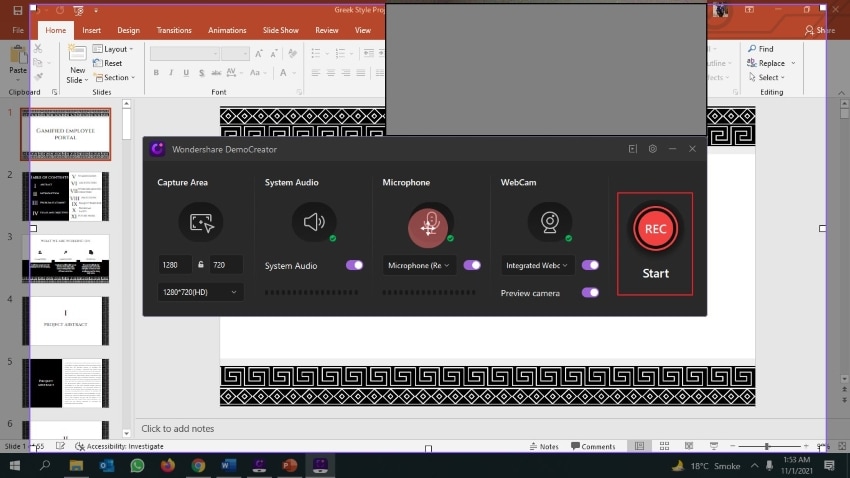
Record Yourself Presenting Powerpoint

There is a peculiar, almost primal silence that descends upon a room just before you click “Present.” It’s a silence that seems to amplify the thud of your own heartbeat, a rhythmic drumbeat that echoes in your ears and drowns out the murmur of the audience. We often think of this moment as a test of our knowledge or our rhetorical skill, but psychologically, it is something far deeper. It is a confrontation with the mirrored self—the version of us that exists in the eyes of others. When we prepare to speak, our brain’s amygdala, the ancient sentinel of threat detection, cannot distinguish between a hungry predator and a sea of expectant faces. It initiates a cascade of cortisol and adrenaline, flooding our system with a survival response that feels entirely out of place in a boardroom or a classroom.
In our modern, hyper-visual age, the PowerPoint deck has become a ubiquitous artifact of competence. Yet, the act of presenting it is often divorced from the act of seeing ourselves present it. We are so consumed by the narrative in our heads—the fear of forgetting, the dread of judgment—that we become disembodied voices projecting slides. The idea of recording ourselves, of inviting our own gaze back onto our performance, feels almost unbearable. It forces us to confront a fundamental psychological dissonance: we have an internal self-image, often generous and forgiving, and an external reality that feels alien and stark. To watch ourselves on screen is to bridge that gap, and initially, the bridge feels like a precipice. This is why the mere thought of a video recording can trigger more anxiety than the live presentation itself—it promises an unfiltered, undeniable truth.
The Cruel Mirror: Why We Shrink From Our Own Image
The first time you watch a recording of yourself, you will likely experience a visceral wave of cringe. This is not vanity; it is neurobiology. Psychologists refer to this as the “mere-exposure effect” working in reverse. We are deeply habituated to our own reflection in the mirror—a flipped, horizontal version of ourselves that we see daily. A camera captures us as the world sees us, unflipped, asymmetrical, and unfamiliar. Your brain registers this image as a slight distortion, an “uncanny” version of you, and it triggers a low-grade threat response. Furthermore, we are brutally efficient at detecting micro-expressions of anxiety that we feel internally—the flicker of the eyes, the tightness of the jaw—but we are rarely aware of how visibly they manifest. Seeing them externalized feels like being exposed, as if a private diary has been read aloud.
Must Read
Beyond the visual, there is the horrifying intimacy of the voice. We hear our own voice internally through bone conduction, which adds depth and resonance. The recorded voice, transmitted through air, sounds thinner, higher, and often more nasal. This auditory disconnect is jarring because our voice is the very vessel of our identity. To hear it sound “wrong” is to feel a fundamental misalignment of self. This is where the emotional spiral begins. We start to judge not just the presentation, but our worth. We think, “Do I really sound that nervous?” or “Why do I fidget like that?” The cognitive bias at play here is the "spotlight effect"—the belief that everyone notices our flaws as much as we do. When we watch the recording, we become the hyper-critical audience, projecting all the judgment we feared onto ourselves, often magnifying minor flaws into catastrophic failures.
The mental hurdle is not about presentation skills; it’s about self-compassion. We hold a standard of perfection for ourselves on camera that we would never hold for a friend. We watch a 20-minute video and fixate on the one 3-second moment where we lost our train of thought, ignoring the 19 minutes and 57 seconds of clarity and passion. This selective attention is a survival mechanism of the ego, trying to protect us from future vulnerability by pointing out every potential pitfall. But all it does is entrench the fear. It creates a loop of avoidance: we don't record ourselves because we fear the judgment, and because we don't record ourselves, we never build the resilience to accept our imperfection. The result is that we enter future presentations more anxious, not less, because we have no tangible evidence of our own capability—only the ghost of our imagined failures.
Rewiring the Lens: A Practice in Radical Self-Acceptance
The path to mastering the recorded presentation is not about achieving cinematic perfection; it is about reclaiming your agency over your own perception. It is a mindfulness practice disguised as a professional skill. To begin, you must change the intention behind the recording. You are not recording to critique; you are recording to witness. The first step is a "silent exposure" session. Set up your camera, deliver your presentation without an audience, but promise yourself that for the first viewing, you will mute the audio and watch with the detachment of a nature documentarian. Watch your body language not as a series of flaws, but as a piece of choreography. Notice the energy in your hands, the way you shift your weight. You are simply gathering data, not passing judgment. This dissociative step lowers the emotional stakes and allows your brain to see the visual self as a separate entity, akin to observing a colleague.

Next, you must confront the "voice." Play the recording with your eyes closed, listening only to the audio. As you listen, mentally translate your internal panic into external narration. When you hear a pause, instead of thinking, “I blanked,” whisper, “I took a necessary breath.” When your pitch rises, don’t label it as anxiety; label it as enthusiasm or engagement. This is a cognitive reappraisal technique. Studies in emotional regulation show that changing the label of a physiological sensation—from "anxiety" to "excitement"—can dramatically alter our performance. By consciously relabeling the auditory cues, you train your brain to associate your own voice with positive intention rather than fear. You are the narrator of your story, not the victim of it.
Then comes the collaborative review. Share the recording with a trusted ally, mentor, or coach—someone who is emotionally invested in your growth, not your performance. This is a risky step, as it involves vulnerability, but it is crucial for breaking the echo chamber of self-criticism. Before you press play for them, set a specific intention. Ask them to identify one thing they admire about your presence, and one thing that slightly distracted them. Do not allow them to give a general review; demand specific, behavioral feedback. Hearing someone say, “You looked incredibly confident when you paused there,” can directly counter the negative narrative in your head. This social proof is powerful medicine against the "spotlight effect," grounding you in the reality that your perceived flaws are often invisible to others or, at the very least, forgiven in the context of your overall message.
Finally, integrate the practice into a routine of "deliberate play." Record yourself not just for formal presentations, but for low-stakes moments: summarizing a journal article, explaining a concept to a pet, or giving a two-minute update on your day. The goal is to desensitize your nervous system to the red light of the camera. Over time, the camera becomes an object of presence, not judgment. You begin to notice that your genuine curiosity about the topic overrides your self-consciousness about the delivery. This is the ultimate mindset shift: from performing to communicating. When you watch these low-stakes recordings, look for moments of authentic spark—a smile, a natural hand gesture, a glint in the eye. Collect these moments as evidence of your real, engaging self. You are building a portfolio of your own humanity, not a highlight reel of perfection.
Frequently Asked Questions: Navigating the Inner Critic
1. Why do I feel physically sick or panicked when I watch myself on video?
This visceral reaction is a classic "self-discrepancy" response. Your brain holds an idealized version of your self-image (the "Ideal Self") and a perceived actual version (the "Actual Self"). When the camera reveals a version that doesn't align with the ideal, your brain registers a significant discrepancy, triggering anxiety and even disgust. This is rooted in the same neural pathways that respond to social rejection—we feel we have failed our own expectations in front of an implicit audience. The panic is a grief response, a mourning of the person you thought you were in favor of the person you see. It is essential to understand that this discomfort is not a reflection of your worth, but simply a measure of the gap between imagination and reality—a gap that shrinks with gentle, repeated exposure.

Emotionally, it is also a confrontation with mortality and temporality. Seeing a moving image of yourself locks you in a specific point in time, highlighting that you are a physical, changing being, subject to the same laws as everyone else. This can trigger existential anxiety. To cope, you must ground yourself in the present moment. Remind yourself that the video is a historical artifact—a snapshot of a moment that has passed. You are not that recording; you are the being who chose to hit record, who is learning, who is showing up. Separate the actor from the action. The panic will subside when you realize that the recording cannot hurt you; it is merely a reflection of a moment you have already survived.
2. How do I stop focusing on my flaws and start focusing on my strengths?
The human brain has a built-in "negativity bias"—we are wired to scan for threats and errors because that kept our ancestors alive. Watching ourselves, this bias latches onto any sign of weakness or incompetence. To override this, you must employ a technique called "guided attention." Before you watch a recording, take a piece of paper and write down three specific strengths you are looking for (e.g., vocal variety, clear enunciation, open posture). During the viewing, your only job is to find those three things. This forces your brain to engage the task-positive network (the analytical, goal-oriented part of the brain) rather than the default-mode network (which is responsible for self-referential, critical rumination).
Furthermore, practice "compassionate annotation." Instead of writing down what went wrong, write down what was effective. For every perceived mistake, ask yourself, "What saved that moment?" Perhaps you lost your thought, but you maintained eye contact and smoothly transitioned. Perhaps your voice cracked, but you smiled, showing vulnerability. By deliberately re-framing every flaw within a context of resilience, you train your neural pathways to associate self-viewing with problem-solving and empathy, rather than with judgment. Over time, this becomes a default lens, allowing you to see a performance that is human and compelling, rather than flawed and broken.
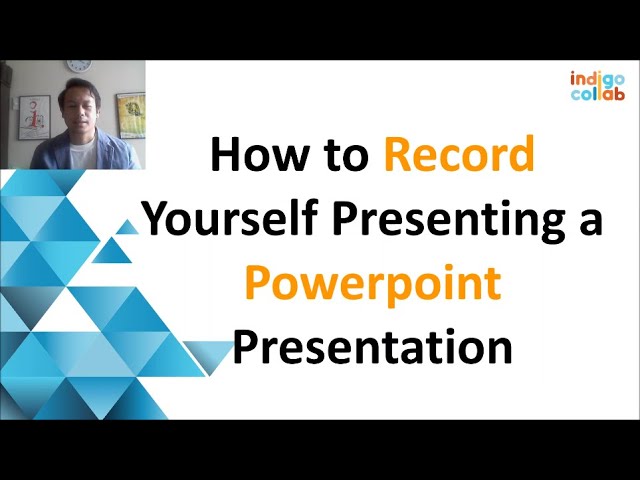
3. Is it better to record a "dry run" or to record the actual live presentation?
Both are essential, but psychologically, they serve different purposes. A "dry run" recording is a sanctuary of practice. It is where you are allowed to make mistakes, to stutter, to start over. This is your private laboratory for experimentation. The mental benefit here is that the absence of a live audience lowers the cortisol spike, allowing your prefrontal cortex—the rational brain—to remain engaged for higher-level thinking, such as narrative flow and argument structure. You are teaching your body the choreography of the talk without the fire of judgment. This builds "muscle memory," which is crucial for creating a baseline of confidence.
Recording the actual live presentation, however, is a rite of passage. It captures the raw energy, the adrenaline, and the interplay with a real audience. Watching this recording is emotionally more difficult, as it brings back the exact anxiety you felt. However, it is the most potent tool for cognitive restructuring. When you watch a live recording, you are often amazed—you felt like you were dying inside, but you look composed and competent on screen. This powerful discrepancy between your internal experience and external reality is the key to conquering stage fright. It teaches your brain that your feelings are not facts, and that you are capable of functioning—and thriving—even under intense subjective distress.
4. What if I don't have a high-quality camera or professional lighting?
This is a common hurdle, but we must reframe it not as a technical limitation, but as an emotional cop-out. The perfectionist inner child thrives on the excuse of poor equipment to avoid the vulnerability of self-examination. The truth is, you do not need cinematic quality to learn about your psychological patterns; you need only the fidelity of human behavior. A phone camera placed on a stack of books is more than sufficient. A grainy image forces you to focus on the core elements: the sound of your voice and the pace of your delivery. Poor video quality can actually diminish the "uncanny valley" effect of seeing your face, as the pixelation creates a slight buffer between you and the image, making it feel less threatening.
Focusing on equipment is a form of procrastination rooted in self-preservation. If you believe you need better gear before you can start, you give yourself permission to delay the discomfort. Instead, embrace the constraints. Use the low-fi setup as a metaphor for self-acceptance: you are not waiting for perfect conditions to validate your growth. You are practicing the radical act of showing up as you are, using what you have. The message, not the medium, allows you to connect with your authentic self. Once you break that initial barrier of "not being ready," you will find that your engagement with the material drastically improves, regardless of the sensor size in your phone.

5. How long before I start feeling comfortable seeing myself?
It is a gradual desensitization process, akin to exposure therapy. There is no set timeline, but you can expect to see a significant shift after just four to six deliberate recordings spread over a few weeks. The initial sessions will be uncomfortable. Your brain is creating new neural pathways to accommodate this unfamiliar self-image. The key is consistency coupled with the compassionate review techniques mentioned earlier. If you simply record and berate yourself, you will reinforce the negative associations. But if you record and practice the "strengths-gathering" and "relabeling" exercises, you are actively teaching your brain that this mirrored self is safe and, eventually, even likable.
Psychologically, you will know you are making progress when you catch yourself watching a playback and noticing something neutral or positive without having to force it—perhaps you notice the authoritative tone of your voice, or the engaging way you gesture. The "cringe" will be replaced by curiosity. Ultimately, you might even reach a state of "self-transcendence," where you forget you are watching yourself at all, and instead, you are just listening to a human being share an idea. That is the ultimate goal: to merge your internal self with your external expression so thoroughly that the camera ceases to be a mirror and becomes a window into your passion.
Mastering the art of recording your own presentations is, at its core, a practice in reconciliation. It is the process of befriending the stranger in the mirror, of learning to trust that the voice you hear internally is the same voice the world needs to hear. As you sit with the discomfort, you are not just improving your public speaking. You are building a profound, unshakeable intimacy with yourself. You are teaching your nervous system that you are safe in your own presence, regardless of who is watching. This is a superpower that extends far beyond the boardroom; it bleeds into every interaction, every relationship, and every moment of vulnerability. When you stop fearing your own reflection, you stop fearing the world’s judgment.
This journey is not about silencing the inner critic entirely—that would be like silencing your intuition. It is about turning the volume down until the critic’s voice becomes a whisper, a minor suggestion rather than a dictator. By taking the terrifying step to record yourself and watch with empathy, you are declaring that you are worthy of your own attention. You are saying that you are strong enough to be seen, flaws and all. In that act of self-witnessing, you will find a peculiar kind of freedom—the freedom to speak with authenticity, to move with intent, and to know, deep down, that you are not merely presenting a slideshow. You are presenting the only person you have ever truly needed to convince of your worth: yourself.

.webp)