
Porta Potty Cleaner Job Description

There is a peculiar quiet that settles over a fairground at dawn, long before the first funnel cake is fried or the first ride sparks to life. In that stillness, a figure moves with a hose and a tank, performing a ritual that society has chosen to render invisible. We are conditioned to recoil from the thought of it, to treat the very concept of waste as a moral failing rather than a biological fact. Yet, to spend one's working life in the direct stewardship of this most private human function is to engage with a profound psychological truth: we are all just temporary vessels. The job of a porta potty cleaner is not about filth; it is about the silent, unacknowledged maintenance of dignity. It is a career that forces an introspection most of us pay therapists to avoid.
The modern relevance of this role has quietly skyrocketed, not just in construction sites and festivals, but in disaster relief, wilderness preservation, and urban planning. We live in an era of hyper-sanitization, where hand sanitizer is worn like armor and our social media feeds are scrubbed of anything resembling human mess. In this context, the porta potty cleaner becomes a sort of psychological boundary keeper, an individual who stands on the thin line between our curated online existence and our messy, organic reality. To understand this job is to understand a fundamental paradox of the human psyche: our desperate need for cleanliness is matched only by our profound anxiety about the process that creates the dirt. By examining this profession with empathy, we begin to see it not as a lowly trade, but as a masterclass in radical acceptance.
The Psychology of the “Yuck” Response and the Gift of Desensitization
Our brains are wired with a powerful mechanism called the disgust response, an evolutionary survival tool designed to protect us from pathogens and disease. It is a visceral, pre-cognitive reaction, a lightning bolt of aversion that shoots through the amygdala before our conscious mind can even register what we are looking at. For the uninitiated, the environment of a porta potty is a sensory assault that triggers this alarm system at maximum volume. However, the daily reality of the cleaner involves a fascinating cognitive shift. They are not immune to disgust; rather, they have developed a sophisticated relationship with it. They have learned that disgust is a temporary state, not a permanent identity. The first month is the hardest, a period of psychological resistance where every sensory input screams 'danger.' But the brain, in its remarkable plasticity, begins to re-categorize the stimuli. The smell stops being a threat and starts becoming a data point—a signal that the job has been completed, that balance has been restored.
Must Read
This desensitization is often misread as a lack of sensitivity. In reality, it is a profound emotional regulation strategy. Consider the alternative: if the cleaner were to react with the same visceral horror every single time, their nervous system would be in a state of constant burnout. Their survival depends on a kind of mental alchemy, transforming a source of societal taboo into a neutral, manageable task. This mirrors the psychological work done by nurses, morticians, and trauma therapists, but with far less societal acknowledgment. The hidden emotional trigger here is projection. The general public projects their own deep-seated anxieties about bodily failure, aging, and loss of control onto the porta potty. The cleaner, by virtue of their proximity, becomes the unwitting recipient of that projection. They are not just cleaning a unit; they are absorbing the collective unease of thousands of strangers who entered that cubicle carrying the weight of their own private, anxious moments.
There is also a significant cognitive bias at play: the just-world hypothesis. We want to believe that the world is fair, that our jobs reflect our inherent worth. When we see someone doing a job we deem 'dirty,' we subconsciously create a narrative that they must be somehow less than, unskilled, or desperate, simply to reconcile our own discomfort with our comparative privilege. This is a defense mechanism, a way of distancing ourselves from the terrifying notion that circumstance, not merit, often dictates our path. For the cleaner, recognizing this bias in others can be a lonely experience. They must constantly navigate a world that looks through them while depending on their labor. Yet, in that isolation, there is a fierce, unshakeable self-awareness. They know that their work is harder, more honest, and more necessary than most. They have moved beyond the need for external validation, finding a quiet, steel-tipped sense of self-worth forged in the very fires of societal taboo.
Developing the Art of “Clean Mindfulness”: A Step-by-Step Mindset Shift
To thrive in this role, or even to apply its lessons to our own lives, one must develop a practice that can only be described as clean mindfulness. This is not about visualization or breathing exercises in a sterile room; it is a gritty, hands-on form of meditation where the mantra is not 'om' but 'finished.' The first actionable step is to master the ritual of preparation. Before starting a shift, do not armor yourself against the work. That is resistance. Instead, acknowledge the physicality of your body. Stand outside the first unit, take a slow breath that accepts the air as it is, and make a conscious declaration: 'I am here to provide a service. My presence restores order.' This reframes the task from a punishment to a repair. It is a cognitive shift from being a victim of the environment to being an active agent within it.
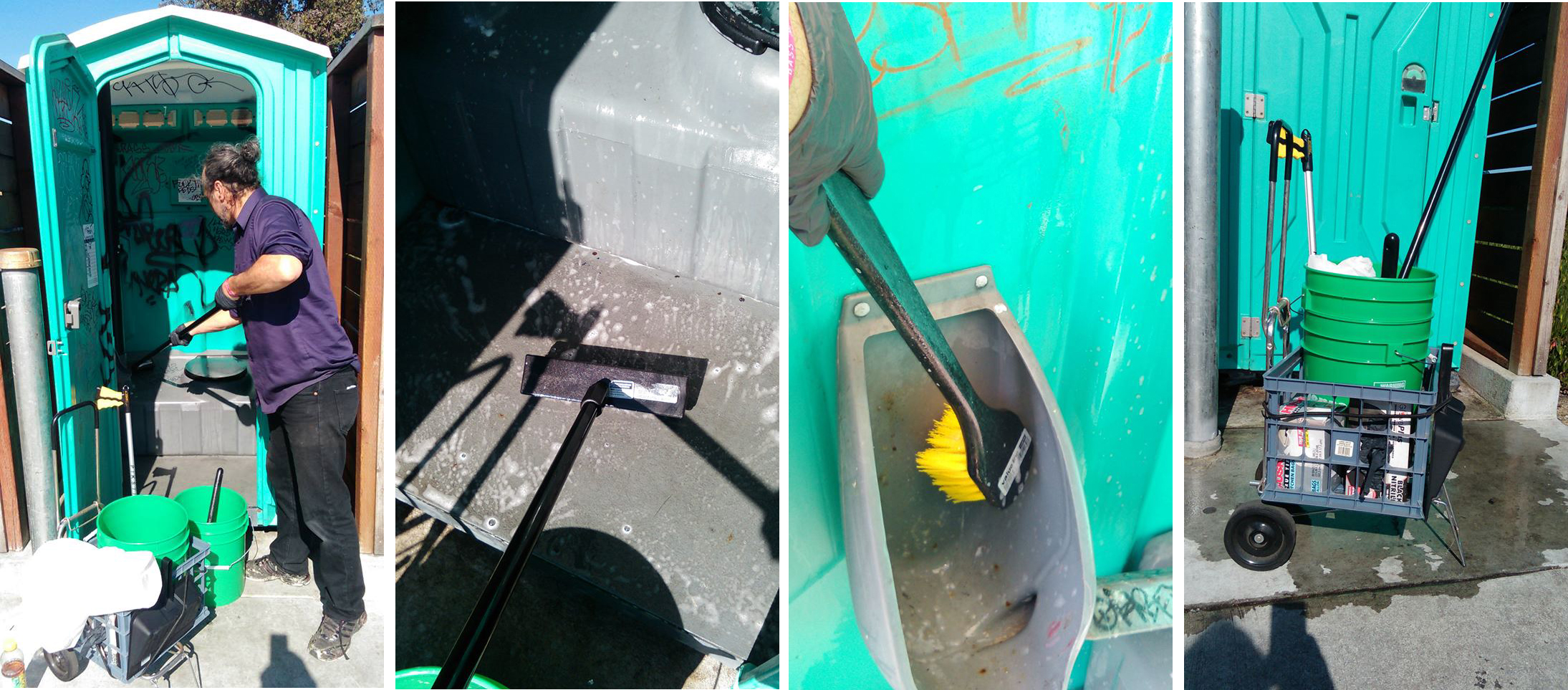
The second step involves breaking the job down into micro-actions. Do not think about the 'hundreds of toilets' you have to finish. Think only about the gasket you are sealing, the corner you are wiping, the surface you are sanitizing. This is a powerful tool against overwhelm, a cognitive behavioral technique called 'chunking.' As your hands move, focus your mind on the physical sensation of the spray, the texture of the wipe, the weight of the tank. By anchoring your consciousness in the tactile present, you starve the anxious, wandering mind of its fuel. You are not 'cleaning a toilet'; you are completing a gesture. This level of focus induces a flow state, the same psychological zone that athletes and artists crave, where time dilates and self-consciousness evaporates. The job stops being a slog and becomes a dynamic physical practice.
Thirdly, and perhaps most crucially, is the practice of non-identification. The smell, the mess, the splatter—these are not reflections of your character. They are external phenomena that you are calmly observing and interacting with. When you see a particularly challenging mess, your internal dialogue must not be 'Why do people do this?' or 'This is ruining my life.' Instead, adopt the neutral language of a scientist: 'An event has occurred. I am observing the results. I will apply the appropriate solution.' This detachment is not coldness; it is a protective shield for your amygdala. You are building a psychological firebreak between stimulus and reaction. Over time, this practice becomes a superpower. The things that used to trigger your anxiety—a mess in the kitchen, a chaotic schedule, an unpleasant comment—will begin to lose their power over you. If you can clean a festival porta potty in peak summer heat, you can handle a passive-aggressive email. The perspective gained is immeasurable.
Finally, you must build a robust decompression ritual for after the shift. This is non-negotiable. It is the deliberate act of remembering you are not your job. This could involve a lengthy shower with specific music, a walk in a green space where you consciously notice the difference in air quality, or a change into clothes that carry no scent of the day. This ritual is a psychological 'closing ceremony' for the work identity. It signals to your brain that the ‘cape’ is off. Furthermore, you should actively seek out opportunities for 'psychological debriefing'—not about the gross details, but about the emotions. Talk to a friend you trust about how it feels to be invisible. Acknowledge the loneliness. By naming the emotion, you drain its power. This transforms the job from a silent burden into a shared human experience, reminding you that the isolation is a circumstance, not a truth.
Frequently Asked Questions: The Inner Work of Sanitation
How do you stop the smell from "following you" psychologically?
This is perhaps the most common fear, and it is deeply rooted in social anxiety. The fear is not about the physical odor (which is easily removed with proper hygiene) but about the metaphorical odor—the fear of being socially marked, of having others perceive you as 'unclean' because of your profession. The psychological smell 'follows you' only when you carry the shame of the job in your posture and your demeanor. If you are convinced that you smell, you will act furtively, and others will pick up on your discomfort, not the scent.

The solution is complete physical separation coupled with a powerful mental ceremony. Your work clothes must never enter your living space. They are stored and washed in isolation. But more importantly, you must engage in a 'symbolic washing' at the end of your shift. Stand under the water and consciously visualize the day's societal weight swirling down the drain. Repeat a mantra like "I release what is not mine." You are not washing away the physical dirt; you are washing away the judgment. When you step out, you dress in clothes that you associate with your authentic self—your joys, your hobbies, your families. You force your brain to overwrite the 'work' neural pathways with 'life' pathways. Confidence is the best deodorant; shame is the strongest odor. Once you detoxify the shame, you are fundamentally free.
How do you handle the feeling that society looks down on you?
The sting of social devaluation is real and can be a significant source of depressive rumination. When you see people hold their noses as you walk by, or when you hear the euphemistic jokes at your expense, it is natural to internalize a feeling of inferiority. The key to navigating this is not to fight against it, but to change your internal frame of reference. You must understand that their condescension is a reflection of their own fragility, not a verdict on your worth. Their disgust is a defense against their own mortality and messiness. You are a mirror they don't want to look into.
Therefore, your mental health strategy must be rooted in perspective-taking. Understand your role in the ecosystem. Without your work, their festivals would be pestilent, their worksites would be unsafe, and their public parks would be unusable. You are a fundamental pillar of public health and civility. Hold that knowledge in your chest like a burning coal. When you encounter disrespect, do not become defensive. Instead, practice a quiet, internal compassion for that person. Say to yourself, "They are trapped in a prison of fear. I am free." This is not arrogance; it is self-preservation. Build a community of those who understand your world. Find other tradespeople—plumbers, waste haulers, janitors. Share stories not to gain pity, but to validate your shared, unromanticized reality. Strength is built in the solidarity of those who get their hands dirty.

Can this job actually lead to personal growth and a 'better' life?
Absolutely, and often more profoundly than a white-collar job. The primary growth comes from the dismantling of the ego. In a world obsessed with status and external markers of success, this job strips all pretense away. You cannot hide behind a title. You are forced to confront the raw essence of your own worth and build a self-concept based on who you are, not what you do. This builds an incredible, unshakeable resilience. Once you have faced the ‘abject’ and survived, the smaller anxieties of life—a bad traffic jam, a snide comment—seem laughably insignificant. You develop a stoic’s temperament, focused on the sphere of your own control.
Furthermore, the job instills a profound sense of mastery and craft. There is a deep, visceral satisfaction in taking a chaotic, unsanitary space and returning it to a state of pristine order. You see the immediate result of your labor. This instant feedback loop is highly addictive to the brain's reward system, fostering a sense of accomplishment that is often missing in jobs where you stare at a screen all day. You learn to be present, meticulous, and efficient. You learn to work without supervision, managing your time and resources with total autonomy. These are leadership skills. The independence fostered here is a form of profound maturity. Graduates of this job often emerge with a clarity of purpose and an unaffectedness that makes them exceptionally effective in any future endeavor they choose.
What is the biggest mental challenge that people don't anticipate?
Most people expect the challenge to be the grossness, but the real antagonist is the isolation and invisibility. You are often working alone, in the periphery of human activity. You are surrounded by people, but there is a bubble around you. They are there for fun, for work, for connection; you are there for a function. This can trigger deep feelings of existential loneliness and a sense of being a ghost. You witness the joy and bustle of life from the outside, like a silent observer in a snow globe you aren't allowed to shake. This can wear heavily on the psyche, leading to a sense of disconnection from community.
Combating this requires deliberate effort. You cannot rely on passive social interaction at work; you must actively seek it out in your off-hours. Join clubs, volunteer, take a class. You must aggressively build a social architecture outside of your job. Additionally, you must find meaning in the solitude. Use this quiet time to listen to audiobooks, learn a language, or mentally plan your future. Instead of feeling lonely, view this time as precious 'rehearsal' time for your true life. The solitude is not an absence of life; it is a space filled with your own thoughts. Reframe the time alone as a powerful retreat from the noise of the world, a sanctuary where you can hear your own inner voice clearly without the static of societal expectations.

Is it okay to tell people you do this job, or should you hide it?
This is an incredibly personal decision, and the answer lies entirely in your psychological state. If you are still wrestling with internalized shame, telling everyone might force you to defend yourself prematurely, which can reinforce negative feelings. In that phase, it is wise to be vague—say you're in 'sanitation services'—while you build your internal fortitude. There is no shame in protecting your tender psyche while it grows callouses. However, absolute secrecy can become a prison of its own, requiring constant energy to maintain a facade. This cognitive load can be incredibly draining.
As you grow into the role and truly accept its value, honesty becomes the most liberating option. When you state your job with a calm, steady gaze and without apology, you disarm the judgment. You are essentially throwing down the gauntlet: 'This is what I do. Does this change your opinion of my worth? If so, that says more about you than me.' This transparency filters your social circle. It removes fake people and deepens connections with those who see your intrinsic value. Telling the truth is an act of self-acceptance. It is the final step in mastering the job. Once you can own it publicly, the job has no power over you. It becomes just a thing you do, not a thing you are.
Mastering this lens of humble service does more than just get you through the workday; it recalibrates your entire relationship with the world. It teaches you that dignity is not a surface-level scrub but a deep-seated interior polish. You learn to see the sacred in the mundane and the beauty in the cycle of decay and renewal. You become more patient, less judgmental, and infinitely more grateful. The comfort of a clean bathroom becomes a luxury you never take for granted, and the generosity of a worker who provides it becomes a form of secular grace. This is a quiet revolution of the spirit, turning the lowest rung on the social ladder into a lookout point with an unmatched view of human nature.
Ultimately, the porta potty cleaner’s journey is a mirror for us all. We are all, in some way, managing the waste of our lives—the bad decisions, the regrets, the messy emotions. We have a choice: we can let it pile up and poison us with shame and avoidance, or we can put on our gloves, pick up our hose, and actively process it. We can learn to sanitize our own internal units, not by denying the mess, but by attending to it with routine, focus, and a profound lack of judgment. This job whispers a truth that the modern world desperately needs to hear: you cannot build a beautiful life on the foundation of ignoring your own debris. The cleaner who walks away at sunset, leaving behind a row of pristine white units, is not just a laborer. They are a living testament to the peace that comes from facing the unmentionable and restoring it to order, a peace available to anyone brave enough to take on the mess, thanklessly and without fanfare.
![Porta Potty Maintenance Made Easy [2026 Best Pro Tips]](https://dirtyjobmarketing.com/wp-content/uploads/2025/05/Equipment-Porta-Potty-Maintenance.jpeg)


![Porta Potty Maintenance Made Easy [2026 Best Pro Tips]](https://dirtyjobmarketing.com/wp-content/uploads/2025/05/Porta-Potty-Maintenance.jpg)