
Pharmacist Lab Coat Short Sleeve

There is a peculiar, indelible image etched into the collective memory of anyone who has ever stepped into a pharmacy: the crisp, white, short-sleeved lab coat. It is a garment that smells faintly of isopropyl alcohol and dust from pill bottles, a uniform that speaks of authority, sterility, and quiet competence. Before the era of corner drugstores and drive-thru windows, the apothecary was a mystic, a brewer of potent botanicals, and their attire was that of a scholar—often a heavy, dark woolen frock. The radical shift to a knee-length, short-sleeved white coat was not a mere fashion choice; it was a declaration of a new scientific era. In the late 19th century, as germ theory began to take hold, the medical profession adopted white as a symbol of antiseptic purity, and the pharmacist, once a tradesman, seized upon this visual language to align themselves with the burgeoning field of clinical medicine. The humble beginnings of this garment were rooted in a desperate human necessity: the need to trust that the person handing you a remedy was not a charlatan, but a guardian of health, visibly unsullied by the grime of the street.
The transition from the long-sleeved, waist-length chemist’s smock to the short-sleeved lab coat was a slow, functional evolution. Initially, the coat was long, almost like a sterile duster, mimicking surgeons. However, pharmacists quickly realized that the long, sweeping sleeves were a hazard around mortars, pestles, and compounding balances. Powdered digitalis, arsenic, and other potent compounds would inevitably soil the cuffs, creating a cross-contamination risk. The short sleeve was born of pragmatism—a way to keep the forearms bare for frequent washing, a nod to the new obsession with hygiene championed by pioneers like Joseph Lister. By the 1920s, the short-sleeved coat had become the standard-bearer for the "clean drug trade." It was a billboard of efficiency. The pockets, however, were the real story. They were deep and reinforced, designed to hold the heavy National Formulary or a leather-bound prescription pad. The coat was not just a uniform; it was a mobile workstation, a vestment of responsibility that allowed the pharmacist to glide from the compounding bench to the front counter without shedding their professional armor.
But nostalgia often glosses over the bizarre and forgotten facets of this garment’s history. In the 1950s, during the height of the pharmaceutical boom, the lab coat became a symbol of the "Mad Men" era of medicine. It was not uncommon for pharmacists to wear their short-sleeved coats with a tie, the starched collar peeking out, creating a look that was part physician, part IBM salesman. There was a peculiar, unwritten code regarding the coat's buttons—typically five, made of plastic or corozo nut, but never metal, as metal could corrode or spark near volatile ethers used in early extractions. Furthermore, the short sleeve allowed for a subtle display of status. A pharmacist who wore a watch on the left wrist would often turn the face inward, a gesture of constant timing for compounding. The coat itself was frequently starched to a rigid, architectural stiffness, so much so that early lab coats could stand up on their own when hung. Forgotten vintage facts include the "infection control" color-coding systems from the 1940s, where some hospitals mandated that pharmacy staff wear a slight blue or green tint to their white coats to differentiate them from physicians, a practice that was widely resisted and abandoned by the 1960s in favor of the pure, unadulterated white.
Must Read
The Great Unraveling: High-Tech Threads and the Death of the Starch
The golden age of the starched cotton coat lasted until the late 1980s. Then, the landscape shifted dramatically. The rise of managed care and the explosion of prescription volume transformed the pharmacist from a compounder into a verifier and counselor. The short-sleeved coat, still present, began to lose its starch. The fabric transitioned from heavy cotton twill to synthetic blends like polyester and Dacron, a move driven by cost-cutting and the need for no-iron garments. This was a period of paradox: the coat became more durable, yet less authoritative. The pockets, once the proud holders of reference texts, now bulged with mobile pagers and, later, clunky PDA devices. A bizarre trend in the 1990s was the "roll-up" era, where pharmacists who had been issued long-sleeved coats would aggressively roll their sleeves up past the elbow, not for hygiene, but to appear more approachable and "hands-on" in a customer-service-driven retail environment. This was a silent rebellion against the clinical stiffness, a subconscious acknowledgment that the pharmacist was now a retail professional as much as a medical one.
As we moved into the 2000s, the short-sleeved lab coat faced an existential threat from the retail polo shirt, which was adopted by many national chains to soften the corporate image. However, the lab coat fought back, not by changing its shape, but by changing its substance. The modern short-sleeved coat is now a marvel of textile engineering—treated with antimicrobial silver ions, moisture-wicking fibers, and even liquid-repellent nanotech finishes. The cut has become gender-specific; the boxy "unisex" cut of the 1970s has been replaced by contoured female silhouettes that cinch at the waist, acknowledging that the pharmacy workforce is overwhelmingly female. The forgotten practice of "personalization" has also been revived through embroidery, but not with the old block-letter names of the 1950s. Today, it is not about the last name; it is about the credential—"PharmD," "RPh," or even a specialty board certification. The modern coat is a tool of differentiation in a profession where the public often cannot distinguish between a pharmacist, a pharmacy tech, and a cashier.

Ironically, in the age of automation, the short sleeve is experiencing a resurgence in meaning. With the rise of robotic dispensing systems and AI-driven inventory, the pharmacist’s role has pivoted to direct patient consultation—vaccinations, point-of-care testing, and chronic disease management. The short sleeve is now technically mandatory for this scope of practice. It allows for unimpeded access to the deltoid muscle for immunizations, making the coat a functional prerequisite for the pharmacist’s expansion into primary care. The "vintage" practice of rolling up the sleeves has been institutionalized as a "ready-to-vaccinate" posture. In the 2020s, during the COVID-19 pandemic, the short-sleeved white coat became the armor of the accessible frontline, a stark contrast to the ICU physician's outdated long-sleeved lead apron or the N95-masked technician. It represents the democratization of healthcare—the idea that you don't need an appointment in a hospital to get professional medical advice; you just need to walk past the vitamin aisle and see the person in the white shorts.
Yet, there is a dark, bizarre secret lurking in the seams of modern lab coats: they are often dirtier than they look. Studies in the 2010s revealed that up to 60% of pharmacy lab coats carry pathogenic bacteria, including MRSA, on their cuffs and pockets. This has led to a bizarre hack: the "pocket sheath." Pharmacists are now using silicone sleeves and caddies that fit inside the coat pockets but can be removed daily for machine washing. This hacking of the classic garment is a nod to its original intent—hygiene—while acknowledging the fabric itself is a vector. The modern pharmacist sports a coat that is essentially a shell over a functional base layer, often changing into the coat only when on the main floor, keeping their street clothes and their white garment in strict isolation.
Rebooting the Vestment: Modern Tech Hacks and the Smart Coat
The classic principles of the short-sleeved coat—mobility, hygiene, and authority—are being ruthlessly hacked by a new generation of "pharmapreneurs." The most significant modern development is the integration of wearable technology. Start-ups are now producing lab coats with woven conductive fibers in the forearms that can sync with a Bluetooth stethoscope or a digital scanning ring. Imagine a pharmacist who can double-tap their sleeve to log a medication administration, or whose coat fabric changes color—from white to light blue—upon exposure to harmful chemotherapeutic residue. This is not science fiction; it is the "smart coat" prototype being tested in major teaching hospitals. The fashion of the coat is shifting from a passive covering to an active interface.
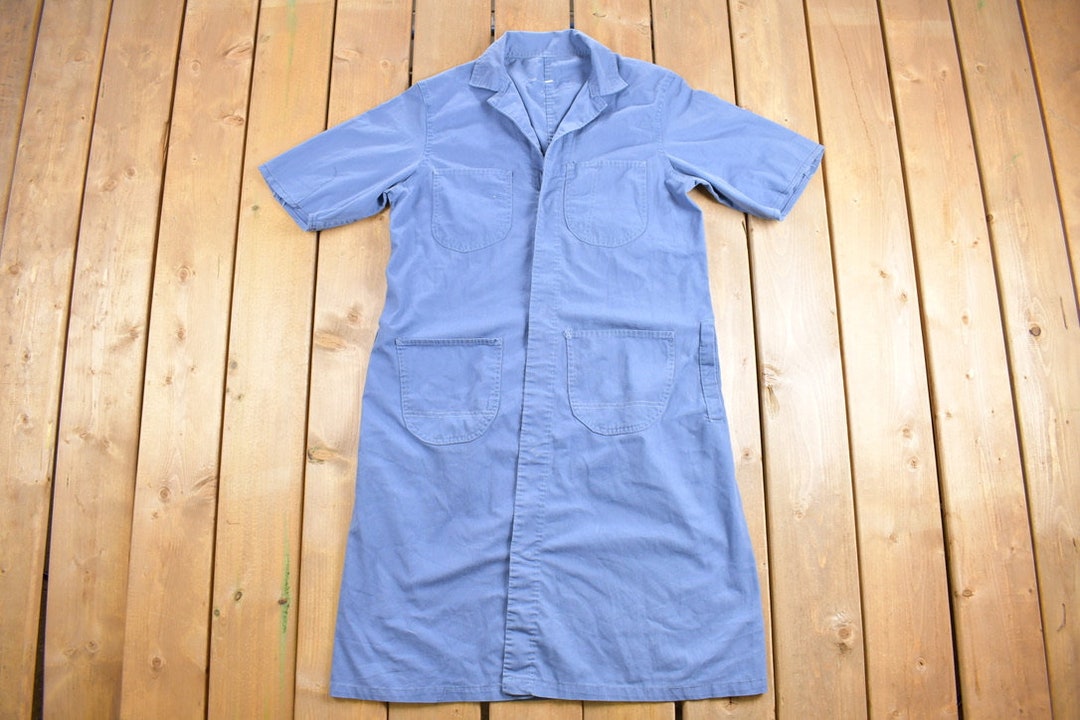
Furthermore, the "minimalist hack" is taking root. Recognizing that the deep pockets harbor bacteria and create a sloppy silhouette, modern designers are eliminating them entirely. The new coats feature a sleek, pocket-less design with a magnetic closure at the waist, forcing the pharmacist to carry a small wearable fanny pack or a digital tablet instead. This destroys the nostalgic image of the pharmacist pulling a well-thumbed reference book from their hip pocket, but it streamlines the workflow. The ultimate hack is the "disposable prestige" model, where high-end coats made of bio-based, compostable polymers are designed to be worn for a single shift and then recycled, eliminating cross-contamination entirely. This is a direct philosophical lineage back to the 1900s concept of the "boiler suit" for pharmacists, but updated for a zero-waste, ultra-hygienic future. The classic starched collar is gone, replaced by a seamless, bonded crew neck that is less likely to irritate the skin during long hours.
The Essential Q&A: Debunking the Myths of the White Sleeve
Why are pharmacist coats short-sleeved, but physician coats are usually long-sleeved?
The historical myth is that short sleeves were chosen purely for "washing ease," but the deeper truth lies in the division of labor. In the early 20th century, physicians were diagnosticians—they were not expected to touch hazardous materials directly; they used tools. Pharmacists, however, were compounders, their hands constantly in contact with powders, tinctures, and extracts. The short sleeve was a pragmatic acceptance of wet, messy work. The myth persists that the long-sleeved physician coat means "higher authority," but in reality, the short sleeve allows for a cleaner, more aggressive hand-washing ritual, which is the true measure of safety. Modern regulations, such as the CDC’s guidelines for vaccination, have now mandated that any clinician giving injections must have bare forearms, which has forced even some physicians to roll up their sleeves, inadvertently adopting the pharmacist's vintage logic.
In the modern era, the distinction has blurred. Many family practice doctors are switching to short sleeves for the same immunization reasons, while pharmacists in sterile compounding pharmacies (IV rooms) are forced to wear long-sleeved, tight-fitting sterile gowns over their short-sleeved coats. The short sleeve is now a sign of "front-facing" clinical work, while the long sleeve signifies "cleanroom" or "surgical" back-of-house work. The old hierarchy has inverted. The forgotten vintage fact is that in the 1960s, some states actually proposed legislation to make short sleeves mandatory for pharmacists to visually distinguish them from physicians, to help patients know who to ask for medication questions versus medical diagnoses. It failed, but the visual language stuck anyway.

Did the color white always mean "clean" in pharmacy, or were other colors used?
Before the 1880s, the apothecary wore dark brown or black coats to hide stains. The shift to white was not immediate. In fact, many European apothecaries in the 1900s wore light gray or pale blue smocks. The insistence on pure white in the United States was driven by the marketing of the pharmaceutical giants like Eli Lilly and Parke-Davis, who used white-coated pharmacists in their advertising to imply their drugs were pure, unadulterated, and scientifically vetted—unlike the "snake oil" pitches of their competitors. The myth is that white was chosen for its reflective properties to show dirt; but the actual reason was branding. White was the most expensive dye to maintain in a laundry setting, so wearing it signaled that the pharmacist could afford cleanliness.
Modern facts have challenged the purity of white. Eye-tracking studies in retail pharmacies show that patients have a hard time finding the pharmacist in a sea of white, leading to confusion. This has sparked a "color revolution" where some modern chains are introducing "ice blue" or "pearl gray" coats for pharmacists to differentiate them from pharmacy technicians who also wear white. The vintage myth of "white = expert" is being replaced by "color = accessibility." There is even a niche movement for "beyond white" coats that incorporate subtle, medically-themed patterns (like DNA helixes or pill shapes) woven into the fabric, which studies suggest increase patient trust by making the pharmacist appear more approachable and human.
Is the short-sleeve coat going extinct due to the rise of the "retail casual" work environment?
There was a catastrophic moment in 2008 when a major national pharmacy chain mandated polo shirts and khakis for all pharmacists, citing a "friendly, approachable" image. The result was a disaster in trust metrics. Patients reported confusion, and medication errors due to patients not knowing who to approach increased in internal audits. The experiment lasted only three years before the chain restored the short-sleeved lab coat. The myth that casual clothes make pharmacists more approachable is false; the white coat acts as a "cognitive trigger" that activates the patient's expectation of professional rigor. The short sleeve, specifically, is the "action" of the garment—it signals the pharmacist is ready to work, not just socialize.

Looking ahead, the extinction of the coat in its current form is inevitable, but not because of casualization. It will evolve into a "smart vest" or a "clinical shoulder cape" worn over regular scrubs. The short sleeve will remain, but the fabric will become semi-transparent to allow for a heads-up display on the pharmacist's wrist. The retail casual trend is dead; instead, we are seeing the "athleisure-ification" of the lab coat, with stretchy, breathable fabrics that move with the pharmacist, but the visual signifier of the short sleeve remains as a non-negotiable icon. The modern myth is that coats are disposable; in reality, the high-quality, antimicrobial versions are being treated as personal protective equipment, laundered at dedicated facilities, and are here to stay, albeit in a radically different form.
Looking twenty years into the future, the short-sleeved lab coat will likely be entirely embedded with photonic sensors that monitor the pharmacist's fatigue and stress levels, wirelessly transmitting data to a central wellness hub. The coat will not just be a uniform; it will be a health monitor for the healer itself. The narrative of the future is not about the individual coat, but about the "ensemble"—a cohesive, interconnected system where the sleeve communicates with the pill bottle, and the fabric senses if the environment is sterile. The nostalgia for the simple, starched cotton coat will remain, but it will be relegated to ceremonial use, like the white tie of a chef or the robe of a judge.
However, the essence will survive. The short sleeve represents a philosophical commitment: that the professional is always ready to engage, to touch, to heal. As we move towards telemedicine and robotic dispensing, the physical presence of the pharmacist becomes even more precious. The coat will become a beacon of human touch in a sea of automation. It will not be replaced by AI; rather, it will be the last physical remnant of the artisan apothecary, adapted for a digital world. The future pharmacist will don a "fabric shell" that hums with data, but the exposed forearms will remind every patient that behind the technology, there is still a human being, ready to roll up their sleeves and get to work. The short-sleeved lab coat will not simply persist; it will become the sacred symbol of the human resistance against a cold, touchless future.


