Online Schools To Get Your Diploma
Remember when “homeschooling” conjured images of a kid in a denim jumper doing algebra at the kitchen table while ignoring the family’s 14 goats? Yeah, that’s as dated as a TikTok of someone doing the Renegade. In 2025, the online diploma is the metaphorical It-Girl of the education world—a sleek, Wi-Fi-enabled phoenix rising from the ashes of a post-pandemic, burnout-riddled, gig-economy chaos. It’s not just for the chronically shy or the child actors on Disney Channel anymore; it’s for the former gifted kid who peaked in high school, the 30-something career-switcher, and the creative who realized that a brick-and-mortar lecture hall is just a very expensive, very slow-loading group chat.
The glow-up is real. What was once a shameful loophole for the “problem kids” is now a flex—a badge of digital-native independence. We’re in an era where your “main character energy” is directly correlated to your ability to curate your own schedule. The #StudyTok community has turned online learning into an aesthetic, complete with 4 AM gym sessions, chunky water bottles, and laminated planners. The conversation has shifted from “Are you even learning?” to “How many AP credits can I stack while simultaneously launching a podcast?” It’s less about dropping out and more about logging in on your own terms. The algorithm has spoken, and it says that self-paced education is the new black.
But let’s be real: this isn’t just a fad for the chronically online. It’s a seismic shift in how we view authority, time, and the ROI of a piece of paper. With the cost of traditional college spiraling into the stratosphere and the job market treating degrees like yesterday’s crypto, the public is desperately looking for a cheat code. Online schools are that cheat code, promising the golden ticket without the crippling debt or the 8 AM final exam that ruins your week. But is it all sunshine and dopamine hits, or is there a dark mode we need to scroll past?
Must Read
The Weird, Wild, and Rife-With-Scammers World of Remote Credentials
Let’s talk about the subculture, because it is a glorious mess of red flags and genuine gold. On one end, you have the “Diploma Mills”—the fast fashion of academia. These are the websites that look like they were designed in 1999 and promise a degree in “Business Leadership” if you pay $4,999 and pass a “life experience” test. They prey on desperation, and they are more common than unironic fedoras at a film festival. You’ll find these promoted by shady “fin-fluencers” on Instagram Reels, wearing rented Lamborghinis, screaming about how you, too, can become a “certified life coach” in 24 hours. Spoiler alert: that credential is about as useful as a chocolate teapot, but the algorithm doesn’t care about your employment status—it just cares about the ad revenue.
Then, you have the extreme opposite: the “Hyper-Grinders” of the online learning world. These are the folks enrolled in transfer-heavy programs at places like WGU or ASU Online, sharing their progress on Reddit forums like r/WGU. They treat a four-year degree like a speedrun, stacking competency-based credits to graduate in 18 months. They are simultaneously inspiring and utterly terrifying, posting about finishing a 12-page paper between shifts at Starbucks and caring for a toddler. The social dynamic here is a bizarre mix of toxic productivity and genuine camaraderie. They mock traditional students for having “bankruptcies and hangovers,” while the traditional students mock them for having “no social life and questionable handwriting.” It’s a culture war fought in comment sections, and the collateral damage is your peace of mind if you try to compare your pace to theirs. The pressure to “finish faster” is a heavy dopamine loop, and it’s easy to feel like a failure if you’re not clocking in 40 hours a week of asynchronous learning.
How to Navigate the Algorithmic Minefield Without Losing Your Sanity (or Wallet)
First things first: Do not panic-buy anything. The FOMO is real, especially when you see an influencer selling a course on “Digital Marketing Mastery” for $29.99 that promises to make you a millionaire. That is not a diploma; that is a digital vitamin scam. When looking for a legitimate high school diploma or GED equivalent, your first vetting step is accreditation. Look for regional accreditation (or national, if it’s a trade school). If the school isn’t accredited by a recognized body, you’re essentially buying fan fiction. Google the school’s name plus “review,” and ignore the testimonials on their own website—those are curated bots. Check forums, Reddit, and even LinkedIn to see where alumni actually work. If you can’t find a single real person who graduated from there, run.
Next, let’s talk about the “Time vs. Money” matrix. The cheapest option is not always the best, but the most expensive is definitely not either. You need to calculate the cost per credit and compare it to the flexibility. If you are working full-time, a synchronous (live) class schedule might ruin you. You need an asynchronous program that allows you to watch lectures at 2 AM in your pajamas. However, beware of “self-paced” programs that are too loose. If you are not a self-starter, you will fail. Be brutally honest with yourself. Are you the type of person who needs a deadline to move? If so, pick a program with fixed weekly milestones, even if it’s online. Do not fall for the trap of thinking you’ll be more productive without structure—you won’t. You’ll just binge-watch “Love is Blind” and cry about your life choices.
Your next move is to check the transfer credit policy. If you’re getting a high school diploma to get into college, ensure that the online school’s curriculum and accreditation are accepted by the colleges you’re eyeing. There is nothing worse than finishing a program and then finding out your state university sees it as “unsatisfactory.” Call the admissions office of your target school directly and ask them: “Do you accept credits from institution X?” Do this before you pay. Also, look for programs that offer college prep or dual enrollment credits. This is a huge hack—you can get high school and college credits simultaneously, effectively buying a two-for-one deal. It’s the ultimate cheat code for the financially savvy.

Finally, curate your digital environment. The #StudyTok rabbit hole is fun, but it’s also filled with misinformation. Do not take financial advice from a 19-year-old who has never paid a utility bill. Instead, follow actual students who share their schedules, not their aesthetic. Look for the boring user—the one who posts about their syllabus and textbook costs. That is your guru. And set a hard budget: decide exactly how much you can spend per month, and add a 10% buffer for textbooks and tech (because your laptop will die). Treat this like a business transaction, not a spiritual journey. Your diploma is a transaction into a better financial future, not a personality replacement.
Your Burning Questions, Answered (Minus the Conspiracy Theories)
Are online diplomas considered “less than” a traditional high school diploma by employers?
In the current job market, the pendulum has swung dramatically. Yes, there are still dinosaurs in HR who think “online” is synonymous with “easier,” but they are being dragged into the 21st century by the sheer volume of remote work and digital natives. Most HR screening software (the ATS bots) does not differentiate between an online and brick-and-mortar diploma for basic keyword matching. The issue isn’t the format, it’s the institution. If you have a diploma from an accredited, recognized online school, it will pass the background check. If you have one from “Trump University,” you’re stuck.
However, nuance is key. If you are trying to get into a highly competitive traditional trade (like medicine or law), you will face a steeper hill. Those fields are obsessed with pedigree and networking, which is harder to replicate online. But for 95% of jobs—from customer service to coding to marketing—the diploma is just a checkbox. What matters more is your portfolio, your soft skills, and your ability to talk about what you learned. In fact, many hiring managers actually view an online diploma as a signal of higher self-discipline and time management, because you clearly didn’t have mom and dad nagging you to go to class. You did it alone, in your bedroom, fighting off the urge to play Minecraft. That is a story you can spin in an interview.
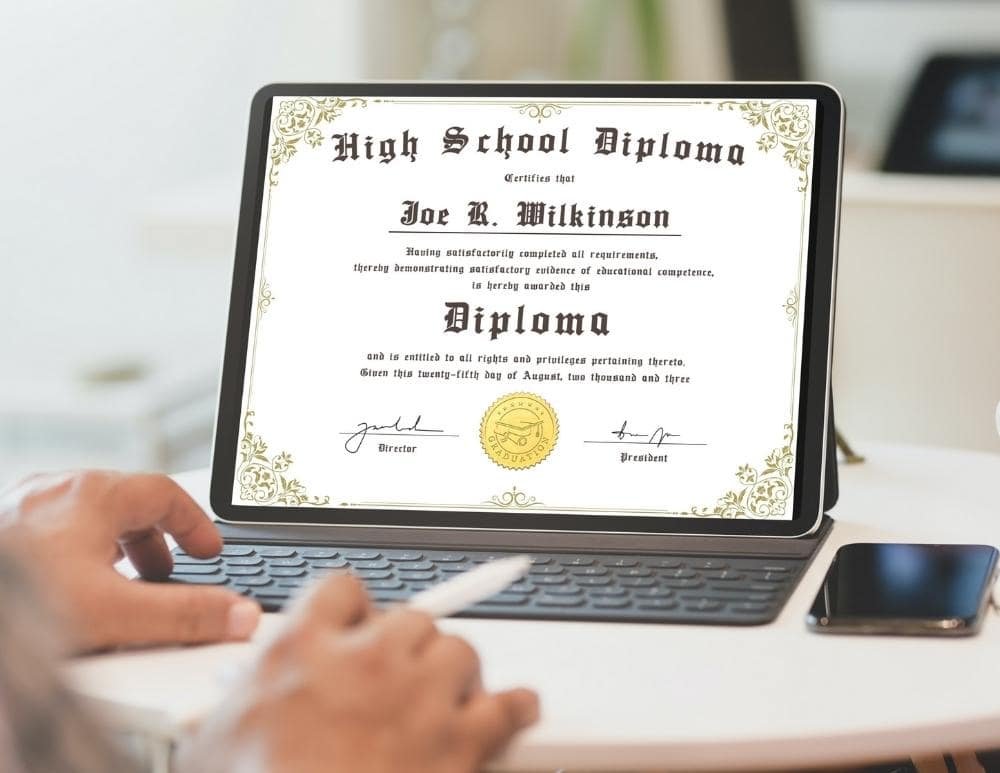
Am I going to be socially stunted if I don’t go to a physical school?
This is the biggest fear-mongering tactic used by traditionalists. They paint a picture of a lonely teenager in a basement, lacking the social graces to order a coffee. Let’s shatter that myth with a hammer. In 2025, most social interaction for Gen Z and Gen Alpha happens online anyway. The hallway drama of high school has been replaced by the drama of Discord servers. You are not missing out on “socialization”; you are missing out on a few hours of forced proximity with people you didn’t choose to know. The skills you actually need for life—communication, empathy, conflict resolution—are often better learned in the real world: at your job, in your hobby groups, or during your D&D campaign.
That being said, you do have to actively pursue connection. You cannot just do coursework and then log off forever. You have to join the study groups, the class forums, and the local meetups. You have to be the one to plan the Zoom study session. The “death of physical schooling” doesn’t mean the death of friendship; it means you have to build your village with intention. If you treat online school as just an app, you’ll be lonely. If you treat it as a portal to a global community, you’ll end up with more friends than you know what to do with. The onus is on you to be social, but the avenues are infinitely more varied than being stuck in a cafeteria with a group of people who think blasting “WAP” on a speaker is a personality.
Is it a waste of time to get a high school diploma online when I’m already 30 and working?
Look, if you don’t have a high school diploma, the harsh reality is that you are locked out of ~60% of better-paying jobs. A GED or an accredited online diploma is almost like a passport—it unlocks travel to the land of stable employment. It is never a waste of time to remove a roadblock to your financial stability. The argument of “I’m too old” is nonsense. You are not too old; you are too scared. The time will pass anyway. You can be 35 with a diploma or 35 without one. Which one sounds better to you in five years?
Moreover, online schools for adult learners are specifically designed for your situation. They are not like high school; they are like a professional development course with better content. The assignments are practical, and the instructors treat you like an adult, not a hormone-riddled teenager. You’ll find that your life experience actually gives you an edge in essay writing and critical thinking—you’ve lived the lessons, you just need the paper to prove it. The ROI here is massive. Even a marginal increase in your hourly wage will pay for the tuition fees within months. Stop using age as an excuse; use it as a weapon. You are wise enough to know you want change, and disciplined enough to actually finish it. That’s more than most 18-year-olds can say.
Is this just a fad, like the time we all thought eating activated charcoal was a good idea? No. This is a structural metamorphosis. The traditional system of chalkboards and bells is a relic of the Industrial Revolution, built to produce factory workers. We are now in an information economy, and the physical campus is increasingly a luxury item for the wealthy, not a necessity for the thinkers. The online diploma is the democratization of education—it’s the punk rock rebellion against the establishment. It allows a single mother in Ohio to get the same Algebra II credit as a trust-fund kid in Manhattan. That is not a fad; that is a revolution wearing a hoodie.
However, we must be vigilant. As with any gold rush, the thieves are emerging. We must champion transparency in accreditation and push back against the “get rich quick” diploma mills that dilute the value of real online work. The future is not about where you learned, but what you learned and how you apply it. Your resume is becoming a repository of skills, not a list of physical addresses. So, go ahead. Log on, learn, and graduate—just make sure you do it with your eyes wide open and your wallet protected. The algorithm is watching, and it’s rooting for your personal brand. Now, go get that paper.