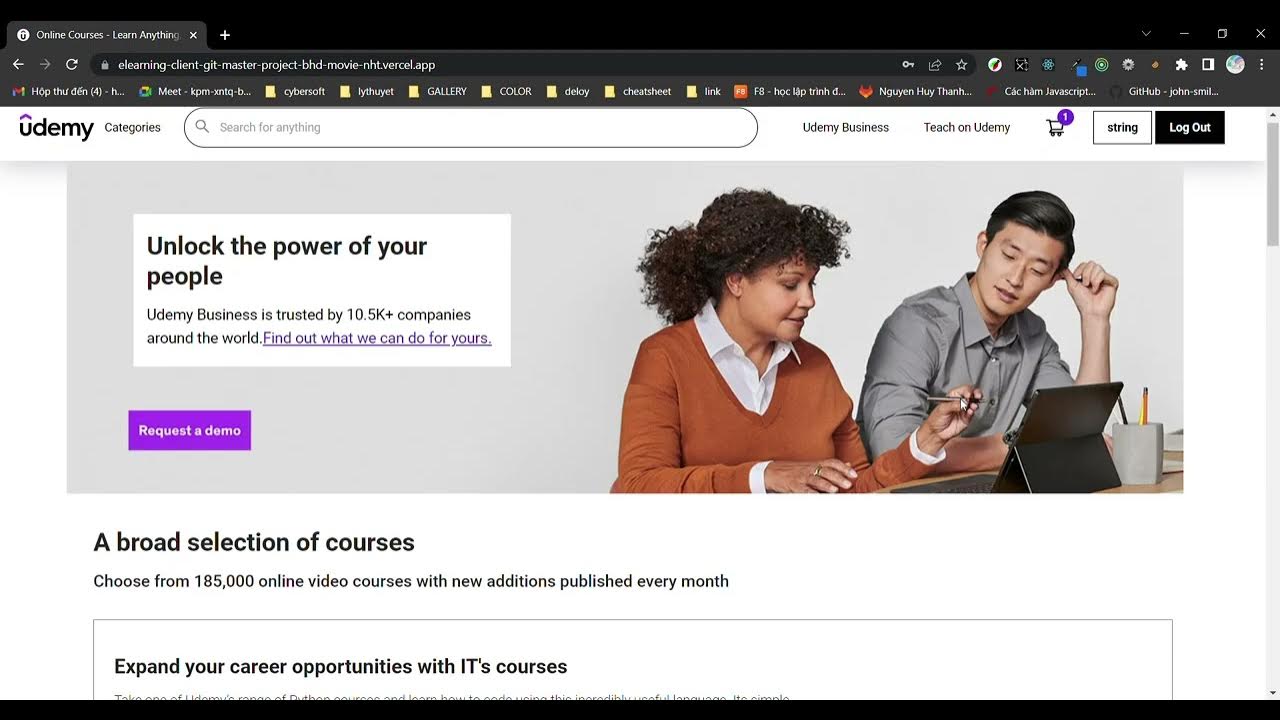
Online Courses - Learn Anything On Your Schedule Udemy

The concept of online courses has been a long time in the making, with its roots dating back to the early days of the internet. As the World Wide Web began to take shape in the 1990s, educators and entrepreneurs started to explores ways to harness its power for learning. One of the pioneers in this space was Educom, a non-profit organization that aimed to promote the use of technology in education. Founded in 1964, Educom played a significant role in shaping the online learning landscape, and its legacy can still be seen today.
As the internet became more widespread, the need for online learning platforms grew. In the early 2000s, websites like MIT OpenCourseWare and Coursera began to emerge, offering free and paid courses to learners around the world. These platforms were groundbreaking, but they had their limitations. It wasn't until the launch of Udemy in 2010 that the online course market really started to take off. Founded by Eren Bali, Oktay Caglar, and Gagan Biyani, Udemy provided a platform for experts to create and sell courses on a wide range of topics, from programming and marketing to photography and cooking.
Today, Udemy is one of the largest online learning platforms in the world, with over 130 million courses available. The platform has revolutionized the way we learn, making it possible for people to access high-quality educational content from anywhere in the world. But the story of online courses is not just about Udemy; it's about the evolution of learning itself. From the early days of correspondence courses to the modern era of AI-powered adaptive learning, the way we learn has undergone a significant transformation over the years.
Must Read
The Evolution of Online Courses
In the 1960s and 1970s, correspondence courses were all the rage. These courses allowed students to learn through mail-based instruction, with teachers sending out lessons and assignments to students who would then complete them and mail them back. It was a slow and cumbersome process, but it marked the beginning of a new era in learning. With the advent of the internet, correspondence courses gave way to online learning platforms, which offered a more interactive and immersive experience.
One of the major transformations in the online course space came with the introduction of Massive Open Online Courses (MOOCs). Launched in the 2010s, MOOCs made it possible for tens of thousands of students to learn together, often for free. Platforms like Coursera and edX led the charge, partnering with top universities to offer high-quality courses to learners around the world. MOOCs democratized access to education, making it possible for people from all walks of life to learn from the best instructors in the world.

But MOOCs were not without their challenges. Many students found it difficult to stay motivated and engaged, and the lack of human interaction made it hard to build meaningful relationships with instructors and peers. To address these challenges, online learning platforms began to incorporate new technologies, such as video conferencing and social learning tools. These technologies enabled students to interact with each other and with instructors in real-time, creating a more immersive and interactive learning experience.
Despite these advancements, online courses have not been without their critics. Some argue that they lack the depth and nuance of traditional classroom instruction, while others claim that they are too focused on practical skills and not enough on theoretical knowledge. However, as the online course market continues to evolve, it's clear that these platforms are here to stay. With the rise of Artificial Intelligence (AI) and Machine Learning (ML), online courses are becoming increasingly personalized, adaptive, and effective.
Modernizing Classic Principles
Today, online courses are being hacked and modernized in ways that were previously unimaginable. With the rise of AI-powered adaptive learning, students can now learn at their own pace, with the platform adjusting the difficulty level and content to suit their needs. This approach has been shown to be highly effective, with studies demonstrating significant improvements in student outcomes and engagement. Additionally, the use of Virtual Reality (VR) and Augmented Reality (AR) is becoming increasingly popular, allowing students to immerse themselves in interactive, 3D environments that simulate real-world scenarios.

Another area where classic principles are being modernized is in the use of gamification and social learning. Online courses are now incorporating game-like elements, such as points, badges, and leaderboards, to make learning more engaging and fun. Additionally, social learning platforms are being used to connect students with each other and with instructors, creating a sense of community and belonging. These approaches are not only making online courses more enjoyable but also more effective, as students are more likely to stay motivated and engaged when they feel connected to others.
Frequently Asked Questions
What is the future of online courses, and how will they continue to evolve?
The future of online courses is exciting and uncertain. As technology continues to advance, we can expect to see even more innovative approaches to learning, such as the use of AI-powered chatbots and personalized learning paths. We can also expect to see a greater emphasis on soft skills and emotional intelligence, as the modern workplace demands more than just technical expertise. Additionally, the rise of microlearning and nanodegrees will continue to transform the way we learn, making it possible for people to acquire new skills and knowledge in bite-sized chunks.
Despite these advancements, there are still many challenges to be addressed, such as the lack of standardization and accreditation in the online course market. To address these challenges, governments, educators, and industry leaders will need to work together to establish clear guidelines and standards for online learning. This will not only ensure the quality and effectiveness of online courses but also provide students with the confidence and assurance they need to invest in their education. As the online course market continues to evolve, it's clear that the future of learning will be shaped by technology, innovation, and a commitment to excellence.

How do online courses compare to traditional classroom instruction, and what are the benefits and drawbacks of each approach?
Online courses and traditional classroom instruction have their own unique benefits and drawbacks. Traditional classroom instruction offers the advantage of face-to-face interaction, socialization, and a sense of community, which can be essential for building relationships and networking. However, traditional classroom instruction can also be limited by geographical constraints, scheduling conflicts, and the need for physical infrastructure. Online courses, on the other hand, offer the advantage of flexibility, accessibility, and scalability, making it possible for people to learn from anywhere in the world at any time.
Despite these benefits, online courses can also have their drawbacks, such as the lack of human interaction, technical issues, and the need for self-motivation. To address these challenges, online learning platforms are incorporating new technologies and approaches, such as video conferencing and social learning tools, to create a more immersive and interactive learning experience. Additionally, the use of AI-powered adaptive learning and personalized learning paths is helping to address the issue of student engagement and motivation, making online courses a more effective and enjoyable way to learn.
What role will online courses play in shaping the future of work and the economy, and how can individuals prepare themselves for the changing job market?
Online courses will play a significant role in shaping the future of work and the economy, as they provide individuals with the skills and knowledge needed to succeed in an increasingly complex and rapidly changing job market. With the rise of Automation and AI, many jobs will become obsolete, while new ones will emerge that we cannot yet imagine. To prepare themselves for this changing job market, individuals will need to be adaptable, resilient, and committed to lifelong learning. Online courses can provide the necessary training and upskilling, enabling individuals to acquire new skills and knowledge and stay ahead of the curve.

Additionally, online courses can help individuals develop the soft skills and emotional intelligence needed to succeed in the modern workplace, such as communication, collaboration, and problem-solving. By investing in online courses and committing to lifelong learning, individuals can future-proof their careers and stay relevant in a rapidly changing job market. As the online course market continues to evolve, it's clear that the future of work will be shaped by technology, innovation, and a commitment to excellence, and online courses will play a critical role in preparing individuals for the challenges and opportunities that lie ahead.
As we look to the future, it's clear that online courses will continue to play a major role in shaping the way we learn and the way we work. With the rise of AI and ML, online courses will become even more personalized, adaptive, and effective, enabling individuals to acquire new skills and knowledge at an unprecedented pace. Additionally, the use of VR and AR will continue to transform the online learning experience, making it more immersive, interactive, and enjoyable.
Over the next 20 years, we can expect to see significant advancements in online learning, from the use of brain-computer interfaces to the development of personalized learning paths that adapt to an individual's unique needs and abilities. We can also expect to see a greater emphasis on soft skills and emotional intelligence, as the modern workplace demands more than just technical expertise. As online courses continue to evolve, it's clear that the future of learning will be shaped by technology, innovation, and a commitment to excellence, and that individuals who invest in online courses and commit to lifelong learning will be well-prepared to succeed in a rapidly changing world.