
Offshore Structural Engineer Jobs

Imagine a world where your office sways rhythmically against the horizon, where the commute involves a helicopter ride over open ocean, and where the "co-workers" are a mix of metallurgists, sea birds, and the occasional curious whale. This is the daily reality for offshore structural engineers, the modern-day cartographers of the industrial frontier. While the world obsesses over digital metaverses, these professionals are wrestling with the physical one, designing colossal steel and concrete leviathans that punch through the ocean floor to extract the energy that powers our civilization. It is a career that exists at the intersection of brutal physics and delicate human endurance, a profession that has quietly built the literal pillars of our modern energy economy since the first wooden derricks crept into the shallows of California in the 1890s.
Today, the role has evolved far beyond oil and gas. Offshore structural engineering is the backbone of the renewable energy revolution, responsible for the towering wind turbines that dot coastlines and the emerging tidal energy platforms of tomorrow. This is not merely a job; it is a vocation rooted in the tension between human ambition and the unforgiving temper of the sea. In an era where "working from anywhere" is a buzzword, these engineers are defined by their constraint—they work where the land ends. It demands a unique blend of mathematical rigor, spatial intuition, and a psychological fortitude that few other disciplines require, making it one of the most intriguing, well-compensated, and misunderstood professions in the world.
The Psychology of the Deep: Solitude, Risk, and the "Offshore Mindset"
There is a pervasive myth that offshore engineers are rugged thrill-seekers. The truth is far more nuanced. The psychological profile of a successful structural engineer in this sector leans heavily towards the introverted perfectionist. You are not just designing a beam; you are designing a beam that must withstand a 30-meter rogue wave, hurricane-force winds, and continuous corrosion. The mental weight of that responsibility is immense. Unlike a skyscraper in Manhattan, a failure in the North Sea doesn’t just close a street; it creates an environmental catastrophe and could cost dozens of lives. This breeds a specific kind of professional paranoia—a healthy skepticism of "good enough" that borders on the obsessive. It is a profession where the smallest weld defect is a ticking clock, and the engineer is the only one who can hear it.
Must Read
Culturally, the offshore platform is a microcosm of a forgotten world. It is a rotating society of 20 to 200 people living in a confined metal box for weeks at a time. The dark fun fact here is that while the public associates these platforms with the "Gig Economy," the workers are on a "hitch" system—typically two weeks on, four weeks off—a schedule that wreaks havoc on circadian rhythms but creates a distinct, almost monastic focus. There is no escaping the noise of the machinery or the wind; the constant vibration becomes a lullaby. Engineers report a "high" during the first days onshore, followed by a strange sense of dislocation. This sociological aspect has birthed a unique subculture of gallows humor. A key structural meme in the industry is the "splash zone," the area of a platform where the air meets the sea. It is the most corrosive environment on Earth, and engineers joke that it is where "your career goes to die" because it requires the most maintenance and innovation to solve.
From a technical standpoint, the lesser-known truth is that the software doesn't run the show—the engineer does. While Finite Element Analysis (FEA) software is the standard tool, the true skill lies in validating the model against the real world. Offshore structures aren't just static; they are dynamic. They "breathe," flexing with the waves and thermal expansion. An expert engineer develops an almost organic sense of how steel will "dance" under load. They rely on "fatigue life" calculations, which are essentially crystal-ball gazing to predict how many millions of wave cycles a joint can survive before cracking. It is a strange, dark science of predicting the death of your own creation, ensuring it lives just long enough to be decommissioned safely.
Life on the Edge: Case Studies, Scenarios, and Practical Takeaways
Let’s walk through a typical career trajectory. Sarah, a 29-year-old structural engineer, works for a major energy contractor. Her journey begins not on the platform, but in a hydrodynamic testing lab. She is tasked with reviewing the "topsides" of a new platform—the production decks—to ensure they can support a new, heavier drilling rig. Her primary tool is not a wrench, but a spreadsheet containing thousands of "load paths." The scenario is tense: the fabrication yard in South Korea has already cut the steel. A change now costs $50,000 per day. Sarah must use her expertise to "chop" a node design, re-routing the stress through a new gusset plate. She realizes the initial design was over-conservative; by tweaking the steel grade in a non-critical walkway, she saves 12 tonnes of weight. That weight saved translates to millions of dollars in deck cargo capacity over the platform's 30-year life. Her "small" insight is the difference between a profitable asset and a white elephant.
![Offshore Structural Design Engineer Salaries [Unveiled] 2026](https://astsglobal.com/blog/wp-content/uploads/2023/06/Offshore-Structural-Design-Engineer-Salaries.jpg)
Another scenario involves the "brownfield" redevelopment of an aging platform. This is where the psychological aspect peaks. You are dealing with a 40-year-old structure that was never designed to handle the extra weight of a new compression module. The sea conditions have also changed; the original design standards were less stringent than today's. The engineer must perform a "life extension assessment." This is forensic engineering at its finest. They use drones to inspect for corrosion and "anode wastage" (the sacrificial metal that protects the steel). They analyze ship impact records and historical storm data. The actionable takeaway here is that offshore structural engineers are often forensic historians. They must deduce what has happened to the structure based on weathering patterns, fatigue cracks, and maintenance logs, often discovering that the "as-built" drawings do not match the physical reality due to field "fixes" from decades past.
For those looking to break into the field, the practical insights are distinct from standard civil engineering. You must accept that your job is as much about logistics as it is about math. A structural engineer who cannot communicate with the installation crew—the welders, the riggers, the crane operators—is useless. The best engineers are those who have spent time in the fabrication yard, getting dirty, understanding why a welder hates a particular joint configuration. The career is cyclical; it booms when energy prices soar and shifts toward offshore wind when environmental regulations tighten. The smartest players in this game are multi-disciplinary. They spec out a jacket structure that can be fabricated with ease, transported on a heavy-lift vessel, and installed with minimal noise—because harbor porpoises, a protected species, are sensitive to pile-driving sounds. This environmental constraint is now a core design parameter, not an afterthought.
Finally, consider the "digital twin" revolution. Today's engineer isn't just drawing plans; they are creating real-time digital replicas of the platform, complete with sensors. This allows them to sit in an office in Houston and monitor the actual stress on a platform in the Gulf of Mexico. This is transformative, but it poses a new risk: cyber-security. A hack that alters the structural monitoring data could cause a false alarm or, worse, hide a critical failure. The engineer is now a guardian of data integrity, proving that in the modern world, the structural engineer is also a cybersecurity analyst, a data scientist, and a marine biologist.
The Ultimate FAQ: Navigating the Rigors of the Role
1. What is the actual difference between an offshore structural engineer and an onshore one?
On the surface, both use physics to keep buildings up. But the loading is fundamentally different. An onshore engineer designs for gravity, wind, and seismic events that occur once in a century. An offshore engineer designs for cyclic loading that occurs millions of times. The primary killer offshore is not the biggest storm—it is the cumulative fatigue from everyday waves. An onshore structure is typically "static" in its analysis; an offshore platform is fluid-structure interaction. The sea sucks energy out of the structure, creating vortex-induced vibrations. In essence, an offshore engineer must master fluid dynamics as much as solid mechanics, mixing in soil mechanics for the foundation piles. The material behavior is also different—offshore steel must have excellent weldability, high fracture toughness at sub-zero temperatures, and resistance to hydrogen-induced cracking caused by seawater.
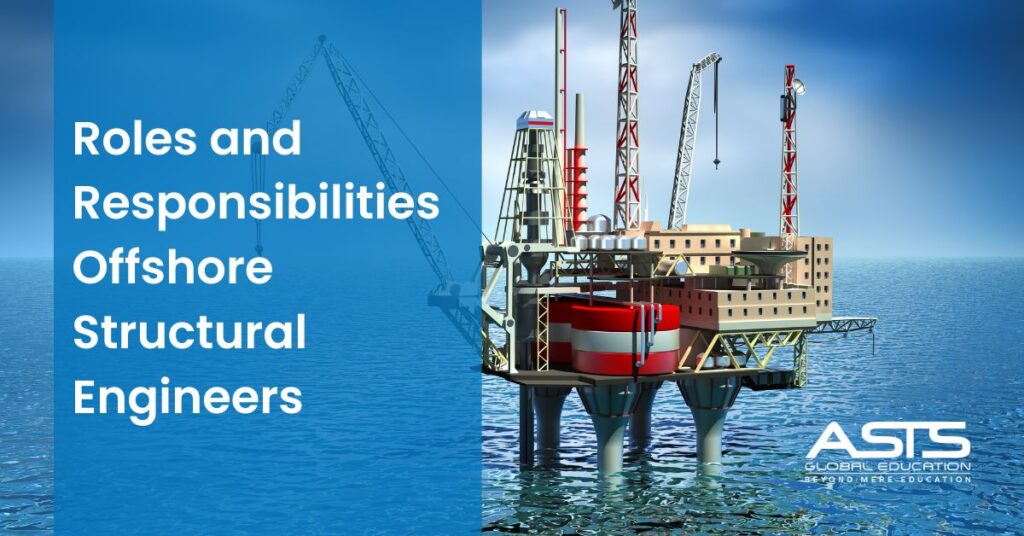
Furthermore, the construction reality is drastically different. Onshore, you can pour concrete on-site with relative ease. Offshore, you are building in a hostile environment where weather windows are precious. An offshore structure is built in modules, transported on barges, and lifted onto the sea, or built "on the hook" (constructed while suspended from a crane vessel). This logistically dictates the design. A joint that is easy to weld in a yard is a nightmare to weld 100 meters up in the North Sea wind. The engineer's primary enemy is the "tolerance"—onshore, a 10-millimeter gap is a nuisance; offshore, it can halt an installation crew for days, costing millions. Therefore, the offshore engineer has a profound respect for the "erection sequence" that an onshore engineer rarely considers.
2. How dangerous is the job, and what are the actual risks?
It is statistically safer today than it has ever been, but the profile of the risk is extreme. The overarching fear is the "Loss of Containment" (LOC)—a sudden release of pressurized gas or oil, leading to a fire or explosion. The structural engineer's role is to ensure the platform's "passive fire protection" (decks and bulkheads) contains the blast, preventing the domino effect of structural collapse. However, the day-to-day physical risks are more mundane: slips, trips, and falls from heights, and helicopter crashes, which remain the highest risk per hour of exposure. There is also the psychological risk of "shift fatigue" from the extended hours on the rig.
But the danger extends to the public and the environment. The engineer is designing against the "Environmental Load Case," which includes a 10,000-year return period cyclone. If the structure fails, the consequences are not just economic; they are ecological. The 2010 Deepwater Horizon disaster was not a structural failure of the platform itself, but it highlighted how a failure in the wellhead and the subsequent inability to shut it in creates massive structural stress and loss of life. The engineer must design for the worst-case "accidental load"—like the collision of a supply vessel. They must ensure that the main platform legs are "redundant," meaning if one is crippled, the structure can still stand long enough for evacuation.
3. Is the field limited to Oil and Gas, or is there a future in Renewables?
This is the most exciting pivot in the industry. While Oil and Gas still dominates the existing infrastructure, the new build market is overwhelmingly dominated by Offshore Wind. The core structural principles are identical—fatigue, corrosion, and dynamic response—but the challenges differ. A wind turbine monopile (a massive steel tube driven 60 meters into the seabed) is a structural nightmare because it is top-heavy. The transition piece connecting the tower to the pile experiences extreme bending moments. More importantly, the push into "floating wind" for deep waters is the ultimate structural engineering test. These platforms are constantly moving, tethered to the seabed with mooring lines. This creates complex multi-body dynamics.
![Offshore Structural Design Engineer Salaries [Unveiled] 2026](https://astsglobal.com/blog/wp-content/uploads/2023/06/Job-Market-and-Salary-Offshore-Structural-Engineers-1024x536.jpg)
For the engineer, this means your skills are transferable. However, the cost drivers are different. Oil platforms are designed for massive payloads; wind turbines are designed for minimal weight and cost per megawatt. This forces you to be more efficient with steel, pushing material to its limits. Moreover, the workflow is faster. A wind farm might have a hundred identical structures; a single oil platform is a one-off. This means more standardized, production-style engineering—less of the bespoke "art" and more of the "manufacturing" mindset. The future is hybrid, too; there is a growing trend of combining wind power with green hydrogen production on the platform, requiring holistic systems design.
4. What are the perfect personality traits for a successful offshore structural engineer?
Beyond strong math skills, you need high "design sentience"—the ability to visualize how forces flow through a joint before the computer tells you. You must be a skeptic. If a piece of software says a stress is low, you must ask "why?" and verify if the model boundary conditions are correct. You must be incredibly disciplined with documentation. In this field, "if it isn't written down, it didn't happen." There is no room for improvisation; a welder needs a clear, precise, revision-controlled drawing. This attracts a specific type of person: those who find comfort in rules and predictability, yet are creative enough to solve the unpredictable flaws in those rules.
Psychologically, you need to be a "stayer." The projects are long—years from concept to installation. The gratification is delayed. You need to be comfortable with uncertainty, as weather delays and supply chain issues constantly disrupt the schedule. You must also have a high tolerance for meetings, as the interdisciplinary coordination with pipeline engineers, geotechnical engineers, and marine operations managers is intense. Finally, you need a healthy sense of humility. The sea is a brutal teacher. Nature will always find the flaw in your design. The best engineers are those who learn from failures—not just their own, but the industry's—and approach every new structure with a sense of awe and trepidation. Arrogance gets people killed.
5. How does one actually get started in this niche, and what is the salary landscape?
Start with a Bachelor's degree in Civil, Mechanical, or Ocean Engineering. Specialized Masters' programs in "Offshore Engineering" or "Marine Structures" (like those at MIT, Delft, or the University of Houston) are highly valued. But the real entry point is through internships with major energy service providers (Schlumberger, Halliburton, Aker Solutions) or engineering consultancies (TechnipFMC, Worley, Wood). You must be geographically flexible. The hubs are Houston (Gulf of Mexico), Aberdeen (North Sea), Stavanger, and increasingly, London and Copenhagen for the wind sector. Certification is a must; aiming for a Professional Engineer (P.E.) license is crucial for career progression, as you must stamp and approve drawings.
Financially, this is a high-stakes game. Expect a starting salary for a junior structural engineer to be in the $75,000-$90,000 range in the US, rapidly escalating. Senior lead engineers with 10 years of experience command $140,000-$180,000, and Principal Engineers or Discipline Managers easily surpass $200,000, often with generous bonuses. The catch is the cyclical nature—you must save during the boom years to coast through the busts. There is also a growing "experienced hire" shortage, meaning that companies are offering signing bonuses and rapid promotion tracks for those with 5 years of experience in any structural field, as they can be trained on the job. The key is to demonstrate proficiency in FEA software (like ANSYS or SACS) and a willingness to obtain hazardous work certifications (like Bosiet) to visit offshore installations.
Reflecting on this profession, it connects to our daily lives in a way we rarely acknowledge. Every time we flick on a light switch or charge our electric car, we rely on the integrity of structures that are thousands of miles away, standing in freezing water. The struggle of the offshore engineer is a proxy for our own stubbornness as a species; we refuse to accept the boundaries of the natural world. We build in the shallow waters, and when that’s not enough, we push into deeper water, inventing new materials and new shapes. This mirrors the human condition—our constant desire to build, to climb, and to reach that which is just beyond our grasp, even when the environment screams at us to stay back.
On a human level, the offshore engineer teaches us about resilience. Their work requires a long-term perspective—a five-year plan for a structure that will outlive them. In an age of instant gratification, where we are used to tearing down and rebuilding quickly, these engineers are the custodians of permanence. They think in "service life" and "decommissioning schedules," forcing us to confront the legacy we leave behind. The discipline they bring to material science is a lesson in fiscal responsibility—understanding that the cheapest solution now is often the most expensive one in the long run.
Ultimately, the offshore structural engineer is a guardian of the horizon. They are poets of the physical world, rendering in steel and concrete what most of us only dream of in abstract terms—stability in chaos. The next time you feel the ground beneath your feet, remember that for some, that solidity is not a given. It is an engineering problem to be solved, a battle to be won against the relentless weight of the sea. And perhaps, in that fight, we see a mirror of our own inner struggles—to stay upright, to remain flexible yet strong, and to endure the storms without losing our structural integrity.
![Offshore Structural Engineer Job Description [Updated for 2026]](https://interviewguy.com/wp-content/uploads/2024/09/offshore-structural-engineer-job-description.webp)
