Officer Branches Army National Guard
The chime of a smartphone notification is rarely the soundtrack to a paradigm shift, but for a growing cohort of professionals, it signals something far more profound than a calendar reminder. We are not talking about a standard career pivot or a side hustle; we are talking about the quiet, deliberate act of a civilian—a lawyer, an engineer, a teacher—raising their right hand to become an Officer in the Army National Guard. This is not a story about camouflage and combat rifles, at least not initially. It is a story about duality, about holding a briefcase in one hand and a command. The National Guard officer lives in a liminal space, a modern-day Janus, looking simultaneously at the civilian marketplace and the strategic map of the world’s most formidable military institution.
The history of this dual-status life is deeply woven into the American fabric, predating the establishment of the nation itself with the colonial militias. Today, however, the "Citizen-Soldier" has evolved beyond the image of the Revolutionary War farmer grabbing his musket. The modern Army National Guard officer is a highly trained, federally funded, state-commanded leader who might be managing a cybersecurity breach in Silicon Valley on a Wednesday and directing a humanitarian relief operation in a flood-stricken town on a Saturday. What makes this path so compelling—and so fraught with unique tension—is the sheer cognitive demand of switching between two completely different leadership ecosystems. It is not a part-time job; it is a parallel life that demands a psychological elasticity most corporate leadership courses simply cannot teach.
The Paradox of the "Part-Time" Commander
Let’s dispel a myth immediately: there is no such thing as a "part-time" officer. The jargon "One weekend a month, two weeks a year" is a recruiting slogan, not a reality. The reality is a constant, low-frequency hum of obligation—emails to answer, fitness tests to pass, military education courses to complete online, and a relentless imperative to stay tactically proficient. The dark secret that few discuss, however, is the psychological whiplash. One day you are negotiating a corporate contract, utilizing soft power and consensus-building; the next, you are on a field exercise, issuing orders that require absolute, unquestioning compliance—orders that, in a real-world scenario, could mean the difference between life and death. This juxtaposition can leave an officer feeling like a spy in both worlds, never fully belonging to either.
Must Read
Yet, this friction is precisely where the magic happens. The cultural impact of the Guard officer is profound because they import military-grade risk assessment into civilian boardrooms and, conversely, bring a dose of commercial pragmatism into the military’s often rigid hierarchy. The good ones become translation machines. They understand that a National Guard unit, unlike active-duty forces, is a microcosm of the local community. The soldiers under their command are not isolated in barracks; they are the local police officers, the nurses, the mechanics, the college students. A Guard officer must lead people who have a different boss on Monday morning. This demands a leadership style built on empathy and trust rather than sheer positional authority, making them arguably some of the most adaptable leaders in the entire Department of Defense.
There is also a peculiar, often unspoken, cultural cachet attached to the role. In an era where "quiet quitting" dominates the zeitgeist, the Guard officer is a loud, defiant answer to that ethos. They voluntarily sign up for more accountability, more stress, and more complexity. This creates an aura of quiet competence that is magnetically attractive in the civilian sector. It signals a tolerance for discomfort and a capacity for logistics that HR departments and executive headhunters find irresistible. The dark side of this, however, is the stereotype of the "weekend warrior" who is prone to overcompensating for their civilian insecurities with military authority—a trope that, while amusing in film, is a real leadership hazard that the best officers actively fight against through rigorous self-reflection.
From the Boardroom to the Breach: Scenarios and Actionable Takeaways
Consider the case of Captain Sarah J., a civil engineer in Seattle who also commands a Vertical Construction Company. During the devastating wildfires on the West Coast, her unit was activated for state emergency duty. Her civilian expertise in soil stability and structural integrity became the primary weapon in her arsenal. While her lieutenants focused on tactical grid layouts, she was mentally calculating the load-bearing capacities of temporary bridges and the logistics of water runoff. The lesson here is that the Guard officer’s value is not found in their military rank, but in the intersection of their civilian professional license and their military operational framework. The officer who forgets their civilian skill set while in uniform is wasting the nation's investment in their education.

Another scenario involves the cyber domain. Imagine a First Lieutenant who works as a network architect for a Fortune 500 bank. The Army National Guard is desperate for his skills in the Cyber branch. In his civilian life, he protects financial assets; in his Guard life, he may be tasked with defending critical infrastructure from state-sponsored hackers. The actionable takeaway for prospective officers is to realize that you do not have to abandon your civilian career to serve; rather, you must find the Military Occupational Specialty (MOS) that compliments it. The Guard offers direct commission paths for lawyers, doctors, chaplains, and even cyber professionals, allowing them to enter at a higher rank, acknowledging that their civilian expertise is equivalent to a military postgraduate degree.
For the reader considering this path, the practical insights are clear. First, understand the "split" training model. The path to becoming an officer typically involves going to Officer Candidate School (OCS) over a period of 12 to 18 months, often on weekends or in intense summer blocks, rather than the nine-month continuous slog of West Point or ROTC. This allows you to maintain your civilian job, but it requires a herculean level of time management. Second, expect the "Annual Training" to be a misnomer. It is often a 14-day crucible that tests your patience and your ability to integrate with active-duty units. Your family will need to be on board; this is not a solo journey. The psychological contract you sign includes your spouse and children, who must cope with your absence during disasters—the very times when they might need you most.
Finally, a critical strategic takeaway: use the Guard to fund your civilian ascent. The tuition assistance programs, the health insurance (TRICARE Reserve Select), and the low-cost life insurance are excellent, but the real financial win is the access to leadership training that costs tens of thousands of dollars in the civilian world. A Captain in the Guard has likely commanded a budget of millions and led 150 soldiers through complex logistical challenges. That is not "experience" you can buy; it is experience you earn. When you translate this into your resume, do not write "Team Leader"; write "Managed multi-million dollar assets and provided strategic direction to a 150-person organization in high-pressure environments." The Guard provides the substrate for that narrative, but you must be savvy enough to package it for the civilian market.
The Veteran's Gauntlet: Five Questions on the Officer Path
1. Is it possible to balance a demanding civilian career (like medicine or law) with the operational demands of a Guard Officer?
Yes, but it requires a ruthless prioritization that often borders on monastic discipline. The Army National Guard recognizes that it cannot function without these high-skill professionals, which is why there are specific branches like the Judge Advocate General's Corps (JAG) and the Medical Corps that offer flexible drill schedules. However, you must be transparent with your civilian employer from day one. The key is to demonstrate that your military service enhances your civilian performance. A surgeon who has commanded a forward surgical team is a better trauma surgeon. A corporate attorney who has navigated the Uniform Code of Military Justice has a unique perspective on ethical leadership. The friction arises not from the military itself, but from the logistics of being on call for your civilian job while you are in the field. You will need a strong "wingman"—a colleague who can cover for you during drills, just as you will cover for them when they deploy.
Furthermore, you must master the art of "batching" your work. You cannot be a fantastic lawyer on Friday and a mediocre officer on Saturday. The transition requires a mental shift that is almost theatrical. The best solution is to negotiate a "duty schedule" with your employer that aligns with your Unit Training Assembly (UTA) weekends. Many Guard officers use their annual leave to attend their 14-day training, which preserves their civilian paychecks. The dark truth, however, is that operational tempo in the 2020s is high. Federal deployments for state emergencies and overseas missions are more frequent than the "strategic reserve" of the 90s. If you have a high-stakes court case or a critical surgery schedule, you must be prepared to potentially reschedule—or be relieved of your command. It is a delicate dance between two demanding masters, and only the truly organized survive.
2. What happens if I am mobilized or deployed while I have a major family event or a critical business deadline?
This is the existential dread of every Guard officer. The answer, while legally clear, is emotionally complex. If you are federally mobilized (Title 10 orders), you are legally protected under the Uniformed Services Employment and Reemployment Rights Act (USERRA). Your civilian job is legally safe, and they cannot fire you for your service. However, USERRA does not protect you from the consequences of being absent. If you miss the launch of a new product line, your company may legally have to keep your job, but they are not obligated to promote you or give you the plum assignment when you return. This is the "sliding door" effect of the Guard career.
Practically, you mitigate this by engaging in "back-briefing" with your civilian leadership long before the orders come. If a mobilization is on the horizon, meet with your boss and create a succession plan. Treat it like a business acquisition—you are handing over intellectual property. For family events, the military’s stance is firm: there is no leave for birthdays or anniversaries during a deployment. You will miss things. The dark secret is that this is actually a bonding experience for many families; it forces them to develop their own resilience. The best advice is to create a "battle rhythm" for your family that includes regular scheduled video calls during the deployment. You cannot control the mission, but you can control the communication infrastructure. The officer who waits for the activation to explain the situation to their spouse is setting themselves up for a catastrophe.
3. How does the promotion timeline compare to Active Duty, and does it hurt my long-term career prospects?
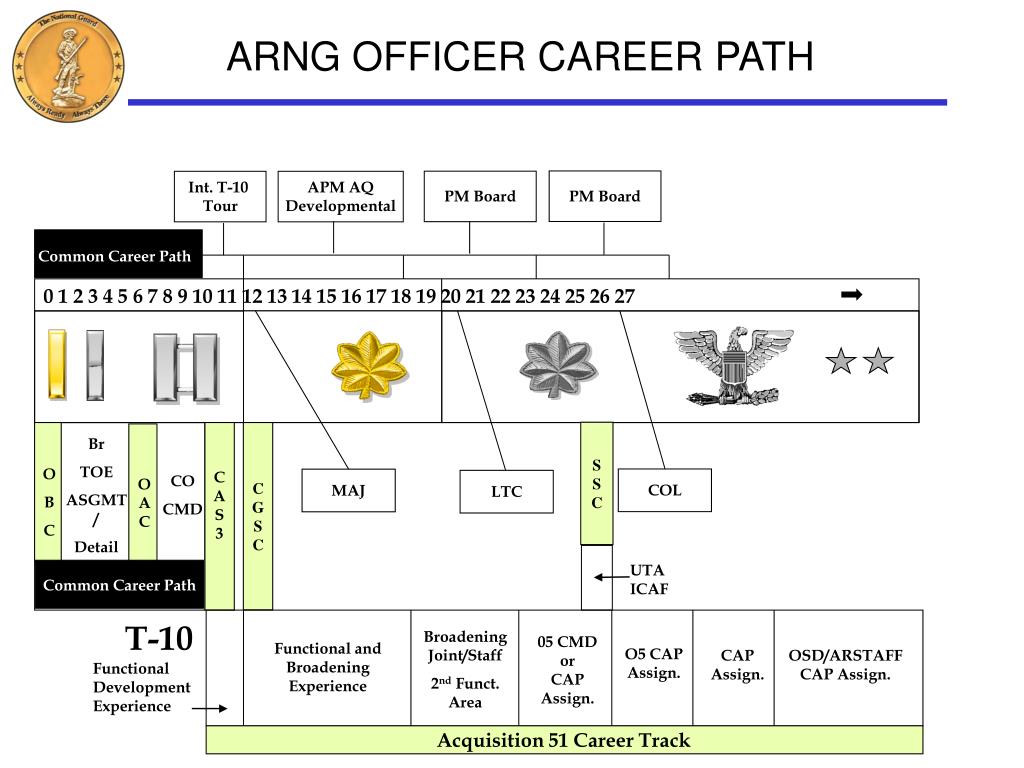
Promotion in the Guard is a bizarre mixture of merit, tenure, and sheer luck of the unit assignment. Unlike Active Duty, where you are in a massive pool competing for slots, the Guard promotes into specific vacancies within the state. You might be a brilliant Captain, but if there is no Major slot available in your specific unit, you will be stuck. This is known as being "pinned but not promoted"—you hold the rank but not the position, which can be a career purgatory. The timeline is typically slower. An Active Duty officer might make Major in 10-12 years; a Guard officer might take 14-16 years, depending on the state's budget and force structure.
However, the system is not without its loopholes. You can apply for "military school" slots that give you credit, and you can be "cross-leveled" to another state if your state lacks a position. The long-term civilian career prospect is actually enhanced. Having "Major" on your resume for a decade while working a civilian job shows a level of sustained commitment that is rare. The problem is the "up or out" system found in Active Duty is more lenient in the Guard. You can be passed over for promotion and still continue to serve, which is a blessing for those who prioritize citizenship over rank, but a curse for those who are type-A ego-driven. You must decide if you are serving for the rank or for the mission. If it’s the former, the Guard will frustrate you.
4. What is the physical and mental health reality for a part-time officer?
The physical reality is often ironically more demanding than Active Duty. On Active Duty, you have time in your schedule for physical training (PT). In the Guard, you are squeezing your PT into your off-hours between a demanding civilian job and family obligations. The Army Combat Fitness Test (ACFT) does not care if you had a late night at the office; it demands a high level of strength and endurance. This often leads to a gym obsession that borders on narcissism, or alternatively, to a slow descent into obesity—two sides of the same unhealthy coin. The mental health aspect is even more insidious. Guard officers suffer from high rates of "role conflict" stress. You are not just managing your own stress; you are managing the stress of your soldiers who might be struggling with civilian job loss or marital issues—issues that are not present in the same intensity for Active Duty commanders.
Access to mental health care is a paradox. You have Tricare, but if you check a box on a military health questionnaire indicating "suicidal ideation," you can trigger a bureaucratic avalanche that might flag you for security clearance reviews or jeopardize your civilian career if your employer gets wind of it (which they shouldn't, but paranoia is real). Therefore, many Guard officers avoid official channels and pay out-of-pocket for civilian therapists. The best modern advice is to build a "peer support" network of fellow officers. The stereotypical "barracks gossip" is actually a vital mental health resource. You need someone who understands why a simple civilian mistake feels like a personal failure in uniform. The Guard is getting better at mental health resilience, but the culture still stigmatizes fragility. The modern officer must be the one to break that stigma within their own unit, not for the Army's sake, but for their own longevity.
5. Can I transition from Enlisted to Officer, and is it worth the hassle?
Absolutely, and it is known as the "Green to Gold" pathway or, in the Guard specifically, the State Officer Candidate School (OCS) route. Enlisted soldiers who become officers are often the best leaders because they have seen the consequences of poor leadership from the bottom up. They know what it feels like to be given a nonsensical order. The "hassle" is significant: you will attend OCS, which is a deliberate, brutally exhausting test of your ability to handle stress. You will be treated like a worthless recruit for months, even if you have 10 years of enlisted service and a master's degree. This is psychological screening, not a training course.
Is it worth it? Financially, yes. The pay jump from a senior NCO (E-7) to a junior officer (O-1E) is substantial. Career-wise, it opens doors to staff positions and command. But the real reason is the shift in responsibility. As an NCO, you enforce standards. As an officer, you set the conditions for those standards. The trade-off is a loss of the "hands-on" technical work. If you love fixing the humvee, stay an NCO. If you love the politics of securing the funding to fix the humvee, become an officer. The dark side of this transition is the "lost tribe" syndrome. Your former enlisted peers will no longer invite you for their informal lunches (even if you were friends), because the rank structure creates a social distance. It can be lonely at the top. But the view of the operational landscape is unmatched.
We often look for leadership salves in podcasts or executive retreats, but the Army National Guard officer’s journey strips away the pretense. It connects us to a primal human need: the need to be part of a tribe that values sacrifice over self-gratification. In an age of digital detachment, the Guard officer deals in the currency of physical presence—showing up at 0500 in the rain to conduct a formation, checking on a soldier's family during a crisis. It reminds us that the greatest management principle is not "maximizing shareholder value," but rather "taking care of your people," because they are the only asset class that matters in a crisis.
For the rest of us, the lesson is not to enlist, but to adopt the guard mentality. It is the ability to operate in two different realities—the one where you must make payroll and the one where you might be asked to risk your life—and to find a coherent identity within that chaos. This dualism is profoundly human. We are all, to some extent, juggling the expectations of our families, our employers, and our own inner moral codes. The Guard officer just does it with a distinct uniform and a higher stake. They are a mirror held up to our potential, reflecting that we are all capable of more than our daily job title suggests.
Ultimately, the story of the officer in the Army National Guard is a story of permission. Permission to be more complex than a LinkedIn profile. Permission to serve a cause larger than the quarterly earnings report. It is a testament to the human capacity for compartmentalization that somehow yields a more integrated self. They do not choose the Guard to escape civilian life; they choose it to infuse civilian life with a sense of gravity and purpose. In their continued service, we find a powerful, quiet argument that the best version of ourselves is often the one that exists in the tension between who we are at work and who we are when the nation calls.