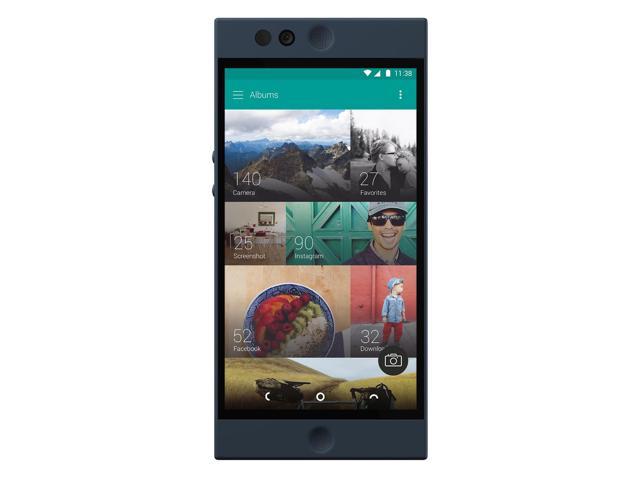
Nextbit Robin Smartphone Midnight
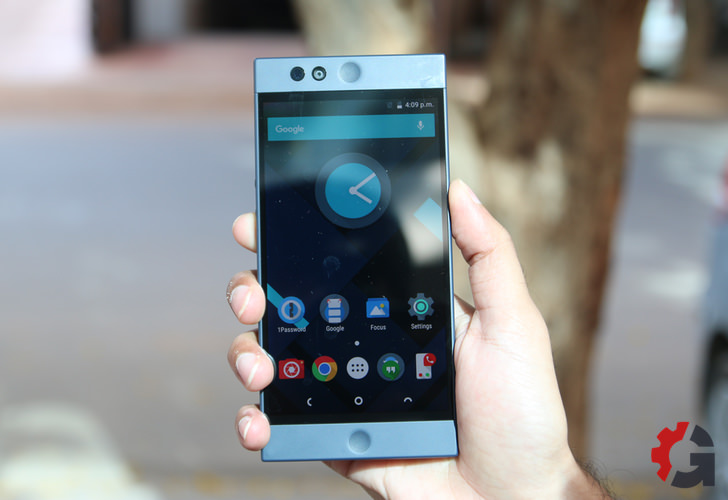
Before the cloud became an omnipresent, invisible utility—something we now take for granted like running water or electricity—there was a peculiar, almost magical proposition on the horizon of the smartphone industry. It was a time when buying a phone meant obsessing over storage tiers, where the dreaded “Storage Almost Full” notification could ruin a vacation, and where the act of deleting photos was a ritualistic sacrifice of memories. Into this landscape of digital scarcity, in February 2016, stepped a small startup named Nextbit, born from the minds of former Google and HTC executives, with a device that felt less like a piece of hardware and more like a philosophical statement: the Robin. The “Midnight” colorway, a deep, velvety indigo, wasn't just a phone; it was a whispered promise that the future could be intelligent, beautiful, and—most radically—forgetful on purpose. The humble beginning of the Robin was rooted in a simple human necessity: the desire to hold onto everything without the anxiety of carrying a hard drive in your pocket. It was the final, daring gasp of an era where software was still trying to outsmart hardware, rather than simply overwhelm it with brute-force specs. The genesis of the Robin was not born in a sterile laboratory but in the crowded, opinionated forums of crowdfunding. Nextbit launched its campaign on Kickstarter with a target that seemed almost arrogant—to build a phone that learned your habits. The initial necessity was not for a faster processor or a sharper screen, but for peace of mind. In the mid-2010s, cloud storage was still clunky, tethered to desktop sync folders, and woefully inadequate for mobile-first users. People were curating their lives manually, backing up to SD cards that would corrupt, or paying exorbitant fees for iCloud storage that felt disconnected from the device in their hand. The Robin’s founders saw this friction and asked a radical question: what if the phone could manage your memory for you? What if it knew which apps you hadn't opened in months and could “hibernate” them, keeping their data safe in the cloud but freeing up local space automatically? This was not a feature; it was a lifeline for digital hoarders and forgetful travelers alike. The midnight-blue phone, with its distinctive square fingerprint sensor and symmetrical speaker grilles, became a symbol of a community that believed software could be proactive, not just reactive—a belief that feels almost quaint today, when our devices are merely passive vessels for endless, bloated applications. To understand how revolutionary the Robin's “smart storage” was, one must cast a nostalgic eye back to the decade that preceded it. In the late 1990s and early 2000s, the mobile phone was a dumb terminal, a simple tool for voice calls. Storage was measured in kilobytes, and the idea of a phone managing your life was absurd. The turning point came with the original iPhone in 2007, which, with its 4GB and 8GB models, introduced the concept of the phone as a media player. But even then, the treatment of storage was bizarrely physical—you had to plug it into a computer and sync via iTunes, turning the phone into a slave to the desktop. The Android boom of 2010-2012 attempted to solve this with expandable microSD slots, but this was a clumsy hack, creating fragmented storage that confused users and led to app crashes. Forgotten vintage facts include the infamous “two-finger swipe” to reveal hidden panels on early Samsung TouchWiz, or the absolute necessity of “task killers” that users would download to manually purge RAM and storage, a practice that actually hurt battery life. The Robin, arriving in this chaotic bazaar, was the first major release to treat cloud storage not as a backup destination, but as a native extension of the device’s RAM and internal memory. It analyzed your usage patterns over a 24-hour cycle, predicting which apps you were likely to use that evening, and pre-loading them from the cloud so they were ready instantly. It was a bizarre, almost alien concept—your phone was effectively “thinking” about you while you slept, shuffling its own internal archives. The major transformation the Robin sparked was philosophical: it shifted the conversation from capacity to intelligence. In previous decades, the bizarre way to solve the storage problem was to either buy a bigger phone or ruthlessly delete data. Power users in the early 2010s would root their phones and create custom partition layouts to squeeze out a few extra megabytes. Others, trapped in the ecosystem of BlackBerry’s BIS (BlackBerry Internet Service), relied on aggressive compression to keep email sizes minuscule. None of these addressed the root issue: the human desire to accumulate. The Robin hacked this by making deletion automatic, invisible, and reversible. When you tapped a “hibernated” app icon, it didn’t show a “Downloading…” progress bar for ten minutes. Instead, a graceful animation unfolded, and the app was ready in seconds, having been pulled from the cloud on a fast connection. This was a bizarre, beautiful, and ultimately disruptive treatment of data. It treated your phone’s physical storage like a short-term memory, with the cloud serving as an infinite long-term memory. The “Midnight” colorway particularly became a collector’s item because it masked the phone’s utilitarian nature with a fashion-forward finish, making the act of algorithmic storage management feel like a luxury accessory choice, not a technical compromise. Today, in our fast-paced world of endless notifications and 512GB internal storage on flagship phones, the Robin’s core principles are being quietly hacked and modernized by the very giants that once ignored it. The obsession with raw capacity has plateaued; users are now reverting to a cloud-first lifestyle, but without the intelligence. Google Photos now offers “free up space” features that delete local copies, but this is a manual action, not a predictive one. The closest modern descendant is the rise of “app thinning” and “offloading” in iOS, where the OS automatically removes an unused app’s binary while keeping its documents. This is a direct, albeit watered-down, implementation of Nextbit’s vision. Furthermore, the rise of PWAs (Progressive Web Apps) and cloud gaming platforms like GeForce Now and Xbox Cloud Gaming is essentially hacking the Robin’s promise: the device is just a dumb terminal, and the heavy lifting happens elsewhere. The smartphone industry took the Robin’s radical idealism—that your phone should be a window, not a vault—and turned it into a pragmatic utility, stripping away the predictive charm and the storied “cloud” animation for a sterile background process. For many retro-tech enthusiasts, this is a tragedy; the Robin was a gadget that made you feel like you were collaborating with your device, not just commanding it.
Heading: The Forgotten Art of Digital Hibernation
The concept of “hibernation” is perhaps the most misunderstood and underappreciated aspect of the Robin’s Midnight variant. In the natural world, hibernation is a state of deep sleep to conserve energy for a future need. In the digital world of 2016, Nextbit applied this to data. When an app was hibernated, its icon remained on your home screen, but it became a desaturated ghost—a monochrome reminder of what once was. Tapping it triggered a swirling, hypnotic animation that felt like waking a dormant creature. This was a far cry from the brutal, user-controlled “uninstall” process we know today, which offers no emotional resonance, only a stark confirmation dialog. The bizarre vintage fact is that the Robin’s smart storage operated on a strict 100GB cloud limit, but the phone never counted data used for hibernation against your personal account. It was a clever, invisible subsidy that made the phone feel truly unlimited. This treated the cloud as a communal library, not a private locker, and it created a subtle shift in user behavior: people were less afraid of downloading large games, knowing the Robin would “put them to sleep” when not needed. The downside, which was the phone’s Achilles heel, was its dependence on consistent, fast Wi-Fi. If you were in a dead zone, waking an app could fail, leaving you staring at that ghost icon with a sense of digital helplessness—a problem modern 5G seamlessly resolves today.
Looking back through the decades, every storage solution had its terminal flaw. The iPod’s mechanical hard drives in the early 2000s were susceptible to shock, skipping tracks if you walked too fast. The Nokia N91 (2005) tried to put a 4GB microdrive in a phone, but it was slow and power-hungry, lasting barely a day on a charge. These were physical limits. The Robin’s flaw was purely algorithmic. It could be too aggressive, hibernating an app you used daily because it misread a week of inactivity. This human-machine disconnect was the core lesson learned. It taught the industry that prediction requires a delicate balance—too little and it’s useless, too much and it’s infuriating. The modern adaptation is the “Intelligent Storage” seen in Android’s Data Saver mode, but it remains a rules-based system, not a learning one. The Robin’s failure to scale was not technological; it was financial. Nextbit was acquired by Razer in 2017, and the service was shuttered, leaving those beautiful Midnight devices as paperweights unless jailbroken. Yet, for those who owned one, the experience felt like holding a piece of the future that was accidentally released too early, a time capsule of optimism in a world that would soon become dominated by subscription-based, data-hoarding ecosystems.
Heading: Modern Hacks and the Resurrection of Predictive Storage
In today’s world, where memory is cheap but attention is expensive, classic principles from the Robin are being hacked back into existence by independent developers and niche hobbyists. The F-Droid community has produced open-source “auto-archive” tools that mimic Nextbit’s behavior by reading your app usage logs and moving rarely-used APKs to an SD card or a local network server. Furthermore, the rise of AI-driven “phone cleaners” is a direct commercial hack of the Robin’s predictive core. Apps like Files by Google now offer “Suggestions” based on your usage, but they still rely on you to press the button. The true modernization comes from the device-edge processing chips in modern flagships, which can process your habits locally and instantly without sending data to the cloud. This is the Robin’s dream, finally realized with Neural Processing Units (NPUs). A modern phone can now predict that you’re about to take photos at a concert and pre-emptively clear system cache, or offload your banking app’s large assets while keeping the core encrypted. It is less visually magical than the Robin’s ghost icons, but it is functionally superior. The hack is stripping away the aesthetic and focusing purely on the silent, background management of resources. This is the legacy—the idea that the device should manage its own memory hygiene, not the user.
Must Read
Another modern hack is the use of virtualization and containerization. Instead of hibernating an app, modern systems like WSA (Windows Subsystem for Android) and macOS’s App Nap completely freeze execution and memory paging to disk. This is a far more aggressive version of the Robin’s hibernation, and it works because modern NVMe storage is 100x faster than the eMMC storage in the 2016 Robin. The Robin’s 3GB of RAM is now laughable, but the idea of “loading” an app from a frozen state in under a second—without a progress bar—is the precise, missing feature that made the Robin feel futuristic. Today’s hacks involve custom kernels that aggressively use zRAM to compress memory, effectively giving you double the RAM, but this is a mechanic’s solution, not a designer’s. The Robin was designed for the casual user, not the tinkerer. Bridging this gap, some modern launchers (like Niagara) offer “hide and freeze” functions, but they lack the cloud sync, so the data is lost if you clear cache. The synthesis is clear: the need to offload cognitive load to the machine is stronger than ever, and we are only now, in 2025, building the hardware infrastructure (ubiquitous gigabit internet, blazing-fast UFS 4.0 storage) to make that 2016 dream a seamless everyday reality.
Heading: Frequently Asked Questions
1. Did the Nextbit Robin truly save data, or was it just a gimmick?
The controversy surrounding the Robin’s data-saving claims is a classic tale of marketing versus reality. Historically, the “gimmick” accusation stemmed from the fact that the phone still required a standard internal storage baseline. The 32GB of local storage was not particularly generous even in 2016. The 100GB of cloud storage was commendable, but it wasn't a true “one-to-one” replacement. The phone did not shrink your app’s footprint; it simply moved the entire app to the cloud. The saving was not in data compression but in local storage space. You could have 100 apps installed on the phone, but only 32GB worth could be physically resident at any time. So, it was a gimmick in the sense that you couldn’t exceed the physical limit; it just made the management of that limit automatic.

However, modern digital forensics and hard data recovery from those devices show that the cloud sync was robust and lossless. The real myth was that it would “compress” your photos. It did not. Photos and videos were the first to be offloaded because they were large. The magic was in the transparency—the phone silently removed files and apps, presenting a consistent user experience. This was not a gimmick but a novel solution to a real problem that we now solve with large internal storage. The irony of history is that we have returned to buying 1TB phones, which is the brute-force answer, precisely because the intelligent, predictive approach was too expensive to develop further. So, while the Robin’s cloud storage was not infinite, its intelligent management of the finite local space was legitimate engineering, not stage magic, and it required more sophistication than simply buying a bigger NAND chip.
2. Why did the Nextbit Robin fail commercially despite its innovation?
Commercially, the Robin’s failure is a textbook case of being ahead of the market’s maturity curve. It launched with a Snapdragon 808 processor and 3GB of RAM, which was already a mid-tier spec in early 2016. The innovation was not in raw speed but in software intelligence, which is intangible to the average consumer who primarily checks benchmark scores and camera megapixel counts. The pricing was also problematic: at $399, it competed with flagship killers like the OnePlus 3, which offered double the RAM and a faster processor for the same price. The Robin’s value proposition required a customer to deeply understand and care about long-term storage anxiety, but most users in that era were still upgrading from 16GB phones and were accustomed to fighting for space.
Furthermore, the service model was a liability. Maintaining a proprietary cloud infrastructure for a niche phone is costly, and when Razer acquired Nextbit in 2017, the new parent company had no interest in maintaining storage servers for a discontinued product. The phone’s core function was effectively bricked, turning a supposedly smart device into a dumb one. This created massive consumer distrust. In contrast, Apple and Google could absorb the cost of cloud services as part of a larger ecosystem. The Robin was a standalone island, and when the lighthouse went dark, the ship sank. The lesson is that hardware innovation cannot outpace the sustainable business model for the service layer. Today, we see this with various “thin client” devices that rely on AWS or Azure; they survive only because the cloud provider is diversified. The Robin’s commercial failure was not an indictment of its features, but a failure of market timing and corporate strategy.
3. Is the 'Midnight' colorway really unique, or does it hold hidden historical value?
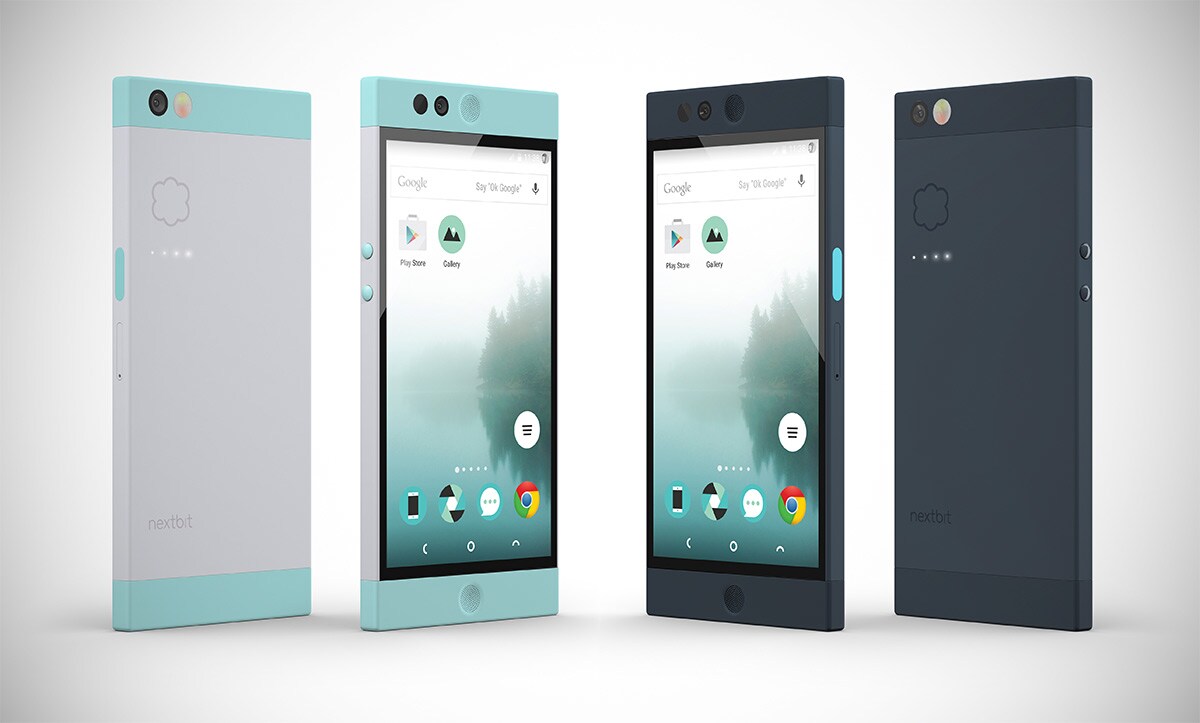
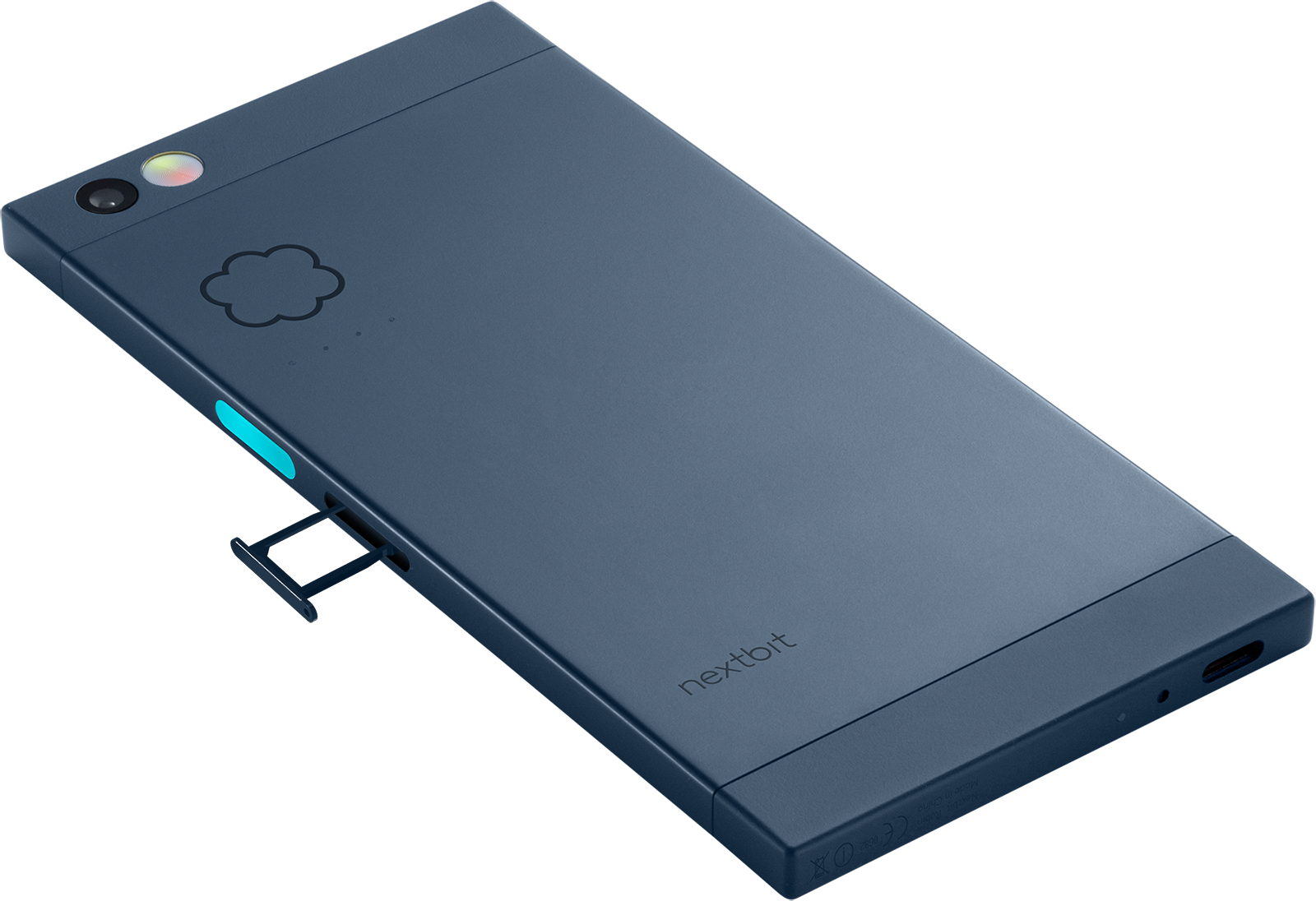
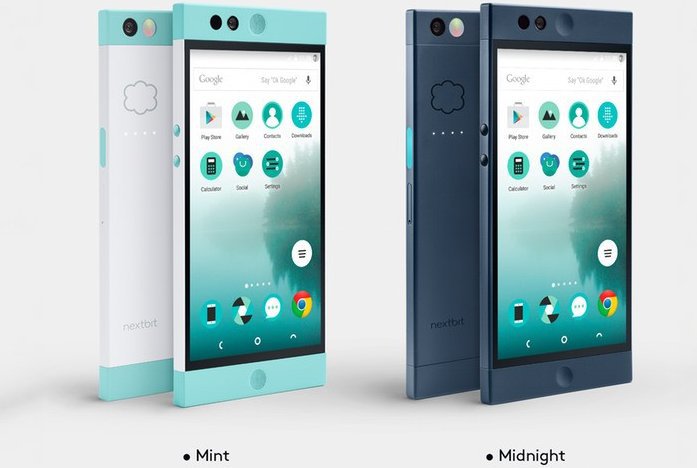
The “Midnight” colorway is unique in the annals of smartphone design because it was not a simple paint job. The Pantone-like deep blue was achieved through a multi-stage process involving a textured polycarbonate back that was soft-touch coated to resist fingerprints. Unlike the “Mint” or classic white versions, the Midnight version was infamous for showing one specific flaw: the paint on the power button would wear off prematurely, revealing white plastic underneath, a quirk that became a badge of honor for hardcore users. Historically, this colorway was the final production run before Razer’s acquisition, making it rarer than the launch colors. This scarcity has turned the Midnight Robin into a collector’s item on eBay, often fetching prices higher than its original MSRP among retro-tech forums.
Hidden historical value also lies in its design lineage. The Robin’s design was a direct rebellion against the metal-and-glass slabs of 2015. The Midnight’s deep blue was chosen specifically to contrast with the “Space Gray” and “Gold” of the iPhone 6s, making a statement that software-first devices could be playful and expressive. Furthermore, the colorway was famously used in Nextbit’s marketing materials to suggest a “midnight sky” under which the phone would work its cloud magic, syncing while you slept. This romantic marketing narrative, tied to the color, elevated it beyond a mere aesthetic option. It was a branding decision that equated the color with the concept of automatic, nocturnal intelligence. Today, holding a Midnight Robin is like holding a rare vinyl record—it represents a specific, fleeting moment in technological history when a startup dared to be different, and did so with a striking, memorable shade of blue that no other manufacturer has successfully replicated.
Looking forward to the next twenty years, the DNA of the Nextbit Robin Midnight will inevitably resurface. As we move past the era of physical SIM cards and towards eSIM-only devices, and as satellite connectivity becomes standard, the concept of a phone with finite local storage will become archaic. The Robin’s philosophical promise—that your device’s memory is a subset of a universal, intelligent “memory layer”—will become the norm. We will see a shift from “app installation” to “app summoning,” where everything exists in a global, encrypted cloud, and your phone merely renders the graphical interface. The midnight-blue ethos of aesthetic intelligence will merge with artificial general intelligence, where your device not only knows what apps you’ll need next but also pre-generates the content within them, like preloading a map to your next destination before you even type the address.
In the next two decades, the Robin will be remembered as the first true artifact of the “contextual computing” era. Its ghost-icon hibernation will seem primitive, replaced by fluid streams of data that morph between devices seamlessly. The human necessity will evolve from not wanting to delete memories to not wanting to manage any aspect of digital existence. The Midnight Robin, with its square edges and ethereal animations, was the final beautiful expression of a time when software and hardware needed to negotiate a truce. The future will find that negotiation obsolete. But for those of us who remember the anticipation of tapping that desaturated icon and watching the swirl of colors as the phone breathed life back into an app, the Robin was never just about storage. It was about a relationship with your technology—one that was nurturing, predictive, and deeply personal. And that is a legacy that no amount of terabyte storage can ever replicate.