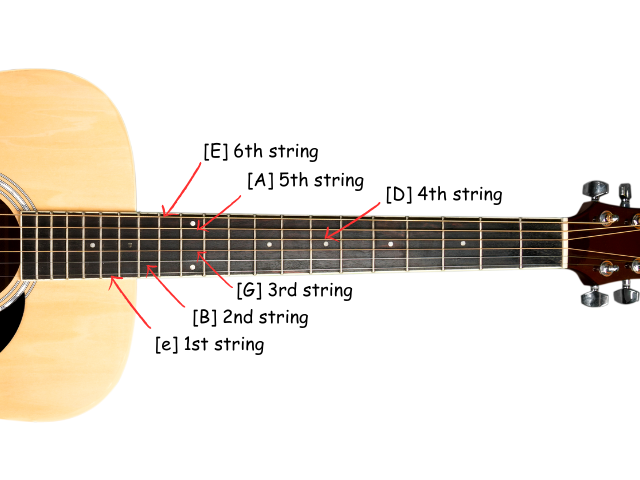
Names Of The Strings On The Guitar

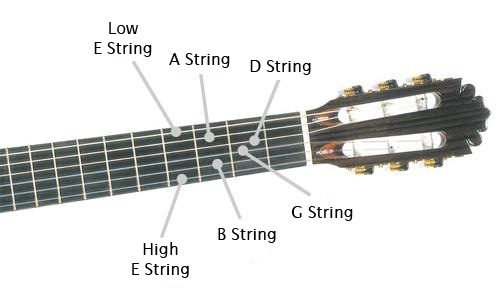
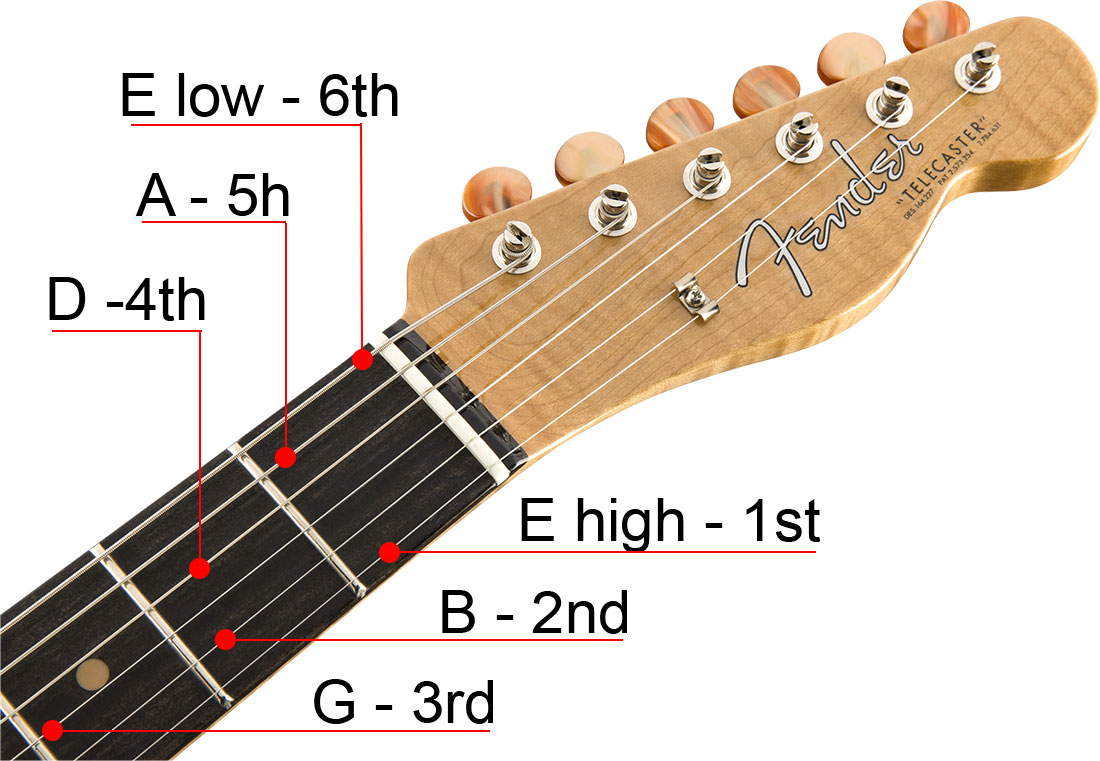
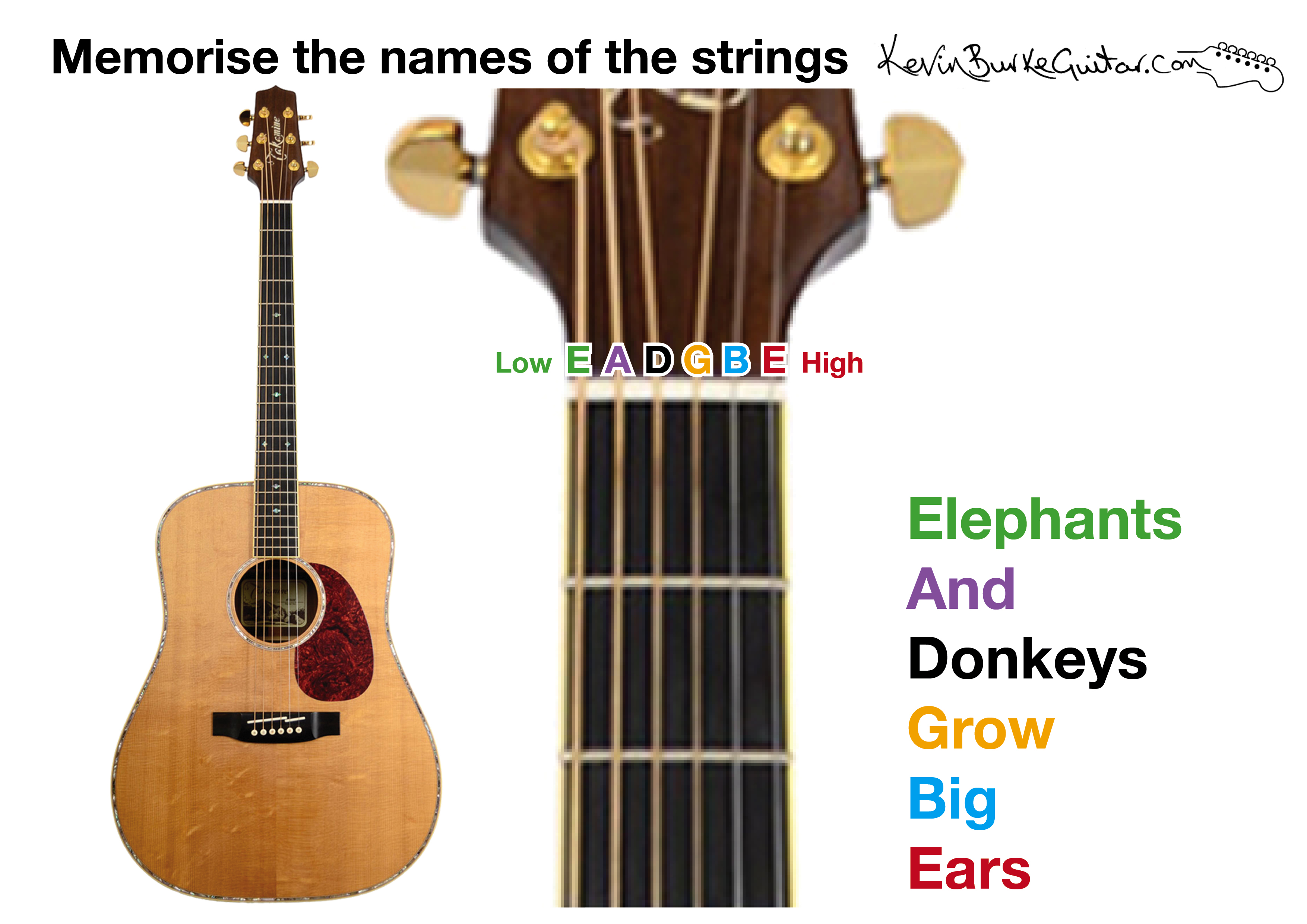
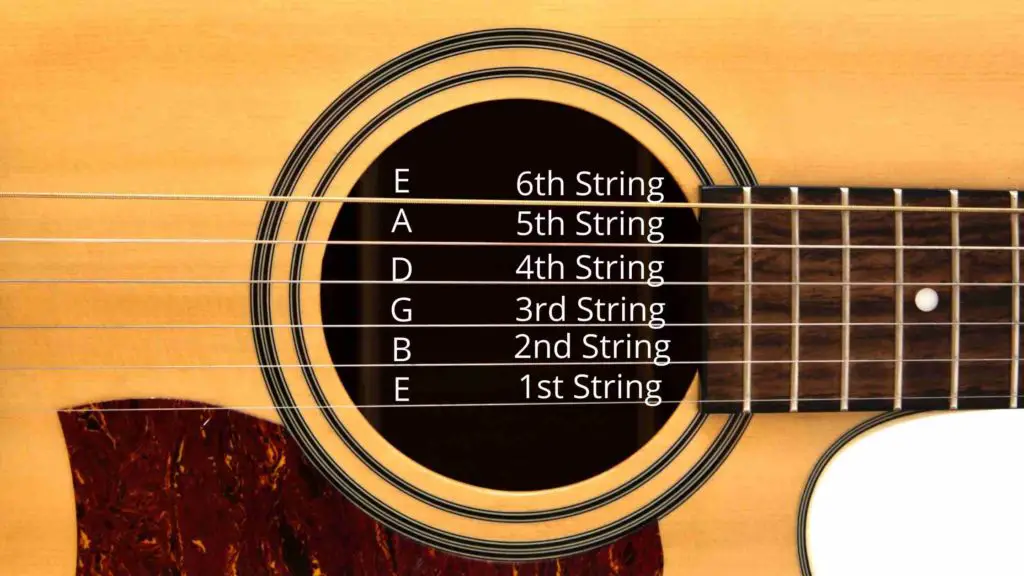
Before the first chord was ever strummed in a smoky Delta juke joint or a Viennese parlor, before the electric hum of a solid body cut through the static of a 1950s radio, there was a simple, almost primal necessity: the need to tune. It is a ritual every guitarist knows, a private conversation between the player and the instrument, a quiet moment of adjustment before the noise begins. But look down at that fretboard, at the six slender metal threads stretching from the nut to the bridge, and you are not just looking at tuned wire. You are looking at a living archive of musical history, a lineage that stretches back through centuries of conquest, trade, and technological accident. The names we give these strings—E, A, D, G, B, and high E—are so ubiquitous, so ingrained in muscle memory, that we rarely pause to ask the most fundamental question: why these letters, and why this particular order? The answer is not found in a single moment of invention, but in a sprawling, chaotic, and utterly fascinating evolution of human expression, a story that begins not with a guitar at all, but with the ancient struggle to make a single voice carry across a crowd. The ancestral lineage of the guitar is a tangled family tree. Its most direct forbearers are the lute and the vihuela, instruments that arrived in Europe from the Islamic world via the Iberian Peninsula during the 8th and 9th centuries. The lute, with its pear-shaped body and delicate gut strings, was the aristocrat of the Renaissance court, but its tuning was notoriously unstable and varied from region to region. The vihuela, Spain’s answer to the lute, adopted a tuning that was essentially that of a modern guitar’s first four strings—G, C, E, A—though the pitches were different from today. The crucial pivot point, the moment the modern system solidified, occurred in the late 18th century. As the guitar began to displace the lute’s popularity, instrument makers sought a tuning that was both logical for chord voicing and forgiving for the player’s left hand. They settled on a system of intervals based on the perfect fourth—the distance between each string, save for one crucial exception. This was not an acoustic revelation, but a pragmatic one, a compromise forged in the fires of necessity: how to allow a player to form a full-bodied, resonant chord without the physical contortions required by earlier instruments. The birth of the standard tuning, E-A-D-G-B-E, is a masterclass in human compromise. The logic is almost diabolical in its simplicity. By tuning the bottom four strings in perfect fourths, the guitarist can move barre chords up and down the neck with terrifying efficiency, a single finger shape unlocking every key. But the major third between the G and B strings—that tiny, seemingly illogical break in the pattern—is the genius stroke that allows for the open chords to sound rich and full. Imagine a perfect fourth between G and B: you would get a C, making some of our most beloved open chords, like C major and A minor, physically impossible to finger cleanly. This tuning was standardized by Miguel Garcia, a Parisian guitar maker and publisher in the 1810s, who effectively codified the six-string instrument’s pitch relationships. It was a decision that sealed the guitar’s fate, allowing it to become the harmonic workhorse of Western music. But it was also a decision that would create a generation of "cheaters," players who would utilize alternative tunings like Drop D or Open G to sidestep the complexity of the standard, to find shortcuts to the soul of the instrument.
The Golden Age of Wire: How Materials Forged the Names We Know
If the 18th century gave the guitar its sonic DNA, the 19th and 20th centuries gave it its voice. The names have always been the same, but the character of the strings—and the way players understood them—underwent a violent transformation. In the early days, strings were made of sheep or ox gut, prized for their warm, complex timbre but notoriously sensitive to humidity and temperature. A touring musician in the 1850s would carry thirty or forty spare strings, not out of showmanship, but out of sheer survival—a single sharp note played too hard could snap a G string into a dull thud. The low E and A were often wrapped with silver or silk to add mass, but they were still thick, flaccid ropes that buzzed against the frets at the slightest modern touch. Then came the Industrial Revolution, and with it, a paradigm shift. The invention of machine-wound metal strings, perfected around 1900, allowed for higher tension and greater volume. For the first time, the low E string was no longer a thick gut cable but a steel core wrapped in a thin ribbon of bronze or phosphor. This was a seismic event for the naming convention, because it transformed the low strings from mere gut strands into honest-to-god metal cables, the very essence of the modern blues and country sound. But this technological leap forward produced a bizarre crisis for the high strings. The unwound B and high E strings, still made of plain steel, were now so thin and sharp that they would cut into the wooden nut of the guitar, causing frequent breakage. Guitarists in the 1920s adapted by using "open-gear" tuners that allowed them to restring the guitar in under two minutes, a skill that became as essential as chord changes for the traveling musician. This was also the era of the oddities. In the 1930s, some niche luthiers experimented with "terz" guitars, which were tuned a third higher, shifting the entire string naming scheme, but this was a failed experiment, a footnote in the history books, overshadowed by the rise of the electric guitar. The 1940s and 1950s saw the true "hacking" of the string names, not by changing their letters, but by weaponizing their tension. The introduction of the electric guitar did not just amplify the sound; it changed the physical relationship with the strings. Light-gauge strings (thinner diameters) were marketed for ease of bending, allowing players like B.B. King to practically scream with vibrato. The ubiquitous "E, A, D, G, B, E" became a battle plan. In the 1960s, the psychedelic era brought a resurgence of open tunings, but this time, they were not used for classical music but for mind-expanding drones and raga rock. Players would loosen their low E string down to a D, effectively changing the name of that string for the duration of the song, only to tighten it back up, creating a dissonant ritual that audiences heard as pure genius. The names were no longer fixed law, but dynamic tools—rubber bands of potential, waiting to be re-tuned at the whim of the artist.The Digital Fretboard: Hacking the Standard for the Modern Player
In today’s fast-paced, algorithm-driven world, the classic E-A-D-G-B-E is being challenged by technology that would have seemed like witchcraft to a 19th-century lutenist. The modern player is a hacker, a programmer of the fretboard. The rise of the clip-on polyphonic tuner and the mobile tuner app has made "standard tuning" a conversational starting point, not a sacred law. Apps like Fender Tune and GuitarTuna allow the user to instantly jump into Drop C, Open G, or even more esoteric tunings like DADGAD, with a tap of the screen. This has democratized the old "cheating" methods, allowing novice players to instantly access heavy metal shimmer or ethereal folk textures without years of theory. The name of the string is now just data—a starting frequency in a digital matrix that can be shifted at will. Furthermore, the physical interface itself is mutating. The rise of the MIDI guitar and the use of hexaphonic pickups—which translate each string’s signal into independent digital data—is hacking the naming convention at its core. In this world, the "G string" is not just a string; it is a trigger for a synthesizer or a sample library. A guitarist in 2024 can play a chord based on E-A-D-G-B-E, but the sound coming out of the speakers might be a full string section or a bass synth. The interval relationships remain, providing the geographic layout for the player’s fingers, but the sonic destination is limitless. The fast-paced world demands instant gratification, and this is the ultimate hack: keeping the familiar neck geometry of standard tuning while completely redefining the sonic output. The old names are the map, but the destination is now entirely up to the software.The Eternal Questions of Tension: Myths and Modern Truths
Why is the G string always the one that breaks?
The legend of the "cursed G string" is as old as the guitar itself. In the gut-string era, the G string was often the thickest of the unwound set, and it bore the brunt of the tension when players made barre chords, leading to frequent snaps. But the modern myth is more nuanced. In the 1870s, when the string was tuned to the pitch we know today, the G was the boundary between the wound lower strings and the plain upper strings. As a plain steel string, it is subjected to extreme stress because of its relatively thin gauge and high tension relative to its mass. However, the true culprit is often the nut and the saddle. The G string, being slightly thicker than the B, creates a sharper angle when it exits the nut, causing friction and binding. This is not a curse, but a physics problem.
Modern luthiers have solved this by using specialized "string spreader" screws in the nut or by using graphite-infused nuts to reduce friction. The myth persists, however, because most casual players buy a standard string set and install it without filing the nut. The G string is not fragile; it is simply the one string that demands preparation. It is a lesson in the importance of the instrument’s geometry—a reminder that it’s not just the name we call the string, but the manner in which we present it to the bridge that determines its fate. The 1980s shredders, with their locking nuts and Floyd Rose tremolos, effectively "fixed" this issue for the metal genre, showcasing that the myth was never about the string’s imprudence, but about the imperfect interface we so often take for granted.
Could we have standard tuning in a different order? Why not A-D-G-C-E-A?
Historically, there were many attempts. The six-string guitar in the early 1700s had various tunings, but the concept of standardizing emerged from the need for chordal playability. The issue is not the letters themselves, but the interval they create. If we were to tune a modern guitar to A-D-G-C-E-A (all perfect fourths), barre chords would be physically impossible to play safely with a single finger shape. You would have to shift your hand for almost every chord, making the guitar a far more intellectually demanding instrument. The system we have is a compromise that banishes perfect symmetry to yield harmonic richness.
Must Read
Modern alternative tunings like "New Standard Tuning" (CGDAEG) proposed by guitarists like Robert Fripp exist today, but they are niche. The reason E-A-D-G-B-E remains is a powerful mix of inertia and musical pragmatism. Every teaching method, every chord chart, every tablature program is built on this foundation. To switch the order would be to erase a thousand years of accumulated muscle memory across the globe. The technical analysis shows that an all-fourths tuning is arguably more logical, but the guitar is not a logical instrument; it is a deeply human one, flawed and beautiful. The current system allows for the open minor chord shapes that resonate with our collective unconscious, and that emotional resonance easily outweighs any futuristic, scientific alternative.
Does the material of the string change its "name" or its purpose?
The name—the pitch note—remains the same regardless of whether you use phosphor bronze, pure nickel, or synthetic core. However, the material fundamentally alters the string's purpose in the sonic spectrum. A nylon string on the low E, rare but seen in parlor guitars, will deliver a soft, thumpy attack, changing the character of the entire bass response. In the 1930s, the use of "silk and steel" strings was a marketing coup, promising the ease of gut with the volume of metal, but they produced a darker tone that was unsuitable for the bright, aggressive tones of early rock and roll.
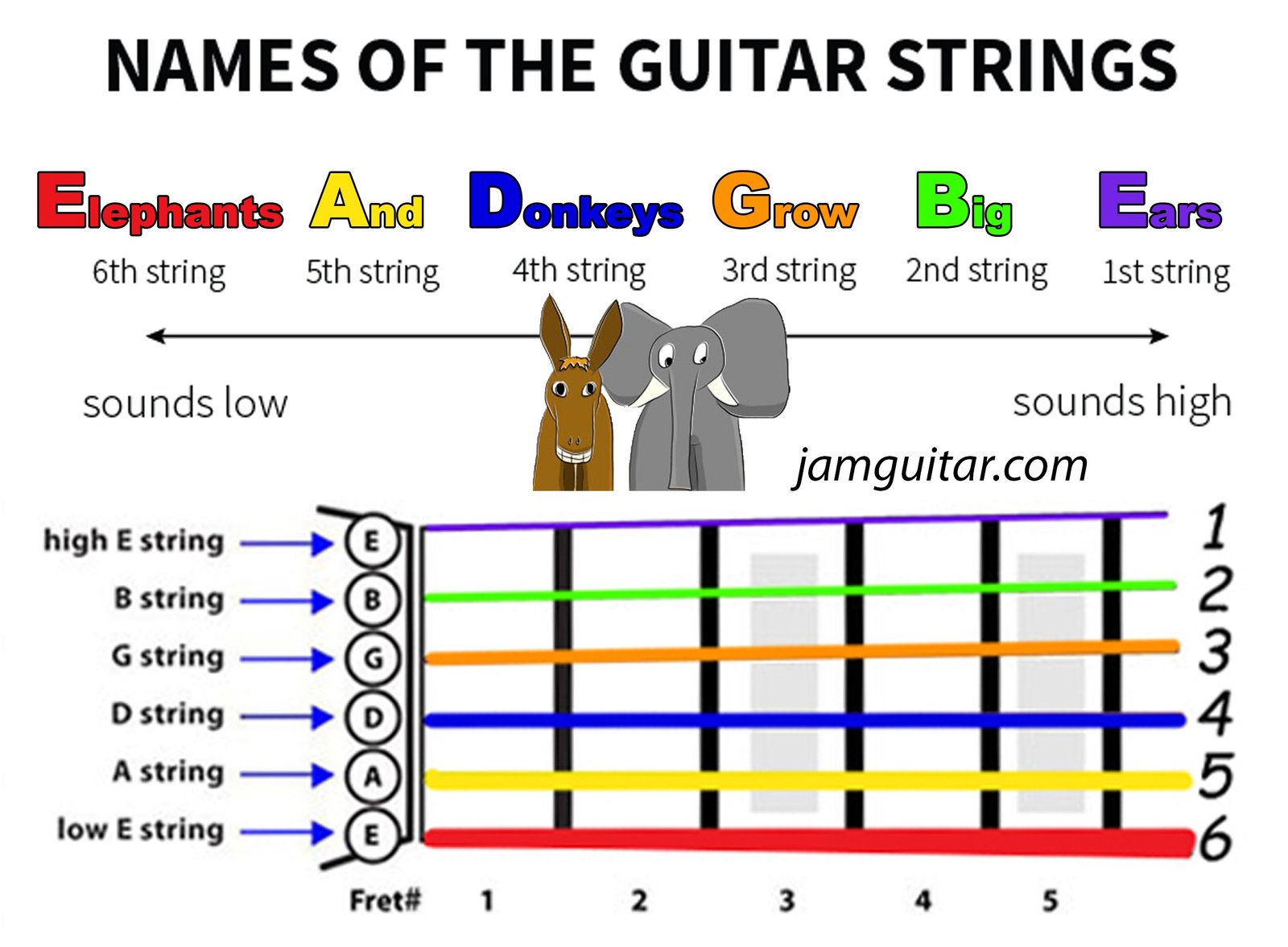
The purpose is also defined by the player. A jazz guitarist using flatwound strings (solid metal with a smooth outer surface) will see the "D" string as a vehicle for mellow, slippery note transitions, while a country player using roundwound strings sees the same "D" string as a tool for explosive twang and attack. The naming is a constant, but the identity of the string is a variable dictated by tonality. In the modern era, this has reached a peak with the advent of 8-string guitars, where the added low strings are given names like "F#" and "B". These names are not universal; they are inventions of the modern metal genre. The purpose is clear: to give the guitarist access to the sub-bass frequencies formerly reserved for the bass player, effectively hacking the standard tuning system to expand the guitar’s identity beyond its traditional melodic role.
Looking forward, the next 20 years will likely dissolve the physical necessity of the named string altogether. With the rise of virtual instruments and neck-less MIDI controllers, the guitar body may become a simple touchpad, and the "strings" will be rendered as virtual lines on a screen. The pitch of these lines will be instantly changeable, allowing a single instrument to mimic a sitar, a harp, or a synth wave. The tactile feedback of resistance and tension will be simulated with haptic motors, giving the illusion of a G string’s stiffness, but the sound will originate from a digital core. This is the ultimate evolution: the names will persist as a user interface, a ghost of the past, but the physical constraints we associate with them will evaporate. The player will be less of a musician and more of an architect of vibration, uploading tunings and string materials directly to the instrument via Bluetooth. But even in that futuristic tableau, the nostalgia of the physical string will retain its power. There is a romance in the specific, fragile melody of a brand-new set of high E strings plucking against a mahogany top—a sound that no digital emulation, no matter how precise, has fully replicated. The names of the strings will always be the gateway key—the secret code that unlocks the door to the past. Whether it’s a cello for the left hand of a classical player or a boundary-less synthesizer for the digital native, the concept of standard tuning remains the foundational mythology of modern music. It is a linguistic relic that proves that even our most advanced technological leaps are built on the simple, ancient logic of a vibrating piece of wire, a note called "E", and a human desire to make it sing.