
Mumbai Bandra Linking Road Shopping
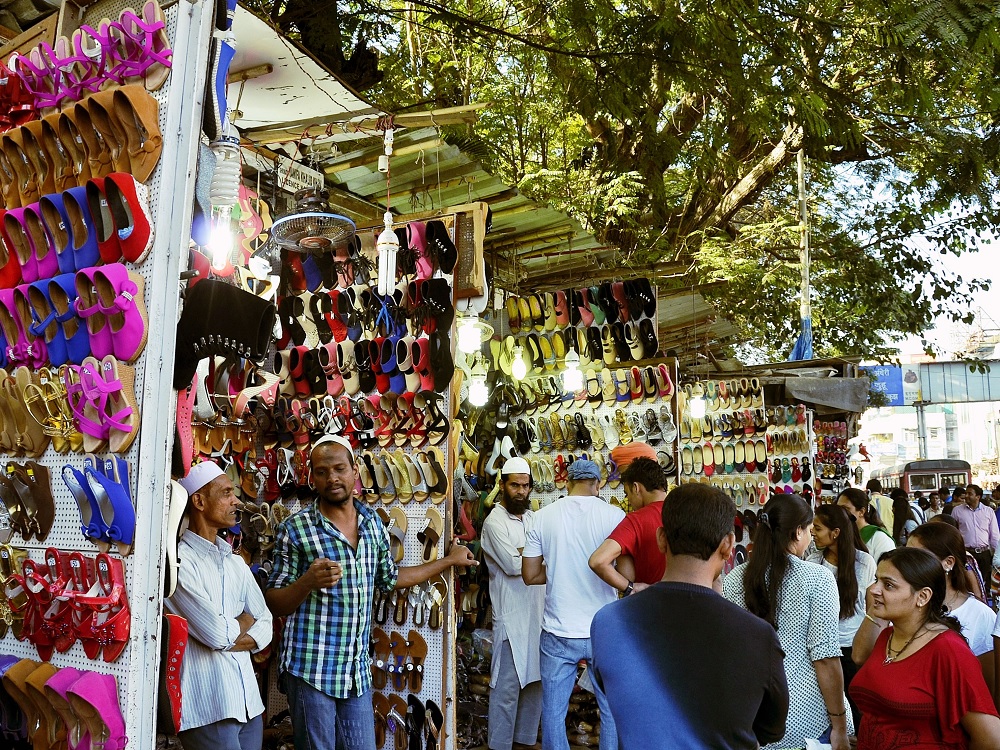
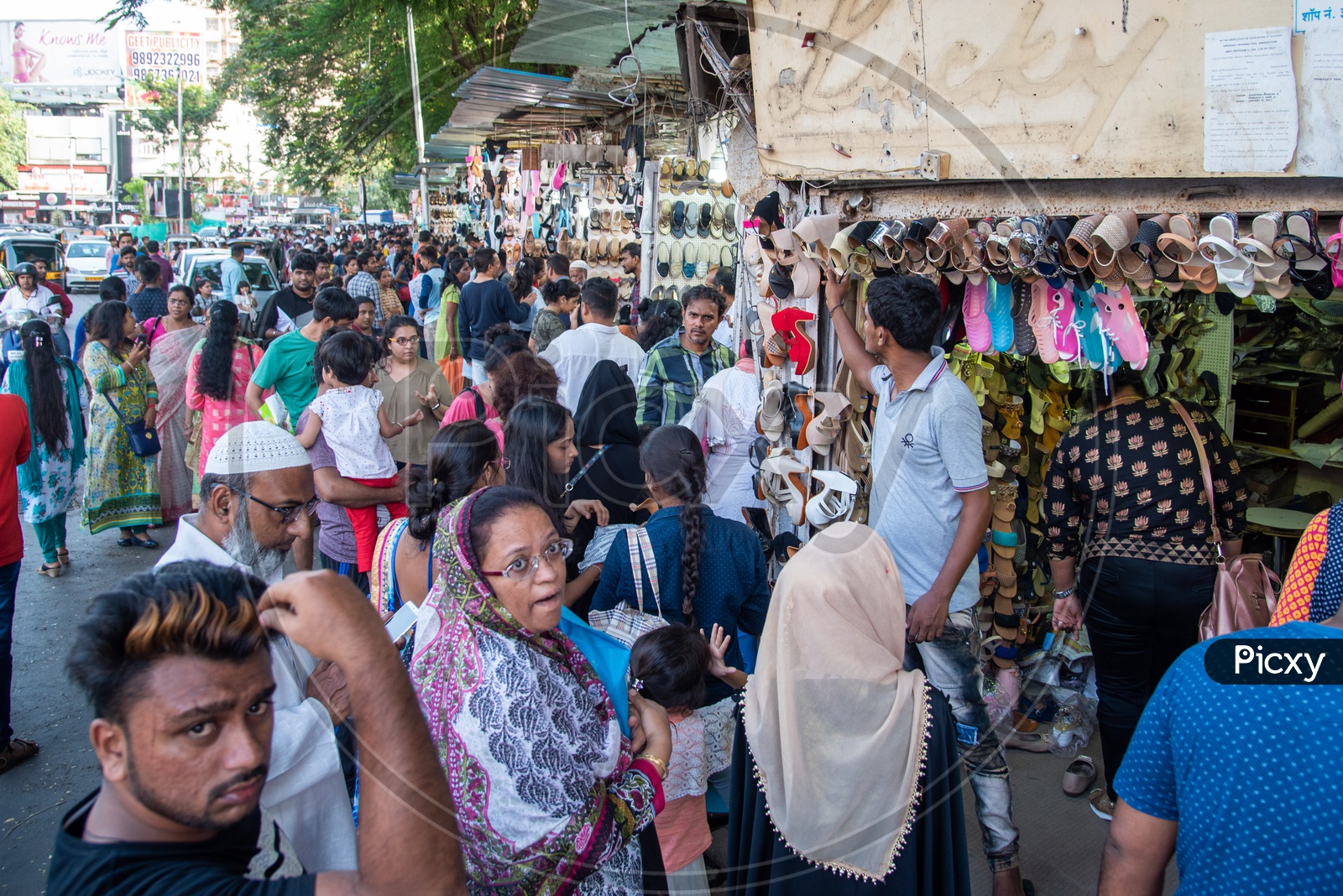
Linking Road in Bandra is not merely a street; it is a high-velocity, open-air marketplace operating on a hyper-localized economic model. To the uninitiated, it appears as pure, chaotic entropy—a swirling mass of human bodies, fabric, and bargaining. But viewed through a pragmatic lens, it is a complex, self-regulating ecosystem where supply chains, behavioral psychology, and material science collide. The physics here is defined by friction—not just of tires on asphalt, but of flesh against polyester, and of cash against calloused palms. Your ability to navigate this environment is directly proportional to your capacity to reduce that friction, optimizing your kinetic energy for maximum output (purchases) while minimizing thermodynamic load (heat exhaustion and fatigue).
This is not a shopping trip; it is an expedition into a biological arena. Your brain, flooded with dopamine from the sheer novelty and visual cacophony, is primed to make irrational purchasing decisions. The vendors understand this neurochemistry better than you do. They exploit the fight-or-flight response by creating artificial time pressure (“Last piece, madam!”), and they trigger the endowment effect by physically placing the garment in your hands, making you feel ownership before payment. To survive—and thrive—you must shift from a passive consumer to a data-driven systems analyst. You are no longer shopping; you are engaging in a live, improvisational audit of textile quality, retail markup, and social engineering.
Furthermore, the physical geography of Linking Road dictates a specific metabolic cost. The stretch between Bandra Station and KFC is approximately 1.2 kilometers, but the effective walking distance is tripled by the slalom effect of weaving through stationary groups. Your basal metabolic rate spikes, leading to dehydration and a drop in blood glucose, which impairs executive function in the prefrontal cortex. This is the vendor’s secret weapon: they wait for your cognitive fatigue to set in before quoting their final price. Understanding this biological degradation is the first step toward mastery. You are not just buying goods; you are managing your own physiology against aggressive external stimuli.
Must Read
The Neurochemistry of the “Fair Price”: Why Your Brain Loses the Bargaining War
The transaction on Linking Road is a duel of cortisol versus oxytocin. The vendor’s opening price is engineered to induce an adrenal spike—a shock that triggers a stress response. Your subsequent counter-offer is often a reactive, amygdala-driven reflex rather than a calculated assessment. Research in behavioral economics suggests that the anchoring effect is potent here: the first number spoken sets a psychological baseline, even if it is wildly inflated. To counteract this, you must deploy a technique known as pre-commitment calibration. Before you even touch a fabric, you must have a hard data point in your head—the maximum retail price (MRP) you would pay online, multiplied by a factor of 0.4 to account for the lack of a return policy and the physical risk of the goods.
But the deeper science lies in the textile microscopy of the garments themselves. The poly-cotton blends that dominate the racks are often subjected to a chemical process known as mercerization to give them a silky sheen, masking the true coarseness of the weave. When you run your hand over a “silk” saree priced at ₹500, you are actually feeling a synthetic polymer—viscose rayon—which has a moisture regain rate of only 11%, compared to silk’s 30%. This means it will not breathe, leading to microbial growth (body odor) during the monsoon humidity. Your biological imperative is to identify the ligament of the fabric—the thread count. Hold the garment up to the light; if you see a grid of light coming through, the thread count is below 180, which guarantees premature fraying within three washes.
Moreover, the vendors rely on your loss aversion—the psychological principle that the pain of losing is twice as powerful as the pleasure of gaining. When you walk away from a deal, the vendor will often call out a descending series of prices (e.g., "Okay, 800... 700... last price 600"). This is a classic differential reinforcement schedule. Your brain interprets the vendor’s capitulation as a win, flooded with a dopamine release that validates the purchase. However, the baseline price was likely ₹250. To override this, you must practice emotional detachment. Treat the interaction as a sterile laboratory experiment. If the final price does not match your pre-calculated threshold, terminate the negotiation with a neutral phrase (“I’ll think about it”) and physically turn your back. The vendor’s cost of inventory storage (the opportunity cost of square footage on that pavement) is higher than your desire for the item. You have the leverage—you just have to override your biology to use it.
Strategic Biological Optimization: A Measurable Protocol for the 2-Hour Operation
To master Linking Road, you must treat your body like a precision instrument. The average shopper burns approximately 350 calories per hour here, but they also lose 1.5 liters of water through sweat in the Mumbai humidity. Dehydration by just 2% of body weight reduces cognitive performance by up to 20%—this is your bargaining brain dying. The protocol is strict: hydrate with an electrolyte solution (not just water) 45 minutes prior to arrival. Do not consume caffeine; it increases heart rate and exacerbates the stress response to vendor confrontation. Instead, consume a slow-release carbohydrate (oats or a banana) to maintain steady blood glucose levels, preserving your prefrontal cortex for complex price arithmetic.

Your first hack is the Biomechanical Load Shift. Wear a crossbody sling bag with a zipper—keeping your hands free and your center of gravity stable. This reduces the lactic acid buildup in your forearms from clutching a handbag, which induces fatigue and makes you irritable. Secondly, utilize the Temporal Window. The optimal biological window is between 10:00 AM and 11:30 AM, when the crowd density is 60% lower. This is not arbitrary; it is when the initial stock is laid out, and vendors are keen to make their first 'seed' sale of the day to set a positive sales pace. They are more amenable to lower margins in this first hour to build momentum.
Thirdly, deploy the Tactical Scan. Do not touch anything in the first 30 minutes. Walk the entire stretch passively, taking inventory visually. Photograph items with your phone for later reference. This offloads memory function from your hippocampus to digital storage, freeing cognitive resources. When you return to a stall, you now have a cost-benefit matrix in your head. Fourthly, use the Buddy System Decoy. Shop with a partner, but they must act as a disinterested observer. While you negotiate, your partner should stare at their phone, appearing bored. This lowers the vendor’s social pressure threshold, as they do not perceive the same level of enthusiasm. The vendor’s mirror-neuron system picks up on your partner’s lack of interest, reducing their perceived value of the item to you.
Finally, the Cash Endgame. Always carry crisp, small-denomination notes (₹100 and ₹200). The psychology of payment transparency is massive. When you pull out a bundle of notes, the vendor sees the physical limit of your cash. This activates their scarcity heuristic, making them believe they will lose the sale if they do not meet your final offer. Do not negotiate in round figures. Offer ₹637 instead of ₹650. The odd number signals that you have calculated the value precisely, inferring that you are a rational actor who cannot be bluffed. This breaks the vendor’s anchoring pattern and forces them to recalculate their own profit margin, often to your advantage.
Systems Failure and Recovery: Navigating the Post-Purchase Cognitive Dissonance
The moment you hand over the cash, a physiological shift occurs. Your brain releases oxytocin, a bonding hormone, which creates a false sense of satisfaction. This is the sunk cost fallacy taking hold—you must justify the purchase to yourself to avoid the psychological pain of a bad deal. The reality is that 30% of what you buy on Linking Road will be defective, mismatched, or fall apart within a month. This is a statistical inevitability due to the lack of quality control in the fast-fashion supply chain that feeds this market. Your recovery protocol must be absolute: upon returning home, immediately photograph every item and write the price paid on the tag with a permanent marker.

For defective items, the Bandra Exchange Algorithm is strict. The vendors have a complex social hierarchy; the footpath vendors (on the outer edge) are more amenable to exchanges than the shop-owners (permanent structures). However, this involves a return trip. The pragmatic solution is to accept the loss and categorize it as a learning premium. Every failed purchase is a data point. You must log what material failed, at what price point, and from which specific stall (note the landmark, as they move). This builds a personal risk-assessment database. Within three visits, you will have a statistical model of which stretches of the road sell structurally sound goods versus visual-only trinkets.
The most critical recovery is bio-chemical. Shopping in crowds raises your allostatic load—the wear and tear on the body from chronic stress. After your expedition, you need a 20-minute period of parasympathetic activation. Sit in the air-conditioned lobby of a nearby hotel (they rarely check if you look clean) and practice slow, diaphragmatic breathing (6 breaths per minute). This lowers your cortisol levels by 25% within minutes. You are not being lazy; you are biologically resetting your cardiovascular system to prevent the inflammatory cascade that leads to chronic fatigue. Ignore the guilt; consider it part of the total cost of acquisition.
Frequently Asked Questions: Optimizing Specific Scenarios
Is it better to go on weekdays or weekends to reduce conflict and get better prices?
Data from foot-traffic analysis suggests weekdays (Tuesday to Thursday) yield a 15% lower price baseline. On weekends, the vendors face a captive audience of tourists and time-poor workers, allowing them to inflate margins by up to 40%. However, weekdays have a lower stock turnover, meaning you may have less variety in sizes. The scientific hack is to go on a Tuesday morning, specifically targeting stalls close to the main road, as these have the highest overhead (they pay more rent to the municipal corporation) and are therefore more desperate to move inventory early in the week to meet their rental payments.
Furthermore, the psychology of the vendor on a Tuesday is different. They are post-weekend fatigue and anticipating a slow day. Their discount elasticity is higher; they are willing to accept a lower profit margin to avoid the mental toll of zero sales. On weekends, the crowd provides social proof—vendors see lines and assume they can hold firm on prices because another buyer is waiting. To leverage this, you must check the local school calendar. Avoid days with major festivals or events at Bandra Fort, as this drives foot traffic up and price firmness up with it.
How do I identify the quality of leather vs. synthetic “leather” on Linking Road?
This requires a basic chemical test. Real leather is a porous, protein-based material (collagen). Synthetic leather (PU or PVC) is a petroleum polymer. The water droplet test is your highest-accuracy tool. Ask for a drop of water from your bottle. Place it on the surface of the item. On real leather, it will absorb into the surface slowly, darkening the area over 30 seconds. On synthetic, it will bead up and sit on top. Additionally, use the flex test: bend the material sharply. Real leather will show a crease with a subtle, fibrous texture change. PVC will show a whitish stress mark (plastic deformation) immediately.
:max_bytes(150000):strip_icc()/_DSC0306_Snapseed_Fotor-56a3c1cd5f9b58b7d0d39b66.jpg)
Smell is a secondary biological cue, but beware of fragranced synthetics. Vendors often spray leather-scented oils on PU leather to fool olfactory receptors. Do not rely on smell alone. Also, check the edge of the material. Real leather will have a rough, suede-like core when you view the cut edge, whereas synthetic will have a uniform, fibrous mesh or a solid plastic core. If a “leather” bag costs less than ₹1,200, the probability that it is a high-quality full-grain leather is less than 5%. You are paying for the aesthetic of leather, not the material science. Adjust your price expectations accordingly.
What is the psychology behind the "builder" or "shop owner" who screams at you as you leave?
This is a high-pressure sales tactic known as guilt-tripping, rooted in the reciprocity principle. The vendor has invested energy (yelling, showing you items), and by walking away, you are violating the social contract they have set. They attempt to trigger your compliance guilt, releasing cortisol as they verbally assault you (“I spent 10 minutes on you!”). This is a calculated performance to destabilize your rational judgment. The optimal response is systematic desensitization. Acknowledge them verbally without engaging: say, “You are correct, I am difficult,” and continue walking. Do not look back; eye contact signals submission.
This tactic is more frequent at stalls selling bridal wear or sarees, where the emotional stakes are high, and the items are high-ticket. The vendor knows that you are likely to cave out of embarrassment in front of your companions. To counter this, pre-agree with your shopping partner that you will both leave the stall immediately upon any verbal negativity. Do not negotiate further. Vendors remember faces. If you leave firmly twice, on your third return (if you must), they will treat you with more respect because they know the tactic is ineffective against you. It is operant conditioning on the vendor—you are training their behavior.
How much can I realistically expect to bargain down from the original quoted price?
The universal historic baseline for Linking Road is a negotiation factor between 40% to 60% off the initial quote. This is not arbitrary; it is rooted in the vendor’s markup theory. They typically set the asking price at 2.5 to 3 times the cost of goods sold to account for shrinkage (theft), rent, and the 30% of customers who will not bargain at all. Your target price should be 50% of the initial quote. The absolute floor (the price at which they break even) usually sits at 30% of the initial quote. If you hit 35% of the initial quote, you have won the negotiation—your price now equals or exceeds their wholesale cost.

However, this varies by category. For footwear and electronics (less common here), the markups are lower, often only 50%, so the discount potential caps at 30%. For clothing, especially counterfeits or "export surplus," the markup is astronomical—as high as 500%. Use the Bundle Offset Technique here. If you are buying two shirts at ₹500 each, offer ₹800 for both. The vendor’s cognitive bias shifts from unit economics to total transaction value; they perceive a higher overall cash intake, even if the margin is thin, which triggers their dopaminergic reward system. Always negotiate on the total bill, not the individual item price.
What is the best way to physically carry my purchases to prevent bodily strain and theft?
The ergonomics of carrying are governed by intervertebral disc pressure. Carrying multiple plastic bags creates an asymmetrical load, increasing the compression on your lumbar spine by up to 300%. The optimal solution is to carry one large, foldable canvas tote (with a reinforced base). This allows you to distribute the weight across your entire shoulder and back. Keep the tote on your non-dominant shoulder to reserve your dominant hand for ticket checking and phone use. This reduces the metabolic energy wasted on correcting your gait, which causes early fatigue and leg cramps.
For theft prevention, the Zonal Defense is critical. The product you just bought is at high risk in the first 10 minutes because the vendor's accomplices are watching your exit. Do not place your new item in an outside pocket. Put it at the bottom of your tote, buried under your own jacket or bag. Keep your wallet in a front zipped pocket. The biology of the pickpocket relies on mist intentionality—they create a distraction (bumping into you) to trigger a startle reflex, looking at them, while their other hand dips into your exposed bag. By keeping your bag physically in front of your body, you eliminate the posterior blind spot where they operate. Stop and re-bag every 30 minutes; do not wait until you are exhausted to organize.
Respecting the science of Linking Road transforms you from a victim of circumstance into a master of a complex, chaotic system. When you understand the chemical reactions of stress, the mechanical properties of textiles, and the psychological algorithms of salesmanship, you are no longer merely buying things; you are engaging in a sophisticated trade negotiation that hones your cognitive agility. This pragmatic literacy turns a frustrating chore into a live exercise in applied economics and behavioral biology, making you sharper, more decisive, and more resilient in all other areas of life.
Ultimately, the efficiency you cultivate here is a transferable skill. The ability to remain calm under aggressive persuasion, to rely on data over emotion, and to manage your physical resources under duress—these are not just shopping tactics. They are survival mechanisms for modern urban existence. Every successful navigation of that pavement reinforces your own executive control, proving that you are not a passive consumer buffeted by capital, but an active agent capable of extracting value from entropy. That is the true prize of Bandra, hidden not in the merchandise, but in the mastery of the method.

:max_bytes(150000):strip_icc()/_DSC0309_Snapseed_Fotor-56a3c1c23df78cf7727f075e.jpg)
