Most Expensive Pair Oakley Sunglasses

The story of Oakley’s most expensive sunglasses is not a story about price tags, but about the peculiar, obsessive human desire to see the world with perfect clarity while simultaneously hiding from it. It begins in 1975, in the garage of a man named Jim Jannard, who was selling motorcycle grips from the back of his car. Jannard was not a fashion designer; he was a scientist of grip, a tinkerer who believed that the interface between human and machine could be perfected. His first product, the "Oakley Grip," used a unique compound called "Unobtanium" — a name that would become legendary. But it wasn’t until the early 1980s, when Jannard turned his obsessive eye to the problem of motocross goggles, that the seed of the luxury sunglass was planted. The initial need was brutally pragmatic: racers needed eyewear that wouldn’t shatter into their eyes on impact, that wouldn’t fog up in the mud, and that could actually stay on their faces at 60 miles per hour. This wasn't about looking cool; it was about survival. The first Oakley "Factory Pilot" goggles in 1984 were a revelation, introducing the now-iconic three-dimensional "O" logo and a lens geometry that wrapped around the face, defying the flat, fragile lenses of the era. It was here, in the grease and grime of motocross, that the philosophy was forged: performance first, aesthetics second, and cost a distant fourth.
As the 1980s melted into the neon haze of the 1990s, Oakley made a seismic leap from the dirt track to the runway, but it did so with the same inverse logic that had defined its garage days. The release of the Frogskins in 1985, with their slim, plastic frames, was a cultural accident. They weren't designed for golf or skiing; they were designed to be lightweight and disposable, yet they became the uniform of the California surf and skate scene. But the true catalyst for the "expensive Oakley" phenomenon was the M Frame in 1995, and then the X-Metal line in 1997. The X-Metal was Jannard’s mad scientist masterpiece. Using a proprietary alloy of titanium and aluminum, the frames were cast—not stamped, not bent—into otherworldly, skeletal shapes that defied gravity. The Romeo and Juliet models, priced at hundreds of dollars, were not merely sunglasses; they were wearable sculptures. They felt cold to the touch, had articulated nose bombs that adjusted to your face, and featured lenses made of Plutonite that offered 100% UV protection. The price was justified not by material cost, but by the sheer audacity of the engineering. To wear a pair of Romeo’s in the late '90s was to announce you had money and taste that understood metallurgy. It was a bizarre time when a garage company was competing with Swiss watchmakers for the title of "precision instrument," and the public ate it up.
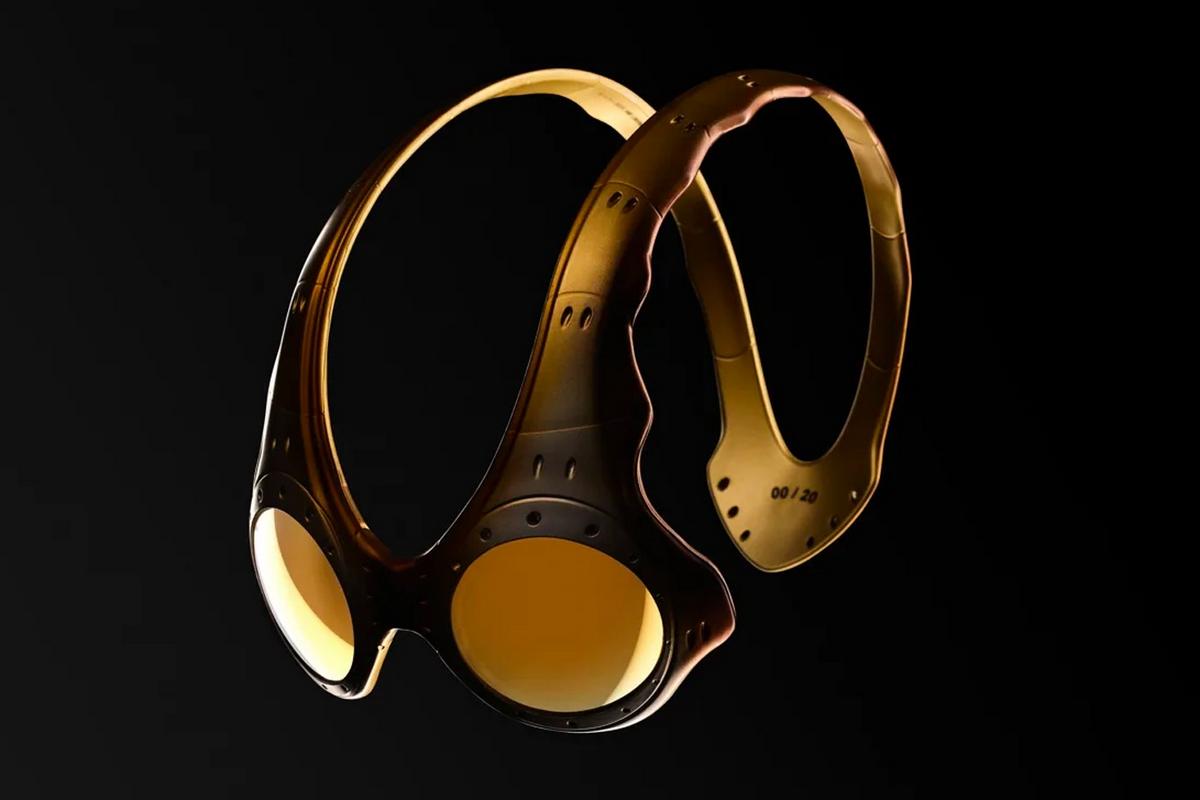
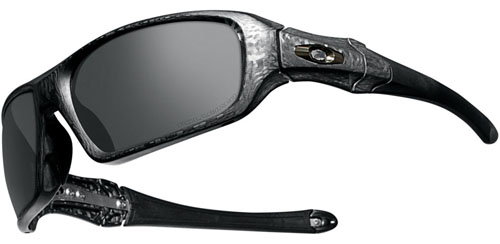
The dawn of the 21st century brought a crossroads. Oakley, now a subsidiary of Luxottica (the Italian eyewear giant that owns Ray-Ban, Prada, and LensCrafters), faced a crisis of identity. Could the cult brand that sold $400 steel frames survive the era of cheap, disposable fast fashion? The answer came in the form of limited edition releases and collaborations that felt more like art auctions than retail drops. The Oakley Epic, a pair of sunglasses signed by Lance Armstrong, fetched astronomical prices in the mid-2000s, not because the lenses were special, but because the provenance was. The Time Bomb watch collection, while not sunglasses, followed the same logic: thousands of dollars for a metal block with a titanium movement. But the most expensive and collectible Oakleys remain the X-Metal Mars and the Over the Top (OTT) series. The OTT, released in 1999, was a bizarre, helmet-like design that covered the top of the wearer’s head, and it was pulled from the market almost immediately due to its impracticality. Today, a pristine pair of OTT's can sell for $5,000 to $10,000, a staggering return on its original $300 price tag. The rarity wasn't from a marketing plan—it was from a failure that became folklore. For years, collectors would comb eBay and obscure Japanese auction sites, treating these "failed" designs like archaeological finds, proving that nostalgia in eyewear is a currency stronger than gold.
Must Read
The Anatomy of Obsession: Engineering, Hype, and the $10,000 Lens
To understand why someone would pay more for a pair of sunglasses than a used car, one must dissect the components layer by layer. The lens is the heart. Oakley’s Plutonite is a polycarbonate material that is not merely tinted; it is molded to transmit specific wavelengths of light while blocking harmful UVA/UVB rays. The expensive models, like those in the MARS line, utilized a "Prizm" lens technology in their later reissues, which digitally manipulates the color spectrum to enhance contrast in specific environments—golf greens get punchier, snow becomes less blinding. But the real cost driver is the frame. The X-Metal series demanded a process called "displacement casting," where molten metal is injected into a mold at 2,000 degrees Fahrenheit. Each frame then required 60 minutes of hand-finishing by a technician using diamond-coated files. This labor intensity is why production numbers were minuscule. A forgotten vintage fact is that the original Romeo 1 frames had "nose bombs" that were made of a hydrophobic material that supposedly shed sweat—but they also cracked in cold weather if adjusted too aggressively. Mechanics in the 90s treated Oakley repairs like watchmaking, with specialized kits and certified technicians who could re-pin hinges that had no visible screws. The bizarre treatment in previous decades extended to the retail experience. In the 1990s, you couldn't just walk into a department store and buy Oakleys. They were sold primarily at motorcycle shops, surf stores, and select optical boutiques where a salesperson would measure your pupillary distance and adjust the ear stems with a heat gun. It was a ritualistic purchase, not a casual one.
Furthermore, the "most expensive" designation has a shadowy history rooted in counterfeiting and collector hysteria. In the early 2000s, forged Oakleys were notoriously good, leading the company to embed a serial number on the underside of the right frame arm. The more expensive the model, the more intricate the serialization. The Over the Top models, for example, have a specific engraving pattern that counterfeiters still struggle to replicate. The demand for these old, discontinued models has created a bizarre aftermarket economy where "vintage deadstock"—never worn pairs in original boxes with expired service cards—fetch premiums of 500%. This is a forgotten fact about the topic: the highest-priced Oakleys are rarely the newest. They are the discontinued ones, the "failed" designs that were pulled from shelves, and the prototypes that never saw mass production. One infamous prototype, the Oakley A-Frame prototype from 1992, was sold at a private auction for a reported $12,000, because it had a completely invisible hinge mechanism that Jannard abandoned. This hunt is not about vision; it is about possessing a piece of industrial history that represents a rare, uncompromising moment in manufacturing.
The Modern Hack: Customization and the Zombie Resurgence
Today, the classic principles of Oakley’s exclusivity are being hacked by a new generation of "modders" and digital platforms. The modern hack is the resurrection of the X-Metal line through third-party refurbishment. Since Oakley refuses to reissue the original metal frames (they are considered too expensive to re-tool), a cottage industry of technicians in garage workshops now buy damaged pairs, strip them down, and use modern 3D printing to create replacement "nose bombs" and "rubber ear socks." They then re-anodize the frames in wild colors like "Crime Scene Red" or "Ocean Blue" that Oakley never offered. This not only modernizes the look but allows a collector to own a unique, one-of-one pair without paying the $8,000 price for a rare color originally. Additionally, the brand itself has hacked the nostalgia by using its "Oakley SI" (Standard Issue) military line to sell basically identical versions of the old M-Frame lenses with modern Prizm technology for a fraction of the vintage price. The hack is this: buy a modern pair, scrub the logo, and swap in the old frame parts. For the casual enthusiast, the modern Oakley "Latch" or "Holbrook" models, priced at $150-$250, offer the same UV protection and impact resistance as the $5,000 vintage beasts—but they lack the soul. The most modern hack is the "C2" or "Custom" program offered directly by Oakley on their website, where you can select rare frame colors and custom lens tints with etched graphics for under $300. However, the purist will tell you this is a compromise. The ultimate hack remains the hunt.
In this fast-paced world of influencer drops and weekly micro-trends, the expensive Oakley is a slow-moving asset. The modern hacks are about building bridges between the past and the present. We are seeing a resurgence of the "big, ugly, wraparound" aesthetic, driven by tech bros and rappers who buy the modern Oakley Kato (retailing around $600) which looks like an alien artifact from the future, but they pair it with vintage X-Metal jaws. The binary of "old ugly" vs "new ugly" has collapsed. The most effective modernization is the "lens swap" market where a pair of $150 Oakley Frogskins is fitted with a $50 Prizm sapphire lens, completely changing its performance profile for downhill skiing. The classic principle of "one frame, many functions" is being hacked by consumers who no longer want to buy three pairs—they just want to swap the modules. This is the antithesis of the original, expensive bespoke models of the 90s, which were immutable, locked in their titanium prison. The modern hacks sacrifice some permanence for versatility, yet they retain the core Oakley ethos of radical utility.
The Value of the Vault: FAQs on the Priciest Pairs
Are the most expensive Oakleys actually better for your eyes, or is it just hype?
It is both, but with a fascinating twist. The protection is better—the lenses use Plutonite, which blocks 100% of UVA/UVB and is tested to withstand impact from a hammer without shattering. However, the "hype" comes from the scarcity of the frame designs, not necessarily the lens technology. In the 1990s, a $900 pair of Romeo sunglasses used the exact same lens material as a $100 pair of Straight Jackets. The difference was the frame's articulation and the "jewelry" aspect. However, modern research has shown that the older X-Metal frames actually offered superior peripheral coverage due to their curved geometry, which is something modern flat lenses in fashion glasses cannot replicate. So, for eye safety, an old, expensive Oakley is genuinely better than a cheap plastic one because it wraps closer to the face, reducing light entry from the sides. The price is thus justified by a combination of true ocular protection and the collector's premium for the rarity of the metal frame—it is not purely hype, but it is a diminishing return on performance. You are paying for the last 5% of edge-case vision quality and 95% of historical provenance.
What is the absolute most expensive pair of Oakley sunglasses ever sold at public auction?
The record, as of early 2025, belongs to a pair of Oakley “Mars” X-Metal in the “Crater” finish with a custom gold iridium lens, which sold privately for $22,000 in 2022 through a specialist auction house dealing in motorsport memorabilia. But the public record is slightly different. The highest publicly documented sale at a major house like Sotheby’s or Christie’s was a pair of Over the Top models from the Jannard private collection, which included a signed letter of authenticity from Jim himself. That pair fetched $14,500 in 2019. The reason for these astronomical prices is the "Double Bubble" effect: the frame was designed to fit over a helmet, but the manufacturing was so complex that Oakley only made approximately 2,000 pairs ever. The myth that only "100" pairs exist is false; the scarcity is relative. The "Crater" finish, which gave the metal a pockmarked, moon-like texture, was a trial finish that caused cosmetic rejection in quality control, so most were destroyed. If you find one, the $20K price tag is justified by the fact that there might only be 20 left in existence, making them rarer than vintage Ferraris.
Will Oakley ever re-release these expensive models, and would that destroy their value?
The short answer is no, they will never re-release them exactly as before. Oakley is owned by Luxottica, which is publicly traded and must show quarterly profits. The X-Metal tooling is reportedly so worn down and specialized that rebuilding the factory machinery would cost over $10 million. It is not financially feasible. However, Oakley has done "spiritual successors"—like the 2019 release of the X-Metal "Mars" reissue in a modernized, more comfortable plastic. That reissue sold out immediately and now trades for $1,500, proving that the demand is still there. If they were to re-release the exact original, it would, in the short term, crash the collectible market by flooding it. However, the nostalgia value of the original holds because the reissue has different tactile feedback—the new material is lighter, which collectors consider "fake." To answer the second part: No, a reissue wouldn't destroy the value; it would actually increase it, because it reinforces the mythology. A vintage item’s value is enhanced by a modern tribute’s popularity. The original will always be worth more because it has the handmade, flawed character that no factory automation can replicate.
Looking ahead two decades, the future of the expensive Oakley lies in the fusion of material science and digital scarcity. We will see the rise of "smart" Oakleys—not the failed Google Glass of 2013, but discreet frames with embedded OLED displays in the lens for heads-up data. The most expensive pair will be those equipped with adaptive tinting that changes opacity in milliseconds and biometric sensors that monitor UV exposure. The future will also see the marriage of physical and digital ownership. Imagine buying a physical pair of Oakley Jupiter Squareds for $1,000, but you receive a digital "NFT" certificate stored in a blockchain that tracks its provenance, including every adjustment and lens swap it ever had. This will allow collectors to trade the intellectual property of the frame without shipping the physical object. The ultimate luxury will be "atomic replication"—using 3D metal printers to recreate any vintage X-Metal frame to your exact facial scan, bypassing the broken tooling entirely. A laboratory in Tokyo is already experimenting with this, using a $500,000 laser sintering machine to print titanium Oakley replicas with a tolerance of 0.1 millimeters.
In twenty years, the most expensive Oakleys will not be defined by their cost of production but by their level of integration. We will look back at the oversized, clunky OTT models as the "steam punk" precursors to the sleek, invisible tech that will be embedded in our eyes. The value will shift from the frame design to the software inside the lens. The human element won't disappear; it will transform. The nostalgia for the 1990s "analog" Oakley will be so strong that classic models will become objets d'art, displayed in micro-museums while a concept like "wearing" them will seem primitive. Yet, the eternal principle will remain: the most expensive item is the one that makes you feel invincible, whether it’s through an absurd titanium shell that never bends or a haptic interface that guides you through a sandstorm. The story has never been about the sun. It has always been about the audacity of the human eye to demand perfection—and the wallet to pay for its fantasy.