Microsoft Software Engineer Careers
Imagine walking through a hallway where the walls are lined with patents, and every few steps you pass a door behind which someone is quietly redefining how the world computes. This is not a futuristic fantasy; it is a Tuesday afternoon at Microsoft’s Redmond campus. For decades, the role of a Microsoft software engineer has been shrouded in a peculiar mix of corporate mystique and pop-culture geekery—a career that promises intellectual heft, financial stability, and the occasional existential crisis when your code breaks at 2 AM. But beyond the free espresso and the infamous "stack ranking" of yesteryear, lies a career path that is less about writing lines of C# and more about navigating a complex web of human ambition, algorithmic grace, and corporate evolution.
The story begins in 1975, when two college dropouts, Bill Gates and Paul Allen, imagined a computer on every desk. Fast forward to today, and that vision has metastasized into Azure cloud infrastructure, quantum computing research, and the Minecraft universe. The modern Microsoft engineer is not just a coder; they are a hybrid creature—part systems architect, part product visionary, and part corporate diplomat. With the company’s market capitalization flirting with the $3 trillion mark, the pressure to perform is immense, yet so is the allure. In a world where artificial intelligence has become the new gold rush, Microsoft has positioned itself as a colossus, and its engineers are the pickaxes wielded in this digital mine.
The Hidden Architecture of a Microsoft Engineer’s Mind
Let’s strip away the glossy recruitment brochures and talk about the psychological reality. Microsoft engineers don’t just "solve problems"; they engage in a constant battle against cognitive entropy. The company’s internal culture, post-Satya Nadella’s "growth mindset" revolution, has shifted from a know-it-all to a learn-it-all mentality. This means the most successful engineers are those who can embrace being perpetually wrong—a terrifying prospect for those who entered the field for the ego boost. There’s a dark, funny truth here: the average Microsoft engineer spends about 30% of their time coding, 40% in meetings about coding, and 30% debugging code that was written in a meeting. The "eureka" moment is rare; the "why didn't I see that null reference earlier" moment is the daily bread.
Must Read
Culturally, the impact is profound. Microsoft engineers have become the unsung architects of our digital habits, and their work carries a weight that most don't realize. When you press Ctrl+S in Word, you are relying on a legacy of file-system engineering that traces back to the MS-DOS era. When you use Teams, you are experiencing the result of a frantic, decade-long pivot after missing the mobile wave. This history has left a scar tissue of paranoia and resilience. Internally, there’s a morbid joke among engineers: "We don't have bugs; we have undocumented features." This gallows humor masks a high-stakes environment where a single misconfigured cloud setting can cost a Fortune 500 client millions, or accidentally expose a user’s private emails to the entire internet.
Psychologically, the role demands a peculiar form of schizoid detachment. You must simultaneously care deeply about the elegance of your algorithm while being brutally indifferent to the fact that your code will be rewritten by a junior dev in three years. The anonymity of the corporate structure is a double-edged sword. Unlike a startup where your face is on the product, at Microsoft, you are a nameless cog in a massive, $200 billion revenue machine. Yet, this anonymity provides a shield. You can experiment with radical ideas (like the HoloLens mixed-reality headset) knowing that even if it fails, you will be absorbed back into the safety of the Office or Windows product line. It’s a career built on the tension between wanting to leave a legacy and realizing you are just a line in a pull request review.
Navigating the Labyrinth: Scenarios, Case Studies, and Practical Moves
Let’s walk through the career path with a hypothetical engineer, let's call her "Maya." Maya joins Microsoft as a Level 60 (the internal career ladder) after graduating from Carnegie Mellon. Her first six months are a blur of onboarding, compliance training, and trying to decipher the acronym alphabet soup: PM (Program Manager), SDE (Software Development Engineer), and TPM (Technical Program Manager). Her first project is a disaster: a feature for Azure Data Explorer that gets deprioritized after a re-org. The emotional hit is real. But here is the secret: Microsoft values survivability over brilliance. Maya survives by networking with a principal engineer in a different group, and she pivots to an AI-driven feature for GitHub Copilot. Within two years, she is promoted to Senior SDE, realizing that visibility is more important than velocity.

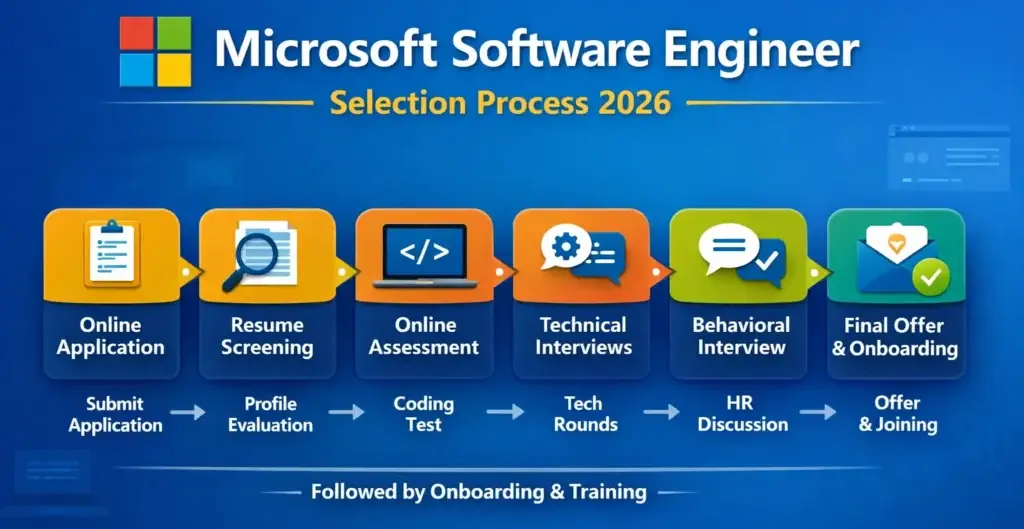
For those on the outside looking in, the actionable takeaway is to master the "Microsoft loop" of the interview: problem solving, system design, and behavioral questions. But the deeper insight is about role specialization. Do you want to be a deep generalist (the "jack of all trades" who knows just enough about networking, storage, and UI to connect the dots) or a surgical specialist (the person who can hand-optimize a GPU kernel to run 0.5% faster)? Historically, the specialists get the highest compensation packages ($300k+ total comp), but they are also the first to be laid off when the technology shifts. The generalists, on the other hand, become the managers and technical fellows who shape the roadmap.
Consider the case of the "Windows 11 Kernel Team." Those engineers live in a world of absolute legacy. They maintain code that was written before they were born, patching security vulnerabilities in functionality that 99% of users never see. Their story is a cautionary tale about the "treadmill problem" – you can spend your entire career preserving the status quo. Conversely, look at the "AI Frameworks Group" – they are the rockstars, publishing papers and shipping cutting-edge features like real-time speech-to-text translation in Teams. The moral of the story is to constantly audit your team’s position on the "innovation vs. maintenance" axis.
Finally, the pragmatic advice for landing the job is not just about LeetCode. Start contributing to open-source projects that Microsoft touches, such as TypeScript or .NET Core. Build a portfolio that demonstrates your ability to work with cloud-native patterns (Kubernetes, serverless). And crucially, learn to speak the language of impact. Don’t say "I wrote a sorting algorithm." Say, "I optimized a data pipeline that reduced customer latency by 40%, saving an estimated 500,000 user hours per year." Microsoft hires engineers, but they promote storytellers who can code. The reality is that the interview loop is designed to test your resilience under ambiguity—they want to see if you break a sweat when asked to design a system for 1 billion concurrent users knowing full well that only 10 million will ever show up.
Frequently Asked Questions: The Insider’s Guide
1. Is a Computer Science degree strictly required to become a Microsoft Software Engineer?
Strictly speaking, no. While the vast majority of hires (around 80%) hold a bachelor's or master's in CS or a related field, Microsoft has increasingly moved towards a skills-based hiring approach. There are notable engineers on the teams who came from bootcamps, physics, or even philosophy backgrounds. The key is demonstrable proof of your coding ability—usually through a robust GitHub portfolio, contributions to major open-source projects, or a verifiable track record of building complex applications. However, be prepared for the "paper ceiling" in the initial HR screening. Without a CS degree, you need a referral from an internal employee or a stellar public profile (e.g., a popular tech blog) just to get past the resume filter.
But even if you get the interview, the lack of degree can be a challenge. You will be expected to perform better than CS grads in the algorithmic coding interviews. The theory is that if you haven't studied data structures formally, your problem-solving skills must be intuitively exceptional. Microsoft also values "experiential learning" heavily. If you have been building distributed systems in your garage for fun, that holds huge weight. In short, it's possible but statistically harder. The most successful non-CS hires usually have a portfolio that screams "self-taught obsessive" rather than a list of failed side projects.
2. What is the actual day-to-day life like, beyond the "coding" stereotype?
Contrary to the image of a solitary programmer in a dark room, the day is an exercise in collaborative friction. A typical day involves a morning stand-up (15 minutes), followed by a design review meeting where a principal engineer will ruthlessly poke holes in your proposed architecture. You'll spend a few hours actually writing code, but you'll also be pulled into triage meetings for bugs coming in from a "critical" customer in the aviation industry. The biggest surprise for new hires is the sheer volume of reading—reading code reviews, reading internal design docs, and reading email threads that seem to never end. There is an unspoken rule: "If it isn't written down, it didn't happen." Documentation is a core part of the responsibility.
Another daily aspect is the "war-room" experience during release cycles. Every few months, a major release (like an Azure update) requires a period of total focus. During these times, the typical 9-to-5 (which is often actually 10-to-6) stretches into late nights, but it’s usually compensated with flexible time off later. The social aspect is significant—you will spend more waking hours with your team than with your family. Microsoft invests heavily in "team health" activities, but the core day is demanding. You are constantly switching contexts between "deep work" (coding) and "shallow work" (emails, status updates). The engineers who thrive are those who are excellent at time-blocking and guarding their deep work slots.
3. How does the compensation structure and stock vesting actually work?
Microsoft's compensation is a three-legged stool: base salary, annual cash bonus, and stock awards (RSUs - Restricted Stock Units). The base salary is competitive but not the highest in the industry (that often goes to Meta or Google). The magic is in the stock. When you receive an offer, a huge portion (often 50% or more of your first-year total comp) is given in RSUs that vest over four years. The catch is a "cliff" and a "step-up." Usually, you get 6% of your stock vested at the end of year one, then 6% every six months after that for the next three years. This is designed to prevent you from leaving early. If you leave before the 1-year mark, you get nothing.

Furthermore, Microsoft does annual compensation reviews, and your raise/bonus is heavily tied to your "impact" rating. If you get a rating of "Exceeds," you might get a 10-15% base increase plus additional stock grants. This creates a system where your total comp can dramatically diverge from your peers within 3-5 years. The psychological game here is intense: you are constantly comparing your performance rating to your neighbors. It’s not uncommon for a Senior SDE to make $350k while a Principal SDE in the same building makes $700k due to cumulative stock appreciation. Do not accept the initial offer without negotiating the stock—this is where the money is made. The company expects you to ask for more RSUs, and a 10-15% bump in stock is surprisingly easy to get.
4. What is the "working from home" culture like vs. the "return to office" mandate?
This has been a contentious point. Post-COVID, Microsoft introduced a "hybrid workplace" model. Most roles are now considered "hybrid," meaning you need to be in the office between 25% and 50% of the time. However, some product groups (like Azure Hardware) require almost full-time presence due to lab access. The days of fully remote, "hire anywhere in the world" are fading. The company has noticed that collaboration and mentorship suffer when everyone is remote. As an engineer, you will be expected to align your schedule with the core collaboration hours (usually 10 AM - 3 PM Pacific Time) regardless of where you live.
The practical reality is that engineers hate this. A 2023 internal survey reportedly showed that 70% of engineers wanted more flexibility than their managers were offering. But there’s a dark, funny twist: the "work from home" days are often used for deep focus, while office days are used for "collaboration theater" (i.e., sitting in a room on your laptop wearing headphones because you still have to join a Teams call with remote colleagues). The key to surviving this is to choose a team leader who is flexible. If your manager is in a different timezone, you can often get away with coming in late and leaving early on office days. The official policy is strict, but the enforcement is highly variable and depends less on company policy and more on your immediate team’s micro-culture.
5. What are the realistic career progression milestones and the "glass ceiling" for engineers?
The career ladder for a software engineer typically progresses: SDE 1 -> SDE 2 -> Senior SDE -> Principal SDE -> Partner SDE -> Distinguished Engineer. The first jump to Senior takes about 3-5 years and is largely a matter of showing you can handle a full feature lifecycle. The jump from Senior to Principal is the first major "filter." Only about 10-15% of Senior engineers make this jump. It requires not just technical excellence but strategic influence—meaning you influence the direction of a product across multiple teams, not just within your own. The title of Principal is often the highest level of "pure coding" before you are forced into a management path (Engineering Manager) to advance further.

The "glass ceiling" is real. To reach Partner and above, you must have a company-wide impact, often meaning you are the "go-to" person for a critical tech like the Windows memory manager or the Azure DNS infrastructure. This is where the politics come in. You need sponsors at the Vice President level. It’s a brutal, Darwinian process where your technical merits are the baseline, but your ability to navigate executive reviews (a.k.a. "The Bill Gates Review" in the old days) becomes paramount. Once you hit Principal, your career becomes a portfolio measurement: what did you ship, how much revenue did it drive, and how much did it save the company? Many engineers are comfortable plateauing at the Senior/Principal level, which still pays an exceptional living. The ones who crash and burn are those who chase the title without enjoying the added responsibility of schmoozing with product managers and finance.
Reflecting on this career path, one can't help but see it as a mirror of our own human desires for purpose and security. We want to build things that matter, but we also want to be paid handsomely. Microsoft engineers sit at a peculiar intersection of creation and bureaucracy, where the code they write is often invisible yet impacts billions. This is a career that humbles you. You might spend three weeks fixing a memory leak that saves the company $10 million a year, and no one will ever know your name. You have to find internal validation in the elegant solution, not the applause.
In an era where tech jobs are increasingly seen as volatile, Microsoft offers a sort of "golden cage." It is a place where you can grow old, but you must be willing to change with the tides. The engineer who restarted their career three times (from Windows to Azure to AI) is the hero of the modern corporate saga. It teaches us that relevance is not about keeping up with every trend but about mastering the fundamentals of learning how to learn. The dark humor about endless meetings and broken builds is a coping mechanism, but it’s also a sign of a resilient community. They know that a broken build is just an opportunity to rebuild it better.
Ultimately, the Microsoft software engineer career is a profound lesson in delayed gratification and emotional endurance. It is not the "supersmart coder" who survives but the one who can navigate ambiguity, handle criticism from a code review bot, and still find joy in a perfectly refactored function. As we all use the tools these engineers create, we are interacting with their sweat, their anxieties, and their triumphs. The next time Outlook syncs without error, remember that somewhere, an engineer just had a quiet, blissful moment of relief before moving on to the next bug. That is the human heart of this massive technological enterprise—a career defined not by the computers we write for, but by the people we manage to work alongside.