Margin Interest Interactive Brokers

Before the blinking cursor of a trading platform, before the fiber-optic cables that stitch global markets into a single, humming organism, there was the leather-bound ledger and the handshake. Margin—the practice of borrowing money to buy securities—is as old as the markets themselves, a concept born from the simple, human necessity of wanting more than one could currently afford. In the early days of American finance, on the cobblestone streets of lower Manhattan, a broker was less a technologist and more a trusted confidant. He knew your family, your habits, and the precise measure of your ambition. To grant you credit was a personal act, a gamble on character as much as on collateral. The “call rate” was whispered over cigars, and the consequences of a missed payment were social as much as financial. This was a time when the very idea of borrowing to invest felt like a secret handshake between gentlemen, a privilege reserved for the few who understood the unspoken rules of the game. The initial necessity was brutally simple: without leverage, the nascent railroads and manufacturing giants would have been impossible to build, and the average speculator had no chance of capturing a slice of that industrial revolution’s enormous bounty.
The journey from that genteel, relationship-based system to the cold, algorithmic precision of today’s Interactive Brokers (IBKR) is a story of profound, often unsettling, evolution. For decades, margin was a static, expensive, and deeply exclusive tool. The prime rate was the bible, and the broker-dealer was the pope, interpreting its scriptures for the faithful. You called your broker, you waited for him to check your balance on a physical terminal, and you paid a premium that could seem arbitrary. The entire process was opaque, a black box where the mystique of the financial world served as a barrier to entry. As late as the 1990s, a margin loan was a cumbersome affair, requiring reams of paperwork, a human review process, and a delay of several business days. The technology was primitive—paper tickets, telex machines, and later, clunky desktop software that crashed with alarming frequency. It was an era where a sudden market dip could leave you scrambling to reach a human being on the phone while your portfolio metaphorically bled out, a stark reminder that in the old world, speed was a luxury reserved for the institutional elite.
Then came the quiet revolution. Thomas Peterffy, a Hungarian-born programmer and options market maker, began to see the future not in suits and handshakes, but in code. He founded Interactive Brokers in the late 1970s, initially to solve his own market-making problems, but his vision was far grander. He understood that the human necessity driving margin wasn’t just access to capital, but access to fair and efficient capital. He began to dismantle the opaqueness, one line of code at a time. Where other brokers viewed margin as a profit center with grotesque rates, Peterffy saw it as a utility—a service that should be priced with the same mathematical rigor as the derivatives he traded. The early days were marked by an almost militant obsession with eliminating the middleman, both human and financial. This wasn't just a modernization; it was a philosophical assault on the very foundation of the old broker-client relationship.
Must Read
The Great Unbundling: From Club Rules to Universal Access
The transformation of margin from a genteel privilege to a brutal, transparent utility is a story defined by a series of aggressive, some might say hostile, price cuts. In the late 1990s, while the internet bubble was inflating, established firms were charging retail clients anywhere from 9% to 12% on margin loans. Interactive Brokers, in contrast, began publishing its rates as, essentially, a tick over a benchmark. This was the great unbundling. The historical norm was that the margin rate subsidized other services—the research, the legwork, the physical offices. IBKR challenged this by asking a simple, devastating question: should a client paying 10% interest subsidize the broker’s marble lobby? The answer, they argued, was a resounding no. This act of “taking the wall paper off the office” crystalized the shift from a consultative relationship to a transactional one. For the first time, a retail investor in Omaha could see the exact same cost of borrowing as a pension fund in London, a level of transparency that was previously unimaginable and, to many old guard brokers, deeply distasteful.
Forgotten vintage facts abound. In the 1980s, margin calls were often delivered via telegram. A Western Union messenger boy arriving at your office was the 1980s equivalent of a red alert siren. The humiliation of the public call, the frantic dash to a bank to wire funds—it was a far cry from today’s push notifications. Another bizarre practice was the “points” system. Some clients—the favored ones—were given preferential rates based on their volume of trades or the size of their account, a completely non-transparent system where your bargaining power was directly proportional to your social standing and the thickness of your checkbook. Interactive Brokers obliterated this by formalizing rates based on a simple formula: your balance and the base rate. There was no charm, no haggling, but also no discrimination. The “haircut” on marginable securities, once a mysterious calculation done in a back office, became a published table of risk-based discounts, a radical departure from the previous decade’s “if you look wealthy, it’s probably fine” methodology.
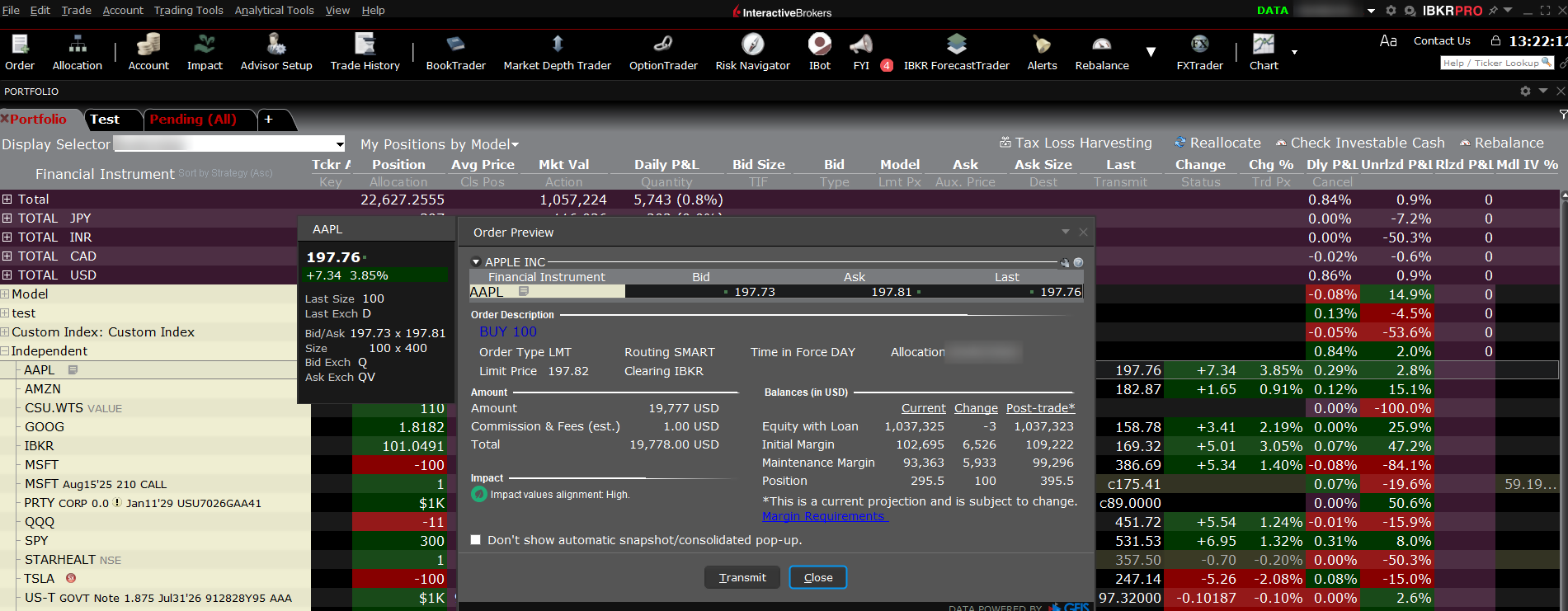
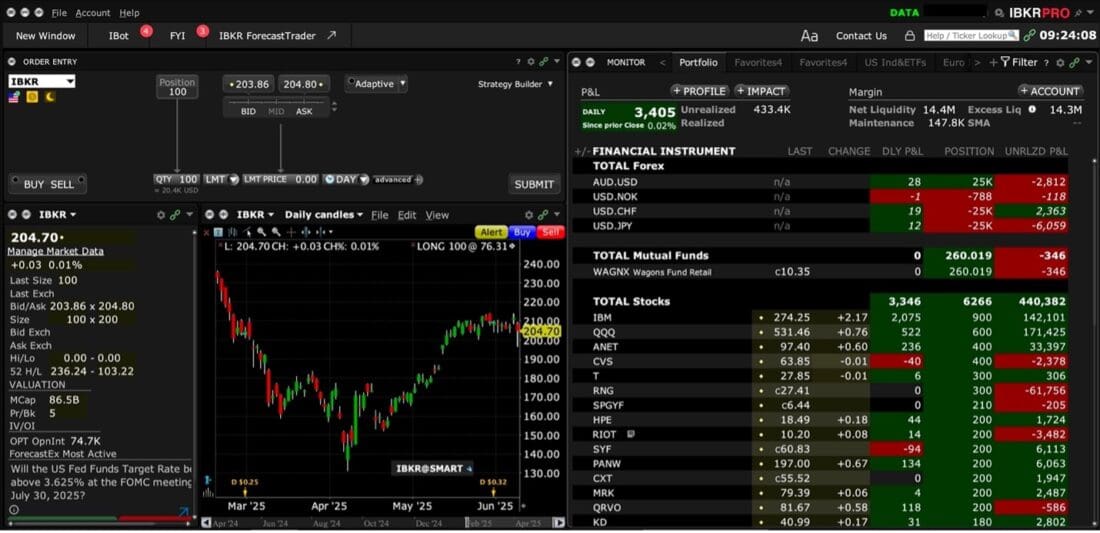
The technological leaps are equally astonishing when viewed in hindsight. Early IBKR platforms were text-based, requiring users to type commands in a Unix terminal. The screens were green-on-black, intimidating to look at, but they offered something the glossy, 56k-modem-era websites of competitors didn’t: real-time risk management. While other brokers were showing you a snapshot of your account from 15 minutes ago, IBKR was calculating your net liquidation value and margin excess on every tick, in real-time. This wasn’t just a feature; it was a hazard light. It meant that the broker was always, mathematically, ahead of your loss. This shifted the blame for a margin call squarely onto the investor, because the system had already told you you were over-leveraged, sometimes seconds before the trade would have been rejected. The old guard’s “I’ll call you when it gets bad” had been replaced by an impersonal, but infinitely more honest, digital gatekeeper.
Perhaps the most underappreciated historical shift is the treatment of overnight risk. For decades, the standard practice was that a client could leverage up to 2:1 intraday, but the positions were “marked-to-market” at end of day, with portfolio margin and intraday margin being a complex, racketeering-adjacent space. Interactive Brokers was one of the first to aggressively push for “portfolio margin” for retail, a system that calculated risk not just per-security, but based on the entire portfolio’s correlated risk. This was a dawning realization that the old rules, written in the 1960s, were designed for a world of single stocks and mutual funds. IBKR’s lobbying and technological implementation of these risk models effectively allowed sophisticated clients to borrow at rates that were previously only available to the largest hedge funds, thereby completing the democratization of risk tolerance. The old rule of thumb—"you can borrow half your stocks’ value”—was replaced by a fluid, statistically-driven calculation that could offer more leverage on a diversified portfolio but less on a penny stock. It was a move that was, and still is, controversial, but it cemented the idea that margin should be a function of risk, not of inequality.

Hacking the Classic: The Algorithmic Restraint of Today
The classic principle of margin was always centered on the bank’s safety, a defensive posture. Today, leading-edge brokers like IBKR are hacking that concept into an offensive tool through sophisticated volatility-based risk engines. The idea of the “Hard Margin” formula is being modernized by a constant, real-time stream of data that adjusts your buying power in milliseconds based on the VIX or the realized volatility of your specific assets. The old world gave you a static limit and punished you when you hit it. The new world, however, predicts your pinch point. For example, if you are holding a portfolio of tech stocks and the market futures drop 2% pre-market, the modern algorithm immediately lowers your available margin excess before the US market even opens. It doesn’t wait for the crash; it anticipates the volatility and pre-punishes you to prevent the catastrophe. This is a bitter pill for many traders, as it feels like the broker is taking away capital that hasn’t been lost yet, but it’s a profound modern hack on the old "ask for forgiveness" model.
Furthermore, the integration of Intelligent Order Routing (IOR) has centralized the margin equation. In the old days, your order went to one exchange, and you paid the price. Now, IBKR’s system checks multiple venues, looking for price improvement and rebates, which effectively lowers the share price of your trade and thus the notional value of the margin you need. This is a modern hack on the cost of borrowing itself—not by lowering the interest rate, but by lowering the principal. It’s a relentless, computational optimization that feels like a violation of the old, slow, relationship-based model. The modern user doesn’t “feel” the market; they “see” the algorithmically adjusted numbers. The nostalgia for the broker’s calm voice on the phone is replaced by the anxiety of a constantly updating “Margin Status” bar that flashes green, yellow, or red, a digital traffic light for your financial life.

Frequently Asked Questions: The Ledger and the Algorithm
1. Does Interactive Brokers still use the old “Broker Call Rate” to price margin, or is it a completely different animal?
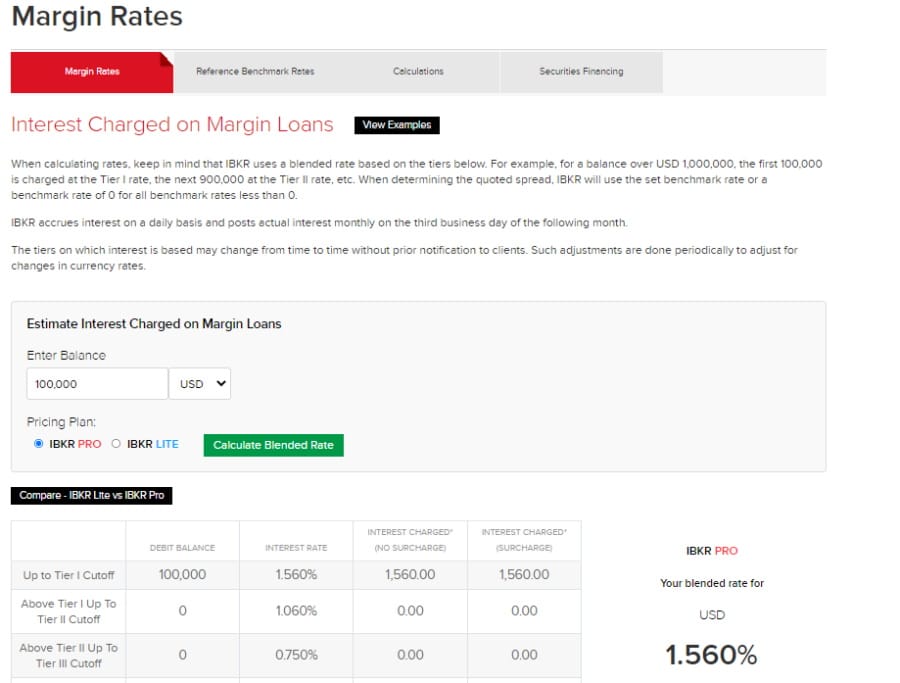
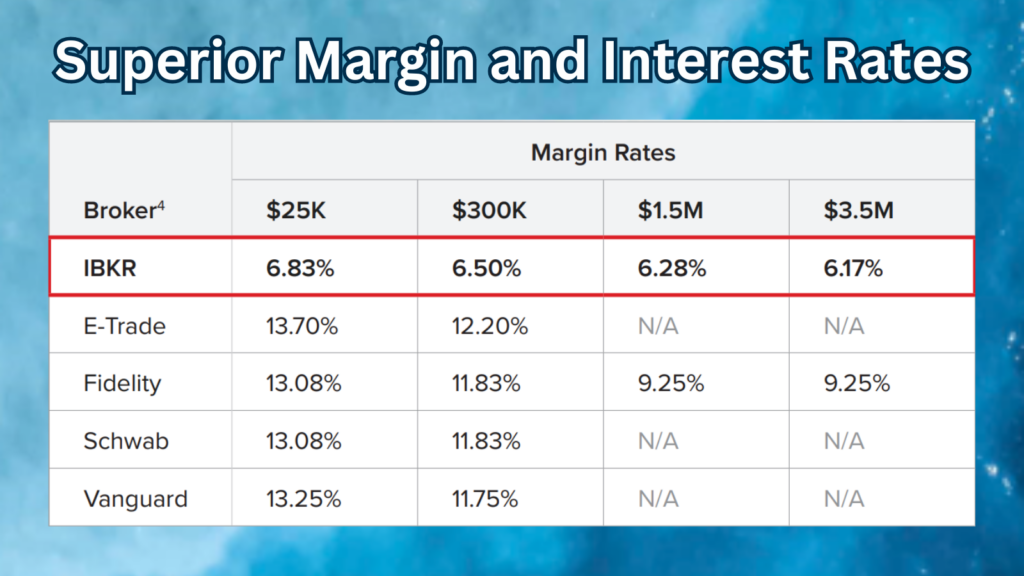
It is a completely different animal, though it has distant lineage. Historically, brokers would take the “Broker Call Rate” (the rate banks charge brokers for overnight loans) and add a markup—often 1.5% to 3%; this was your rate. Interactive Brokers, however, effectively eliminated the specific, personalized markup as a primary tool. They published a tiered rate structure that is often a mere 0.5% to 1.5% above the risk-free rate (like SOFR), and for large balances, they can lend at rates that are below what standard retail banks can get. The old myth was that you needed to be a millionaire to get a prime rate; the modern fact is that IBKR’s rates on a $100,000 margin balance are often numerically lower than what a client with $5 million at a legacy firm is paying. They are able to do this because they lend their own capital and have an incredibly low operational cost structure, achieved through automation. The old model was about charging a premium for human risk-taking; the new model is about aggregating risk globally and charging for the technology that manages it.
2. Is margin in the modern IBKR era more dangerous than the “genteel” era of the 1970s, where a human broker could stop you from making a mistake?
This is a loaded question that bridges historical myth with modern fact. The myth is that the human broker was a guardian angel who would talk you out of ruin. The reality, often forgotten, is that those same brokers were often pushing you into margin to generate commissions, and they were frequently wrong. However, the speed of ruin is definitely different. In the old world, you might have a day to wire funds before a forced liquidation. With IBKR’s automated system, the liquidation can occur seconds after a breach, especially if the platform’s risk engine deems the position insolvent. This seems more dangerous, and it can be, if you are reckless. But the modern fact is that IBKR will prevent you from opening a position that would immediately violate margin, which the old paper system often didn’t catch until the next morning. The danger isn’t the automation itself; it’s the false sense of security it provides. The old felt safer because it was slower, but it was slow for everyone, including the market. Today, the market moves in milliseconds, and an automated margin call is simply the necessary speed-bump to survive in that environment. The hazard is not the software; it’s the human belief that because the software is sophisticated, they are invincible.
3. Where did the concept of “Maintenance Margin” come from, and why is IBKR’s version different?
The concept of maintenance margin (the minimum equity you must maintain in your account) was standardized by the Federal Reserve Board in 1934 under Regulation T, following the wild speculation of the 1920s. It was a simple, blunt instrument: you had to deposit at least 50% of the purchase price upfront, and you had to maintain at least 25% equity (for stocks). The difference with IBKR lies in “Portfolio Margin” and the rigorous calculation of “Guaranteed vs. Non-Guaranteed” margin. In the old model (and still with Reg T), the maintenance margin was a flat percentage based on the asset class. IBKR, for accounts that elect portfolio margin, uses a complex theoretical options pricing model (like the OCC’s TIMS or STANS) that computes the worst-case loss of your entire portfolio over a certain time horizon (usually two days). This means your maintenance margin could be 10% on a hedged position but 40% on a concentrated speculative play. The old myth was that “all stocks are equal” in the eyes of the margin clerk. The modern fact is that IBKR treats your portfolio as a single, interrelated risk ecosystem. This allows for greater borrowing power on safe portfolios but creates a terrifyingly high margin requirement on volatile ones, effectively making the system more ruthless but more intellectually honest.
Looking ahead twenty years, the trajectory of margin is clear: it will become increasingly bi-directional and predictive. We are moving away from the concept of borrowing against stocks to borrow cash. The futuristic evolution involves real-time risk pondering where your margin availability is affected by geopolitical events, central bank speeches, and even weather changes that could impact commodity prices—all before you click “Buy.” We will see the emergence of “auto-deleveraging” algorithms that don’t just liquidate at a breach but will proactively trim a tiny portion of your position to keep you just within the safe zone, a kind of autopilot for leverage. This will lead to the death of the violent “margin call” as we know it; instead, it becomes a gentle, continuous whisper—a digital self-correction that mimics the sophistication of a helicopter parent.
Ultimately, this journey from the leather-bound ledger to the server room is a story of human trust being transferred from individuals to algorithms. The old system trusted the man; the new system trusts the math. The nostalgia we feel for the old margin calls is really nostalgia for a time when finance felt more personal, even when it was exclusive and unfair. But the future suggests that the ultimate act of trust will not be between a borrower and a lender, but between a human and a system that can see the future in the volatility of the present. The next twenty years will not make margin more accessible or cheaper—that ceiling has nearly been reached. The frontier is the management of that access. Human intention will become the only variable that needs controlling, and the world’s most advanced brokers will turn their immense processing power toward the only truly unpredictable asset left: our own impulses.