
Low Pressure Air Conditioner Port

Picture this: you’re staring at your car’s air conditioning system, duct tape in one hand and a vague sense of confidence in the other, when you spot a tiny port that looks suspiciously like a tire valve. That, my friend, is the Low Pressure Air Conditioner Port—the unsung hero of every sweaty summer commute. It’s the little nub that separates “cool as a cucumber” from “melting like a popsicle on a sidewalk.”
The Underdog of Your Dashboard
Here’s the shocking truth: this tiny port is where your car’s AC system gets its lifeline—the refrigerant that makes cold air happen. It’s the exact spot where you hook up a recharge canister, but it’s also where many a weekend warrior has accidentally created a hissing, icy geyser. Think of it as the belly button of your car’s cooling system: small, weirdly placed, and everybody pokes it at some point.
But don’t let its size fool you. That port is gatekeeper to a high-pressure world where chemicals do the tango at 200+ psi on the other side. The low-pressure side is the chill zone—a relaxing 30 to 40 psi—but it’s still a place where you should not stick your finger. That’s a fact I learned the hard way, and my index finger still shivers when I see a turtle.
Must Read
Why “Low” Doesn’t Mean “Safe”
Here’s the punchline: while the low-pressure port is safer than its high-pressure sibling, it’s still no piñata. If you crack it open without knowing what you’re doing, you’ll get a frosty blast of refrigerant that can cause instant frostbite—which is nature’s way of saying “maybe watch a YouTube video first.” Yet, this port is oddly forgiving, which is why it’s the gateway for DIY rechargers who think they’re automotive wizards.
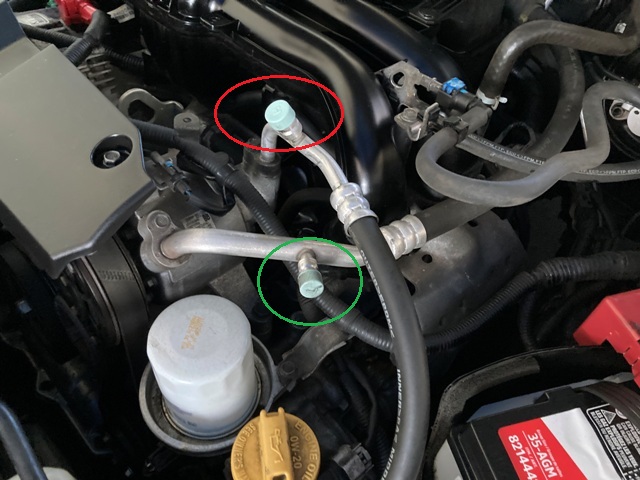
A surprising fact: your AC system uses R-134a or R-1234yf refrigerant, and the low-pressure port is color-coded—usually with a blue cap. But because car engineers have a twisted sense of humor, they often hide it behind a fuse box or under a plastic shroud. It’s like a scavenger hunt where the prize is cold air and a tiny sense of accomplishment.
How to Not Screw It Up
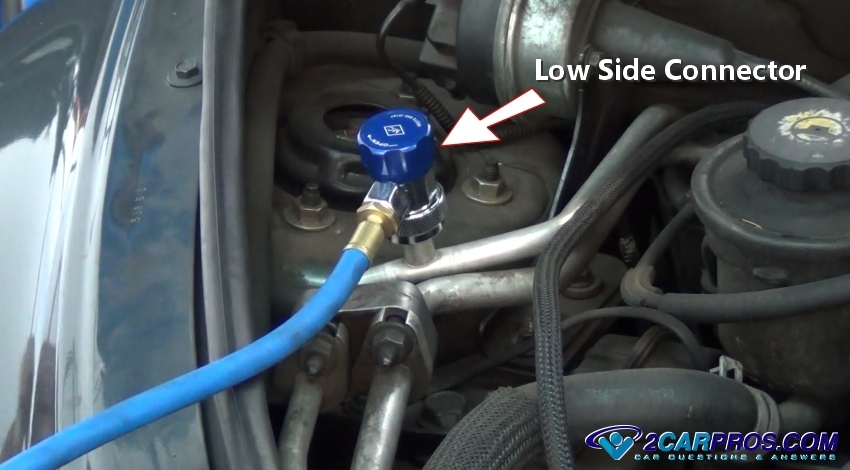
Step one: find the port—it’s thicker than a tire valve and sits on the larger-diameter aluminum tube near the firewall. Step two: attach the recharge canister, but please, please check the pressure with a gauge first. If the system is empty, you’re not fixing a recharge issue; you’re patting a ghost. Step three: run the engine with max AC, and let the canister do its job while you look at it like it’s a science experiment.
But here’s the kicker: overcharging is the classic rookie mistake. You’ll think, “I’ll add a little extra for good luck,” and then your compressor will cry, your vents will blow lukewarm air, and your wallet will file a formal complaint. The port isn’t a vending machine—it’s a precision instrument wrapped in plastic—so treat it with the respect of a mini volcano.

The Final Twist
I’ll leave you with this gem: in some cars, that low-pressure port doubles as the only service point, meaning mechanics use it for everything from pressure tests to dye injection for leaks. It’s basically the Swiss Army knife of AC hooks, but with a duller edge and a higher chance of refrigerant smells. So the next time you open your hood and spot that little capped nub, give it a nod. Just don’t unscrew it while the car is running—unless you enjoy the sound of a thousand hissing snakes and a dry-cleaning bill for your entire engine bay.
Stay cool, friends, and remember: the low-pressure port is the quiet hero we never know we need—until summer hits and we’re driving in a rolling sauna. Respect the nub. It’s the only thing standing between you and a sweat-stained seatbelt.


:max_bytes(150000):strip_icc()/low-press-port-56a0556c5f9b58eba4afeb2a.jpg)
