Littmann Master Cardiology Review
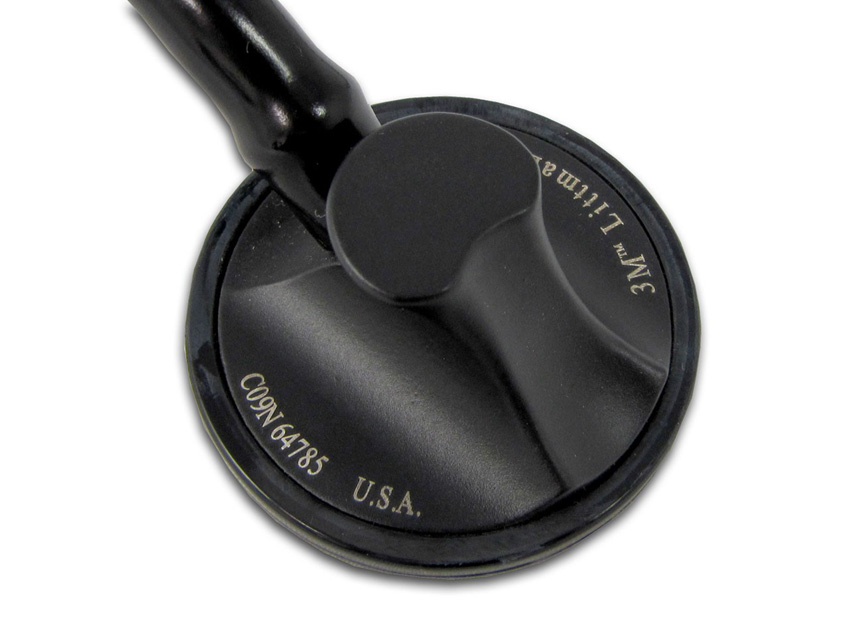
The humble stethoscope is a deceptively complex acoustic transducer. While most of us perceive it as a simple tube for sound, the Littmann Master Cardiology is a finely-tuned mechanical instrument that operates on the principles of acoustic impedance matching and resonant frequency filtering. When you place the chest piece on a patient’s thorax, you are not merely "listening"; you are capturing a spectrum of pressure waves generated by turbulent blood flow and valvular vibration. The diaphragm, constructed from a specially formulated fiberglass resin, is engineered to have a high stiffness-to-mass ratio. This allows it to respond to high-frequency sounds (above 180 Hz), such as aortic regurgitation murmurs, while simultaneously attenuating low-frequency ambient room noise, effectively acting as a physical high-pass filter that optimizes signal-to-noise ratio.
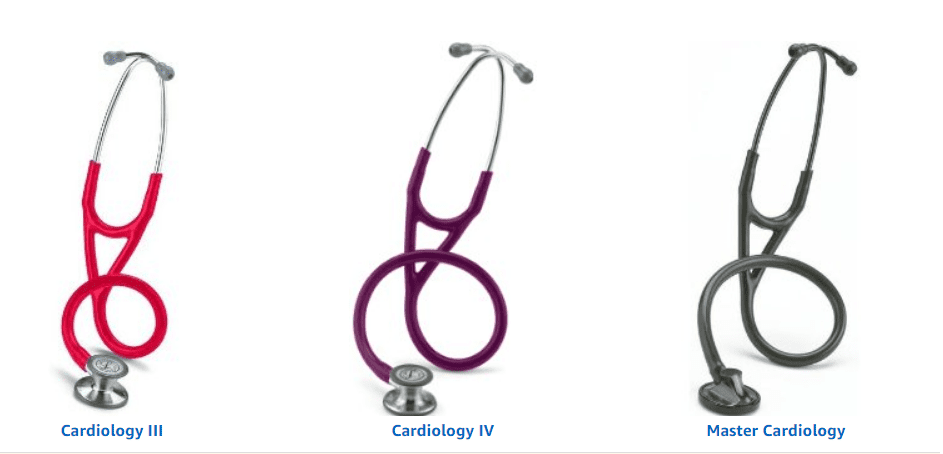
What separates the Master Cardiology from its clinical siblings is its dual-lumen tubing and single-bore chest piece design. Traditional stethoscopes use a single lumen, which can act as a low-pass filter due to wall friction and internal air column mass. The Master Cardiology splits the acoustic pathway into two independent tubes that merge just before the ear tubes. This bifurcation creates a phenomenon known as phase-cancellation reduction. Because sound pressure waves travel down two identical paths, there is less internal destructive interference—the waves arrive at your eardrums more coherently, preserving the temporal fidelity of the sound. This is critical for distinguishing S1 from S2 split sounds, where a 20-millisecond delay is clinically significant. In pragmatic terms, you are not just buying louder; you are buying a higher resolution time-domain signal.
From a bio-mechanical perspective, the ear tips are the unsung heroes. The Master Cardiology ships with soft-sealing ear tips that create an acoustic seal based on the physics of compliance. If the ear tip is too hard, it vibrates at its own resonant frequency, adding artifacts. If it is too soft, it collapses and occludes the ear canal. The provided tips are formulated for a durometer (hardness) that matches the cartilage of the human tragus, allowing for a snug fit that reduces ambient leak. Your external auditory canal is roughly 2.5 cm long and naturally resonates around 3,000 Hz—the exact frequency of many systolic murmurs. By optimizing the seal, you are effectively tuning your own personal acoustic chamber to the physics of human physiology.
Must Read
The Biology of Auditory Perception: Why Your Brain is the Final Filter
Understanding the hardware is only half the battle. The Master Cardiology is a sensor, but the processing unit is your auditory cortex. The human ear has a non-linear frequency response; we are exquisitely sensitive to frequencies between 2,000 and 4,000 Hz, but relatively deaf to frequencies below 1,000 Hz. This is where the science of psychoacoustics becomes your life hack. When you auscultate, you are not just detecting sound; you are performing a real-time spectral analysis. The Master Cardiology’s diaphragm is designed to boost the mid-band frequencies (200–500 Hz), where S1 and S2 heart sounds live, making your brain’s job easier. However, the subtle diastolic rumble of mitral stenosis (typically 40–100 Hz) is barely perceived by the ear. Your brain relies on the harmonic overtones of that rumble—which are in the mid-band—to reconstruct the low-frequency signal. Without a stethoscope that preserves harmonic integrity, you would miss this entirely.
There is also a biological phenomenon called temporal masking. A loud S1 sound can temporarily desensitize your auditory neurons, hiding a soft S2 or a diastolic murmur that immediately follows. The Master Cardiology’s precision acoustic insulation minimizes external noise, but internal masking is still your enemy. To combat this, you must train your brain to "window" the cardiac cycle. This is a neuroplastic process; with repetition, your cortical maps expand for specific frequency ranges. The pragmatic takeaway here is that you should not use this stethoscope for casual listening. You should reserve it for focused diagnostic sessions where you are consciously attending to the systolic and diastolic phases separately. This biological optimization—deliberate practice with high-fidelity input—creates stronger neural pathways than passive listening with a cheaper scope.
Finally, consider the mechanics of your own body. If you are a clinician, your posture affects the acoustic transmission. When you lean forward with a flexed neck, you compress the external auditory canal, altering its resonance. The Master Cardiology’s angled ear tubes (anatomical ear set) are designed to align with the natural anterior tilt of the ear canal, reducing this distortion. But you must also manage your own blood pressure. If you are stressed or have just climbed stairs, your own carotid pulses generate a palpable, low-frequency whooshing that can be transmitted via your arm and hand to the chest piece. Optimal auscultation requires you to achieve a cardiac output steady-state—take three deep breaths, exhale, and then listen. This stabilizes your own hemodynamics, ensuring that you are hearing the patient, not your own physiology.
Optimizing Your Auscultation Workflow: Measurable Life Hacks for Mastery
To move from "owning" a Master Cardiology to mastering it, you must adopt a data-driven workflow. First, perform a baseline calibration check every morning. Put the ear tips in and lightly tap the diaphragm with your fingertip at a consistent distance. You should hear a crisp, dry "thwack." If it sounds dull or muffled, check for a cracked rim or debris in the lumen. You can measure acoustic attenuation by comparing the sound of a standard pen click at 30 cm versus 15 cm. The drop-off should be minimal. If you perceive a notable drop, your internal tubing may have degraded—a process accelerated by exposure to alcohol. Stop soaking the tubing. Use a 70% isopropyl wipe, not a drench, to preserve the polymer integrity. This metric-based approach ensures your tool is performing at >90% of its factory spec.
Second, optimize your pressure application. The Master Cardiology’s floating diaphragm has a specific "sweet spot" of applied force, roughly 1.5 to 2.0 kilograms of pressure. That feels like pressing a firm peach. If you press too lightly, you lose high-frequency fidelity. If you press too hard, the skin becomes taut, acting as a secondary diaphragm that transmits low-frequency muscle and bone sounds, muddying the signal. Practice on a compliant surface, like a folded towel, using a kitchen scale to calibrate your finger pressure. Once you hit that 2 kg threshold, you will hear the murmur "pop" into clarity. This is not hyperbole; it is a physical fact of acoustic coupling.
Third, hack the ambient noise problem using the physics of constructive wave interference. In a hospital corridor, step away from the wall. Sound reflects off flat surfaces and reaches your patient at a slight time delay, creating a comb-filter effect that cancels out key frequencies. Instead, position yourself so that you are facing the patient but your back is to the primary noise source (the nurse's station). This uses your torso as a baffle, creating a shadow zone of reduced high-frequency noise. Additionally, close your eyes. Visual processing consumes ~20% of your cortical energy; reallocating that bandwidth to your auditory cortex measurably improves your detection threshold for subtle S3 gallops.

Fourth, employ the "bare chest" rule for habit optimization. Hair acts as a mechanical damper, absorbing acoustic energy and reducing high-frequency transmission. A thin layer of shaving cream or a small amount of water-based ultrasound gel on the chest significantly improves coupling—this is a pro-level hack. If you cannot use gel, press the diaphragm firmly enough to flatten the hair (back to the 2 kg rule). Do not slide the chest piece over skin, as friction generates a 100 Hz noise burst that mimics a rub. Lift and re-place the bell/diaphragm to avoid this artifact. This singular habit will instantly clarify mitral regurgitation murmurs, which are notoriously high-frequency and easily lost in friction noise.
Finally, perform a binaural comparison test every month. Put the stethoscope on and listen to a metronome app set to 60 BPM. The clicks should sound precisely synchronous in both ears. If you hear a slight delay or flanging effect, your ear tubes have twisted or your ear tips are asymmetric. Adjust the metal binaurals until the sound is centered in your head. This ensures you are receiving the phase information correctly. Also, check the ear tip fit by whispering a 1000 Hz tone. If it sounds shrill, the tips are too small; if it sounds thumpy, they are too large. Proper fit is when the tone sounds neutral and uncolored. You are essentially performing a Fourier transform of your own auditory system.
Frequently Asked Questions: Troubleshooting the Master Cardio Experience
Why does my Master Cardiology sound quieter than my old cheap stethoscope?
This is a common paradox. The Master Cardiology is designed for high-fidelity spectral balance, not just raw volume. Cheap stethoscopes often boost mid-frequency resonance at the expense of distortion, making things sound louder but muddier. If yours sounds quiet, the most likely culprits are a poor ear tip seal or a loose chest piece rim. First, remove the ear tips and manually compress them—if they don't spring back instantly, they have lost elasticity. Replace them with the largest size that you can insert comfortably without pain. Second, check the diaphragm rim. If the plastic rim has a hairline fracture, it creates a pressure leak that kills low-frequency sounds. Place the chest piece in a bowl of water and press gently—bubbles identify the leak. Finally, ensure you are using the high-frequency side (the flat, solid diaphragm) not the open bell. Many users mistakenly twist to the bell and lose acoustic gain.

How do I clean my Master Cardiology without destroying the acoustic properties?
The tubing and diaphragm are sensitive to plasticizers—chemicals that keep the polymer flexible. Alcohol and bleach are aggressive plasticizers that will harden the tubing over 6-12 months, drastically reducing acoustic isolation. The pragmatic protocol is to use a clean dry microfiber cloth for the tubing after every use. For disinfection, use 70% isopropyl alcohol wipes only on the diaphragm and ear tips, and wipe them dry immediately. Never immerse the chest piece in liquid. For deep cleaning, unscrew the chest piece, wash the diaphragm and rim in warm, soapy water (pH neutral), and air-dry completely. Assembling with moisture inside creates a water vapor column that attenuates sound by 20% until evaporated. Also, avoid storing it in a car or near a radiator; prolonged heat (>60°C) accelerates polymer creep, permanently distorting the ear tubes.
Why do I hear my own heartbeat when using the stethoscope on a patient?
This is a classic issue of mechanical coupling through your hands and arms. Your own radial pulse generates a palpable pressure wave. When you grip the chest piece tightly, you transmit that pulsation to the diaphragm, which transduces it as a low-frequency "lub-dub." To troubleshoot, first check your grip pressure. You should hold the chest piece like you are holding a chess piece between your thumb and forefinger—minimal contact area. Second, be aware of your own sympathetic nervous system. Caffeine or anxiety increases your pulse pressure (the difference between systolic and diastolic), making your own arterial pulse more pronounced. Do 10 slow exhalations (4 seconds in, 6 seconds out) to lower your heart rate variability. Third, ensure that the patient's chest wall is not directly over their own apical impulse—move the chest piece 1 cm laterally. If the issue persists, have a colleague listen; if they hear the same ghost beat, it is from your desk chair's armrest vibrating the tubing, so reroute the tube clear of any object.
Can I use the Master Cardiology for blood pressure measurement and pediatric patients?
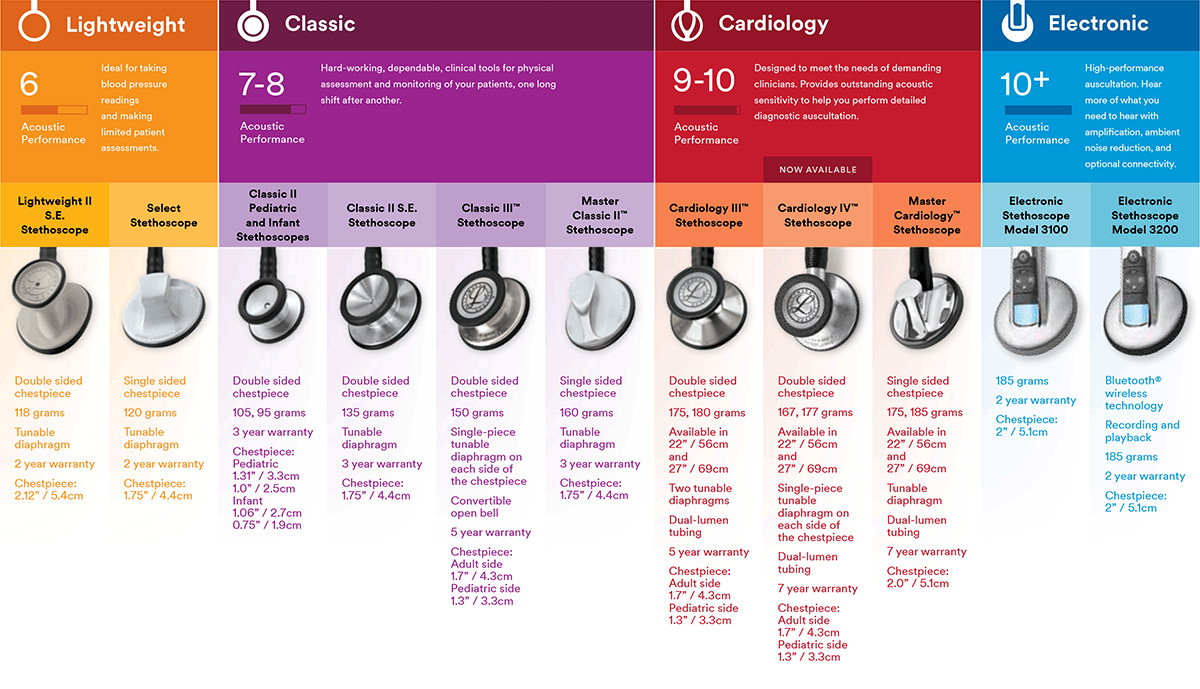
Biologically, the Master Cardiology's large chest piece (5 cm diameter) is optimized for adult thoracic acoustics with an average skin-to-heart distance of 4-6 cm. For pediatric or thin patients, this large diaphragm will pick up too much surface vibration, creating "noise floor" that masks the Korotkoff sounds (used in BP measurement). The physics of contact area dictates that a smaller chest piece (like the Littmann Classic II, 3.2 cm) is superior for pediatrics because it reduces acoustic impedance mismatch on a curved, small chest. For BP measurement, however, the Master Cardiology is excellent—the superior low-frequency response helps you hear the dull "thump" of the systolic Korotkoff phase V more accurately. Avoid using the bell side for BP; the open bell loses pressure wave fidelity. If you must use it on a child, place a folded towel under the chest piece to create a more planar surface, but invest in a separate pediatric scope for serious work.

How often should I replace the tubing and ear tips on my Master Cardiology?
The pragmatic lifecycle depends on usage frequency. For daily clinical use ( 8+ hours/day), the ear tips should be replaced every 6 months—they get compressed and lose their durometer, breaking the acoustic seal. The tubing can last 3-5 years if you avoid alcohol and UV light, but you must test it annually. Here is a quantifiable test: gently stretch a 10 cm section of tubing. It should return to 10.2 cm after release. If it stays stretched at 10.5 cm or snaps back to less than 9.8 cm, the polymer has fatigued. This indicates micro-cracks that allow ambient sound to bleed in. Replace the tubing kit immediately. Also, inspect the Y-connector where the two lumens meet. This is the highest stress point. If you see whitening or crazing (micro-cracks), replace it. This is not a cosmetic issue; crazing is mechanical failure that introduces asymmetrical phase delay between the two ears.
Respecting the acoustic science of the Master Cardiology is a lesson in resource optimization. You are investing in a tool that maximizes information extraction from a complex biological system. It teaches us that fidelity matters more than volume, that nuance is our ally, and that our own physiology is a variable we must control. When you treat your stethoscope as a precision instrument—calibrated, cleaned, and used with deliberate technique—you honor the patient's narrative and your own clinical acumen.
Becoming a better listener is a transferable life skill. The data-driven habits you build here—checking for baseline drift, controlling ambient noise, and managing your internal state—apply directly to conversations, negotiations, and creative work. The Master Cardiology is not just a diagnostic tool; it is a training device for reducing signal loss in high-stakes environments. In a world of noise, the ability to isolate the relevant frequency is the ultimate hack. Master your hardware, and you master your awareness.