Leetcode Vs Algoexpert Vs Hackerrank

There’s a peculiar kind of Stockholm syndrome that develops when you spend your weekends staring at a blinking cursor, trying to invert a binary tree for the seventh time. The modern tech interview has evolved into a gladiatorial arena where your worth is measured not by your ability to ship software, but by your capacity to memorize the intricacies of dynamic programming under a ticking clock. In this crucible, three platforms have risen to dominance: LeetCode, AlgoExpert, and HackerRank. They are the new-age trivium for the digital priesthood, promising not just a job, but a metamorphosis—transforming anxious computer science graduates into confident, six-figure-earning engineers. But beneath the sleek user interfaces and confetti-laden success screens lies a complex ecosystem of psychological warfare, algorithmic Stockholm Syndrome, and a multi-million dollar industry built on your fear of rejection.
The history is surprisingly recent. LeetCode launched in 2015, capitalizing on the post-2010 boom of “algorithm-heavy” interviews pioneered by Google and Facebook. HackerRank, technically the elder statesman, started in 2012 as a competitive coding site before pivoting to serve as a recruiter’s screening tool—a digital bouncer for HR departments. AlgoExpert, the rebellious newcomer, arrived in 2017 with a subscription model and a slick, video-first approach, positioning itself as the “Netflix of coding interviews.” What was once a niche practice of solving Project Euler puzzles for fun has become a $500 million market, fueled by the collective anxiety of millions of developers who understand one dark truth: the interview process is broken, but the alternative is worse.
The Psychology of the Grind: Fear, Dopamine, and the Illusion of Mastery
Let’s talk about the dark side of this codified ritual. LeetCode, with its massive question bank of over 2,500 problems, is a masterclass in addictive design. Each green “Accepted” notification triggers a micro-dose of dopamine, a tiny victory that keeps you chained to your chair for four hours on a Saturday. But the psychological cost is steep. The platform creates a paradox of choice—where do you start? The “Easy” problems mock you with their simplicity, but the “Hard” ones feel like reading ancient Sumerian. This sartorial confusion leads to a phenomenon known as “solution amnesia,” where you watch a NeetCode video, nod your head, and realize you can’t solve the problem alone thirty minutes later. You’re not learning; you’re spectating your own incompetence in 4K resolution.
Must Read
HackerRank, on the other hand, leans into the gamified trauma. Its “Contest” environment is essentially a gladiator pit for your nervous system. Unlike LeetCode’s sanitized sandbox, HackerRank often insists on custom stdin/stdout parsing—a fiddly task that has zero bearing on actual software engineering but a massive impact on your blood pressure. That being said, there’s a twisted cultural prestige to HackerRank’s “Problem Solving” certification. It feels like a black belt in a martial art you’ll never use in a real fight. The platform’s real psychographic appeal is to the competitive coder, the person who enjoys the adrenaline of the 2 AM leaderboard rush.
AlgoExpert, however, weaponizes clarity. Its founder, Clement Mihailescu, understands that the primary barrier to success isn’t knowledge—it’s overwhelm. By offering a curated list of 150 hand-picked problems with high-quality, slow-paced video explanations, AlgoExpert constructs a psychological safety net. You are no longer an explorer in a hostile jungle; you are a student in a private lecture. This reduces cognitive load but introduces a new danger: passive learning. You watch Clement solve a problem, and the false confidence is intoxicating. The dark fun fact here is that most subscribers watch the video explanations before even attempting the problem, turning the platform into a very expensive episode of “Coding TV.”
The Pragmatist’s Guide: Scenarios, Case Studies, and Strategic Deployment
Let’s cut through the noise of “which is better” and focus on which is better for your specific timeline and personality profile. Consider Sarah, the 22-year-old fresh graduate with a Computer Science degree from a state school. She has six weeks until her Meta interview. For Sarah, LeetCode is a trap. She’ll waste two weeks scrolling through tags, jumping from Arrays to Trees then back through HashMaps, never building a cohesive neural pathway. Her best bet is AlgoExpert’s structured “Interview Cram” section, which provides a sequential roadmap, followed by exactly 25 targeted LeetCode problems to simulate spacing repetition. For Sarah, the video explanations act as the mentor she never had, and the curated nature prevents decision paralysis.

Now, consider Marcus, a veteran backend engineer with 12 years of experience who’s interviewing for a Staff role at Amazon. Marcus doesn’t need to learn algorithms; he needs to dust off the rust. HackerRank is his gym. He can take a timed “Warm-Up” test, fail miserably at a Dynamic Programming problem, and then go directly to his preferred topic. The advantage of HackerRank for veterans is its realistic testing harness—it forces you to write code that compiles with strict input validation, which is closer to the actual whiteboard experience (where typos are your nemesis). Marcus should use HackerRank for speed drills and use AlgoExpert to review the specific “hard” concepts he’s forgotten, like segment trees or union-find.
The third scenario is the deadline-less professional, the hobbyist coder who wants to join a FAANG company “someday.” This person risks falling into the deepest rabbit hole of LeetCode. The platform’s sheer size is their undoing. They’ll solve 300 problems, but only ever stick to ‘Easy’ and ‘Medium’ difficulty, living on a constant high of quick wins. The actionable takeaway? Use LeetCode as a diagnostic tool, not a curriculum. Use its “Explore” cards to learn a new topic, and then pick one single Hard problem per week. Struggle with it for 4 hours before looking at the solution. This mirrors the AlgoExpert philosophy. The real secret is that AlgoExpert and HackerRank are supplements; LeetCode is the infinite practice ground. The best engineers combine the structure of AlgoExpert (for understanding) with the rigor of LeetCode (for volume) and the pressure of HackerRank (for testing).
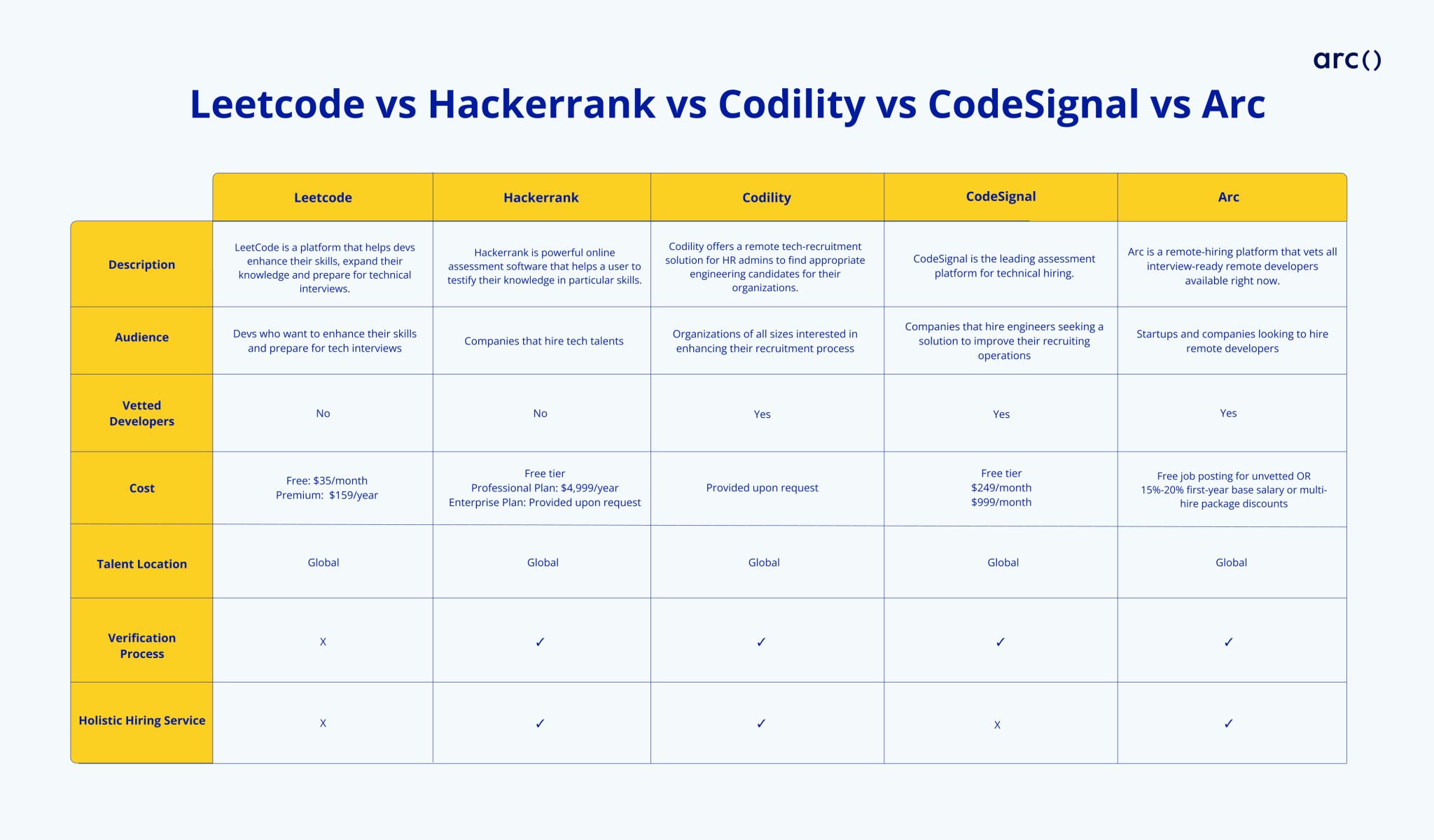
Let’s talk about the economy of your time. AlgoExpert’s $80 annual subscription is a bargain compared to the $200 hourly rate of a professional interview coach. But it doesn’t hold your hand. HackerRank’s free tier is generous, but its premium company-specific assessments are often ghosted—you take the test, and the employer never looks at it. LeetCode’s premium subscription ($35/month) gives you the “Company Tags” section, which is essentially a cheat code for seeing which questions a specific company asks. This is proprietary data that gives you a tangible edge. Actionable takeaway: If you have a target company, buy LeetCode Premium and filter by company name. If you are learning from zero, pay for AlgoExpert and watch every video until you can explain it without the audio. If you have less than two weeks, do timed HackerRank challenges only.
The Final Boss: 5 FAQs on the Digital Gauntlet
1. Should I use only one platform, or combine all three?
The myth of the “single source of truth” is the most expensive mistake you can make. Relying on AlgoExpert alone will leave you underprepared for the sheer volume of unique questions on LeetCode. Relying on LeetCode alone will leave you in a dizzying frenzy of incoherent topics. Relying on HackerRank alone will ruin your confidence because of its quirky hidden test cases. The optimal strategy is a 60/30/10 split. Use AlgoExpert for 60% of your learning (the “how” and “why”), use LeetCode for 30% of your practice (the “volume” and “pattern recognition”), and use HackerRank for 10% of your preparation (the “stress test” and “input/output handling”). This triangulation ensures you get the pedagogical clarity of AlgoExpert, the vast library of LeetCode, and the gritty realism of HackerRank.
Furthermore, combining platforms solves the “confirmation bias” issue. If you solve a problem on LeetCode with a sub-optimal brute force, you might think you’re done. But watching Clement’s explanation on AlgoExpert will show you the optimized solution with a space-time complexity analysis. Conversely, if you watch the AlgoExpert video and feel confused, attempting a similar tagged problem on HackerRank with a strict time limit will force you to truly internalize it. No single platform has the entire picture; the intersection of their strengths is where your mastery lies.
2. Are the “Hard” problems on these platforms a reflection of real job duties?
Absolutely not. The dark, uncomfortable truth is that 99% of software engineering jobs involve writing CRUD APIs, debugging CSS, and integrating payment gateways—not finding the longest palindromic substring. However, these Hard problems serve a dual purpose: they are a universal proxy for intelligence under pressure and rigorous logical reasoning—traits that are difficult to test in a 45-minute behavioral interview. They are the modern equivalent of a golf handicap in the business world: a somewhat arbitrary metric that everyone agrees to respect. The reality is that a Senior Engineer solving a LeetCode Hard is not reconstructing their daily work; they are proving they have the cognitive stamina to parse ambiguous, complex requirements and reduce them to computational steps.
The problem arises when companies over-index on these challenges. A person who memorized 500 solutions may beat a brilliant architect in a screening test. But that is a flaw in the corporate hiring manager’s strategy, not the platform. For the candidate, the takeaway is to treat Hard problems not as “work problems” but as IQ tests. They measure your ability to break down an impossible problem into manageable chunks, use pattern matching from previous questions, and most importantly, avoid panic. This skill of “calm in the face of chaos” is actually transferable to production outages and deadline crunches, which is the hidden justification behind the madness.
3. Which platform is better for complete beginners with no CS degree?
Without a shadow of a doubt, AlgoExpert. LeetCode assumes you’ve taken a Data Structures class. Its “Easy” problems still require knowledge of Big-O notation, recursion trees, and hash map internals. A beginner jumping into LeetCode will feel like they’ve entered a Tarantino film halfway through—all the violence and intrigue with zero context. HackerRank is slightly better because it has a “Tutorial” section, but its UI for beginners is cluttered and intimidating. AlgoExpert begins with the absolute fundamentals: what is a Linked List, why does a stack exist, what is time complexity? Clement’s teaching style is methodical, using visual aids on a digital whiteboard. He speaks slowly, and he explains the thinking process behind the solution, not just the code syntax.

Moreover, AlgoExpert’s curated list of 150 problems is a godsend for the beginner. It prevents the “downloading the internet” syndrome where a novice tries to solve every problem ever created. The platform also categorizes problems by difficulty and topic, and crucially, it shows a “Difficulty” rating that is honest. LeetCode’s “Easy” is often a Medium in disguise. For a beginner, hitting a wall of unsolvable “Easy” problems is a psychological death knell. AlgoExpert gently ramps you up, ensuring small victories. After you’ve completed AlgoExpert’s core sections, you can graduate to LeetCode’s “Top Interview 150” list, which is a much safer starting point than the entire database.
4. How do I deal with the “I’ve memorized the pattern but can’t solve a new problem” issue?
This is the infamous illusion of fluency. You recognize a problem type (e.g., “Sliding Window”) and immediately think you know the answer. But when a variation appears—like “minimum window with at most K distinct characters”—your brain freezes. The core issue is that you are memorizing the solution syntax rather than the constraint logic. The fix is to use the “Socratic Retreat” method. After you solve (or watch a solution for) a problem, wait 48 hours and try to solve it again from scratch on a blank sheet of paper. Don’t look at the code. If you can’t write the brute force solution, you haven’t learned it; you’ve just seen it.
The best platform to combat this is LeetCode, ironically, because of its massive community discussion section. Instead of just watching the video solution, read the top 3 comments. Often, a user will explain the intuition with a story or an analogy, which anchors the concept better than code. Then, use HackerRank’s “Interview Preparation Kit” which often takes a core concept and twists it in an unexpected way. You must practice flexible retrieval. Tell yourself: “I will only use the general pattern, not the exact loop structure I remember.” This forces your brain to rebuild the algorithm from its foundational principles. Remember, a true engineer can derive a binary search from first principles under a time crunch, not just recite a code snippet.
5. Is the subscription price worth it, or are free resources like YouTube and Problem Sets enough?
The answer is a nuanced “yes, but.” You can get 90% of the way with free resources—NeetCode’s YouTube channel, LeetCode’s free problem set, and HackerRank’s free challenges. The missing 10% is curated precision and time efficiency. AlgoExpert’s price is essentially paying for someone to organize your chaos. If you have a 6-month timeline and a disciplined study schedule, free resources are enough. However, if you have a 4-week deadline, the $80 for AlgoExpert is worth it because it saves you 100 hours of “what do I study tonight?” indecision. Think of it as buying a private tour guide for a city you could theoretically explore alone, but where getting lost is expensive.

LeetCode Premium is the only subscription that feels truly mandatory. The “Company Tags” feature is an asymmetrical information advantage that is virtually impossible to replicate with free tools. Guessing which questions Amazon asks is a losing game without that data. The “Mock Interview” feature, also paid, is worth its weight in gold because it simulates the peer pressure and time constraints that free practice cannot. HackerRank’s paid tier offers “Domain Certifications,” but these are less recognized by hiring managers than your actual performance on their custom test. So, my verdict: Free resources are for exploration; paid resources are for surgical precision. If you budget for only one thing, make it LeetCode Premium. If you need help studying, beg for AlgoExpert. HackerRank is your casual gym where you can work out for free.
Ultimately, these platforms are not just tools; they are mirrors reflecting our deepest insecurities about intelligence and meritocracy. The way we engage with them—the obsessive tracker of streaks, the scroller of solutions, the one who quits at the first Hard problem—reveals more about our relationship with failure than our coding ability. We treat algorithmic problems like a confession booth, hoping that by solving a few hundred, we can absolve ourselves of the imposter syndrome that haunts every developer. The hours we pour into LeetCode are a desperate attempt to control an unpredictable hiring process, to turn the chaos of human judgment into something as deterministic as a hash map lookup.
This obsession is a very human reaction to a world that tells us we must be exceptional just to be average. We buy subscriptions to platforms that preach the gospel of optimization, searching for a formula to unlock the golden door of a FAANG headquarters. The dark fun fact is that even the engineers who curate these questions have to practice for interviews, creating a snake eating its own tail. But perhaps the real insight is not about the algorithms at all. It is about resilience. Every time you fail a HackerRank test, you are practicing the art of getting back up. Every time your code times out on LeetCode, you are learning to let go of ego and accept the brute force—both in code and in life.
In a world drowning in distraction, sitting down, alone, with a complicated problem and refusing to look away is a radical act of self-discipline. Whether you choose AlgoExpert for its warm, pedagogical glow, LeetCode for its vast, intimidating arena, or HackerRank for its cold, competitive edge, remember that the true prize is not the job offer. It is the quiet confidence of knowing that you can face a confusing mix of parentheses and words, and silence it into logic. So, close the tab, open the editor, and embrace the grind—not for the big tech salary, but for the small, profound victory of understanding what was once impossible. That, more than any company tag, is the ultimate return on investment.